Game review
Pipistrello and the Cursed Yoyo
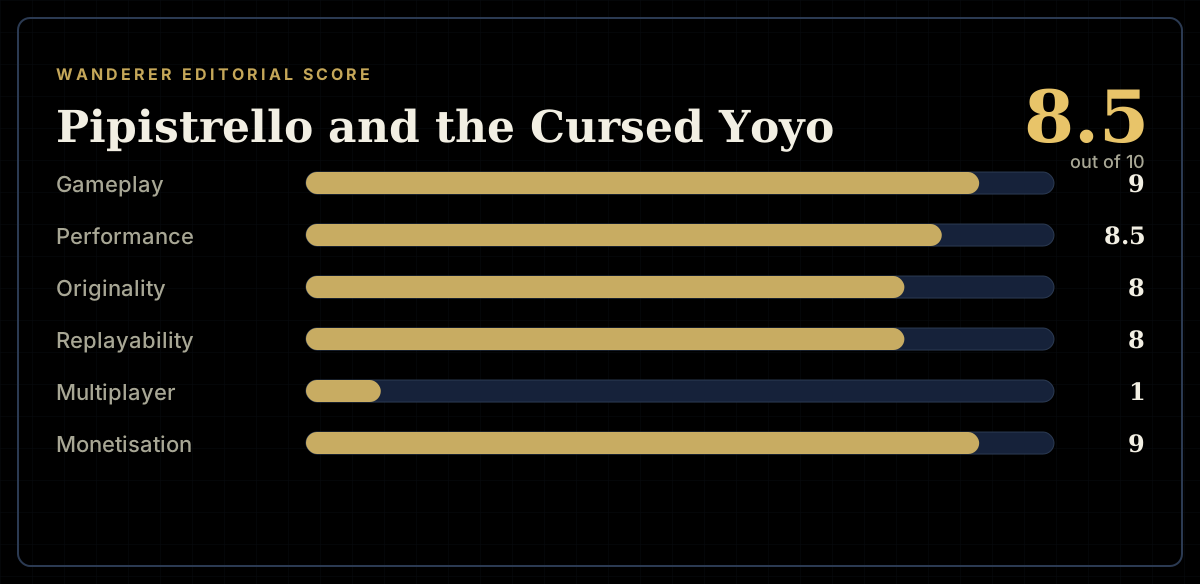
8.5 / 10
- Developer
- Pocket Trap
- Publisher
- PM Studios, Inc.
- Released
- 28 May 2025
- Platforms
- Windows
- Genre
- Action, Adventure, Indie
- Monetisation
- Premium, one-time purchase. No microtransactions or DLC.
- Players
- Single-player only.
The short version
Pipistrello and the Cursed Yoyo is Pocket Trap's love letter to Game Boy Advance-era top-down adventure games, casting players as a yoyo-wielding member of a disgraced crime family reclaiming their city's districts through combat, puzzles, and secrets. Its Overwhelmingly Positive review sample is remarkably consistent in comparing it favourably to the best 2D Zelda titles, praising tight controls, inventive room and dungeon design, and an authentic retro soundtrack, with only a small handful of reviewers pushing back on the sheer size of its map and a life-based penalty system some feel undercuts its otherwise excellent puzzle platforming.
Biggest strengths
- Overwhelmingly praised for room, dungeon, and puzzle design, with one reviewer calling it "the best Nintendo game Nintendo never made" and crediting "incredible room and puzzle design," while another separately states the game "KNOWS how to make side content and exploration fun."
- Praised for authentic GBA-era presentation, with one reviewer calling it "one of the most legit GBA-style games I've ever seen," citing "tight controls and amazing pixel art" plus a simulated LCD-screen display option and an OST "full of recognizable samples from that time."
- Praised for pacing and length relative to its price, with one reviewer noting the game "is worth the full price, is long but doesn't overstay its welcome," and several others separately comparing its scope favourably to beloved handheld Zelda entries.
Biggest weaknesses
- A recurring, if minority, complaint concerns the map's size and density of optional content, with one reviewer stating that after the game "overwhelmed me with optional paths and secrets" the sheer scale "takes this well past excess," diluting the impact of an otherwise strong core loop.
- A related complaint from the same minority holds that later stages feel repetitive, with one reviewer describing the back half as getting "too samey and formulaic," specifically citing fatigue from repeating a "set of 3 golden locks" objective structure.
- A smaller but specific complaint concerns the game's life-based penalty system, with one reviewer arguing that running out of lives "doesn't do anything apart from costing you money," undermining the trial-and-error rhythm of the platforming's more challenging later sections.
Who it's for: Fans of top-down Zelda-likes, Metroidvania-adjacent exploration games, and GBA-era pixel art and soundtracks who want a lengthy, secret-packed campaign; players who want a tightly curated, shorter experience without much optional padding, or who dislike life-based penalty systems in puzzle platforming, may want to sample it carefully first.
Our recommendation: One of the strongest and most underrated top-down adventure games of the year, let down only slightly by its own generosity with content.
8.5 / 10
The first Yoyovania, and it means it
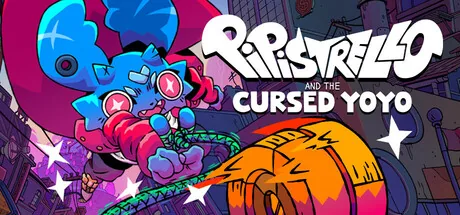
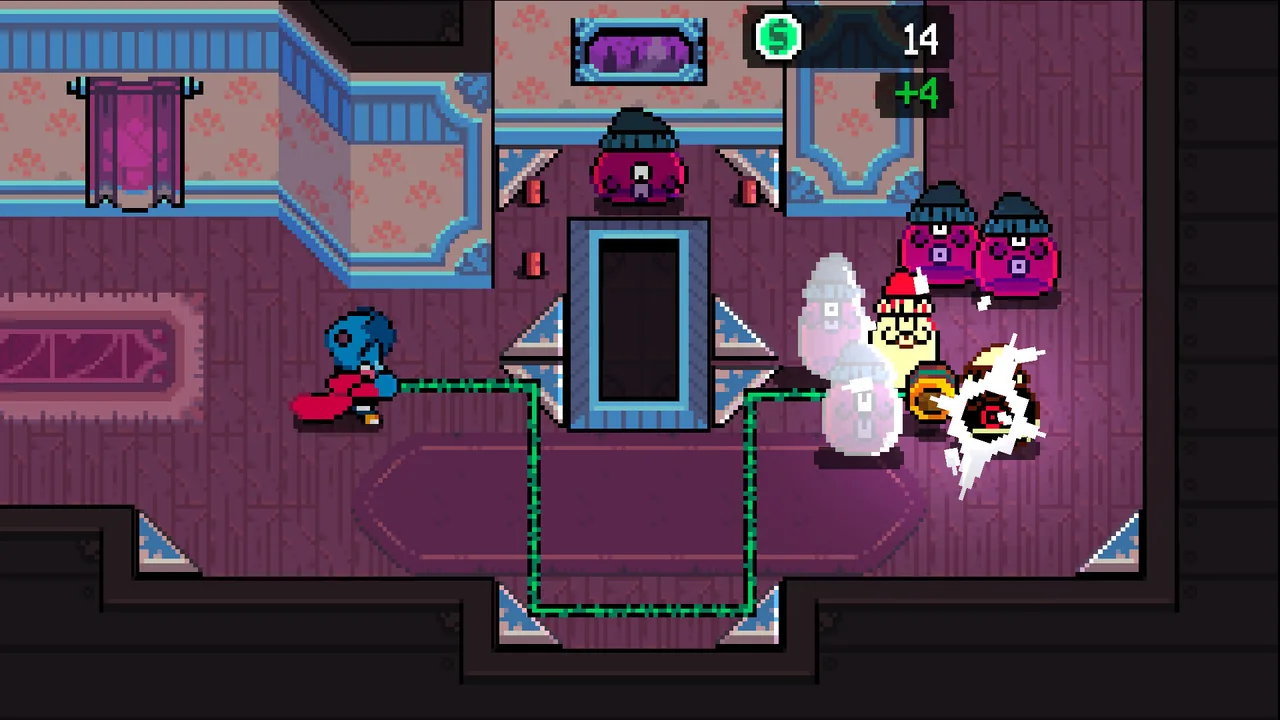
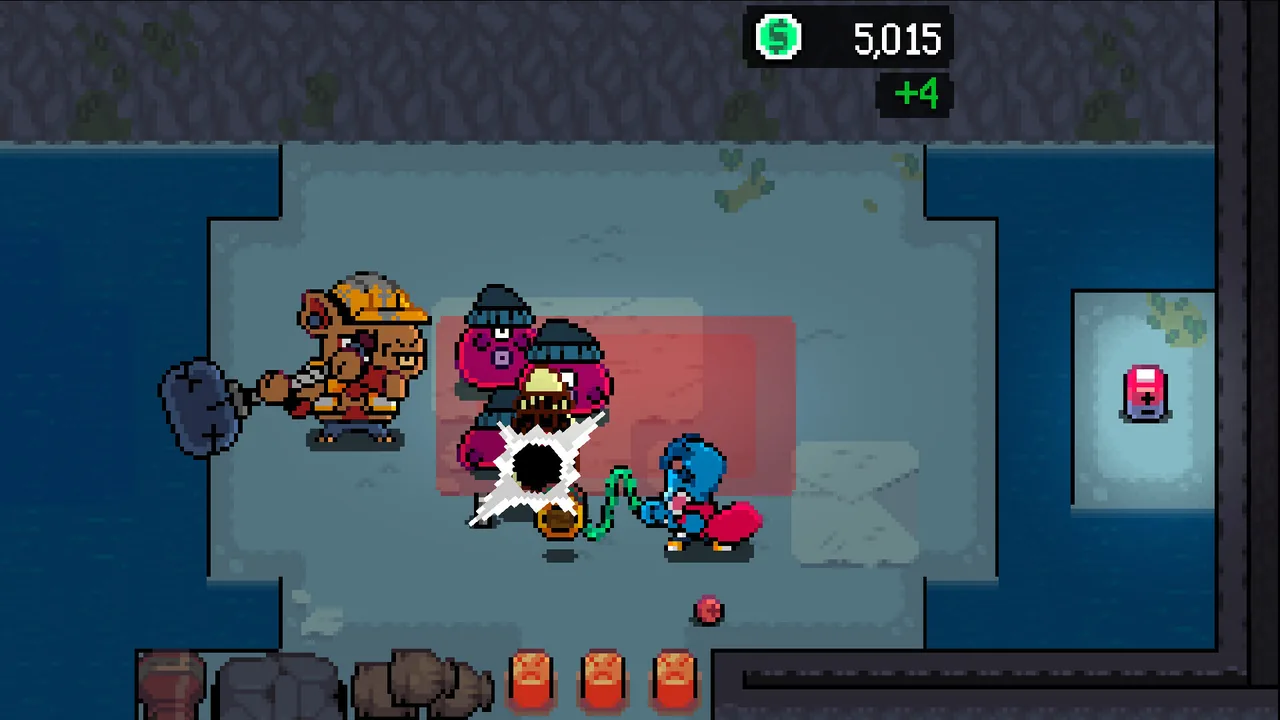
Pipistrello and the Cursed Yoyo, released 28 May 2025 by developer Pocket Trap, bills itself, tongue only partly in cheek, as "the first Yoyovania." Players take control of Pippit, a member of the disgraced Pipistrello crime family, working to reclaim their city's districts using an enchanted yoyo capable of swinging, grappling, striking, and eventually a growing suite of trick-based traversal moves that gate access to new areas in classic Metroidvania fashion. The city itself is broken into distinct districts, each ruled by a rival crime boss, and each functioning much like a Zelda dungeon: a themed space built around a specific new tool or ability, packed with puzzles, secrets, and a boss encounter that tests whatever mechanic that district was built to teach.
The comparison to top-down Zelda games is not incidental, it is the single most common reference point across the entire review sample, and reviewers deploy it with real specificity rather than as a lazy shorthand. One widely upvoted review calls the game bluntly "the best Nintendo game Nintendo never made," praising how it "infuses the top-down Zelda formula with fresh new mechanics" and uses them "to great effect with incredible room and puzzle design." Another reviewer goes further, describing the experience of playing it as akin to "finding an unreleased Zelda that's better than the ones we actually got," a striking claim from a reviewer who explicitly credits the game with "KNOWING" game design at a fundamental level rather than merely imitating a beloved formula.
Presentation reviewers call genuinely authentic
Beyond the structural comparisons, a huge portion of the review sample's enthusiasm is aimed squarely at how convincingly the game recreates its chosen era. One reviewer, evidently well-versed in Game Boy Advance-era game design, calls it "one of the most legit GBA-style games I've ever seen," specifically praising "tight controls and amazing pixel art," and highlighting a built-in option to view the game through a simulated LCD screen filter, a small but telling detail that signals how deliberately the presentation was engineered rather than merely retro-flavoured. The same reviewer singles out the soundtrack as "a GBA masterpiece," noting it is "full of recognizable samples from that time," a level of musical authenticity multiple other reviewers separately confirm without prompting.
That authenticity extends into pricing and scope, an area reviewers seem pleasantly surprised by given the game's modest cost. One reviewer states plainly that the game "is worth the full price, is long but doesn't overstay its welcome," crediting a steady drip of new items, skills, and story beats for keeping the sizeable campaign from ever feeling padded, at least in that reviewer's estimation. Another reviewer who logged the full sixteen-or-so hours needed to reach 100 percent completion using an offline copy, meaning their actual playtime undercounts what Steam's tracker shows, describes the experience in almost reverent terms, arguing "getting 100% is FUN, because there is no bad content. Ever." Multiple reviewers separately express genuine surprise, bordering on frustration on the game's behalf, that so strong a release has accumulated comparatively few reviews, with one calling it "without question the most underrated game I have ever played" and placing it alongside indie landmarks like Hollow Knight and Undertale.
Where the small minority pushes back
The review sample's negative voices are few, only 25 out of 1,265 English-language reviews, but they converge on a specific, coherent critique rather than scattering across unrelated complaints, which makes them worth taking seriously despite the low volume. The most detailed critical review states directly that a genuinely excellent puzzle platformer exists inside the game, but that its good qualities get "buried under a couple of major issues." The first and most repeated of those issues is scale: the same reviewer describes being "overwhelmed" by the sheer density of optional paths and hidden content almost from the outset, arguing that the map's size and the sheer number of secrets tucked into it "takes this well past excess," to the point where the abundance of content starts working against the tightly-designed puzzle rooms that earned the game its comparisons to Zelda in the first place.
A related, independently written critique targets pacing specifically in the game's back half, with one reviewer noting the "impeccable presentation" holds up throughout but that "later levels get too samey and formulaic," citing fatigue specifically from repeating an objective structure built around collecting sets of three golden locks per district. That same reviewer separately flags the game's life-based penalty system as a design misstep, arguing that running out of lives "doesn't do anything apart from costing you money," a currency the reviewer notes players will likely have in surplus by that point, which blunts the sense of consequence the system seems designed to create during the game's more demanding platforming challenges. A smaller, more idiosyncratic complaint from a reviewer without nostalgia for the Game Boy Advance era notes finding some character designs "overworked to the point of being unclear," a critique that reads as a genuine aesthetic mismatch rather than a broader flaw, since it stands almost entirely alone against the sample's dominant praise for the art direction.
Verdict
Pipistrello and the Cursed Yoyo earns its Overwhelmingly Positive score on the strength of remarkably consistent, detailed praise from reviewers who clearly know the genre and era it is drawing from, and who are not shy about comparing it directly, and favourably, to some of gaming's most beloved top-down adventures. The complaints that do exist are not scattered or trivial: reviewers who otherwise loved the game are specifically calling out a map that may have grown past the point of serving its own best puzzle design, and a penalty system that undercuts rather than heightens tension in its toughest moments. Neither issue looks close to derailing what is, by an unusually wide margin, one of the best-reviewed indie adventures of its month, but anyone drawn in by the Zelda comparisons should go in ready for a genuinely large, secret-stuffed world rather than a tightly curated handful of hours.
Pros and cons
Pros
- Overwhelmingly praised for room, dungeon, and puzzle design, with one reviewer calling it "the best Nintendo game Nintendo never made" and crediting "incredible room and puzzle design," while another separately states the game "KNOWS how to make side content and exploration fun."
- Praised for authentic GBA-era presentation, with one reviewer calling it "one of the most legit GBA-style games I've ever seen," citing "tight controls and amazing pixel art" plus a simulated LCD-screen display option and an OST "full of recognizable samples from that time."
- Praised for pacing and length relative to its price, with one reviewer noting the game "is worth the full price, is long but doesn't overstay its welcome," and several others separately comparing its scope favourably to beloved handheld Zelda entries.
Cons
- A recurring, if minority, complaint concerns the map's size and density of optional content, with one reviewer stating that after the game "overwhelmed me with optional paths and secrets" the sheer scale "takes this well past excess," diluting the impact of an otherwise strong core loop.
- A related complaint from the same minority holds that later stages feel repetitive, with one reviewer describing the back half as getting "too samey and formulaic," specifically citing fatigue from repeating a "set of 3 golden locks" objective structure.
- A smaller but specific complaint concerns the game's life-based penalty system, with one reviewer arguing that running out of lives "doesn't do anything apart from costing you money," undermining the trial-and-error rhythm of the platforming's more challenging later sections.
Screenshots
-
Pipistrello and the Cursed YoyoImage: PM Studios, Inc. via Steam -

Pipistrello and the Cursed YoyoImage: PM Studios, Inc. via Steam -
Pipistrello and the Cursed YoyoImage: PM Studios, Inc. via Steam -
How the review scores each part of the gameWanderer Editorial -
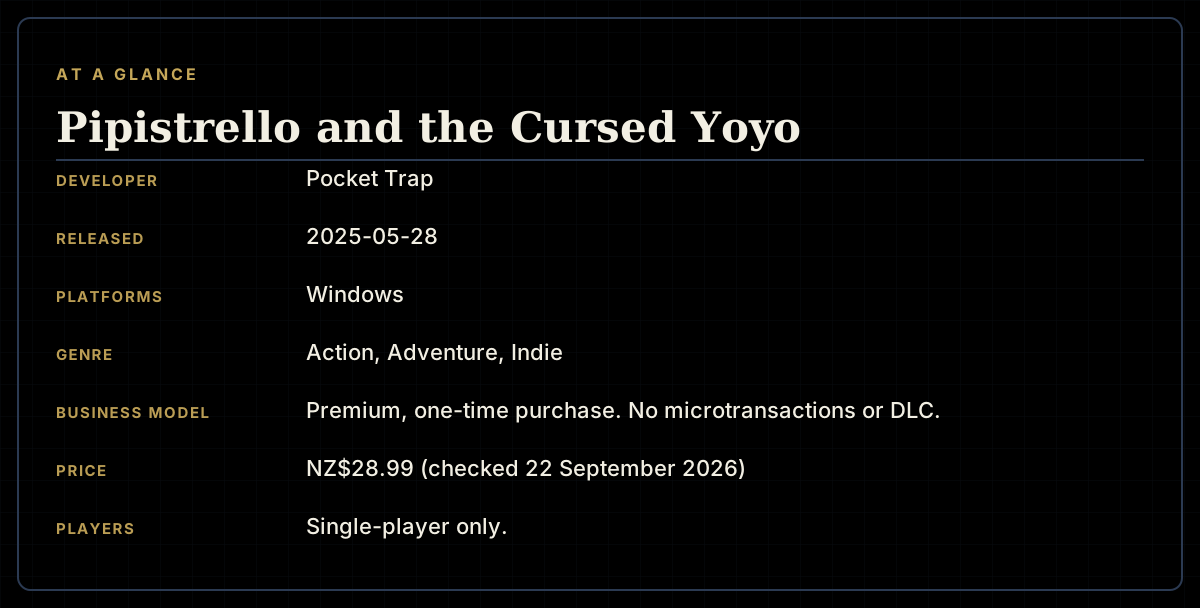
Key facts at a glanceWanderer Editorial -
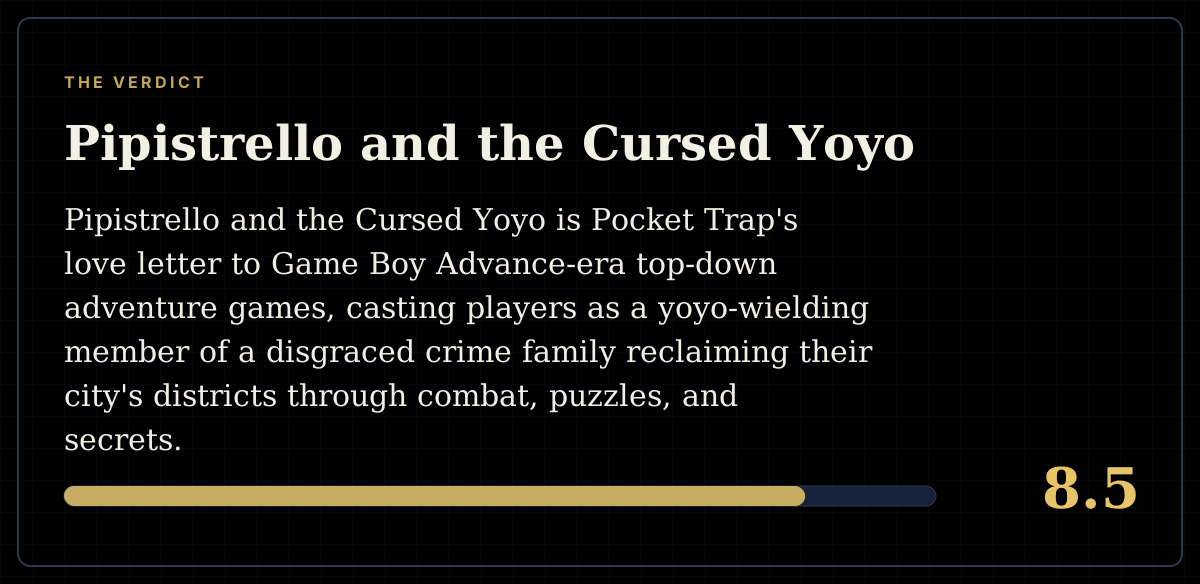
The short versionWanderer Editorial