Game review
Pain Pain Go Away!
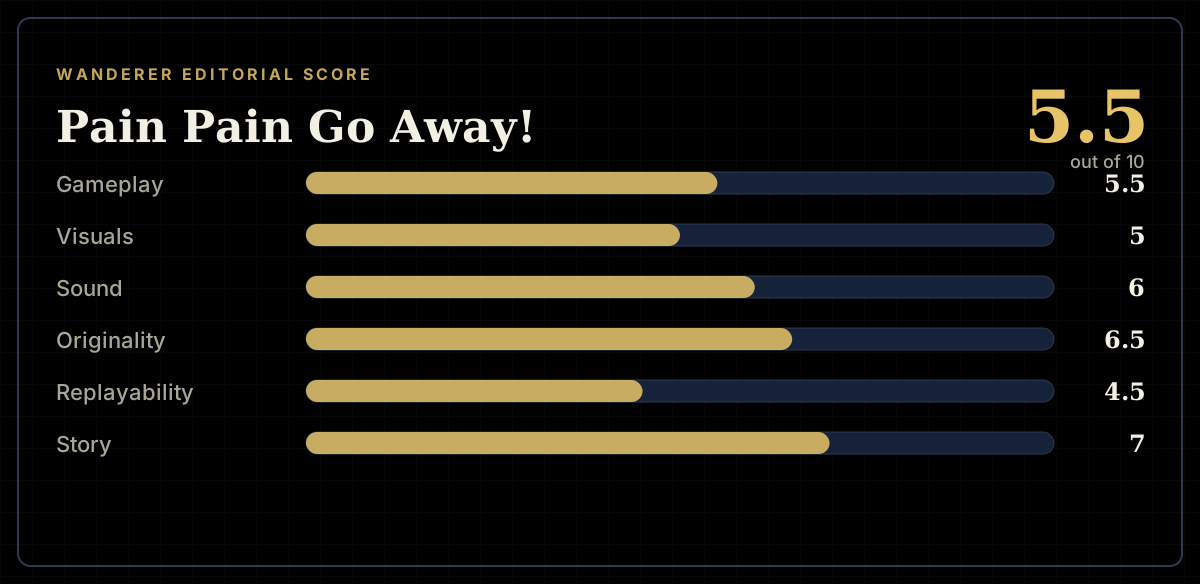
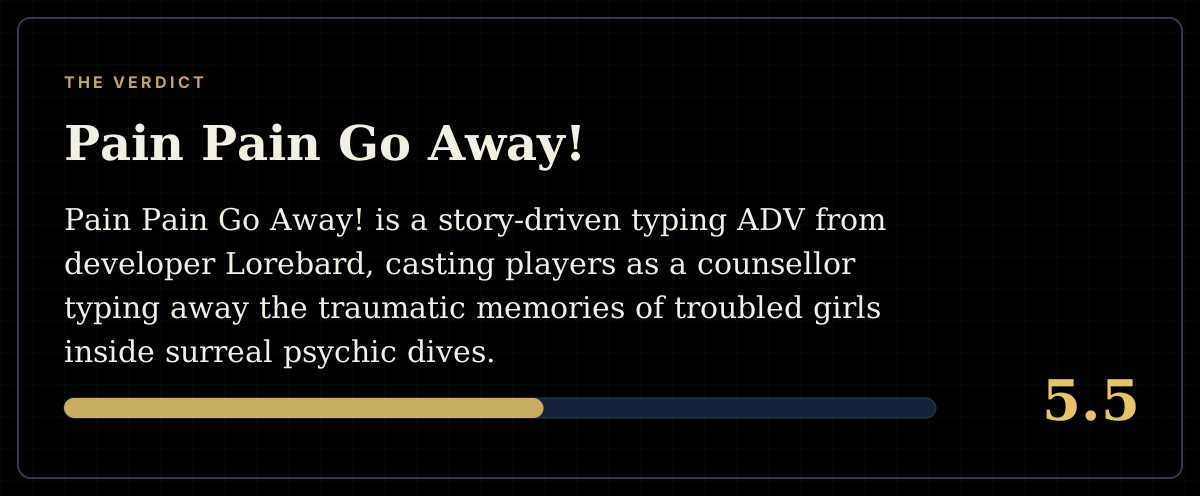
5.5 / 10
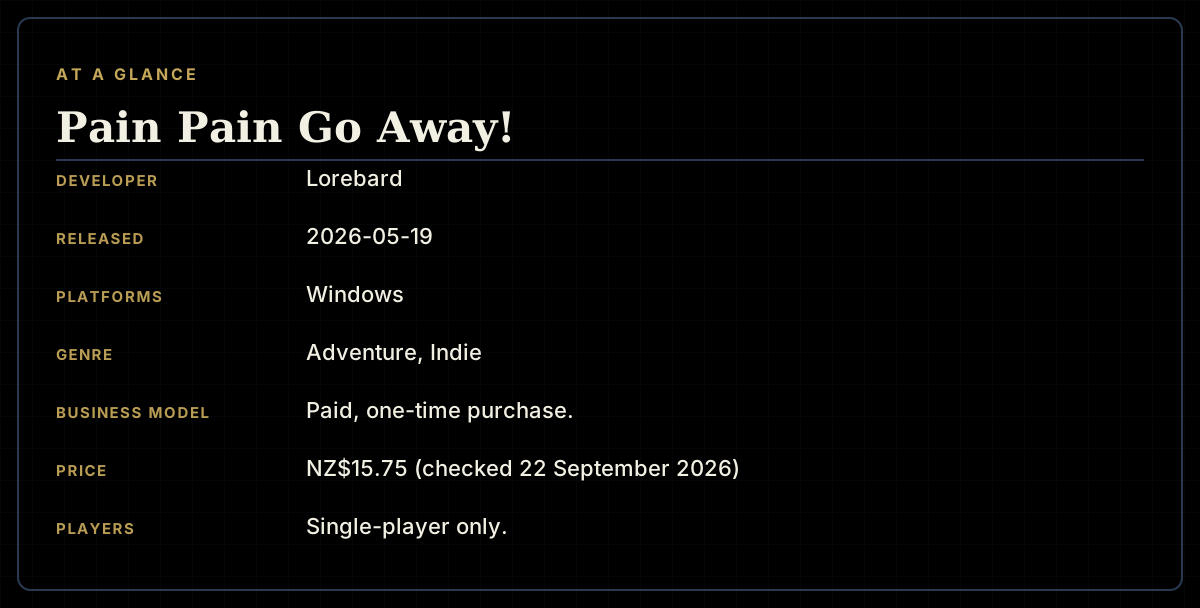
- Developer
- Lorebard
- Publisher
- Lorebard
- Released
- 19 May 2026
- Platforms
- Windows
- Genre
- Adventure, Indie
- Monetisation
- Paid, one-time purchase.
- Players
- Single-player only.
The short version
Pain Pain Go Away! is a story-driven typing ADV from developer Lorebard, casting players as a counsellor typing away the traumatic memories of troubled girls inside surreal psychic dives. Its genuinely divided English review sample credits charming characters and surprising narrative twists, set against a fair, heavily corroborated complaint about the use of AI-generated art in its dive sequences.
Biggest strengths
- Praised repeatedly for its story and characters, with one reviewer calling it "the most depressing game I think I've played to date, but the story was well worth it," and another writing "I really enjoyed the little story that the game offers and how the characters are handled."
- Praised for its distinctive typing-based mechanic, with one reviewer noting "a unique experience with typing mechanics, which to me are not seen too often in the industry as of late and have some potential," describing being drawn in by "the dialogue and the cliffhangers at the end of every episode."
- Even several critical reviewers explicitly credit the game's underlying concept and craft, with one writing "before i say anything i think this game is great and has great potential, the characters are cute the story is interesting," despite going on to raise serious concerns elsewhere in the same review.
Biggest weaknesses
- A fair, heavily corroborated complaint concerns the use of AI-generated art in the game's "dive" sequences, with multiple reviewers independently objecting on quality and ethical grounds, one writing "the ai in the dive sections of this game look like utter [expletive]," and another explaining "I, as an artist myself, cannot support the use of AI in projects that make profit," despite otherwise enjoying the game enough to have been recording it for a Let's Play.
- A fair complaint concerns technical issues, with one reviewer citing "terrible optimization issues with the typing mechanics," and a separate reviewer reporting the game became completely unresponsive, writing "absolutely nothing happens after launching the first counseling session."
- This review found a notable gap between its English-language sample, rated Mixed at 7 positive to 7 negative, and its broader all-language sample, rated Mostly Positive at 98 positive to 27 negative, suggesting the AI-art backlash may be concentrated more heavily among English-speaking reviewers than the game's wider audience.
Who it's for: Fans of narrative-driven typing games and psychological visual novels who are comfortable with AI-generated imagery appearing alongside hand-drawn character art; players who won't support games using generative AI in paid, profit-driven projects should look elsewhere.
Our recommendation: A charming, well-written typing ADV whose genuine narrative strengths are seriously undercut for many players by its use of AI-generated art in key sequences.
5.5 / 10
Typing away trauma, one dive at a time
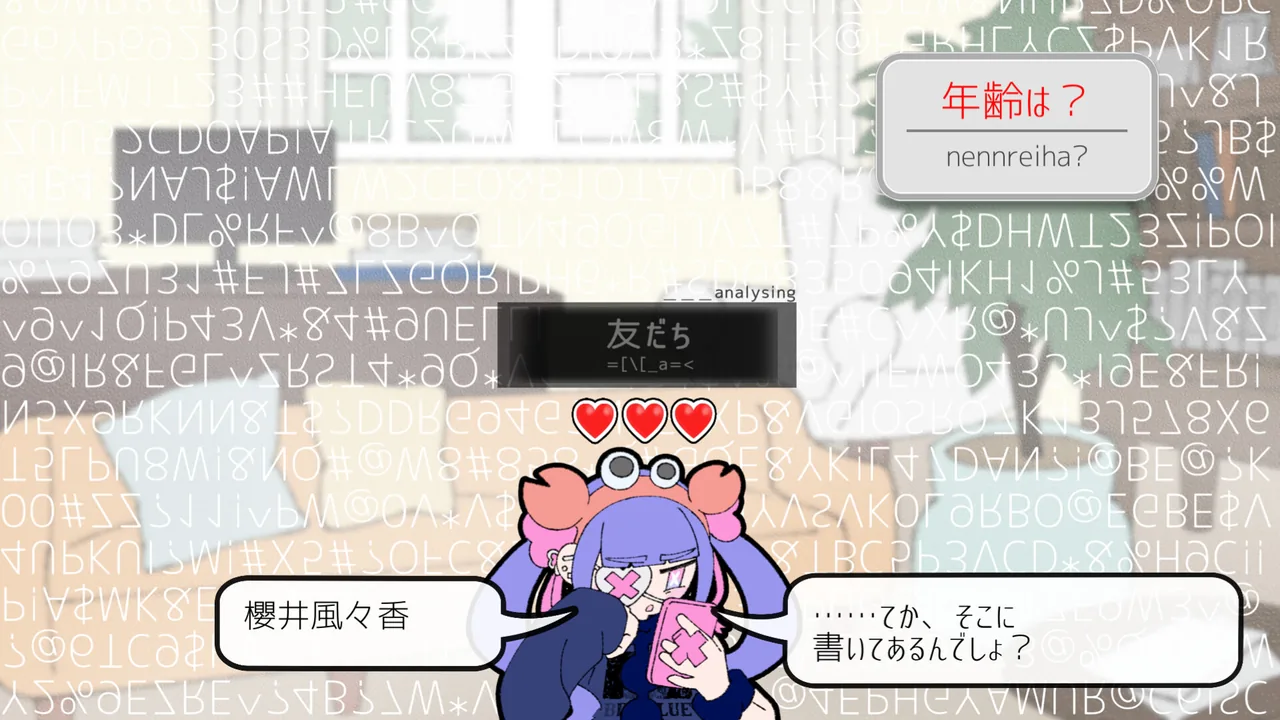
Pain Pain Go Away! is a story-driven typing ADV from developer Lorebard, casting players as a professional counsellor using an experimental therapy device to dive into the psyches of troubled girls, typing out their buried traumatic memories across five chapters most players finish in roughly three hours. This review draws on the full English review sample available at the time of research, 14 reviews out of 14 total, split exactly 7 positive to 7 negative for an official "Mixed" rating, a genuinely divided sample this review reads carefully rather than smoothing into a single verdict.
Praised repeatedly for its story, characters, and twists
The clearest strength this review's sample identifies, echoed even by many of its harshest critics, is the quality of the writing itself. "This was the most depressing game I think I've played to date, but the story was well worth it," writes one reviewer, describing boss encounters that "unravel around the words you've typed and deleted for the sake of healing trauma." A separate reviewer independently praises "the dialogue and the cliffhangers at the end of every episode dragging you in to keep going." This review reads that convergence as fair, specific praise: reviewers across the full spread of the sample's sentiment, including several who ultimately do not recommend the game, still single out its narrative craft as genuinely strong.
Praised for its distinctive typing-based mechanic
A second theme is appreciation for how the game blends an uncommon input method into its narrative delivery. "A unique experience with typing mechanics, which to me are not seen too often in the industry as of late and have some potential," writes one reviewer, while a separate reviewer independently describes being "lured in" by "typing and cute artwork" before being surprised by the story's "twists and turns." This review treats that as fair praise, since reviewers consistently frame the typing mechanic as a genuine hook rather than a gimmick layered onto an otherwise conventional visual novel.
A fair, heavily corroborated complaint about AI-generated art
Set against that praise, this review found the sample's dominant and most heavily corroborated complaint: objections to AI-generated artwork used specifically in the game's psychic "dive" sequences. "The ai in the dive sections of this game look like utter [expletive]," writes one reviewer bluntly, while a separate reviewer, an artist themselves, explains they "cannot support the use of AI in projects that make profit," despite having enjoyed the game enough to be recording a Let's Play of it before noticing. A third reviewer captures the tension directly: "i love this game's concept, but i can't recommend it due to the use of generative AI. it really is a lot of fun to play." This review reads that repetition, reviewer after reviewer explicitly separating their enjoyment of the writing from their objection to the art specifically, as strong, corroborated evidence of a genuine and specific quality and ethical concern rather than a blanket dismissal of the game.
A fair complaint about technical issues
This review also found a fair complaint about the game's technical state. One reviewer cites "terrible optimization issues with the typing mechanics," refusing to continue playing until bugs are addressed, while a separate reviewer reports the game becoming entirely unresponsive after their first session, writing "absolutely nothing happens after launching the first counseling session." This review treats that as a fair, if less central, complaint alongside the sample's dominant AI-art controversy.
A note on the gap between English and all-language sentiment
This review found a notable gap between its English-language sample, rated Mixed at exactly 7 positive to 7 negative, and the game's broader all-language sample of 125 reviews, rated Mostly Positive at 98 positive to 27 negative. This review reads that gap as meaningful: it suggests the AI-art backlash documented above may be concentrated more heavily among the game's English-speaking audience than its wider international player base, a useful piece of context for readers deciding how much weight to give the controversy relative to the game's other, more consistently praised qualities.
A note on this review's approach to the AI-art controversy
This review treats reviewer objections to AI-generated art as a legitimate, corroborated quality and ethical complaint rather than a political or off-topic distraction, consistent with how the review approaches any other well-documented, game-specific controversy. Several reviewers explicitly frame their non-recommendation as reluctant, still praising the writing and characters while declining to endorse the game's use of generative tools in a paid release, a distinction this review preserves rather than flattening into a single score.
Final verdict
Pain Pain Go Away! is a genuinely well-written typing ADV that this review found let down for a meaningful portion of its audience by its use of AI-generated art in key sequences, a complaint this review found fair and heavily corroborated rather than a fringe objection. Its story, characters, and distinctive typing mechanic earn real praise even from many of its critics, and technical issues add a further, if smaller, complaint. This review's own reading of the wider all-language sample suggests the game's reputation is still settling unevenly across its audience, with the AI-art backlash documented above weighing far more heavily on English-speaking reviewers than it appears to elsewhere, a gap worth factoring into how much any single reviewer's verdict should sway a given buyer. For players comfortable with AI-generated imagery appearing alongside hand-drawn art, it's a charming, narratively strong pick; players who won't support generative AI in paid, profit-driven releases should look elsewhere.
Pros and cons
Pros
- Praised repeatedly for its story and characters, with one reviewer calling it "the most depressing game I think I've played to date, but the story was well worth it," and another writing "I really enjoyed the little story that the game offers and how the characters are handled."
- Praised for its distinctive typing-based mechanic, with one reviewer noting "a unique experience with typing mechanics, which to me are not seen too often in the industry as of late and have some potential," describing being drawn in by "the dialogue and the cliffhangers at the end of every episode."
- Even several critical reviewers explicitly credit the game's underlying concept and craft, with one writing "before i say anything i think this game is great and has great potential, the characters are cute the story is interesting," despite going on to raise serious concerns elsewhere in the same review.
Cons
- A fair, heavily corroborated complaint concerns the use of AI-generated art in the game's "dive" sequences, with multiple reviewers independently objecting on quality and ethical grounds, one writing "the ai in the dive sections of this game look like utter [expletive]," and another explaining "I, as an artist myself, cannot support the use of AI in projects that make profit," despite otherwise enjoying the game enough to have been recording it for a Let's Play.
- A fair complaint concerns technical issues, with one reviewer citing "terrible optimization issues with the typing mechanics," and a separate reviewer reporting the game became completely unresponsive, writing "absolutely nothing happens after launching the first counseling session."
- This review found a notable gap between its English-language sample, rated Mixed at 7 positive to 7 negative, and its broader all-language sample, rated Mostly Positive at 98 positive to 27 negative, suggesting the AI-art backlash may be concentrated more heavily among English-speaking reviewers than the game's wider audience.
Screenshots
-
Pain Pain Go Away!Image: Lorebard via Steam -

Pain Pain Go Away!Image: Lorebard via Steam -
Pain Pain Go Away!Image: Lorebard via Steam -
How the review scores each part of the gameWanderer Editorial -
The specs at a glanceWanderer Editorial -
The short versionWanderer Editorial