Game review
The Family Trip
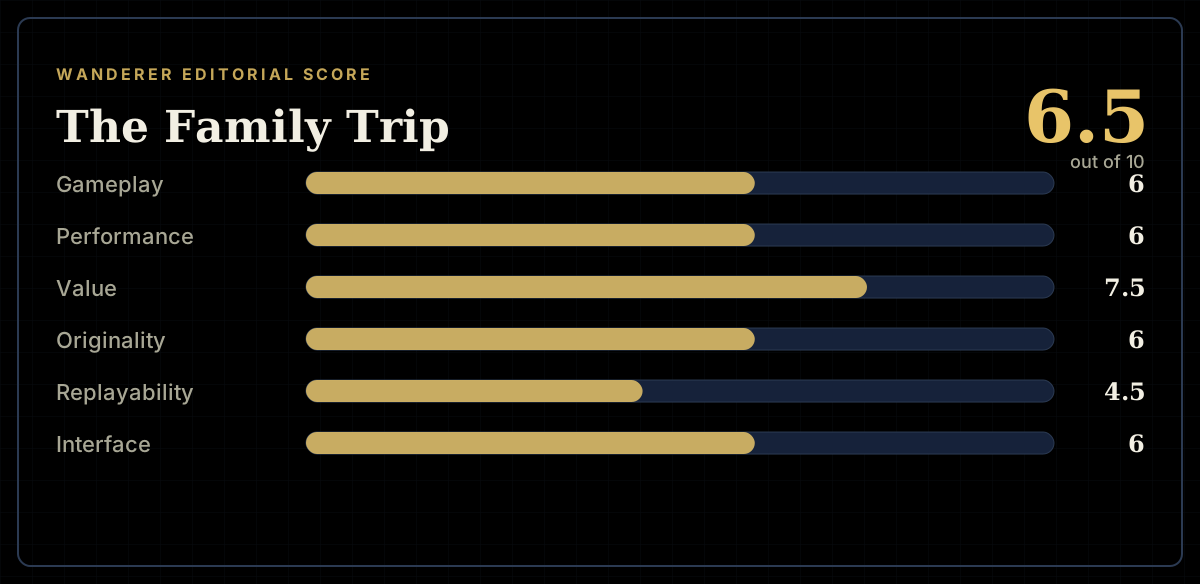
6.5 / 10
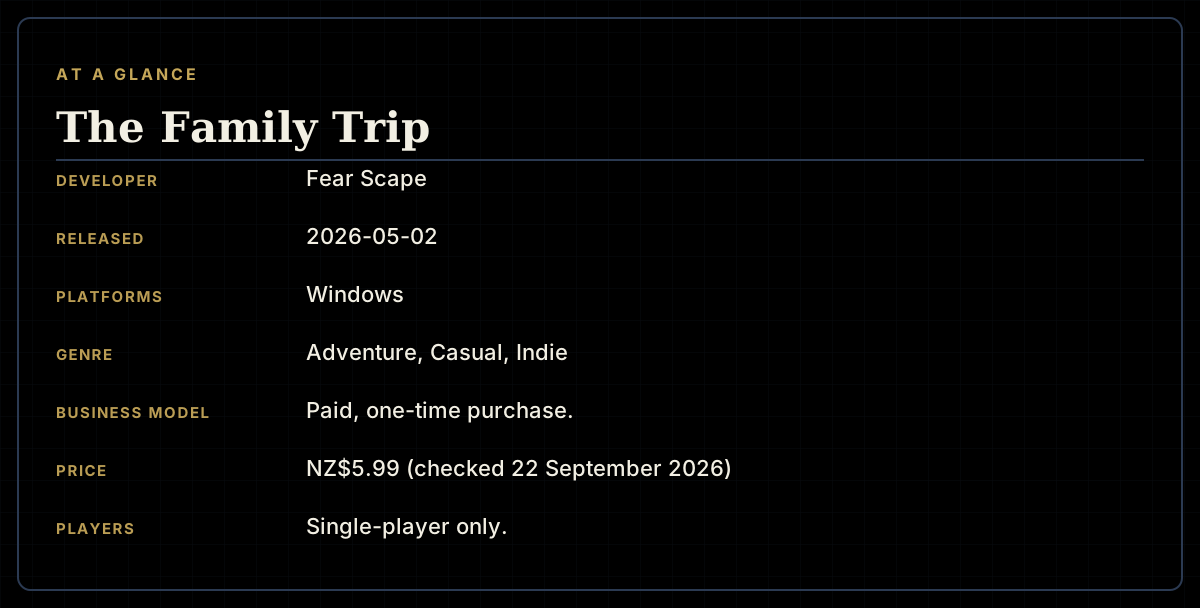
- Developer
- Fear Scape
- Publisher
- Fear Scape
- Released
- 2 May 2026
- Platforms
- Windows
- Genre
- Adventure, Casual, Indie
- Monetisation
- Paid, one-time purchase.
- Players
- Single-player only.
The short version
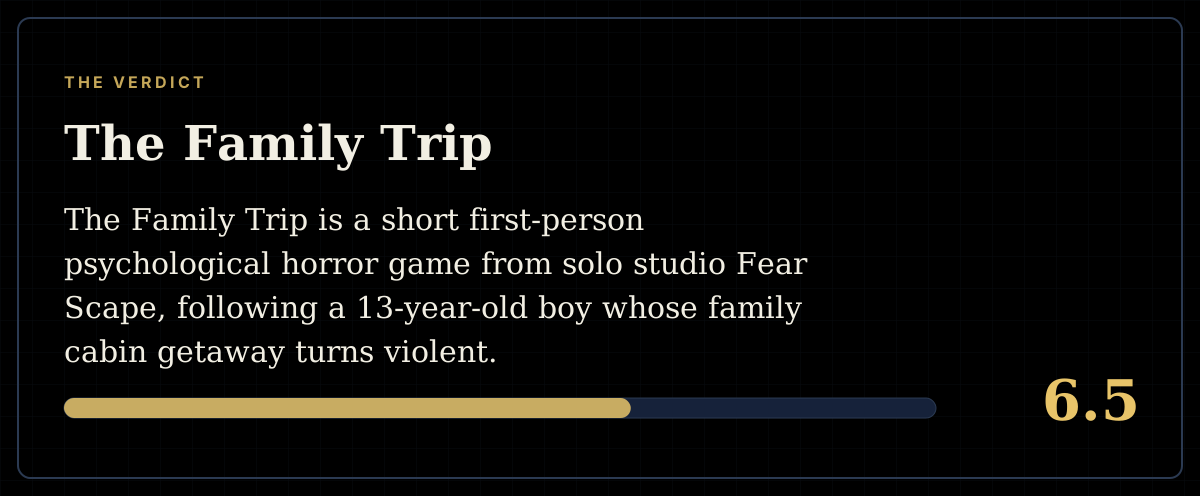
The Family Trip is a short first-person psychological horror game from solo studio Fear Scape, following a 13-year-old boy whose family cabin getaway turns violent. Its mostly positive English review sample praises a tense, "fears to fathom"-style atmosphere and surprising length for the price, tempered by fair complaints about unpolished visuals and a thin, walking-heavy middle stretch.
Biggest strengths
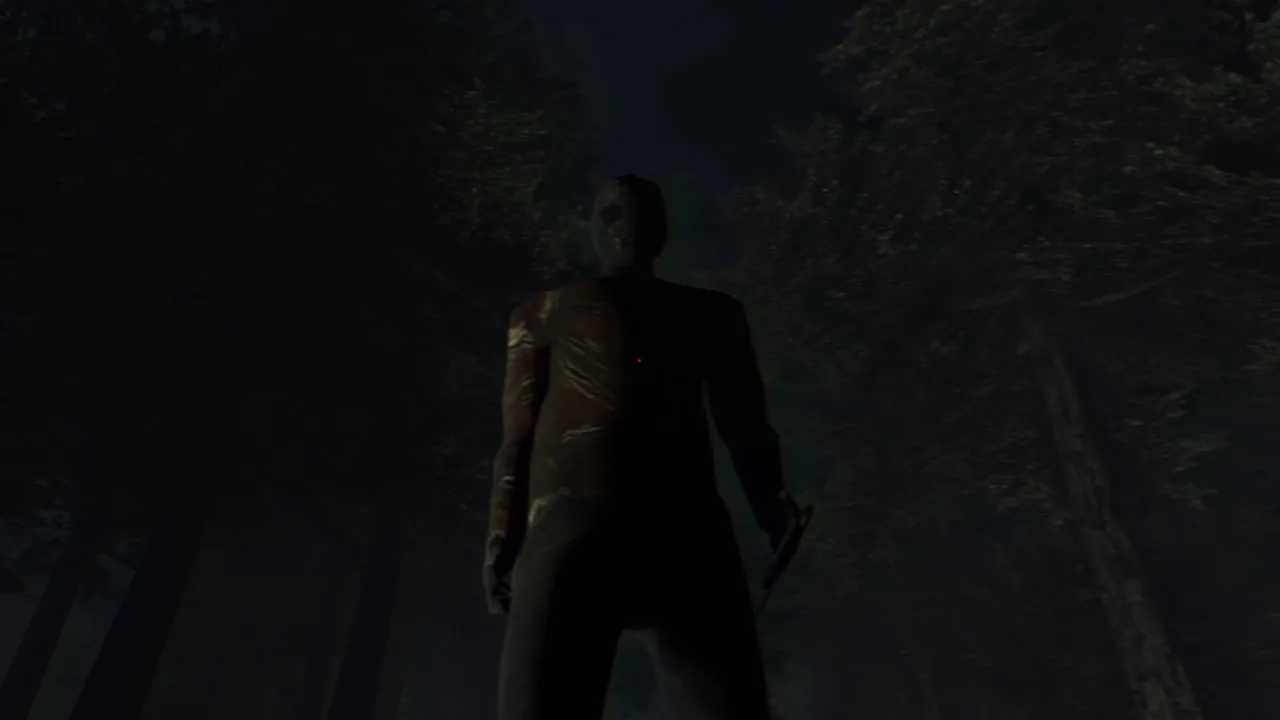
- Praised for genuinely tense, unsettling atmosphere, with multiple reviewers crediting effective jump scares and QTEs, including one moment inside a cupboard singled out as a standout scare.
- Praised for surprising length and value at its low price, with several reviewers noting a runtime of 50 to 90 minutes, longer than expected for the cost.
- Praised for an unusual, effective structure that switches between different characters' points of view, which one reviewer called "very interesting and unusual" and well suited to the game's 80s-slasher vibe.
Biggest weaknesses
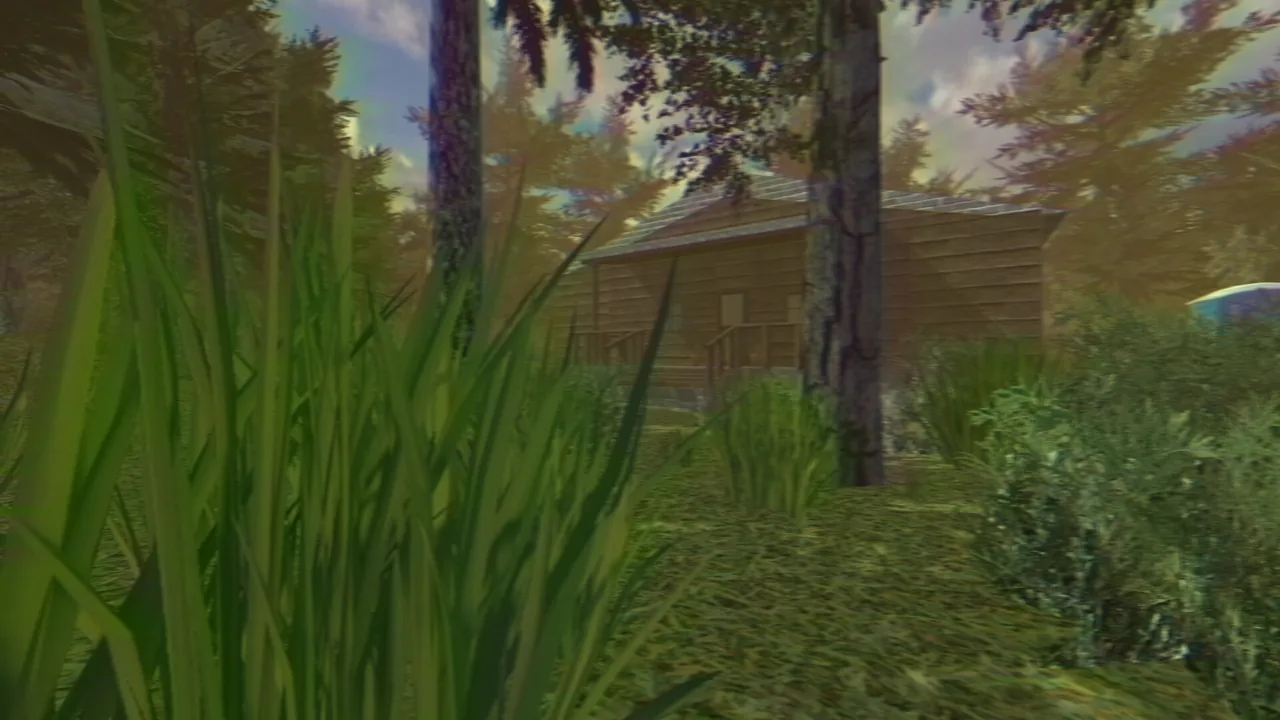
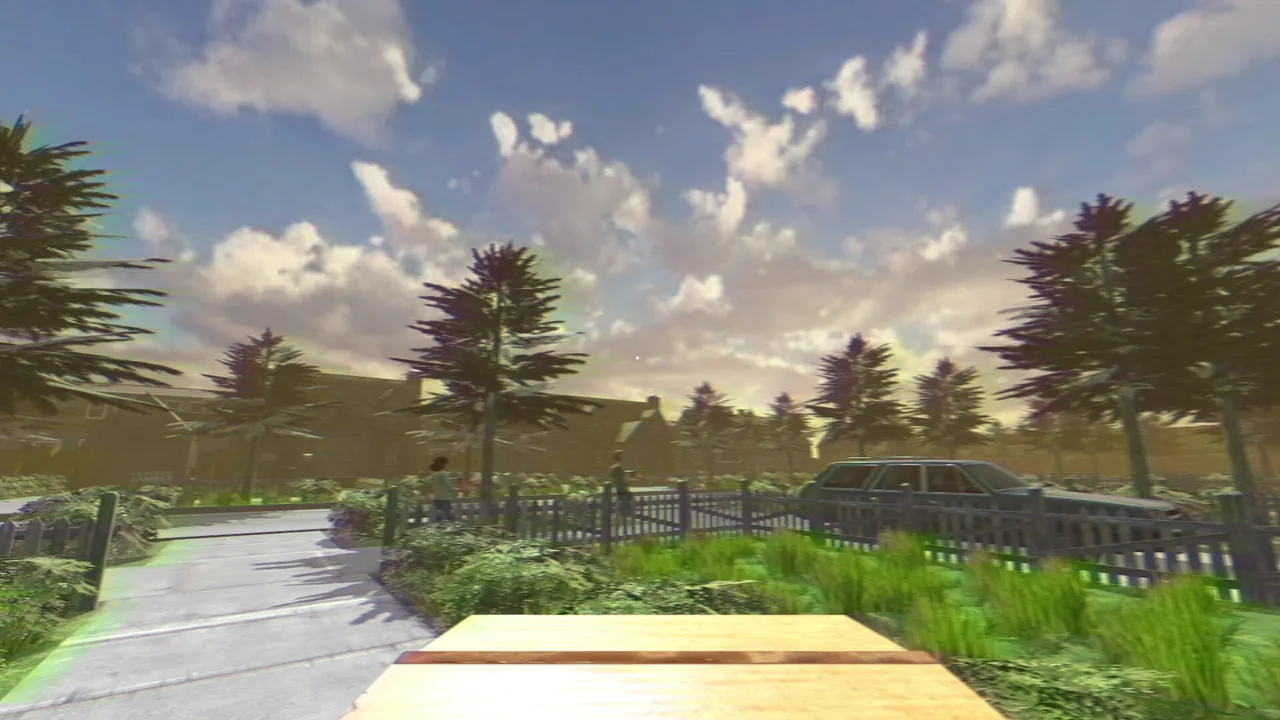
- A fair complaint from one reviewer is that the game shows visible graphical glitches, including moments where the edge of the map is visible, giving parts of the experience an unpolished feel.
- A fair complaint from a separate reviewer is that a stretch of the game leans heavily on repetitive walking, loading screens, and fetch-style interactions, such as collecting firewood, without enough happening to hold attention.
- A fair, related complaint from multiple reviewers is that the ending arrives abruptly, with little space given to resolve or reflect on the disturbing events the story builds toward.
Who it's for: Fans of short, low-budget "fears to fathom"-style first-person horror games who value atmosphere and mature subject matter over polish or replay value; players wanting a technically refined experience or a game they'll return to repeatedly should temper expectations.
Our recommendation: A tense, well-priced slice of amateur-inspired horror, let down by rough visual polish and a slow middle stretch.
6.5 / 10
A cabin getaway that doesn't go as planned
The Family Trip is a short first-person psychological horror game from solo studio Fear Scape, following a 13-year-old boy who travels with his parents to a remote cabin for a short getaway. What begins as a quiet trip exploring the surroundings and visiting a nearby abandoned house curdles into something violent, with the game's own content descriptors warning of scenes of murder and blood, including a child witnessing the aftermath of a killing. This review draws on an English review sample, 34 reviews at the time of research, positive.
Praised for genuinely tense, unsettling atmosphere
Several reviewers single out specific moments of real horror-craft. "Play a lot of Indie horrors and its rare that I find them scary. But theres a few genuinely scary and creepy moments in this game. Great use of QTEs too with one in a cupboard that really took me by surprise," reads one detailed review, who rates the scare factor highly. A separate reviewer independently credits the same overall effect: "Generally creepy atmosphere with a few mild jump scares, although the focus is more on building tension." This review treats that as fair: an experienced horror player specifically crediting a standout scripted scare, corroborated by a second reviewer praising the same tension-first approach, is credible evidence of deliberate, effective atmosphere design rather than reliance on cheap shocks alone.
Praised for surprising length and value
This review also found specific, credible praise for how much game reviewers felt they got for the price. "Was surprised by the length of the game (almost 90mins), so definitely worth the $5 to me!" reads one review, while a separate reviewer independently notes a similar runtime: "Roughly about 50 minutes long if you get straight to the point." This review treats that as fair: multiple reviewers independently reporting a runtime well beyond what a first glance at the price might suggest is a genuine, credible point in the game's favour, especially for a genre where many entries run well under half an hour.
Praised for an unusual, effective perspective-switching structure
This review also found specific praise for a structural choice several reviewers called out by name. "I found the switching between POVs very interesting and unusual, and the retro graphics really suited the vibe," reads one review, which compares the effect to "an 80's slasher movie." A separate reviewer independently credits the same mechanic: "Love that you can play from the perspective of different characters." This review treats that as fair: two reviewers independently highlighting the same specific structural device as a highlight, rather than a gimmick, is credible evidence that it lands as intended.
A fair complaint about unpolished visuals
Set against that praise, this review found a specific, credible complaint about the game's technical presentation from its most critical reviewer. "At times, I swore I could see the edge of the map, other graphical glitches. I hope the devs continue working but try a different formula," reads that review, who nonetheless credits the game's music and QTEs. This review treats that as fair: a reviewer who otherwise engaged seriously with the game identifying specific, visible technical rough edges, rather than a vague complaint about difficulty or taste, is a credible concern worth flagging even from a single detailed source.
A fair complaint about a thin, repetitive middle stretch
This review also found a separate, corroborating complaint about pacing. "Very boring- mostly just walking to an interaction point- load screen- small dialogue and walking back and collecting firewood. Did not keep my attention," reads one critical review, which nonetheless credits the game's graphics, setting, and functioning mechanics. This review treats that as fair: a reviewer who acknowledges the game's individual pieces work, while specifically naming a repetitive fetch-and-return structure as the source of their boredom, is identifying a real pacing problem rather than dismissing the game outright.
Achievement data corroborates a short, largely-completed experience
This review's own check of Steam's global achievement data, across just four tracked milestones, shows 94.3% of players reaching the first story beat, and 82.5% reaching the game's final achievement. That high completion rate, unusually high for a horror title, is consistent with reviewer accounts of a short, tightly linear experience most players see through to its end in a single sitting, rather than a longer game many players abandon partway through. It also lends some support to the pacing complaint above: a game this linear and this consistently finished has little room to hide a slow stretch, which several reviewers clearly felt in its middle section.
A fair complaint about an abrupt ending
This review also found a related complaint about how the story resolves. One reviewer who otherwise praised the game notes "although it was abrupt, I think the ending was pretty good," while a separate, more critical reviewer felt it went further, describing the game as feeling "unfinished with not a whole lot to the ending." This review treats that as fair: given the game's dark subject matter, including a child witnessing violence, multiple reviewers wanting more space to sit with or resolve that material is a reasonable expectation left unmet, even by reviewers who otherwise enjoyed the game.
Final verdict
The Family Trip is a tense, well-crafted slice of low-budget first-person horror that earns real credit for specific, effective scares, an unusual perspective-switching structure, and a runtime that outperforms its very low price. This review found that praise tempered by fair complaints about visible technical rough edges, a repetitive walking-heavy stretch in its middle section, and an ending that several reviewers felt was too abrupt given the weight of the material it builds toward. For fans of short, atmosphere-first horror in the "fears to fathom" mould, it's a reasonable pickup at its price; players wanting a technically polished experience throughout should temper expectations.
Pros and cons
Pros
- Praised for genuinely tense, unsettling atmosphere, with multiple reviewers crediting effective jump scares and QTEs, including one moment inside a cupboard singled out as a standout scare.
- Praised for surprising length and value at its low price, with several reviewers noting a runtime of 50 to 90 minutes, longer than expected for the cost.
- Praised for an unusual, effective structure that switches between different characters' points of view, which one reviewer called "very interesting and unusual" and well suited to the game's 80s-slasher vibe.
- This review's own check of Steam's achievement data shows over 80 percent of players reaching the final achievement, corroborating reviewer accounts of a short, focused experience most players see through to the end.
Cons
- A fair complaint from one reviewer is that the game shows visible graphical glitches, including moments where the edge of the map is visible, giving parts of the experience an unpolished feel.
- A fair complaint from a separate reviewer is that a stretch of the game leans heavily on repetitive walking, loading screens, and fetch-style interactions, such as collecting firewood, without enough happening to hold attention.
- A fair, related complaint from multiple reviewers is that the ending arrives abruptly, with little space given to resolve or reflect on the disturbing events the story builds toward.
- A fair observation from this review's own assessment is that, as a linear, story-driven horror short with a single well-defined ending, it offers very little reason to replay once finished.
Screenshots
-
The Family TripImage: Fear Scape via Steam -
The Family TripImage: Fear Scape via Steam -
The Family TripImage: Fear Scape via Steam -
How the review scores each part of the gameWanderer Editorial -
The specs at a glanceWanderer Editorial -
The short versionWanderer Editorial