Game review
Out of Range Review
6 / 10
- Developer
- Yoho Games
- Publisher
- Yoho Games
- Released
- 14 September 2026
- Platforms
- ["Windows"]
- Genre
- Action
A Free, Fifteen-Minute Student Project With No Padding
Out of Range is a free twin-stick arena shooter released on September 14, 2026 by Yoho Games, and its own store page is refreshingly upfront about what it is: a game "developed in three and a half months by a team of six students." You play a rogue robot marked for destruction by the crew of a hostile spaceship, and the entire experience is built around escaping, fighting through waves of enemies in isometric arenas, picking up weapons and power-ups along the way, and reaching the exit before a final gauntlet decides whether you make it out. The pitch is explicitly anti-bloat: "Tired of long, bloated games? Want to dive straight into the action?" The whole thing is scoped to be finished in about fifteen minutes, and it costs nothing. The review pool reflects that scope exactly: seven reviews, all seven positive, a clean 100% "Positive" score, though every single review is only a sentence or two long, which is itself a telling data point about how much game there actually is to talk about.
The Core Loop Does What It Promises, Nothing More
Every review in the pool agrees on the same basic verdict: it's fun while it lasts, and it doesn't overstay its welcome. "Short, fun game, not too difficult... Give it a play, shouldn't take much longer than 15 minutes to beat," wrote one reviewer, while another distilled the whole experience into a single descriptive run-on: "Fun, quick, fluid, space based, bot shooting, isometric, arena exploring, bullet hellish, obstacle run type a game." A third reviewer praised the feel specifically: "It feels really smooth and intuitive to play." That's a consistent, if narrow, consensus: the core twin-stick shooting and movement reportedly controls well, the pacing is tight, and nobody in this small pool reported it dragging or overstaying its fifteen-minute runtime. For a team of six students working in three and a half months, landing a genre where "feel" is everything, and having every single reviewer specifically praise that feel, is a real accomplishment, even if the resulting game is thin by design.
A Genuinely Responsive Dev, Caught Live By A Reviewer
One review captured something you don't often see documented in real time: a bug getting fixed between the reviewer noticing it and finishing their write-up. "Short, fun game, not too difficult ([strike]final battle ended way sooner than I expected[/strike] Devs fixed it now). Give it a play, shouldn't take much longer than 15 minutes to beat." The reviewer's own strikethrough shows their original complaint, that the climactic final battle was ending prematurely, being crossed out and annotated as already patched. For a free, no-budget student project released only days before this review was written, that's a meaningfully fast turnaround on a legitimate structural complaint (a rushed final encounter undercutting the game's own big finish), and it's the strongest evidence in the review pool that this is an actively maintained project rather than a fire-and-forget student portfolio piece.
There Isn't Much Game Here, And That's The Whole Point
It would be dishonest to oversell Out of Range's scope. This is a single fifteen-minute run through a handful of arenas, built by students on an academic timeline, with no persistent progression system, no meta-unlocks, and no long-term hook mentioned anywhere in the store description or the reviews. One reviewer's hope points at exactly that gap: "A really fun and well-made short game! I really hope there will be more contents in the future!" That's an endorsement of what exists paired with an acknowledgment that what exists is genuinely small. There's no replayability loop being sold here beyond "it controls well enough that a second run wouldn't hurt," and prospective players should go in expecting a tech-demo-scale experience rather than anything resembling a full release, regardless of how positively it's currently rated.
Free Removes Almost All The Risk
The one variable that meaningfully changes how to weigh all of the above is the price: there isn't one. At $0, a fifteen-minute arcade shooter with unanimously positive (if extremely brief) reviews and a demonstrably responsive developer is close to a no-lose proposition. Nobody is being asked to pay for content that doesn't exist yet, and the "shouldn't have bought this" complaint that sinks so many small paid indie games structurally cannot apply here. That doesn't inflate the game's actual scope or ambition, but it does mean the calculus for trying it is completely different from a $5 or $10 game making the same promises.
Verdict
Out of Range is exactly what it says it is: a free, tightly-scoped, fifteen-minute twin-stick shooter built by six students in three and a half months, and within that narrow frame it appears to deliver a smooth, satisfying core loop that every single reviewer so far has enjoyed. It has essentially no long-term hook, no progression, and a review pool too small and too brief to draw firm conclusions from, but the one specific, documented interaction available (a reviewer's bug report getting patched before they'd even finished writing about it) suggests a small team that's still paying attention. As a free curiosity for fans of twin-stick arcade shooters, it's an easy, no-risk recommendation for a single sitting; as anything more substantial than that, it doesn't have the content to back it up yet.
None of that is a knock on the six students who made it in three and a half months, and it shouldn't be read as one. What it does mean is that Out of Range is best understood as a portfolio piece first and a game second, the kind of project meant to demonstrate that a small team can ship something that feels good to play under a hard deadline, rather than something built to hold anyone's attention past a single run. Judged purely against that goal, it succeeds; judged as a game competing for a spot in someone's Steam library alongside paid twin-stick shooters with hours of content, it simply isn't trying to compete on those terms, and it costs nothing to find out for yourself which category matters more to you.
Screenshots
-
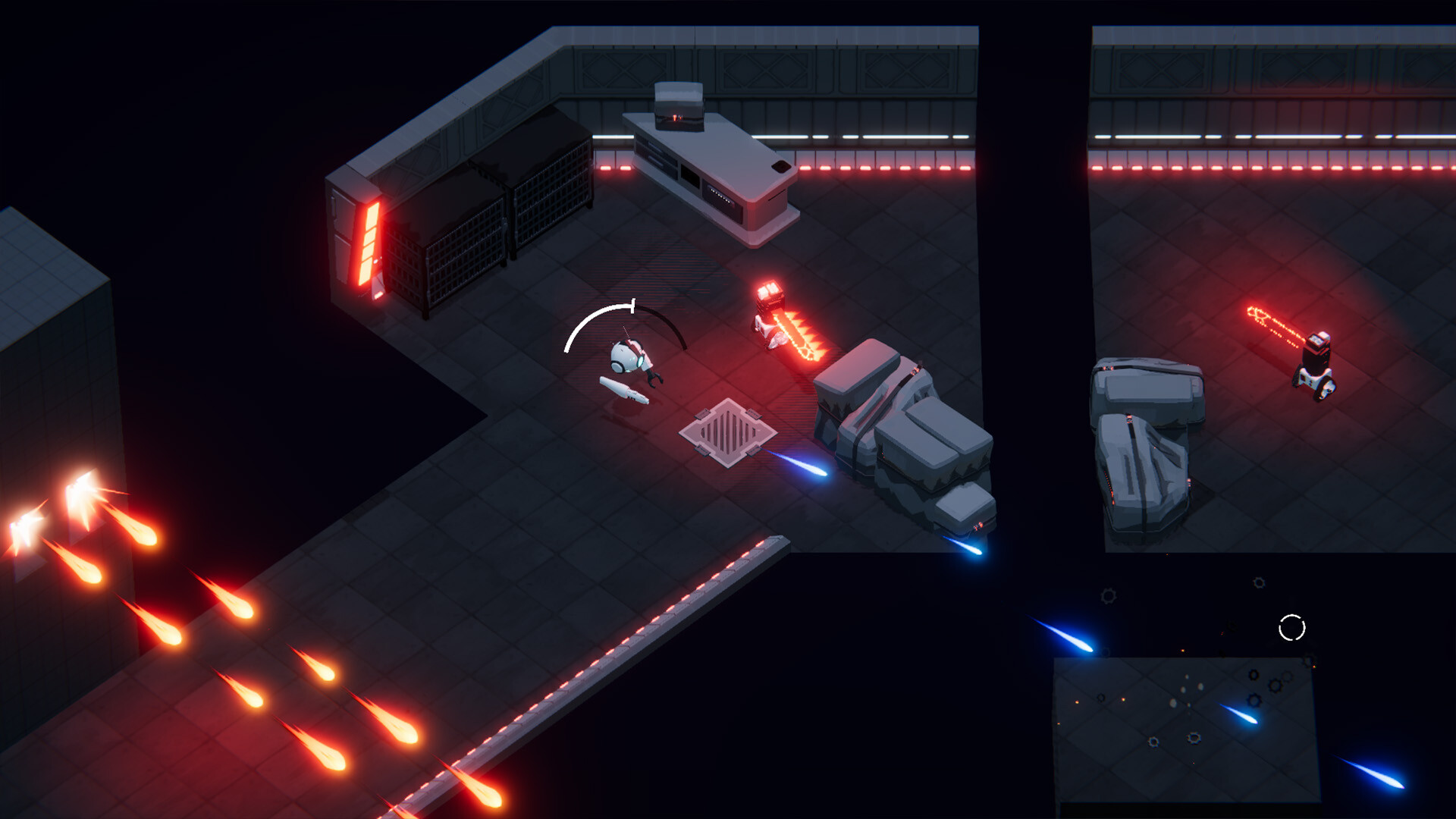
Incoming fire streaks in from multiple angles in one of the arena's tighter corridors, the kind of moment reviewers praised for feeling smooth and intuitive.Image: Yoho Games via Steam -
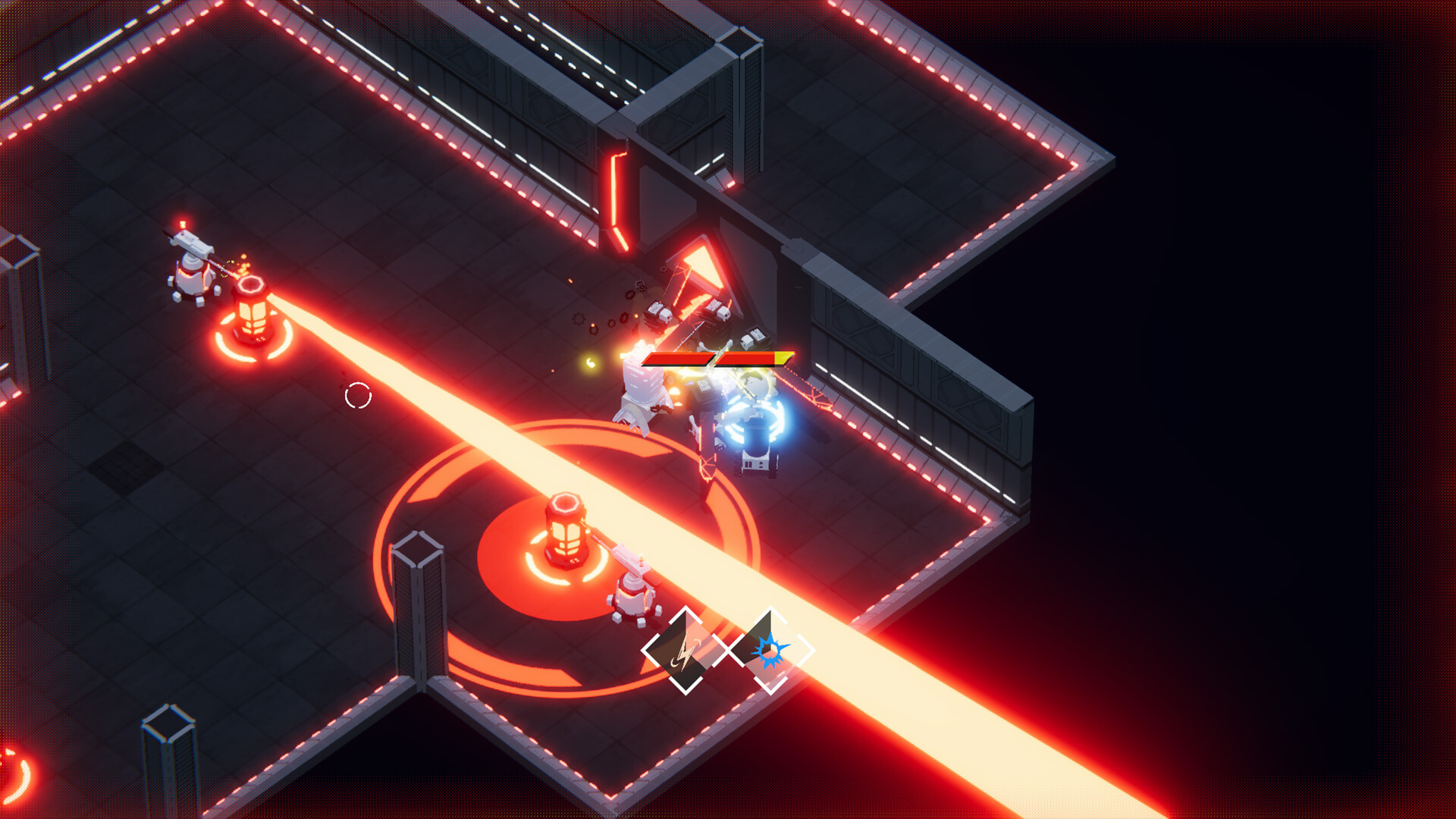
A sustained laser beam and a closing enemy test the twin-stick dodging that the game's short runs are built around.Image: Yoho Games via Steam -
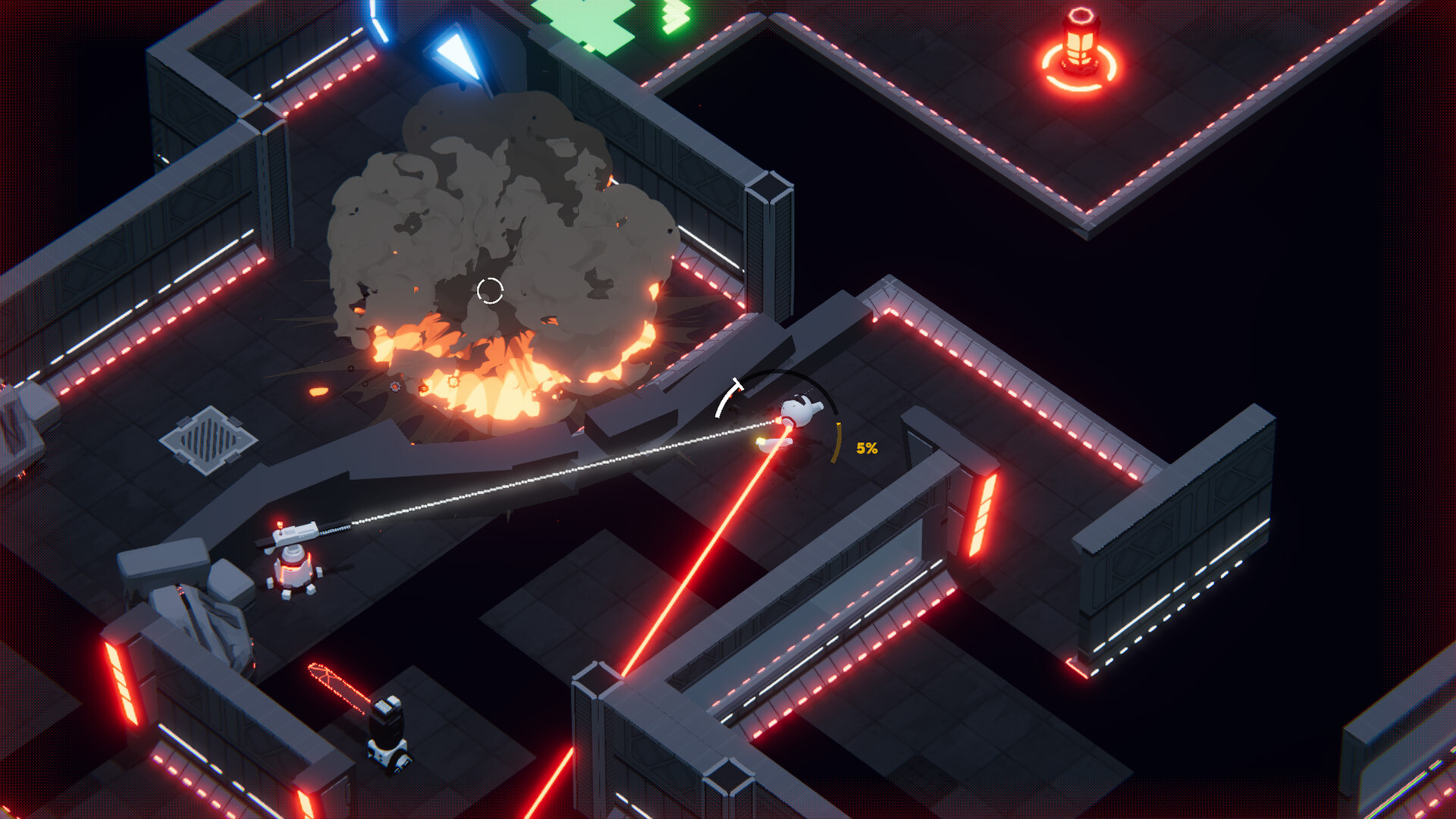
An explosive turret takedown mid-corridor, part of the arena-clearing pace every review in the pool singled out as the game's strongest asset.Image: Yoho Games via Steam