
Game review
Mr. President
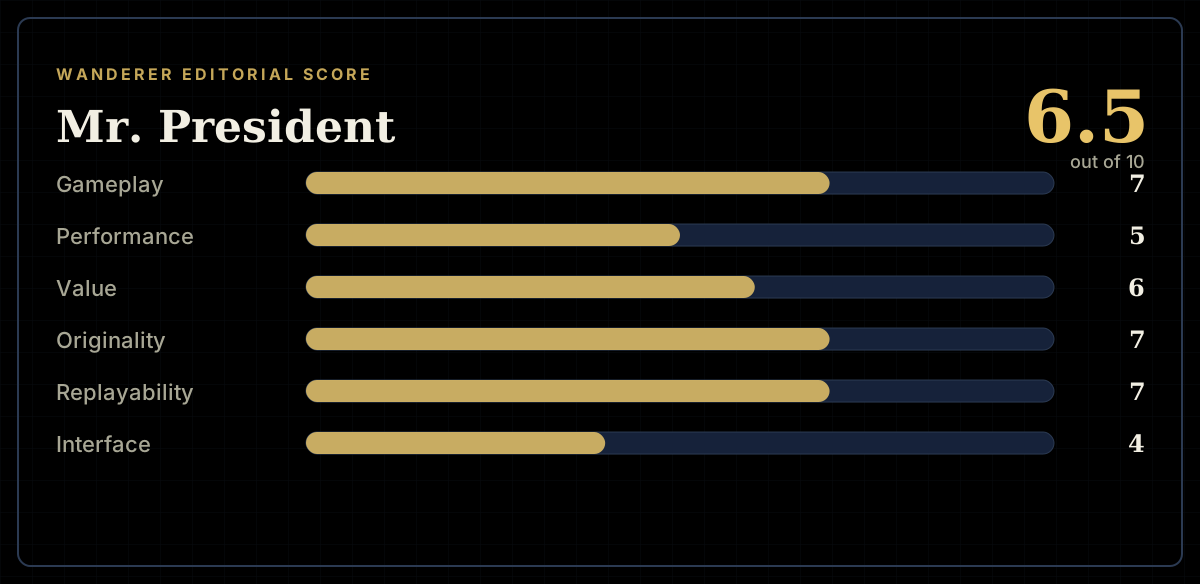
6.5 / 10
- Developer
- Exia Labs
- Publisher
- Exia Labs / GMT Games
- Released
- 26 January 2026
- Platforms
- Windows
- Genre
- Political Strategy / Board Game Adaptation
- Monetisation
- One-time purchase, no in-app purchases, no DLC. Listed at NZ$35.99 with a 20% launch discount bringing it to NZ$28.79 — checked 3 August 2026.
- Players
- Single-player only
The short version
As a conversion of a large, fiddly board game into software, this is a success — it removes the table space, the counter-shuffling and the modifier arithmetic, and leaves the decisions. The decision space is genuinely deep: cabinets, crises, legislation, Supreme Court nominations, five historical terms and a sandbox. What it hasn't solved is presentation. Pop-ups gate every action by several seconds and the end-of-year phase can run fifteen minutes, the interface overwhelms, crashes are being reported at 1.0, and the dice at the centre of it all are not what a player who bought a "presidency simulator" expects.
Biggest strengths
- A faithful conversion that removes the board game's real burdens — dice handling, counters, modifier tracking and a table you don't have to give up for a week
- Genuinely deep decision space across cabinet selection, domestic and foreign crises, legislation and Supreme Court nominations
- Five historical scenarios covering 2000 to 2020 plus a sandbox, with real replay value in seeing whether you can outperform the historical record
Biggest weaknesses
- Pop-ups gate progress with multi-second delays and the end-of-year cleanup phase can take fifteen to twenty minutes of clicking through notifications
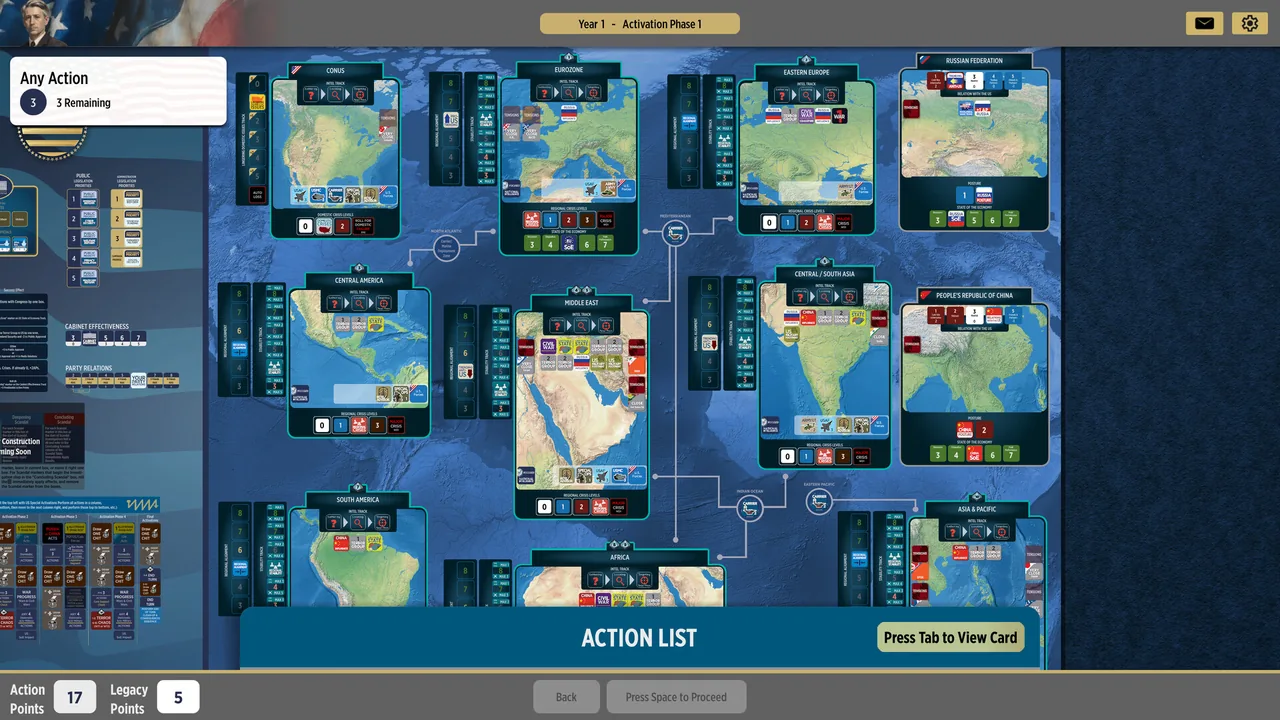
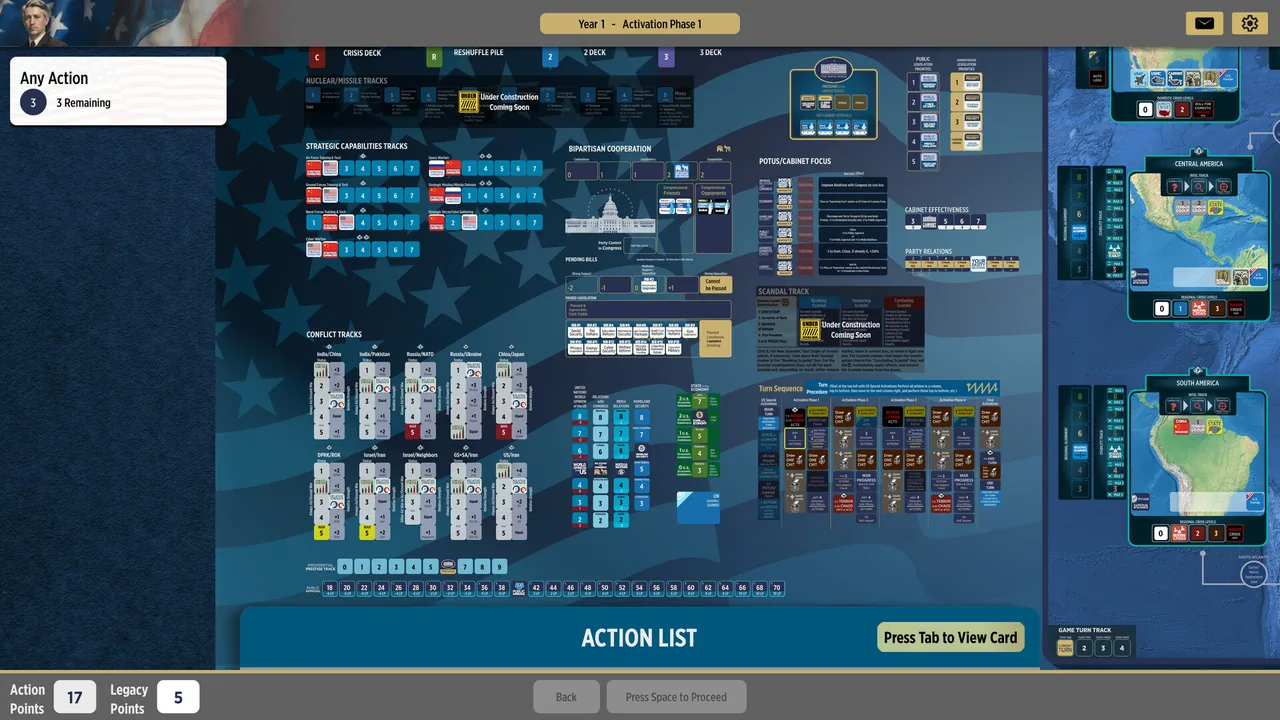
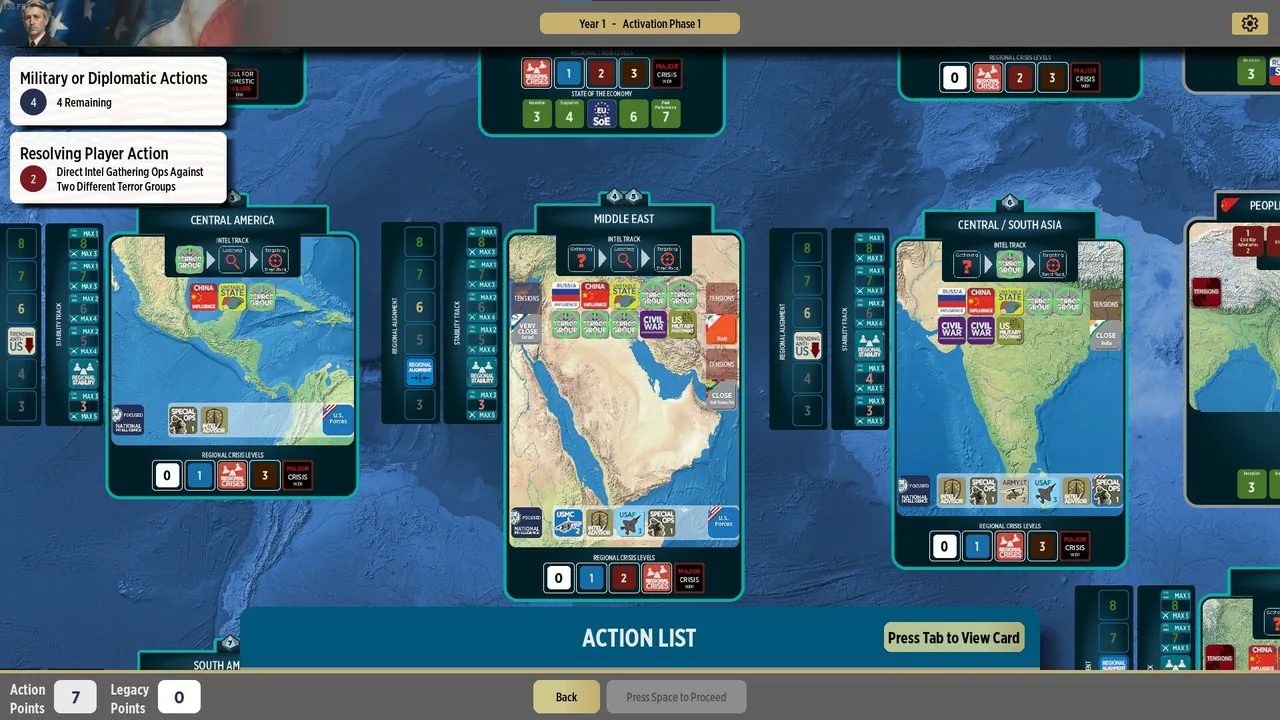
- The interface is dense and oversized, making it hard to see what actually changed
- Crash reports at 1.0, including one at the propose-legislation stage that made the game unplayable for that player
Who it's for: Board gamers who know GMT's design language and want this specific game without the table, and strategy players comfortable with outcomes decided by modified dice rolls. Not for players expecting a management sim where skill determines results, and not for anyone with a low tolerance for interface friction.
Our recommendation: If you already know the board game, this is the version to own and the review's reservations mostly won't apply to you. If you don't, watch a session before buying — the dice and the pop-up pacing are the two things people bounce off, and neither is a bug to be patched away. Wait for a sale and for a patch pass on the crash reports if you're unsure.
6.5 / 10
Two complaints define this game's reception, and they arrive in the first hour.
The first: you don't govern, you roll. Outcomes across diplomacy, legislation and crisis management resolve on modified dice, and several players have written some version of "I expected to run the United States government, not roll a dice" — one of them among the most-upvoted reviews on the page.
The second: the pop-ups. Every notification holds the screen for a few seconds before you can dismiss it, and the end-of-year cleanup phase generates so many that one player clocks it at fifteen to twenty minutes of clicking through boxes after each in-game year.
Neither is a misunderstanding. The first is the board game working as designed; the second is the adaptation failing to account for what's tolerable on a screen versus a table.
What's actually being adapted
Mr. President is a digital version of GMT Games' board game about the American presidency from 2000 to 2020. You take office, appoint a cabinet, and work through five historical scenarios — one per presidential term — or a sandbox covering the period's general trends. Along the way you handle domestic and foreign crises, nominate Supreme Court justices, push legislation, and deal with events that happened and plenty that didn't: an earlier financial crisis, a cartel-run rogue state, an oil shock driving a domestic emergency.
The conversion does the thing a good board game port should. It removes the physical burden — rolling and tracking dozens of dice, moving counters across a large map, calculating stacked modifiers — and leaves you with the decisions. Several of the most enthusiastic reviews are explicitly from people who own the physical game and can't find the table space or the uninterrupted days to play it. For that audience this is straightforwardly the better version, and they say so.
The decision space earns the praise. Systems interlock, the scenarios have genuinely different pressures, and the appeal of trying to outperform an actual administration is a strong hook. The median reviewer has almost thirteen hours in it; one has over 380.
The dice argument
Everything resolves on rolls, modified by your position, your appointments and your prior choices. That is how this kind of political wargame has always worked — you are playing the odds, not executing a plan — and the design intends the feeling of a presidency where preparation improves your chances and nothing guarantees an outcome.
The trouble is entirely one of expectation. The Steam store sells "the complexities and challenges of modern American leadership", and a large share of the audience arriving on that promise has never played a GMT title. They expect a management simulator where good decisions produce good results. What they get is a game where a well-prepared initiative can still fail on a bad roll, repeatedly.
Both readings are defensible, and the review page is the collision between them. Anyone considering a purchase should be clear which camp they're in before spending thirty dollars, because no patch is going to change this.
The pop-up problem, which is fixable
The pacing, on the other hand, is a straightforward software failure and the most legitimate criticism here.
Notifications enforce a delay of several seconds before they can be dismissed. In a game that generates dozens of them per turn — regional crisis increments, popularity shifts, event resolutions — that compounds badly, and the annual cleanup phase becomes a quarter of an hour of clicking "continue" on information you've already absorbed. One player with eight hours in it says plainly that it adds hours to the game's length without adding anything else.
Add an interface that reviewers describe as oversized and hard to parse — lots happening, little indication of what changed — and the friction is considerable even for people enjoying the underlying design. There are also crash reports at 1.0, including one at the propose-legislation stage severe enough to make the game unplayable for that player.
The learning curve compounds all of it: multiple reviewers report the tutorial doesn't equip them to play, and at least one describes keeping outside reference material open throughout just to understand what the options do.
Where the score sits
The lifetime rating is 75% positive of 130 reviews. The fifteen reviews written since the 1.0 release on 31 July split eight positive to seven negative — a bit over half. That gap is the most useful number on the page: this is a game whose Early Access audience, largely people who already knew the board game, rated it well, and whose 1.0 audience is broader, less prepared for what it is, and less forgiving of how it presents itself.
The achievement data supports the "steep" reading too. The most-earned achievement in the game sits at 8.7%, and all twenty-five are under nine percent. Very few people are completing anything here.
Verdict
For its actual audience — board gamers who want GMT's presidency game without surrendering a dining table for a fortnight — this is a good purchase and probably a great one. The adaptation is faithful, the depth is real, and the tedium it removes is the tedium worth removing.
For everyone else, it's a 6.5 with two large asterisks. The dice will decide your presidency whether or not that's what you came for, and the interface will take a meaningful share of your evening doing nothing but confirming what already happened. The first is the game. The second is a fixable failure that a 1.0 release shouldn't still have.
Players who'd rather steer a world that keeps developing between sessions — without a fifteen-minute end-of-year phase — may also enjoy Wanderer.
Pros and cons
Pros
- A faithful conversion that removes the board game's real burdens — dice handling, counters, modifier tracking and a table you don't have to give up for a week
- Genuinely deep decision space across cabinet selection, domestic and foreign crises, legislation and Supreme Court nominations
- Five historical scenarios covering 2000 to 2020 plus a sandbox, with real replay value in seeing whether you can outperform the historical record
- Long-tail engagement from the people it suits — the median reviewer has nearly thirteen hours logged and one is past 380
- Explanatory text for the many choices is better than the board game's rulebook manages
Cons
- Pop-ups gate progress with multi-second delays and the end-of-year cleanup phase can take fifteen to twenty minutes of clicking through notifications
- The interface is dense and oversized, making it hard to see what actually changed
- Crash reports at 1.0, including one at the propose-legislation stage that made the game unplayable for that player
- Outcomes hinge on dice, which repeatedly disappoints players who came for a governing simulation rather than a wargame
- The tutorial doesn't teach the systems; players report resorting to outside reference material to understand basic operations
Screenshots
-
Mr. PresidentImage: Exia Labs via Steam -
Mr. PresidentImage: Exia Labs via Steam -
Mr. PresidentImage: Exia Labs via Steam -
How the review scores each part of the gameWanderer Editorial -
The short versionWanderer Editorial