Game review
MAGE: Mega Awesome Gregarious Encounters
7 / 10
- Developer
- FunRug Studio
- Publisher
- FunRug Studio
- Released
- 23 June 2026
- Platforms
- Windows
- Genre
- Action, Casual, Indie
- Monetisation
- paid
- Players
- true
The short version
Biggest strengths
- A simple, approachable control scheme (as few as three buttons) with real skill depth and 21 mages that reviewers consistently described as feeling meaningfully distinct from one another
- Fully voice-acted abilities and a charming, funny art style that reviewers repeatedly called a standout for a small first-time studio
- Genuinely fun, chaotic couch multiplayer that multiple reviewers said won over friends who had never touched a game like it before
Biggest weaknesses
- Rocky online multiplayer at launch, corroborated by several independent reviewers reporting input delay, lag, and connection issues in the days immediately following release
- A detailed single-source report of the keyboard-and-mouse control scheme being close to unplayable out of the box, with unnatural default keybindings, unrebindable movement keys, and a persistent unexplained second-player binding conflict
- A thin roster of active players at launch, which one detailed reviewer argued undercuts the value proposition of a $10 party game that realistically needs a purchasing group of friends to be worthwhile
Who it's for: Couch party-game fans with a controller and a few friends looking for something in the Duck Game/Bopl Battle mold, less ideal for solo players, keyboard-and-mouse purists, or anyone hoping to play online at launch
Our recommendation: recommended
7 / 10
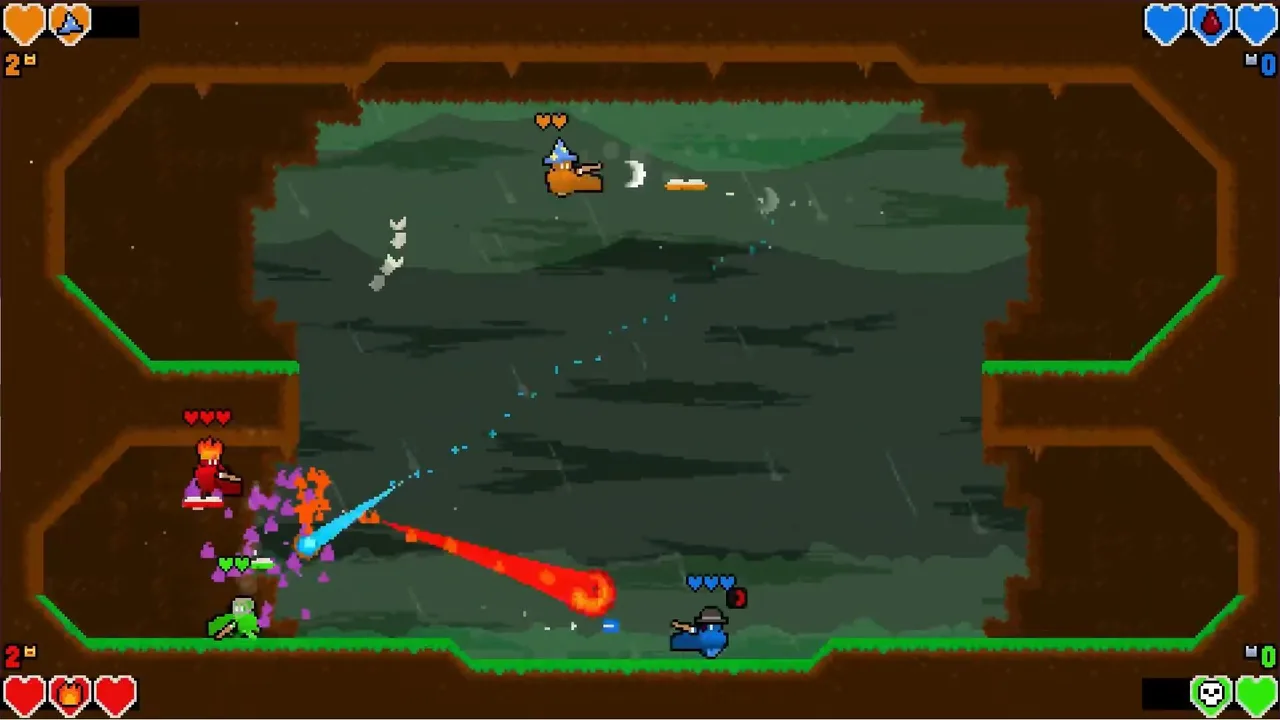
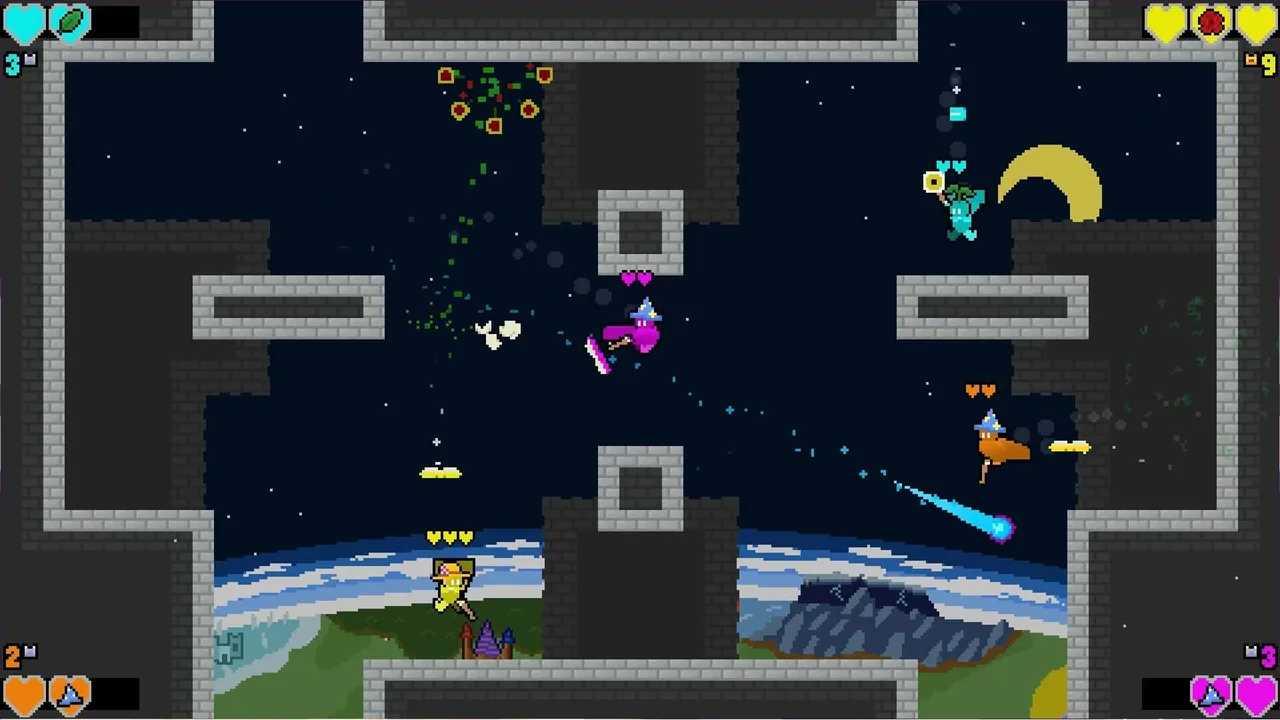
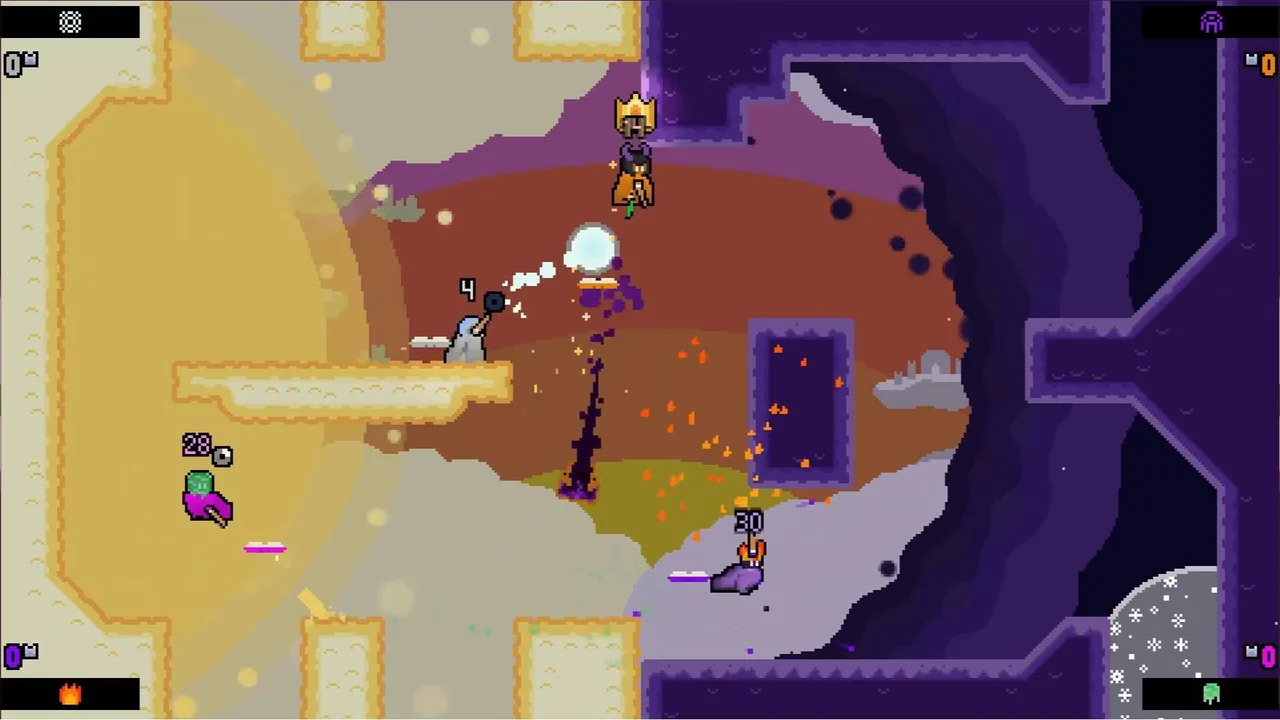
MAGE: Mega Awesome Gregarious Encounters released in full on Steam on June 23, 2026, from first-time studio FunRug Studio, a 2D projectile party fighter for up to four players, local or online, across 21 unique mages and more than 200 maps. Its 38-review English pool sits at a solid Positive (34 up, 4 down, 89%), painting a picture of a genuinely fun, approachable couch multiplayer game whose launch was rougher around the edges, particularly online, than its charming core deserved.
The accessibility-to-depth ratio draws the pool's most consistent praise. One reviewer, describing themselves as having "1000+ hours" of interest in the genre, called the movement "fun and smooth" with combat that "feels tactful but also chaotic," adding that they got "someone who has never picked up a controller before to be decently skilled within 10 minutes." Another reviewer framed the same idea more concisely: "low skill floor but high skill ceiling, just how I like it." A third specifically praised how "every character still manages to feel different from the others" despite the game's overall simplicity, a detail echoed by a fourth reviewer who noted they'd "seen everyone I play with take to different mage's skillsets," suggesting the character variety isn't just cosmetic.
Presentation earns similarly strong, specific praise. Full voice acting on every ability comes up repeatedly and warmly; one reviewer called it "hilariously incredible," while another singled out the sound effects and voice work as elements that "really carry this game." The art style draws consistent "charming" and "unique" descriptors across multiple independent reviews, and Remote Play Together support, letting friends join a session without needing to own or download the game themselves, was specifically praised by one reviewer as "fantastic" for a niche party title trying to build a group of players.
Launch-week technical trouble is the pool's clearest, most corroborated complaint. One reviewer's negative review detailed "heavy input delay making fun 1v1s almost impossible" online, plus new lag issues when connecting screens that hadn't been present during the pre-release demo. That report isn't isolated: a separate, otherwise glowing review noted seeing "complaints about issues with online play" even though they'd only tested locally, and a third reviewer, writing the day after release, independently confirmed "the online is quite buggy" while still recommending the game overall on the strength of local play. Taken together, three independent sources describing the same category of launch-week online problems makes this a fair, well-supported criticism rather than an isolated bad experience.
A separate, more serious complaint comes from a single detailed negative review specifically about keyboard-and-mouse support, which the reviewer called "unplayable" out of the box: "absurd default keybindings that are highly unnatural," an inability to rebind arrow or WASD movement keys even though abilities can be rebound, rebindings that "don't save" between sessions, and a bizarre default setup where the same keyboard also controls a second, unexplained player by default. This is a single-source report, but its specificity, several concrete, checkable claims rather than a vague complaint, makes it worth flagging directly for prospective buyers who don't plan to use a controller, especially since the game's own store listing recommends a gamepad rather than requiring one.
Value is the pool's other genuine point of tension, and it comes from a reviewer who was otherwise enthusiastic about the game. Writing shortly after launch, they argued the $9.99 price "should have been $5 in every universe," reasoning that a party game fundamentally needs an actively played population, and that without one, the practical cost of enjoying it is really "$20 and a friend" rather than the sticker price alone. It's worth noting this reviewer still recommended the game and explicitly wanted the small studio to succeed financially, framing the criticism as a concern about the game's long-term prospects rather than a complaint about the core experience being bad value in isolation. A separate reviewer made a related, more modest suggestion that the game "could use more gamemodes, perhaps larger maps" to round out the content on offer, without treating the current scope as a dealbreaker.
Not every reviewer found the 21-mage roster equally polished, though. The pool's single most detailed review, while overwhelmingly positive, singled out specific characters as underbaked relative to the rest of the cast, arguing dark mage and lightning mage "lack complexity in their kit" and could have used their own movement or counter-spell mechanics, while gravity mage's projectiles "could of been more interesting" if they inherited properties from the material they were made of. That same reviewer also flagged close-range counterspelling in general as feeling "a little clunky," a complaint echoed more lightly by another reviewer who called counterspelling "a little unreliable" while allowing it might be a skill issue on their end. Neither complaint stopped either reviewer from recommending the game, but both point at the same underlying seam: a cast this large inevitably lands a few characters ahead of the rest at launch.
It's worth being upfront that at least two of the pool's most enthusiastic reviews appear to come from people involved in the game's own development, judging by their explicit references to having worked on it "over the development process." Those reviews were set aside as testimony here in favor of the broader, clearly independent consensus, which remains genuinely positive on its own merits even without them.
Taken together, MAGE: Mega Awesome Gregarious Encounters is an easy recommendation for a group of friends with a controller each looking for a fresh entry in the Duck Game/Bopl Battle school of couch chaos, built on genuinely clever, well-differentiated character design and outstanding presentation for a first-time studio's debut. Buyers relying on keyboard and mouse, or hoping to play primarily online at launch, should go in with tempered expectations until FunRug Studio has a chance to patch both issues.
Pros and cons
Pros
- A simple, approachable control scheme (as few as three buttons) with real skill depth and 21 mages that reviewers consistently described as feeling meaningfully distinct from one another
- Fully voice-acted abilities and a charming, funny art style that reviewers repeatedly called a standout for a small first-time studio
- Genuinely fun, chaotic couch multiplayer that multiple reviewers said won over friends who had never touched a game like it before
- Remote Play Together support that lets friends join without buying or downloading anything, praised as a smart, accessible touch for a niche party game
Cons
- Rocky online multiplayer at launch, corroborated by several independent reviewers reporting input delay, lag, and connection issues in the days immediately following release
- A detailed single-source report of the keyboard-and-mouse control scheme being close to unplayable out of the box, with unnatural default keybindings, unrebindable movement keys, and a persistent unexplained second-player binding conflict
- A thin roster of active players at launch, which one detailed reviewer argued undercuts the value proposition of a $10 party game that realistically needs a purchasing group of friends to be worthwhile
Screenshots
-
MAGE: Mega Awesome Gregarious EncountersImage: FunRug Studio via Steam -
MAGE: Mega Awesome Gregarious EncountersImage: FunRug Studio via Steam -
MAGE: Mega Awesome Gregarious EncountersImage: FunRug Studio via Steam