
Game review
LUCKROT
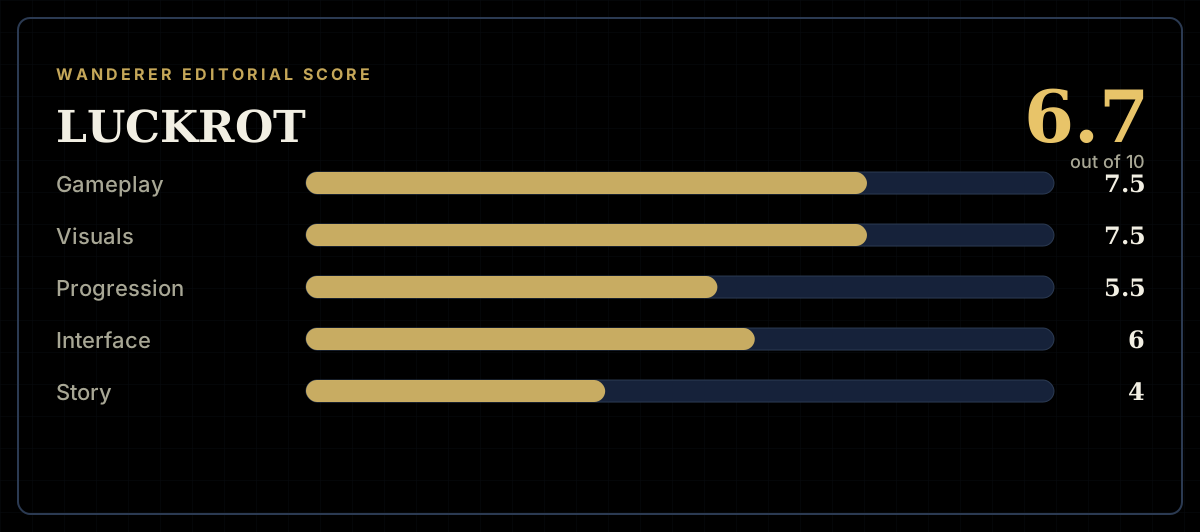
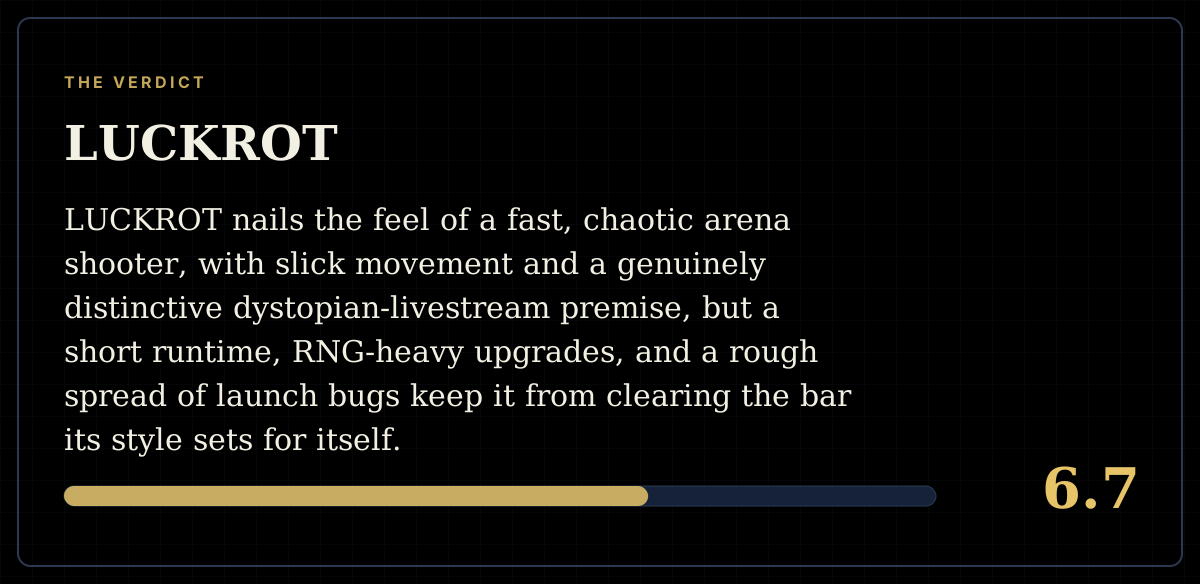
6.7 / 10
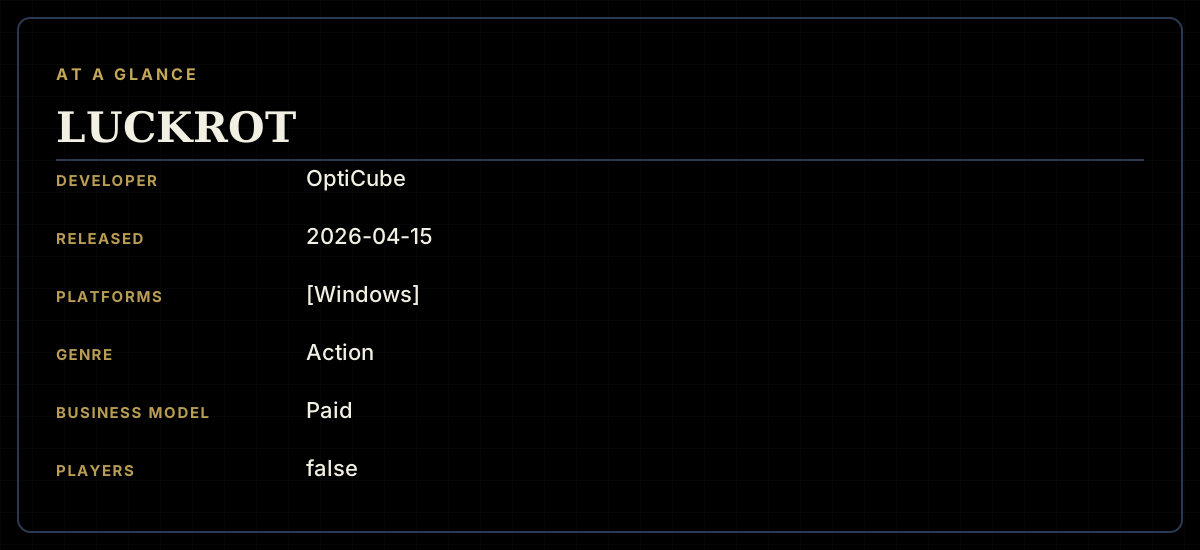
- Developer
- OptiCube
- Publisher
- OptiCube
- Released
- 15 April 2026
- Platforms
- [Windows]
- Genre
- Action
- Monetisation
- Paid
- Players
- false
The short version
LUCKROT nails the feel of a fast, chaotic arena shooter, with slick movement and a genuinely distinctive dystopian-livestream premise, but a short runtime, RNG-heavy upgrades, and a rough spread of launch bugs keep it from clearing the bar its style sets for itself.
Biggest strengths
- Fast, fluid movement and gunplay that makes clearing waves of enemies feel genuinely satisfying, especially once bhopping and dashing click
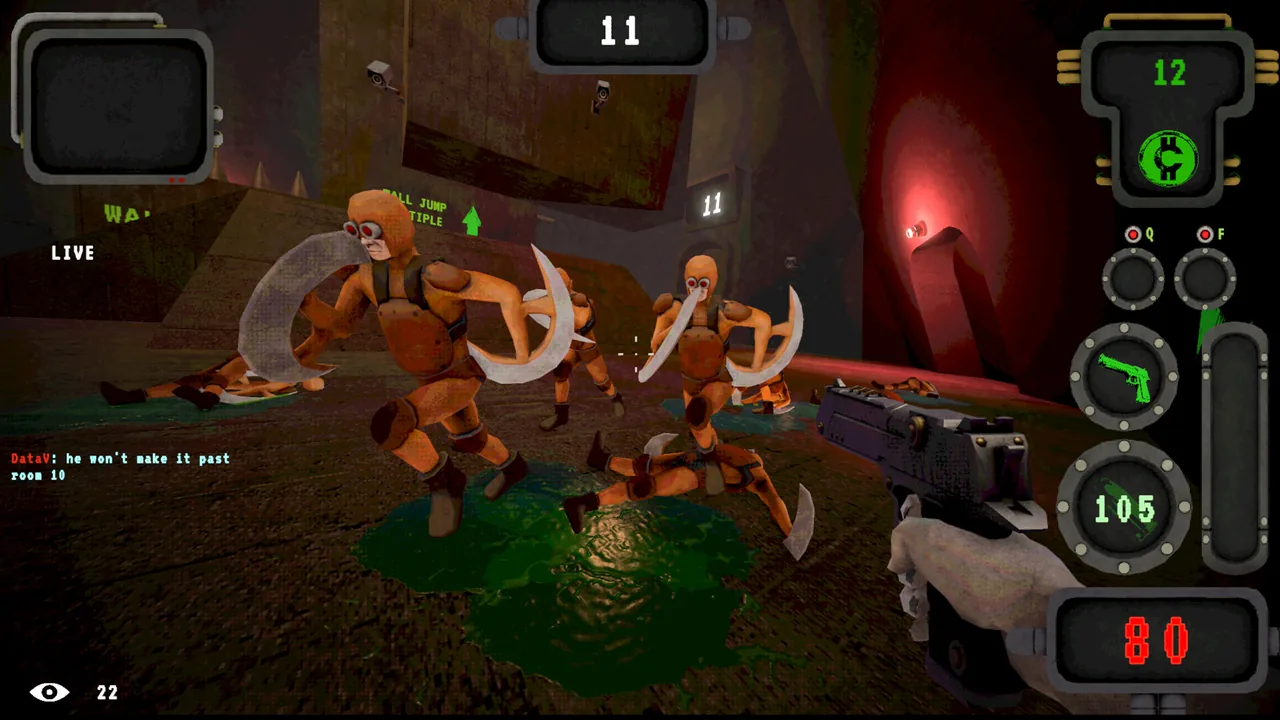
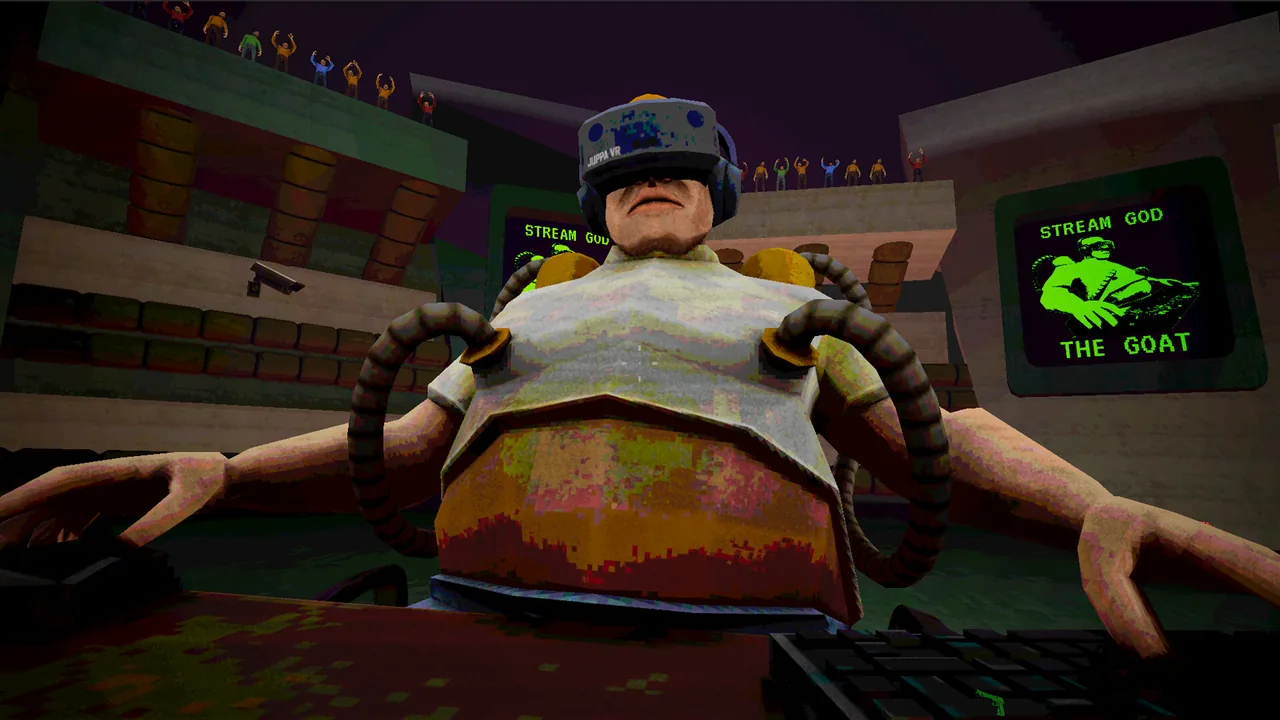
- A distinctive Cruelty Squad-adjacent art style and dystopian livestream-gameshow premise that gives the game real visual and tonal identity
- A widely-praised soundtrack that multiple reviewers explicitly ask to see released separately
Biggest weaknesses
- A short runtime, most reviewers finish a full run in two to five hours, with several wishing for more content once they hit the credits
- A launch crop of real bugs: enemies clipping through walls and floors, specific abilities freezing movement, and at least one report of near-unplayable performance on Linux
- Upgrade selection leans heavily on randomness, limiting the sense of meaningful build choice reviewers say they wanted from the roguelike structure
Who it's for: Boomer-shooter and roguelike fans who want a short, stylish, budget-priced burst of arena combat rather than a long-term commitment.
Our recommendation: Recommended
6.7 / 10
You're live, and you're bleeding for it
LUCKROT, released April 15, 2026 by solo developer OptiCube, drops players into a dystopian future where your minimum-wage job has been replaced by a far worse one: fighting for your life in a livestreamed gameshow arena, earning donations from a bloodthirsty audience and gambling those winnings on random upgrades between rooms. It's a fast, wave-based roguelike shooter wrapped in a grimy, Cruelty Squad-adjacent visual style, and it launched to a Very Positive reception, 117 reviews and roughly 89% positive, with reviewers largely agreeing on what the game does well and where it falls short.
Movement and gunplay that actually deliver
The strongest, most consistently praised element is the moment-to-moment feel of moving through and shooting your way across an arena. Reviewers repeatedly single out the movement tech, bhopping, dashing, and building momentum, as genuinely excellent once it clicks, with wave scaling that gets properly chaotic by the back half of a run. One detailed review describes it as nailing its opening hours specifically because the shooting and movement carry the experience even when other systems feel thinner, and multiple reviewers compare it favorably to Smash TV, Ultrakill, and classic boomer shooters like Serious Sam, while still finding its own identity through the gambling-and-livestream framing layered on top.
A short, stylish burst rather than a marathon
Where LUCKROT consistently loses points is longevity. Most reviewers report finishing a complete run in two to five hours, and while several frame that as reasonable for a $4.99 game, just as many explicitly wish for more content once the credits roll, more rooms, more weapon variety, more of the gambling-upgrade pool that defines the game's core hook. One reviewer, upon finishing, simply notes "now i have nothing," capturing a sentiment that recurs across the sample: the game's best ideas don't get enough room to develop before it ends. The developer has been actively patching and adding content post-launch, including new abilities and an announced endless mode, which several reviewers explicitly cite as the reason they're optimistic about the game's longer-term prospects even while docking the current build for thinness.
Randomness cuts both ways
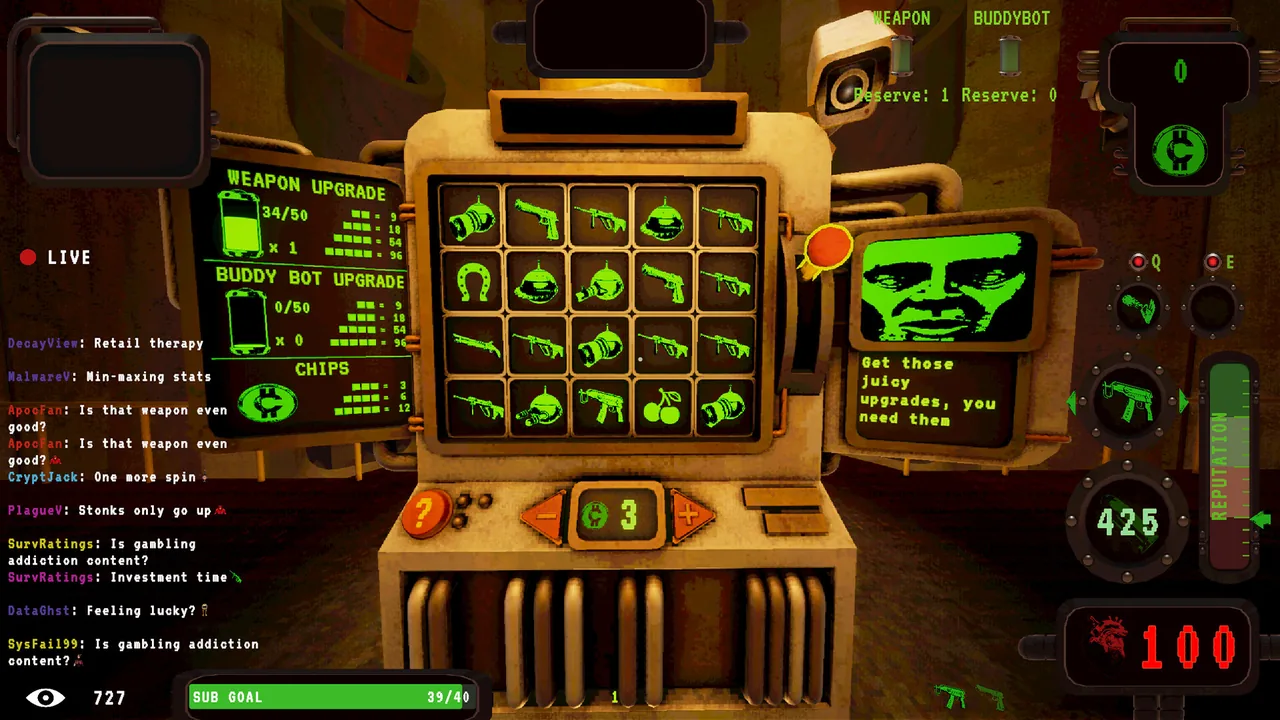
The gambling-themed upgrade system, spinning for gear between stages, is the game's most distinctive mechanical idea, but it draws real criticism for how much control it removes from the player. Several reviewers describe the limited upgrade pool combined with an extra layer of random selection as making it hard to feel the impact of individual choices over a full run, and at least one detailed negative review frames this as undermining the roguelike structure's core appeal, since builds emerge more from luck than from deliberate strategy. Once a strong combination does come together, several reviewers note the game's difficulty curve breaks fairly easily, turning what should be an escalating late-run challenge into something closer to a victory lap.
A rough launch, but a responsive developer
Bugs are the most frequent specific complaint in the negative review sample: enemies clipping through walls and floors, certain abilities (dual-wield and a grapple hook are named repeatedly) freezing player movement or behaving unpredictably, and at least one detailed report of the game being close to unplayable on Linux due to choppy framerate that a recommended VSync fix didn't resolve. What tempers this somewhat is a visibly active patch cadence, multiple reviewers explicitly update their own reviews to note that issues they'd flagged were fixed within days, and the developer is described engaging directly and quickly with bug reports in at least one documented case. It's a rough edge that a launch-week purchase has to accept, but one the sample suggests is actively being sanded down.
The story is mostly vibe, and that's fine
Narrative ambition here is intentionally light: the dystopian-livestream premise, sarcastic audience chat messages, and an unhinged, satirical tone do most of the storytelling work rather than any sustained plot. A handful of reviewers find the constant audience taunting genuinely funny and thematically sharp commentary on internet spectacle culture; others find it repetitive or grating within the first hour, and at least one negative review flags the developer's own dismissive framing of a related complaint as tone-deaf. It's a game that knows exactly what kind of experience it's selling, style, speed, and dark comedy over narrative depth, and mostly delivers on that narrower promise.
Standing next to a crowded genre
The boomer-shooter revival and the roguelike-arena-shooter space it overlaps with have both grown crowded enough that a new entry needs a real hook to stand out, and LUCKROT's is genuinely strong: few games in this space commit as fully to a specific visual and tonal identity, the grimy, Cruelty Squad-inspired dystopia sells its premise in a way that pure mechanical polish alone couldn't. Reviewers who've played widely in the genre credit that identity as the thing that separates it from the glut of interchangeable Vampire Survivors-adjacent shooters currently on Steam, even while acknowledging the underlying systems, wave scaling, upgrade trees, boss encounters, don't do anything mechanically novel on their own. It's a game defined more by its aesthetic conviction than by any single standout system, and for a first commercial release from a solo developer, that's a reasonable trade to make.
The verdict
LUCKROT is a genuinely fun, stylish arena shooter let down by how little of it there currently is, and by a spread of launch bugs that a $4.99 solo-developer game shouldn't be expected to fully avoid but that still cost it real polish. The movement and core combat loop are good enough to recommend on their own merits, especially at this price, but anyone expecting a long-term roguelike obsession should wait for the promised endless mode and further content before buying in.
Pros and cons
Pros
- Fast, fluid movement and gunplay that makes clearing waves of enemies feel genuinely satisfying, especially once bhopping and dashing click
- A distinctive Cruelty Squad-adjacent art style and dystopian livestream-gameshow premise that gives the game real visual and tonal identity
- A widely-praised soundtrack that multiple reviewers explicitly ask to see released separately
- A budget price that most reviewers agree matches or undersells the amount of polish on display in its best moments
Cons
- A short runtime, most reviewers finish a full run in two to five hours, with several wishing for more content once they hit the credits
- A launch crop of real bugs: enemies clipping through walls and floors, specific abilities freezing movement, and at least one report of near-unplayable performance on Linux
- Upgrade selection leans heavily on randomness, limiting the sense of meaningful build choice reviewers say they wanted from the roguelike structure
- Difficulty is reportedly easy to break once a strong build comes together, undercutting later-run tension
Screenshots
-
LUCKROTImage: OptiCube via Steam -
LUCKROTImage: OptiCube via Steam -
LUCKROTImage: OptiCube via Steam -
How the review scores each part of the gameWanderer Editorial -
Key facts at a glanceWanderer Editorial -
The short versionWanderer Editorial