Game review
Loafing Town
6.2 / 10
- Developer
- GoblinZz
- Publisher
- IndieArk
- Released
- 6 November 2025
- Platforms
- PC
- Genre
- Desktop Idle God Sim
A desktop toy with a surprisingly deep loop underneath
Loafing Town's pitch is simple: a strip of pixel-art village that lives at the bottom of your screen or on a second monitor, doing its own thing while you work, study, or play something else. Steam's own description leans into the "desk toy" framing, and the "with physics-based dragging interactions" note is there too — you can nudge villagers and objects around with your cursor the way you might poke a fidget toy. That premise alone would be enough to sell a lot of players, since the genre of background-dwelling idle games has become genuinely popular. What separates Loafing Town from cheaper imitators, according to the review pool, is that there's real structure underneath the cuteness.
The core loop, as described repeatedly by reviewers: raise heroes, sacrifice them at an altar to produce eggs, hatch those eggs into new heroes (with a chance at rare, ultra-rare, or double-ultra-rare variants), and slot those heroes into houses and buildings that grant passive bonuses depending on class. Heroes are organised into tiers, starting with single-class units and building toward more complex multi-class combinations, and players are expected to think about which heroes to keep, which to feed to the altar, and how to position them so the town's passive output keeps climbing. One reviewer with over 2,200 hours logged called it "definitely the best game I played in this genre," specifically citing the sense of ongoing progress. Another compared it favourably to Rusty's Retirement and, more cautiously, to The Gnorp Apologue, saying Loafing Town asks for more actual long-term strategy than most entries in the desktop-idler wave.
Town building sits alongside the hero loop — players unlock and place structures like houses, a clock tower, mining and fishing spots, and decorative pieces, with several reviewers describing satisfaction from optimising building and character placement once the basics click. Periodic "Chaos" boss encounters, triggered manually, break up the otherwise passive rhythm with short combat sequences where a summoned party fights a named enemy for loot and progress.
A transparency bug undermines the core pitch
The single most frequently repeated complaint in the review pool isn't about balance or content — it's a recurring bug where the game's background fails to go transparent, showing solid black instead of the player's desktop. Since the entire premise of Loafing Town is that it sits invisibly at the bottom of your screen, a broken transparency layer is not a cosmetic nuisance; it defeats the purpose. Multiple reviewers report the bug on both Windows and Linux, note that official fixes (such as disabling Fullscreen Optimization on Windows) work "only sometimes," and say the Linux side has no reliable fix at all as of when they wrote their reviews. One recommended review flagged it explicitly as a currently-open bug despite trying a fresh save, changed settings, and community-suggested workarounds. A second, unrelated report describes the game defaulting to the wrong monitor on launch and refusing to remember the correct one across sessions. A handful of very short reviews consist of nothing but "black screen" complaints, suggesting the bug is common enough that it's becoming the game's most visible flaw to new buyers, even though the overwhelming majority of reviewers still recommend the game despite it.
Slow to start, then a long, RNG-heavy grind
Pacing draws consistent criticism in the early game specifically. Several reviewers describe the opening hours as unusually slow — one calling the initial gold gain "a pain" and the pacing "extremely slow from the start" — before the loop opens up. Unlocking the first wave of hero classes is described as engaging, but one reviewer flagged "a huge wall of waiting" before the second batch of classes becomes available, which reads as a rough difficulty or pacing spike rather than a deliberate design choice. Once past that hump, the breeding and sacrifice system leans heavily on RNG: trading in two heroes to hatch a new one can leave a player with something weaker than what they started with, and hitting an ultra-rare-plus outcome is explicitly luck-dependent. Reviewers who stuck with the game generally frame this as a feature rather than a flaw — a long, patient burn suited to background play rather than active engagement — but it's a real barrier for anyone expecting quick, visible progress.
Hero and house management has real friction
Beyond the black-screen bug, the interface draws specific, repeated criticism around a single mechanic: assigning heroes to houses by class. One detailed review, addressed directly to the developer, describes kicking a hero out of a house to make room for a different one, only to have another hero instantly claim the vacated slot before the intended hero can be moved in — turning a routine task into a frustrating, fiddly process. Other reviewers ask for more detailed in-game information on what buildings actually do, with a suggestion that such detail be toggleable to avoid cluttering the small on-screen space. There's also a near-universal note that no official English-language guides exist; several players describe relying on machine-translated Chinese community guides or trial-and-error to understand systems the game doesn't explain well on its own. Boss summoning requires a manual click rather than triggering automatically, which one reviewer flagged as a minor but recurring interruption to otherwise hands-off play.
Strong value and an actively supported game
At NZ$10.49 with no additional monetisation reported by any reviewer, Loafing Town has drawn consistently favourable value comments. Playtime figures in the review pool are striking even by idle-game standards, with several logged past 300, 400, and even 2,000 hours, and one reviewer specifically credited the developer's ongoing updates — citing a specific expedition-and-equipment content update — for extending the game's life well past their initial purchase. Another reviewer, revisiting their own review after months, noted new characters had since been added and expressed hope for continued updates. Isolated complaints exist: one player lost a save after an abnormal shutdown and found the backup system didn't restore it, and a very short-session reviewer requested a refund, citing repetitive music and the difficulty of running the game without accidentally interacting with it. Both are outliers against a review pool otherwise dominated by high hour counts and enthusiastic repeat engagement.
Verdict
Loafing Town earns its Very Positive rating from a genuinely well-built hero-breeding and town-management loop that rewards patience more than most entries in the crowded desktop-idler space, and from a developer that appears to be actively adding content well after launch. Its biggest problem is a self-inflicted one: a recurring, inconsistently-fixed transparency bug that directly undermines the "invisible desktop companion" premise the whole game is built around, compounded by real friction in hero-house management and a near-total absence of official English guidance. Buyers going in aware of the black-screen issue, and willing to accept a slow, RNG-driven opening, will likely find a genre highlight; anyone relying entirely on the desk-toy framing working flawlessly out of the box should wait for more consistent fixes.
Screenshots
-
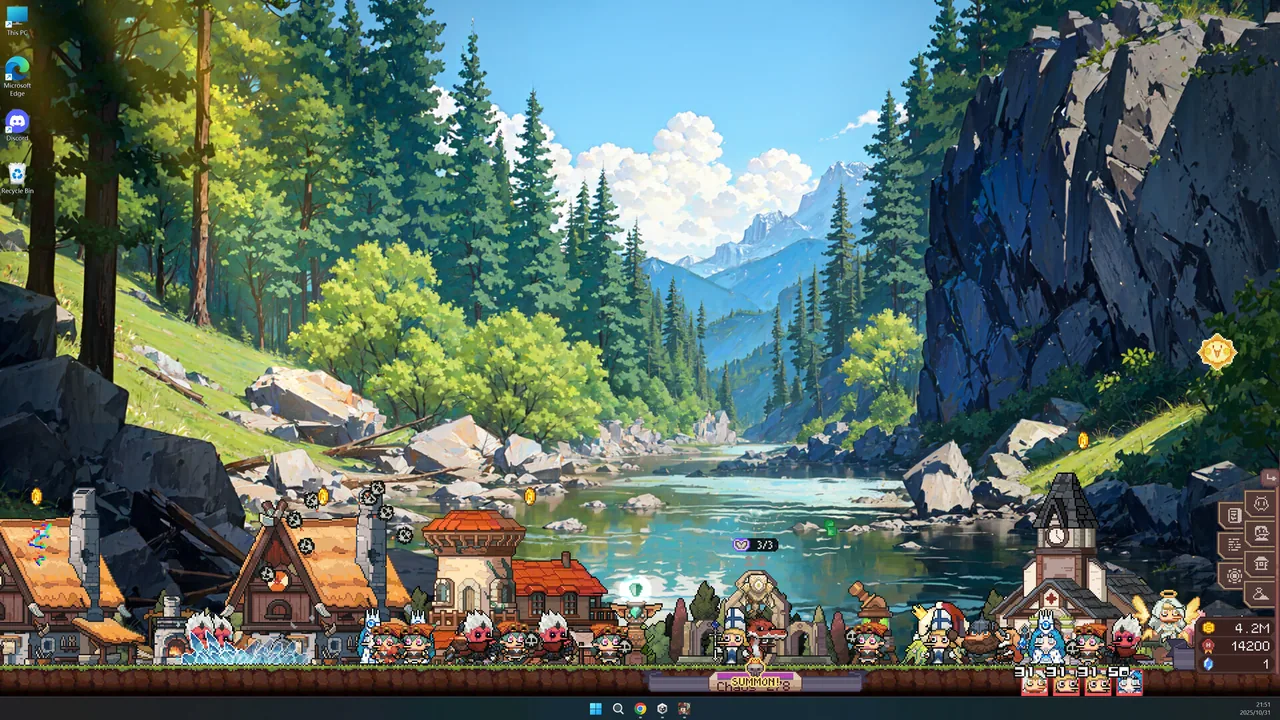
In its intended state, the game is a thin band of activity running along the bottom of your actual desktop wallpaper and icons.Image: GoblinZz via Steam -

Shrines and altars like this one are where players interact with the game's hint and progression systems.Image: GoblinZz via Steam -
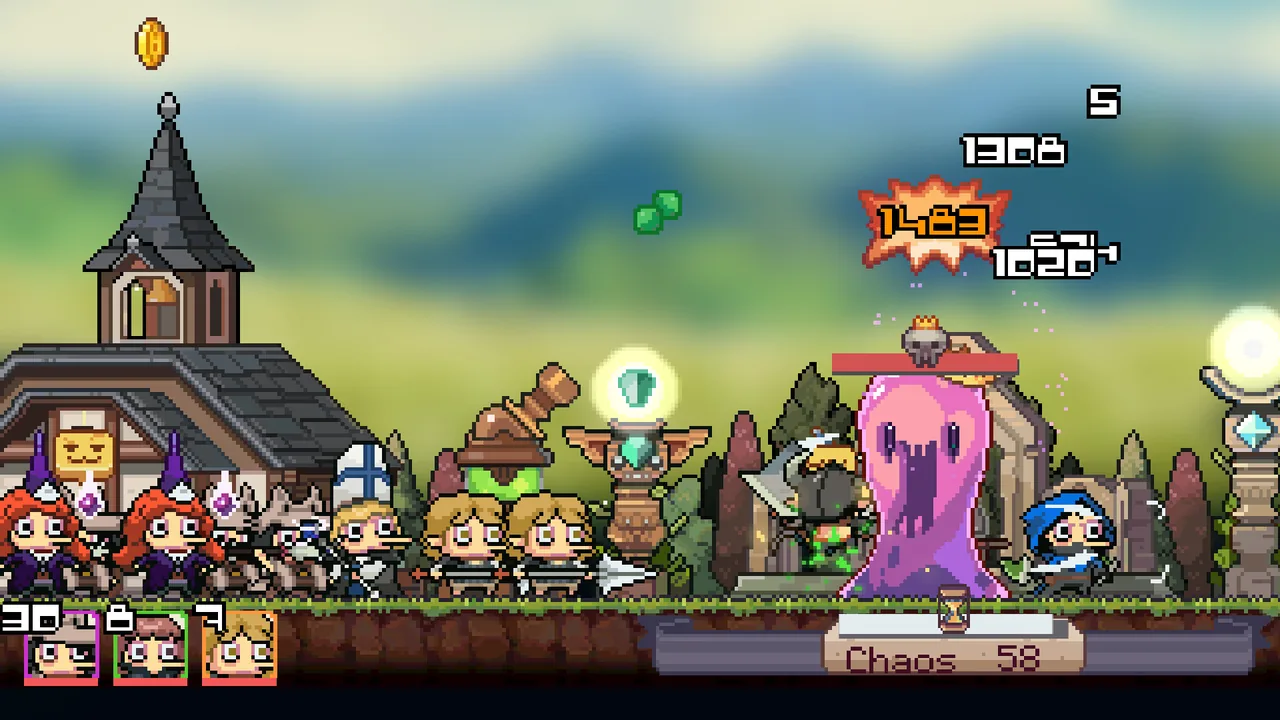
Periodic boss fights against named threats like this Chaos slime punctuate the otherwise passive town management.Image: GoblinZz via Steam