
Game review
Juufuutei Raden's Guide for Pixel Museum
7.5 / 10
- Developer
- Jupiter Corporation
- Publisher
- Jupiter Corporation
- Released
- 4 June 2025
- Platforms
- Windows
- Genre
- Casual, Indie
- Monetisation
- paid
- Players
- false
The short version
Biggest strengths
- Widely and specifically praised as one of, if not the, best entries in genre veteran Jupiter Corporation's long picross catalogue, with several reviewers with extensive experience across the studio's other titles calling it their favourite
- A genuinely educational framing that reviewers repeatedly credited well beyond their expectations, with fully-voiced curator commentary on art and cultural history after each puzzle that many reviewers said they enjoyed even with no prior interest in the subject matter or in Hololive
- An enormous amount of content, with reviewers citing 300-375 puzzles ranging from quick 5x5 grids to demanding 40x30 pieces, and strong accessibility options (mistake-checking, hint numbering, no fail state) that make the largest puzzles approachable for newcomers
Biggest weaknesses
- A widely repeated complaint that the $19.99 asking price is steep for a nonogram game, even among reviewers who ultimately felt the content volume and educational value justified it
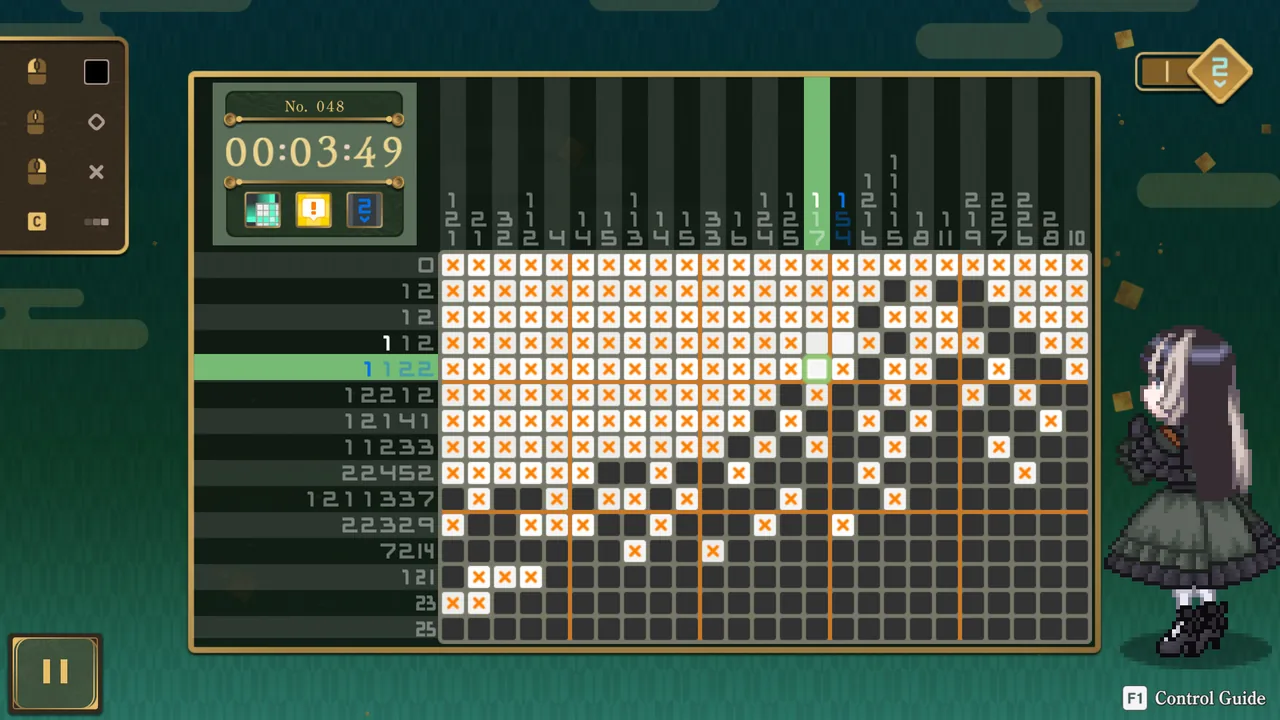
- Missing quality-of-life features some picross veterans expect from competing series, including no visual indicator that a clue number's row or column is already complete, forcing continuous manual recounting on the largest grids
- A somewhat random difficulty ordering across puzzle categories rather than a steady progression, which multiple reviewers said could be disorienting for players new to the genre
Who it's for: Picross and nonogram fans of any experience level, and anyone curious about art history or Hololive's Juufuutei Raden, looking for a generous, polished, genuinely educational puzzle collection
Our recommendation: recommended
7.5 / 10
Juufuutei Raden's Guide for Pixel Museum launched on Steam on June 4, 2025, a $19.99 picross puzzle game from Jupiter Corporation, the studio behind decades of Nintendo's own Picross releases, built around Hololive DEV_IS VTuber Juufuutei Raden acting as museum curator and narrator across hundreds of art-and-culture-themed nonogram puzzles. It holds a remarkable Very Positive rating, 190 to 1 across 191 English reviews, and unlike most titles this lopsided, the pool isn't full of low-effort one-liners; it's dense with detailed, experienced-picross-player praise that makes the case for the rating in specific, credible terms.
The dominant theme across the review pool is that this is simply excellent picross design, judged by players with real points of comparison. One reviewer called it "my favorite Jupiter picross game to date, hands down," having played most of the studio's catalogue, while another, after completing two more Jupiter titles since finishing this one, wrote it "might throw you into the deep-end a bit too fast" for a first picross game precisely because of how ambitious its puzzle sizes are. A third reviewer with over a hundred hours logged called it "the gold standard for picross-esque games," praising how it "simultaneously manages to have extremely difficult puzzles... and give new players plenty of crutches in case they're new to the genre." Multiple reviewers specifically noted the puzzle-size range, from small 5x5 grids up through demanding 40x30 pieces, and praised the decision to scatter differently-sized puzzles across categories rather than force a slow ramp, calling it effective at breaking up potential tedium during long sessions.
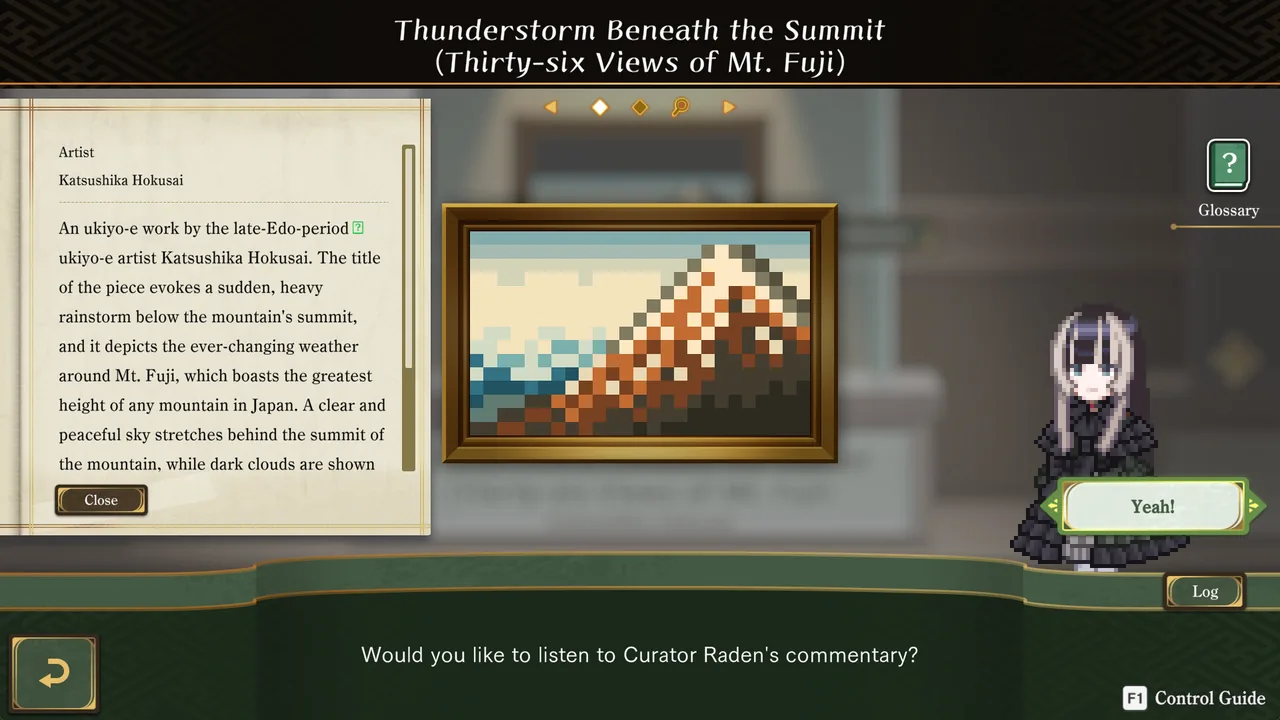
The second major, consistently praised element is Raden's narration itself, which reviewers across the board credited as meaningfully more than window dressing. One reviewer who went in "with zero knowledge of who Juufuutei Raden is" wrote that they "came away a fan," crediting her "depth of real-world knowledge about art history and the craft" for elevating what could have been "a silly gimmick wrapper for a picross collection." Multiple reviewers singled out specific commentary, one calling out the Edvard Munch's The Scream discussion, another the Rakugo storytelling segment, as genuinely interesting even for players with no prior connection to Hololive or Japanese culture. Several reviewers explicitly framed the game as successful edutainment, a claim that recurred often enough across otherwise unrelated reviews to be treated as a real, credited strength rather than marketing language.
Set against that praise, the most consistently repeated criticism concerns price. Multiple reviewers independently flagged the $19.99 asking price as steep for a nonogram game, even while ultimately endorsing the purchase: one wrote "probably a tad expensive for a picross game," another called it "relatively high," and a third said "the price is a bit steep for a nonogram game," in each case immediately following the complaint with a recommendation anyway, citing content volume or the educational commentary as justification. This is a real, repeated caveat rather than a dealbreaker for most of the pool, but it's specific and common enough to weigh into value expectations for anyone not already invested in either picross or Raden specifically.
A second, more technical complaint concerns missing quality-of-life conveniences that picross veterans expect from competing series. One detailed reviewer, comparing it directly to the Gizmos picross series, listed several absent features: no auto-fill of blank squares, no automatic greying-out of clue numbers on completed lines, and no running count preview while selecting large blocks of squares, concluding the game becomes something of a "visual noise simulator" on its biggest grids. A separate reviewer with 117 hours logged made an almost identical point independently, noting the game "does not indicate completed patterns and leaves the clue numbers intact... forcing you to always have to count," which they found "painful on the eyes" on the largest puzzles. That two experienced reviewers, writing independently, converged on the exact same missing feature is a meaningfully stronger signal than either complaint would be alone.
A handful of smaller, softer complaints round out the picture: several reviewers described the game's difficulty ordering as inconsistent rather than steadily escalating, which a few worried could disorient genre newcomers even though it didn't bother more experienced players; the soundtrack, limited to a small handful of tracks, was repeatedly described as repetitive enough to mute after extended sessions; and one detailed reviewer noted the frame rate runs uncapped with no in-game option to limit it. None of these rose to the level of a recommendation-changing flaw for any reviewer sampled, but they're specific enough to note honestly.
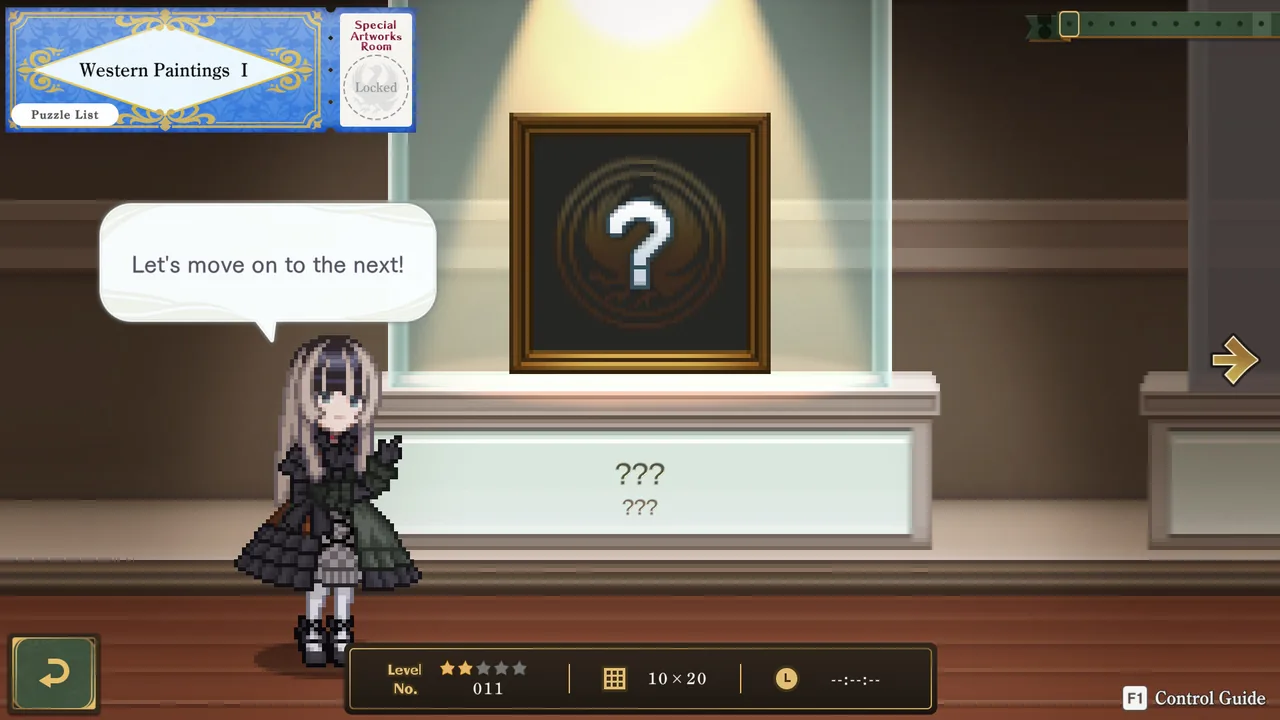
Structurally, the game splits its content between the core museum exhibits, organized around Japanese cultural artifacts and famous global artworks, and a separate set of large, multi-piece puzzles that assemble into bigger pictures tied to Raden's own VTuber career once the main exhibits are cleared. One reviewer who logged around 30 hours through the main museum puzzles specifically wished there were more exhibits given how much they'd come to enjoy the commentary, a reasonable complaint about wanting more of a good thing rather than evidence of thin content; with 300 or more total puzzles cited by multiple reviewers, this isn't a short experience by any measure. It's also worth noting just how thin the dissenting side of the review pool actually is: the single negative review in the entire 191-review English sample is a lighthearted joke about a factual quibble ("Holland is TWO provinces, not one"), rather than any substantive criticism, underscoring how rare a genuinely bad experience with this game appears to be.
Juufuutei Raden's Guide for Pixel Museum earns its Very Positive standing on genuine design merit, not just IP goodwill: reviewers with deep genre experience consistently rank it among the best picross games available, and its educational framing around Raden's art-history commentary draws real, specific praise even from players with no prior interest in either subject. Its price and a handful of missing genre-standard conveniences on the largest grids are worth knowing going in, but for picross fans or the curious, this is an easy recommendation.
Pros and cons
Pros
- Widely and specifically praised as one of, if not the, best entries in genre veteran Jupiter Corporation's long picross catalogue, with several reviewers with extensive experience across the studio's other titles calling it their favourite
- A genuinely educational framing that reviewers repeatedly credited well beyond their expectations, with fully-voiced curator commentary on art and cultural history after each puzzle that many reviewers said they enjoyed even with no prior interest in the subject matter or in Hololive
- An enormous amount of content, with reviewers citing 300-375 puzzles ranging from quick 5x5 grids to demanding 40x30 pieces, and strong accessibility options (mistake-checking, hint numbering, no fail state) that make the largest puzzles approachable for newcomers
- Careful platform polish, including fully remappable Steam Deck control sets that multiple reviewers specifically praised as unusually thoughtful for a puzzle game of this scope
Cons
- A widely repeated complaint that the $19.99 asking price is steep for a nonogram game, even among reviewers who ultimately felt the content volume and educational value justified it
- Missing quality-of-life features some picross veterans expect from competing series, including no visual indicator that a clue number's row or column is already complete, forcing continuous manual recounting on the largest grids
- A somewhat random difficulty ordering across puzzle categories rather than a steady progression, which multiple reviewers said could be disorienting for players new to the genre
- A very small musical soundtrack that several reviewers described as repetitive enough to mute after a handful of hours, alongside an uncapped frame rate with no option to limit it
Screenshots
-
Juufuutei Raden™'s Guide for Pixel MuseumImage: Jupiter Corporation via Steam -
Juufuutei Raden™'s Guide for Pixel MuseumImage: Jupiter Corporation via Steam -
Juufuutei Raden™'s Guide for Pixel MuseumImage: Jupiter Corporation via Steam