
Game review
Idle Together
5.5 / 10
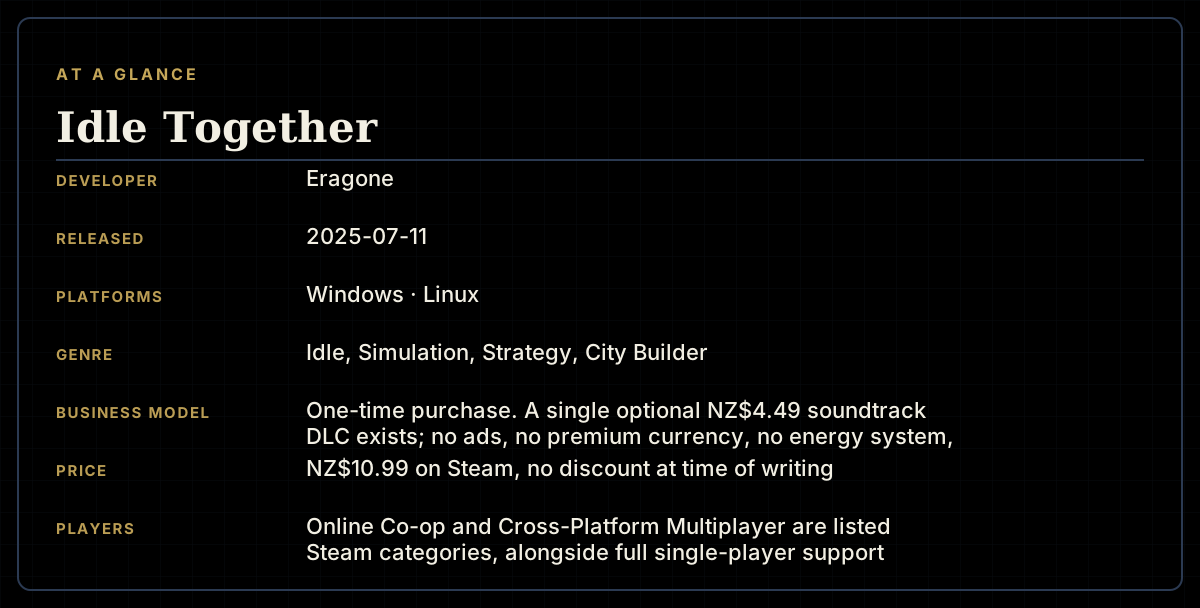
- Developer
- Eragone
- Publisher
- Eragone Games
- Released
- 11 July 2025
- Platforms
- Windows, Linux
- Genre
- Idle, Simulation, Strategy, City Builder
- Monetisation
- One-time purchase. A single optional NZ$4.49 soundtrack DLC exists; no ads, no premium currency, no energy system, nothing that touches progression
- Players
- Online Co-op and Cross-Platform Multiplayer are listed Steam categories, alongside full single-player support
The short version
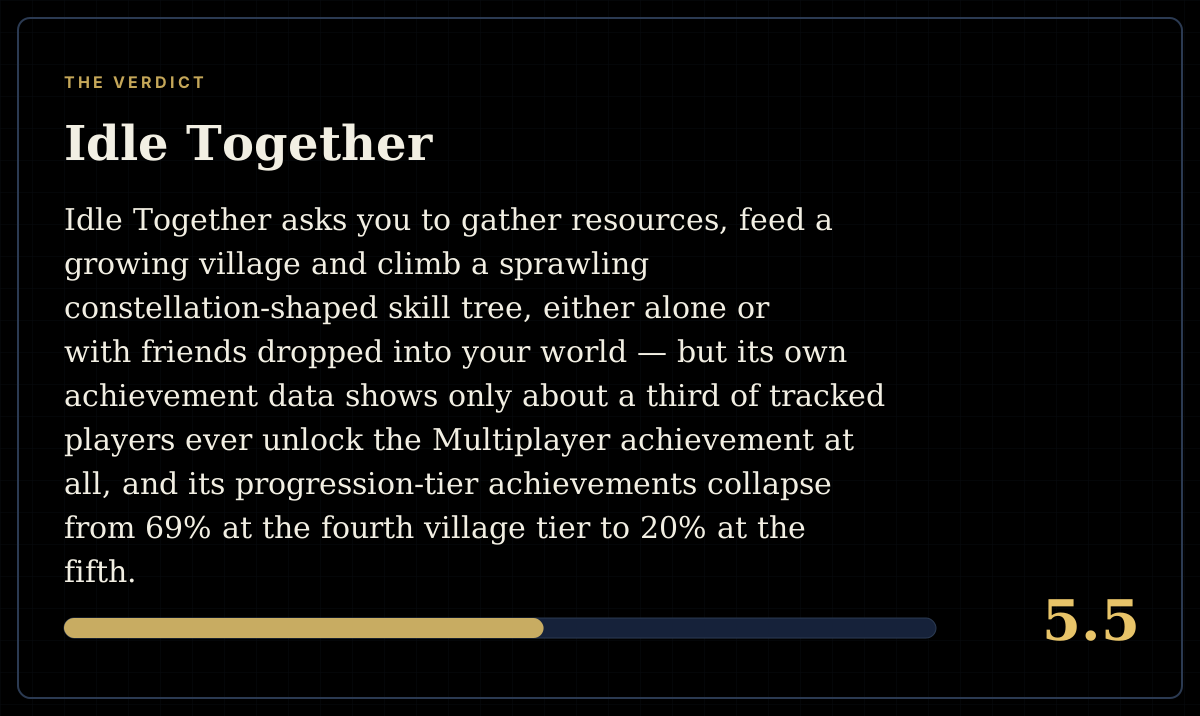
Idle Together asks you to gather resources, feed a growing village and climb a sprawling constellation-shaped skill tree, either alone or with friends dropped into your world — but its own achievement data shows only about a third of tracked players ever unlock the Multiplayer achievement at all, and its progression-tier achievements collapse from 69% at the fourth village tier to 20% at the fifth. The village-building loop is real and, for a genuinely invested minority, addictive; one Steam review logs over 1,251 hours. For most buyers going by the numbers, the co-op hook advertised in the name turns out to be optional, lightly used and — by more than one account — buggy when it is used.
Biggest strengths
- The constellation-shaped skill tree gates a genuinely large number of systems — villager slots, buildings, tool tiers, prestige — behind a single connected web rather than a flat upgrade list, and the storefront screenshots show it branching across dozens of visible nodes
- Monetisation is about as clean as this library sees: one flat purchase, one optional NZ$4.49 soundtrack DLC with no gameplay effect, and no ads, timers or premium currency anywhere on the listing
- A strong accessibility category slate for a solo-developer release — Adjustable Text Size, Custom Volume Controls, Mouse Only Option, Playable without Timed Input and Save Anytime are all listed Steam categories
Biggest weaknesses
- Steam's own achievement data shows only 33.7% of tracked players ever unlock the Multiplayer achievement, and one negative review describes the co-op mode itself as "poorly designed and incredibly buggy," stranding a group after five minutes with no way to progress
- The village-tier achievements fall off a cliff rather than tapering — 69.0% of players reach the fourth tier, but only 20.3% reach the fifth, 10.5% the sixth and 5.2% the seventh, meaning the "build the village of your dreams" pitch describes a village almost nobody actually finishes
- One of the constellation tree's own practical features, manual saving, has to be unlocked with tree points rather than being available from the start, and a 46.2-hour negative review reports the wider tree can leave a save "basically broken around level 10" if it isn't built in the order the developer expected, with no visible respec option
Who it's for: Players who want a low-stakes, family-friendly village idler to run in the background and don't mind the co-op layer being a nice-to-have rather than the main event; a poor fit for anyone buying specifically for a shared-world co-op idle experience.
Our recommendation: A fair NZ$10.99 for the solo loop, which has real scope for a one-person studio. Go in expecting "together" to mean occasional drop-in sessions rather than a persistent shared world, and expect the numbers to stop reading cleanly once you're several dozen hours in.
5.5 / 10
The pitch is right there in the title, and it's a genuinely rare one in this queue: an idle game built around playing with other people, not just watching numbers climb alone. Idle Together asks you to gather wood and stone, grow a village of lazy, occasionally sleeping villagers, and unlock new systems through a literal constellation of stars, either solo or with someone else dropped into your world. That last part is the whole reason this review exists — multiplayer idle games are close to the top of what this library goes looking for, and closer still to what Wanderer itself is. So it's worth saying plainly, and early, what the game's own numbers say about how much "together" actually happens: not very much, for most of the people who buy it.
What "together" actually means here
Mechanically, Idle Together is a co-op resource-and-village sim. You and up to a handful of other players share a procedurally generated world, gather wood, stone, berries and later ore, assign villagers to buildings, and watch progress continue at a reduced rate while nobody's looking. Steam lists it under both Online Co-op and Cross-Platform Multiplayer, and the store page frames the whole game around "optimizing your progress" together with friends. It isn't a persistent shared server the way an MMO is — it reads, from the store's own description and the screenshots, as drop-in sessions where one player's world hosts the others, closer to how Stardew Valley's co-op works than to a always-on multiplayer world.
The achievement data is the part that turns that framing into a fact rather than a guess. Of the players Steam tracks statistics for, 98.9% earn the game's very first achievement and 93.8% build their first house — but only 33.7% ever unlock the achievement for playing multiplayer at all. Two in three tracked players never touch the feature the game is named after. That's not necessarily damning on its own — plenty of co-op games see uneven adoption of their social layer — but it's worth weighing against a September 2025 review describing exactly what happens when someone does try it: "multiplayer is poorly designed and incredibly buggy. Gave us about 5 minutes of multiplayer gameplay before stranding us with no possible progression." One data point isn't a pattern, but combined with the low adoption rate, it reads less like a beloved centerpiece and more like a feature most owners have quietly decided to skip.
The constellation tree, and the trap inside it
The system doing the real work in Idle Together is its "Constellation" — a large, branching skill tree laid out like a star map, where points earned through play unlock everything from new building types and villager slots to tool tiers and, notably, the ability to manually save your game at all. One official screenshot shows the full tree: dozens of connected nodes fanning out from a central point, several still locked, covering resource multipliers, a prestige-adjacent "Ascension" branch, and what looks like a day/night cycle unlock. It's a genuinely large amount of interlocking structure for a solo-developed release, and it gives the moment-to-moment loop — click a tree, assign a villager, check back later — real long-term shape rather than a flat number going up.
It's also where the game's sharpest complaint comes from. A 46.2-hour negative review, one of the few substantial write-ups in the English-language sample, says the tree's own logic works against the player: "if you do not build your talents out in the exact way the dev expected, the game is basically broken around level 10." There's no visible respec option in any of the storefront screenshots, and nothing in the store description suggests one exists. For a system this large, locking in an unforgiving, non-obvious optimal build order — with no way back from a bad early pick — is a real design cost, and it lands hardest on exactly the players trying to engage with the tree seriously rather than clicking through it idly.
Where the village actually stalls
The village-tier achievements tell a cleaner story than any review can. Reaching a Hamlet is realistic for most owners — 69.0% get there. Everything past that falls away fast: 20.3% reach Village, 10.5% reach Town, 7.3% reach City, and just 5.2% ever build a Capital. The store's own pitch — "create the most beautiful village possible" — describes an endpoint fewer than one in twenty tracked players actually see. That's a steeper drop than a healthy pacing curve usually shows, and it lines up with the handful of negative reviews calling the mid-game "an unmanageable mess" with "a lot of QoL features" missing and "no feedback to a player" about what to do next.
The one clear counterpoint is that the ceiling, for a determined minority, is extremely high. A screenshot from deep into the game shows a level-342 village with resource counts running into the tens of millions and villager caps past 150 — someone got there, and got there enjoying it enough to keep playing. One Steam review logs 1,251.2 hours and calls the game "weird, addicting and hard to quit," specifically praising the developer's own presence on the community Discord. Idle Together clearly works, and works well, for the players it clicks with. The achievement curve just says that's a much smaller group than the village-building pitch implies.
Numbers that stop making sense
Idle Together markets itself as "accessible to everyone" and "designed for the whole family," and for the first several hours the interface backs that up — clean resource icons, a simple villager counter, plain integers. That breaks down at scale. By the deep-game screenshot referenced above, resource counters have compressed into two-letter suffixes ("56.1Ac," "959Z," "7.8Ad") with no visible legend, and the experience bar underneath the Level 342 display reads "2.0464636447760127e+77 / 5.0300944470293692e+77" — raw, unformatted scientific notation, the kind of number a spreadsheet shows before someone remembers to apply a format string. It's a minor bug in isolation, and only visible at a depth most players by the achievement data will never reach, but it sits at direct odds with the accessible, family-friendly framing the whole game is sold on. A smaller but more visible flaw: the game's own "Click Level" panel misspells its Lumberjack profession as "Lumberiack" in its own heading.
A small, split audience
Idle Together's Steam reception is genuinely positive where it has an audience at all — 28 of 37 Steam-purchaser reviews are thumbs-up, a 75.7% "Mostly Positive" score. But that number hides a real split. The English-language sample sits at just 8 positive out of 15, a "Mixed" rating, with reviewers calling it "one of the most basic idle games I ever played" and warning that if you've played five minutes, "you've seen 95% of the game." The French-language sample, on a wider pull that includes non-purchase-verified copies, runs 26 positive against 2 negative — over 90% positive. Eragone is the only credited developer, and French is the only other language besides English to ship with full audio support, which points to a home audience that discovered the game early, engaged with its developer directly, and rates it far more warmly than the wider English-speaking market that found it later and judged it against a more crowded field of idle games.
A quiet population and a developer who's moved on
Thirteen months after its full release, Idle Together shows two concurrent players on Steam at the time of writing. The developer patched hard in the first three months — a sound overhaul, a HUD overhaul, camera control fixes, native Discord integration and roughly a dozen updates between late June and October 2025 — before shipping a second, unrelated game, Idle Tycoon Manufacturing, in October 2025. Support for Idle Together hasn't stopped outright; a "Minor Update" landed as recently as June 2026. But the pace has dropped from weekly to roughly once a season, and the studio's attention has visibly split across two products. For a game whose whole appeal depends on a village that's still there when you check back in, and on other people occasionally being around to check in with, a near-empty player count is a material fact for anyone buying today specifically for the multiplayer half of the pitch.
Monetisation done properly
Whatever else is debatable here, the business model isn't. NZ$10.99 buys the whole game outright. The only DLC is a NZ$4.49 soundtrack with no gameplay effect whatsoever. There's no premium currency, no energy system, no ad breaks, and nothing in the Constellation tree that can be bought rather than earned. In a genre this library regularly finds riddled with pay-to-skip timers, that's worth stating as plainly as the problems above.
Final verdict
Idle Together builds a real, sizeable village-management idler around a distinctive constellation-shaped upgrade tree, prices it fairly, and monetises it honestly. For the minority of players who click with its pace — and the 1,251-hour review proves that minority exists and is genuinely happy — it clearly delivers. But judged as the multiplayer idle RPG its own name promises, the evidence doesn't support the pitch: two-thirds of tracked players never touch the multiplayer achievement, the village-tier achievements collapse well before most players reach anything resembling "the village of your dreams," a badly-timed constellation build can break your progress with no way back, and the population thirteen months on is close to nonexistent. At NZ$10.99, among the pricier games this library has covered in its idle queue, that's a harder sell than the concept deserves. Buy it for a pleasant, occasionally deep solo village-builder. Don't buy it expecting the "together" to carry the experience.
Pros and cons
Pros
- The constellation-shaped skill tree gates a genuinely large number of systems — villager slots, buildings, tool tiers, prestige — behind a single connected web rather than a flat upgrade list, and the storefront screenshots show it branching across dozens of visible nodes
- Monetisation is about as clean as this library sees: one flat purchase, one optional NZ$4.49 soundtrack DLC with no gameplay effect, and no ads, timers or premium currency anywhere on the listing
- A strong accessibility category slate for a solo-developer release — Adjustable Text Size, Custom Volume Controls, Mouse Only Option, Playable without Timed Input and Save Anytime are all listed Steam categories
- The developer shipped roughly a dozen patches in the three months after release, including a HUD overhaul, a full sound pass and native Discord integration, showing real early commitment to the game
- Its most devoted players are genuinely devoted — one 1,251-hour Steam review calls it "weird, addicting and hard to quit" and praises the developer's own presence on the game's Discord
Cons
- Steam's own achievement data shows only 33.7% of tracked players ever unlock the Multiplayer achievement, and one negative review describes the co-op mode itself as "poorly designed and incredibly buggy," stranding a group after five minutes with no way to progress
- The village-tier achievements fall off a cliff rather than tapering — 69.0% of players reach the fourth tier, but only 20.3% reach the fifth, 10.5% the sixth and 5.2% the seventh, meaning the "build the village of your dreams" pitch describes a village almost nobody actually finishes
- One of the constellation tree's own practical features, manual saving, has to be unlocked with tree points rather than being available from the start, and a 46.2-hour negative review reports the wider tree can leave a save "basically broken around level 10" if it isn't built in the order the developer expected, with no visible respec option
- Past a certain point the interface stops formatting its own numbers — one official screenshot from deep into the game shows an experience bar reading "2.0464636447760127e+77 / 5.0300944470293692e+77" in raw scientific notation, and currency counters shrink to abstract two-letter suffixes that undercut the "accessible to everyone" pitch
- Thirteen months after its full release the game shows two Steam concurrent players at time of writing, its update cadence has slowed to roughly one small patch every few months, and the developer's public attention has visibly shifted to a second, separate release, Idle Tycoon Manufacturing, launched in October 2025
Screenshots
-
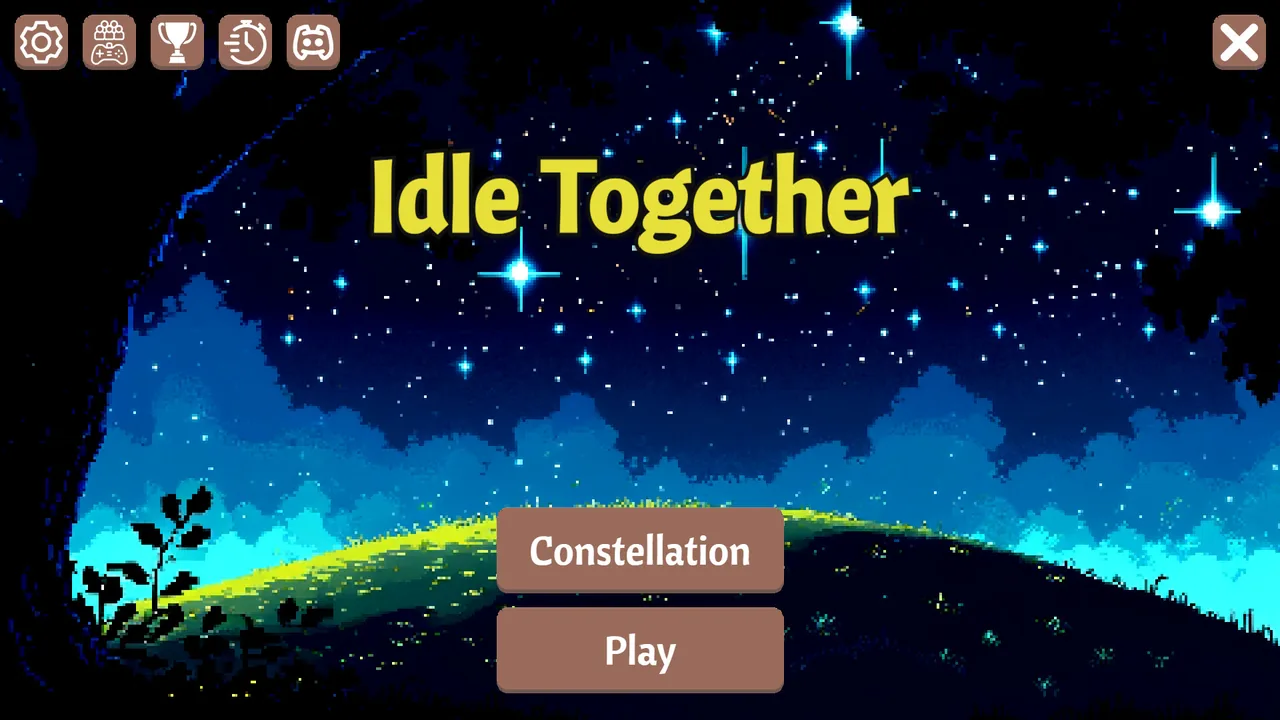
Idle TogetherImage: Eragone Games via Steam -
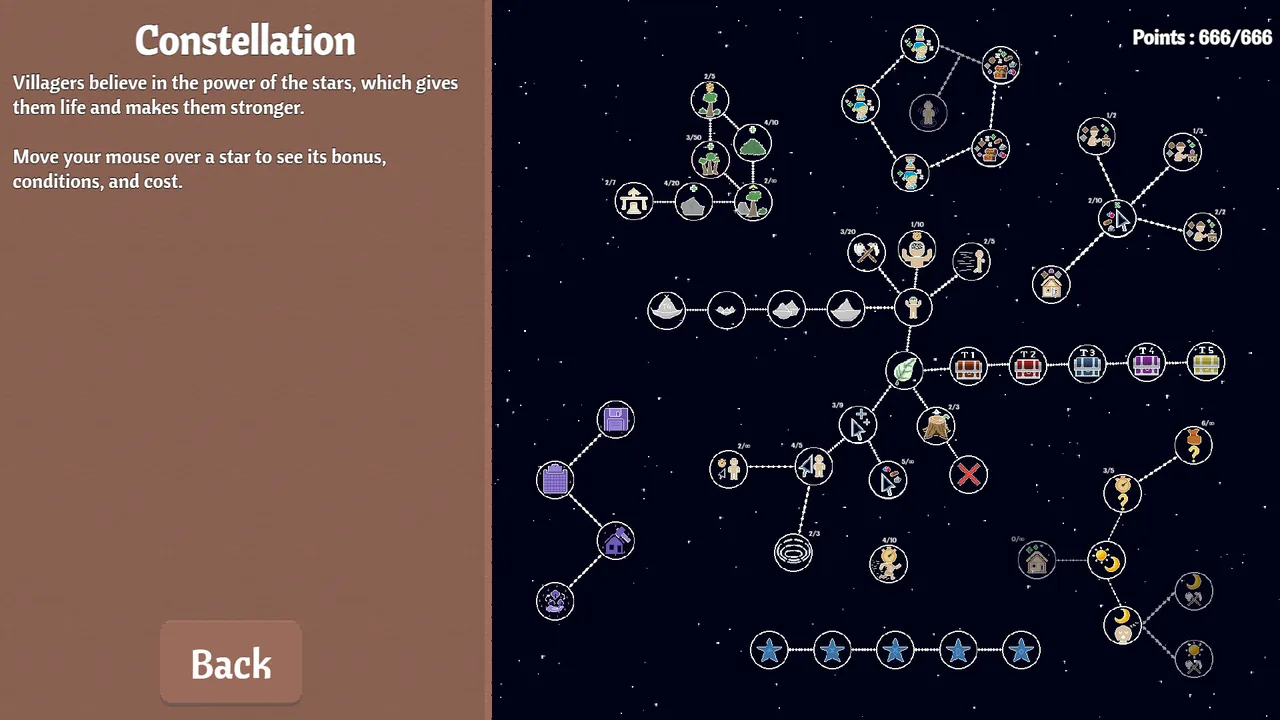
Idle TogetherImage: Eragone Games via Steam -
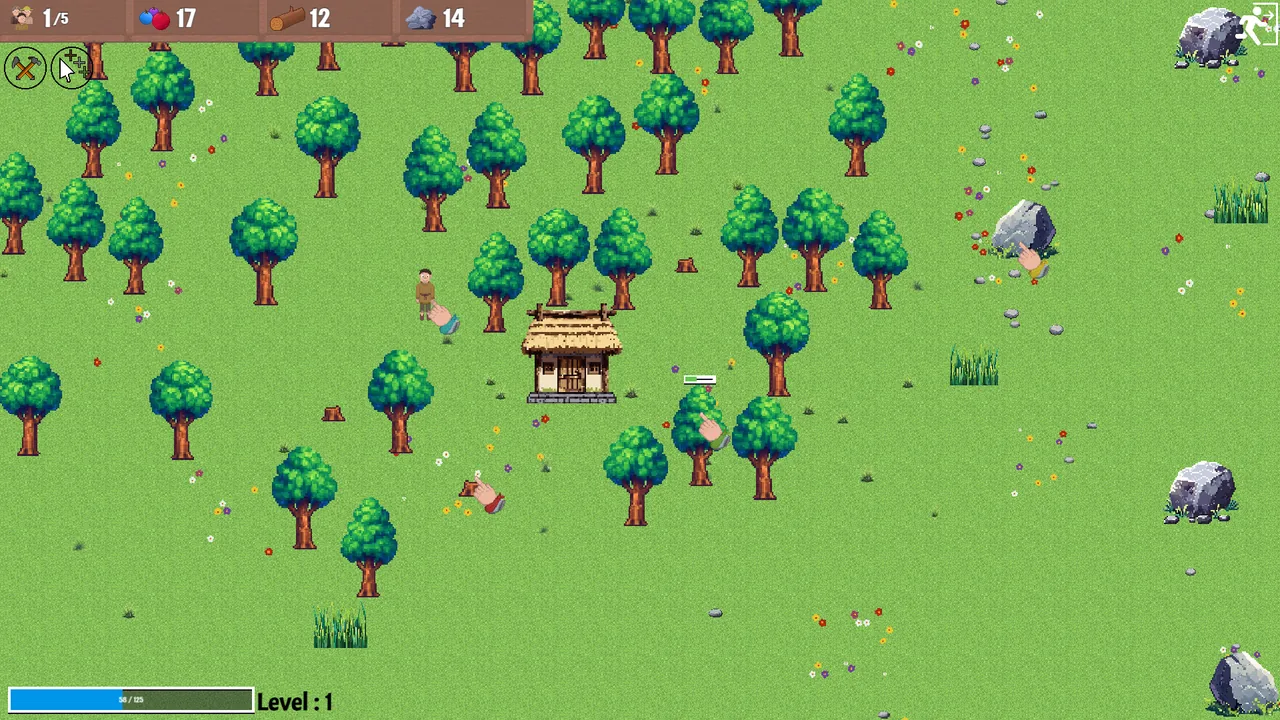
Idle TogetherImage: Eragone Games via Steam -
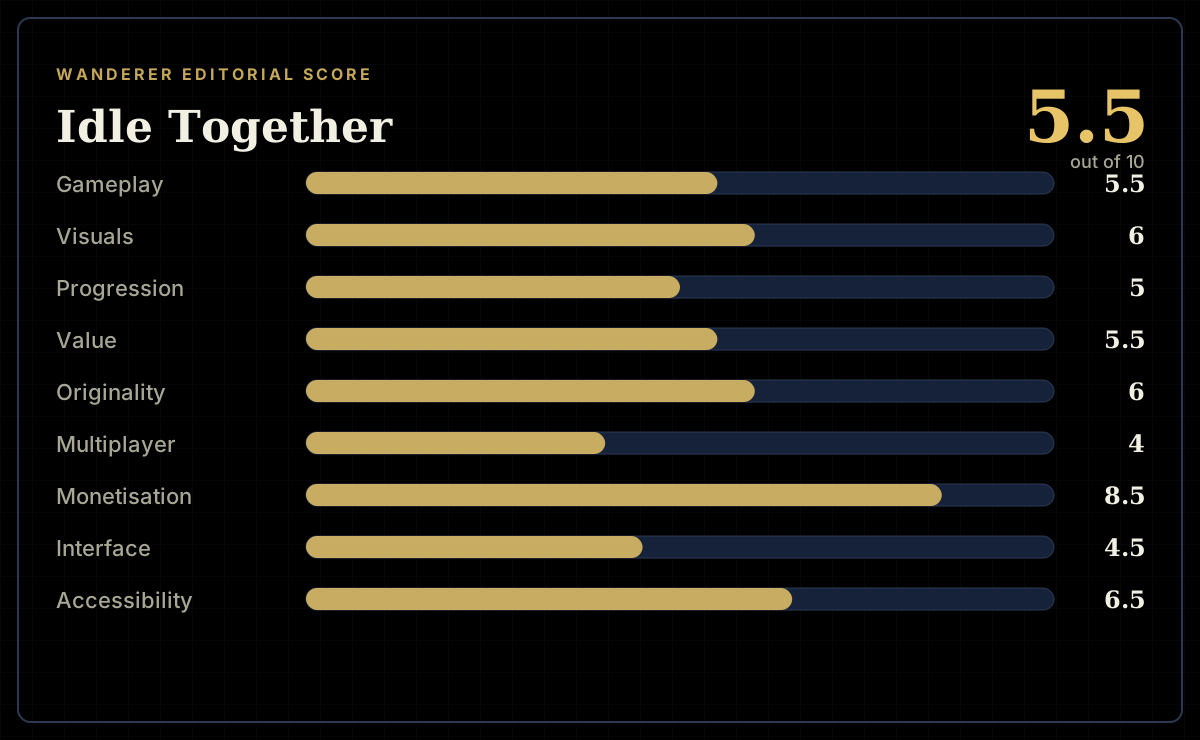
How the review scores each part of the gameWanderer Editorial -
The game at a glanceWanderer Editorial -
The short versionWanderer Editorial