Game review
Hypnophobia; From Your Shadow
7.8 / 10
- Developer
- Stick Horse
- Publisher
- Stick Horse
- Released
- 2 April 2026
- Platforms
- [Windows]
- Genre
- Visual Novel
- Monetisation
- Free
- Players
- false
The short version
Hypnophobia; From Your Shadow has no mechanics to speak of and doesn't need any: it's a short, unflinching, beautifully illustrated portrait of depression and insomnia that a striking number of readers say described their own experience better than games with a hundred times its budget.
Biggest strengths
- A short, tightly focused story about depression and insomnia that an unusually large number of reviewers, across English, Russian, Spanish and other languages, describe as painfully, precisely accurate to their own lived experience
- Distinctive art direction built around a gorgon protagonist and recurring motifs, paired with a melancholic, well-matched original soundtrack reviewers single out repeatedly
- Completely free, with no monetisation, microtransactions, or paywalled content of any kind
Biggest weaknesses
- No choices, branching paths, or interactivity of any kind, a kinetic novel in the strictest sense, which will frustrate anyone expecting agency over the story
- Extremely short at roughly two hours, and entirely one story with one ending, offering essentially no replay value
- Handles heavy, real-world topics like self-harm and suicidal ideation directly and without much narrative cushioning, which is by design but won't suit every reader or mood
Who it's for: Readers drawn to short, emotionally heavy visual novels about mental health, and anyone who wants a free, focused story rather than a long game.
Our recommendation: Buy it
7.8 / 10
A short story that doesn't want to let you go easy
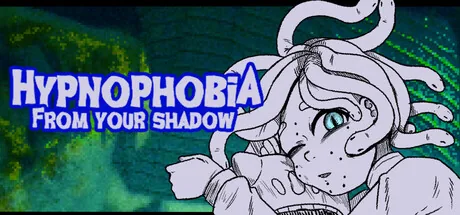
Hypnophobia; From Your Shadow, released April 2, 2026 by solo developer Stick Horse, is a free kinetic visual novel about Iris, a gorgon who has moved to Stalva, the northernmost city in the world, and developed a crushing fear of sleep after the nightmares and memories that wait for her there. There's no combat, no puzzles, and no choices to make; it's a roughly two-hour read that asks only that the player sit with someone else's collapse. It launched to a Very Positive reception, 130 reviews and around 95% positive, an unusually strong result for a free student-scale project, driven almost entirely by how many readers say the story described something they recognised in themselves.
No mechanics, and that's the point
This is worth stating plainly for anyone browsing by genre tag: Hypnophobia is a kinetic novel, meaning the reader clicks forward through prose and illustrated scenes with no branching choices, no alternate endings, and no interactivity beyond pacing your own reading. Reviewers who came in expecting a more traditional visual novel with decision points are occasionally caught off guard, and it's a fair thing to flag going in. But the overwhelming majority of the review sample treats the absence of mechanics as a non-issue, because the thing the game is actually offering is a piece of narrative art, closer to an illustrated short story or a vent comic than a game in the ludic sense, and it succeeds or fails entirely on the strength of that writing.
Depression written from the inside
The story follows Iris through a spiral of depression, insomnia, and self-comparison as a struggling artist, and the single most repeated word across the review sample, in half a dozen languages, is "relatable." Reviewers describe recognising their own thought patterns, their own late-night spirals, and their own difficulty separating a bad day from a bad life, sometimes in reviews that read as personal as the game itself. That's a difficult thing to earn honestly, and Stick Horse largely does: the writing avoids the trap of treating depression as a single dramatic event, instead depicting it as a grinding, repetitive cycle, which more than one reviewer specifically credits for feeling truer to their own experience than higher-profile games covering similar ground. The content descriptor's warning about self-harm and suicidal ideation is not decorative; the game addresses both directly, and readers in a vulnerable place themselves should go in with that clearly understood.
A gorgon with real specificity, not just a metaphor
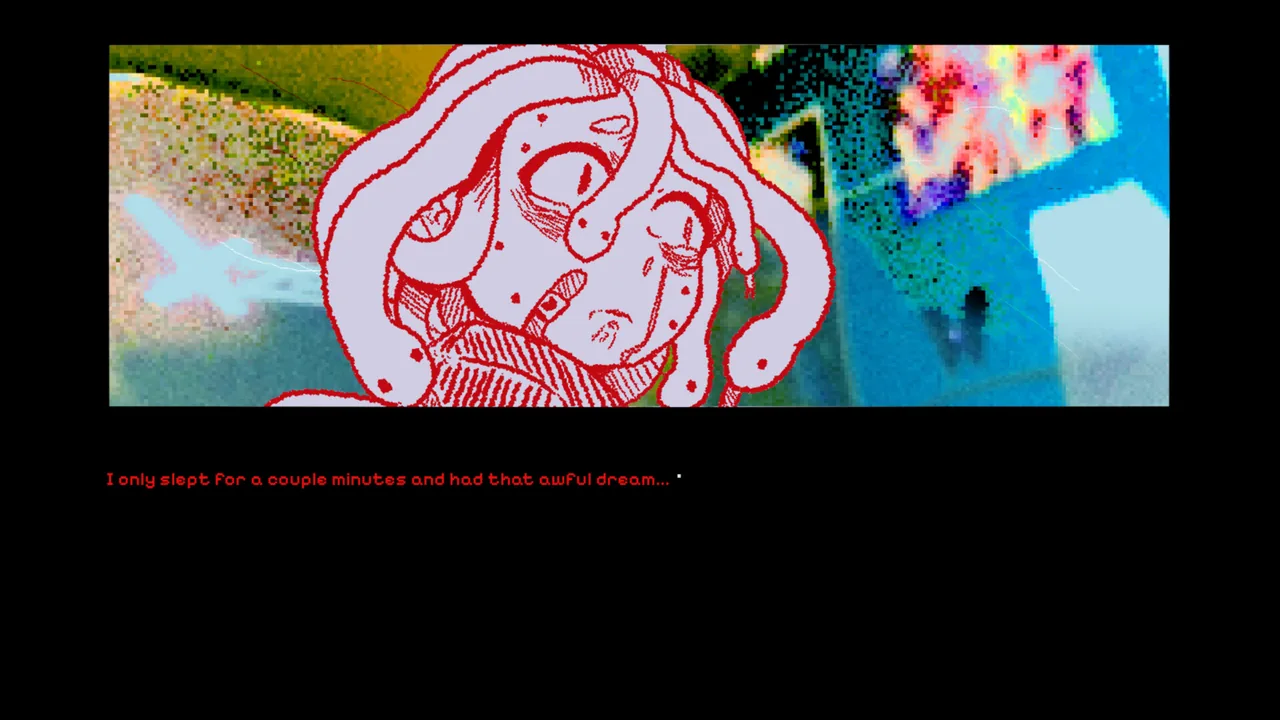
Iris being a gorgon, snakes for hair and all, could easily have been a purely decorative fantasy flourish, but the game leans into it as part of her character rather than set dressing, and several reviewers specifically praise the small details, like the serpentine hair, as giving Iris more presence and identity than a generic human lead would have carried. She's also written and confirmed as a lesbian character navigating a past relationship alongside her mental health struggles, a detail most reviewers treat as simply part of who she is rather than the story's focus, though a small handful of negative-leaning reviews single out her identity specifically and dismissively, reviews that read less as considered criticism and more as reflexive hostility unrelated to the writing itself.
Art and sound doing a lot of the emotional lifting
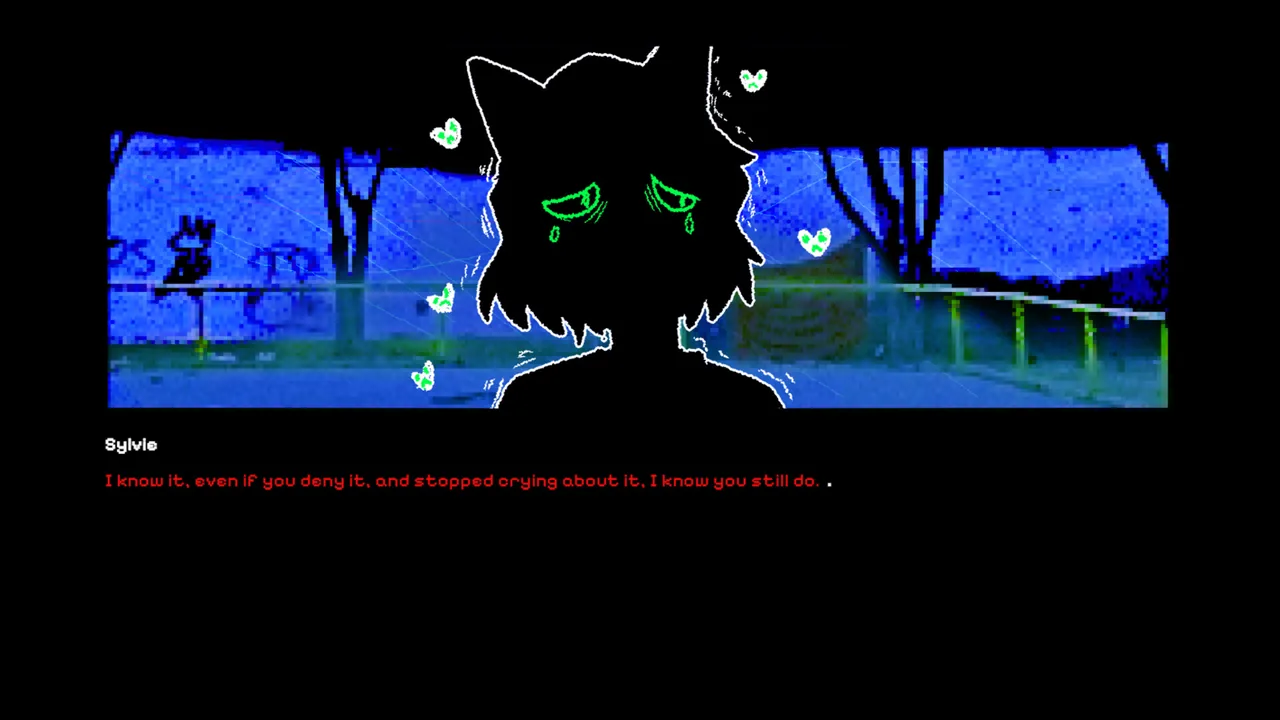
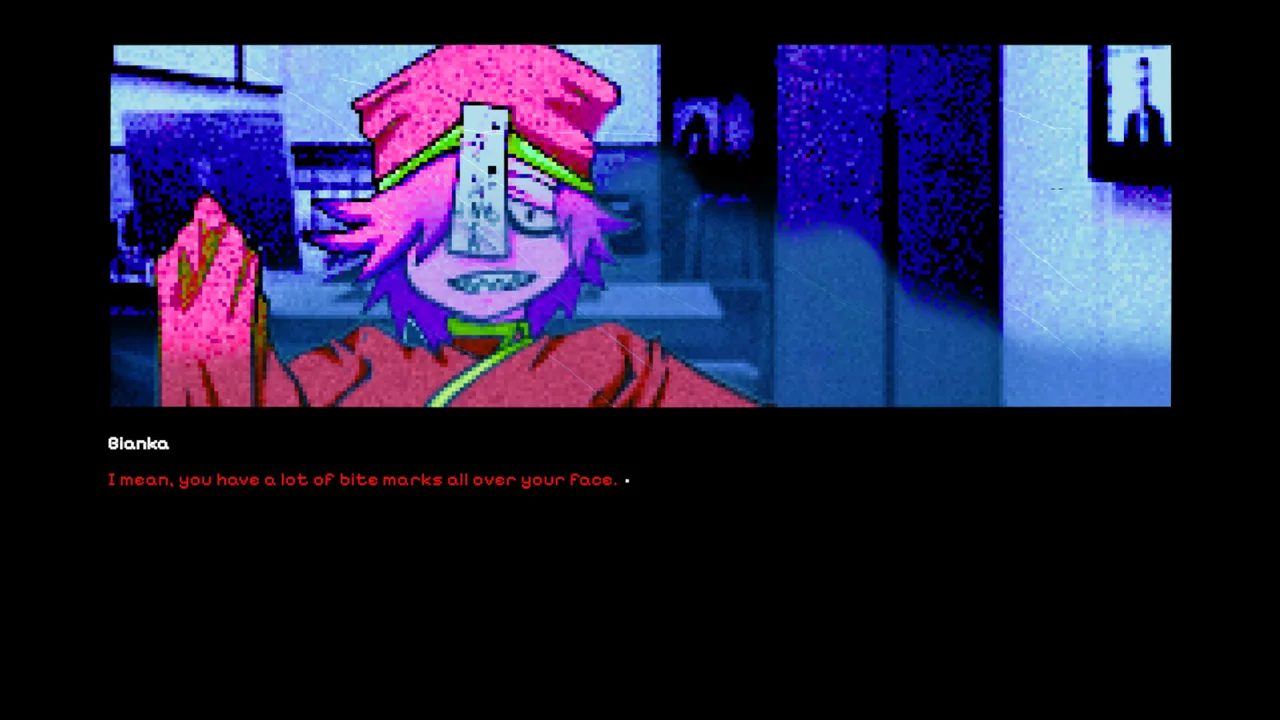
The illustration work draws consistent praise, a distinctive style that reviewers describe as both beautiful and unsettling in the right places, often paired with real-world photographic backdrops that ground Stalva as a specific, cold, isolating place rather than a generic anime-adjacent backdrop. The soundtrack gets called out almost as often: melancholic, understated, and well-timed to the story's emotional beats rather than competing with them. Between the two, several reviewers describe the presentation as punching well above what they expected from a free release, and it's a large part of why the two-hour runtime feels considered rather than thin.
A short read with essentially no replay value
The obvious practical limitation is length: at roughly two hours with a single fixed story and no branching, there's little reason to return to Hypnophobia once finished, and a small minority of reviewers explicitly wish it had been structured as more of an interactive game rather than a straight read, feeling the format undersold real narrative craft that could have supported more player agency. That's a reasonable critique, though it's worth noting the fixed, linear structure is clearly intentional: this is a specific, personal story being told the way its author wanted it told, not a game that's missing features.
Steady post-launch care from a small team
Stick Horse has kept supporting the release well past its April launch, shipping a content update in the first week and then a long tail of community-driven translation work through the summer, Catalan, German, Polish, and more layered in over several months, alongside a bonus artbook and small hotfixes. For a free release from what appears to be a very small team, that level of continued investment stands out, and it's part of why the game has found an audience well beyond its original language.
Who should read this
This is an easy recommendation for anyone drawn to short, heavy, personal visual novels, and the fact that it costs nothing removes any real barrier to trying it. It is not for readers looking for a game with mechanics, branching choices, or replay value, and anyone currently struggling with the specific topics the story covers, depression, insomnia, self-harm, should weigh that carefully before starting, since the game does not soften those themes for comfort.
The verdict
Hypnophobia; From Your Shadow is proof that a short, free, mechanically minimal visual novel can land harder than games many times its size, when the writing is honest and specific enough. It won't be for everyone, and it was never trying to be, but for the audience it's aimed at, it's a genuinely affecting piece of work.
Pros and cons
Pros
- A short, tightly focused story about depression and insomnia that an unusually large number of reviewers, across English, Russian, Spanish and other languages, describe as painfully, precisely accurate to their own lived experience
- Distinctive art direction built around a gorgon protagonist and recurring motifs, paired with a melancholic, well-matched original soundtrack reviewers single out repeatedly
- Completely free, with no monetisation, microtransactions, or paywalled content of any kind
- A growing list of community-requested language translations added steadily since launch, making the story accessible well beyond its original audience
Cons
- No choices, branching paths, or interactivity of any kind, a kinetic novel in the strictest sense, which will frustrate anyone expecting agency over the story
- Extremely short at roughly two hours, and entirely one story with one ending, offering essentially no replay value
- Handles heavy, real-world topics like self-harm and suicidal ideation directly and without much narrative cushioning, which is by design but won't suit every reader or mood
- At least one reviewer flags the Spanish localisation as leaning too hard into a specific regional slang that undercuts the story's seriousness for some readers
Screenshots
-
Hypnophobia; From Your ShadowImage: Stick Horse via Steam -
Hypnophobia; From Your ShadowImage: Stick Horse via Steam -
Hypnophobia; From Your ShadowImage: Stick Horse via Steam -
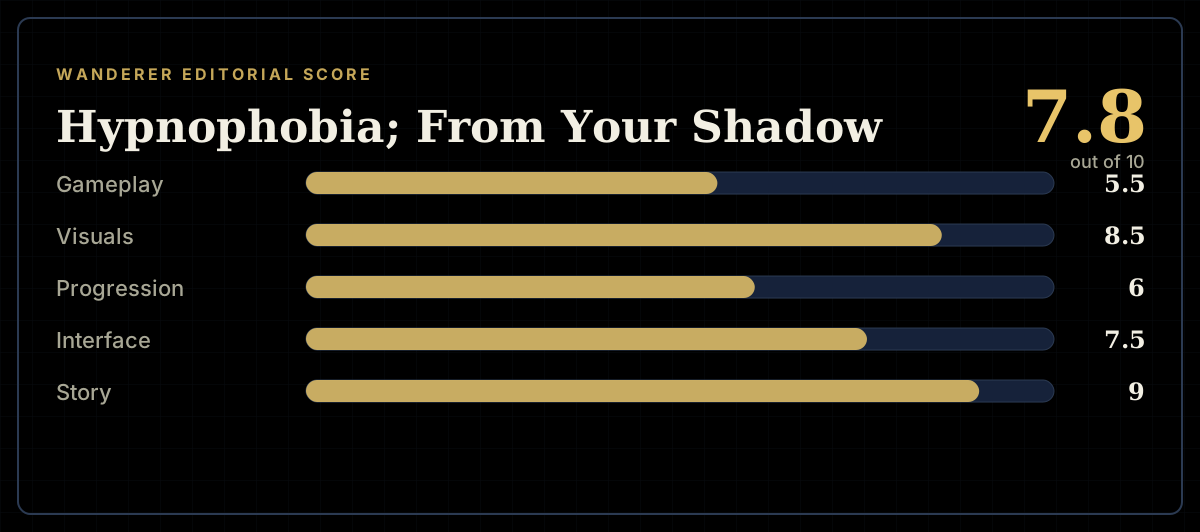
How the review scores each part of the gameWanderer Editorial -
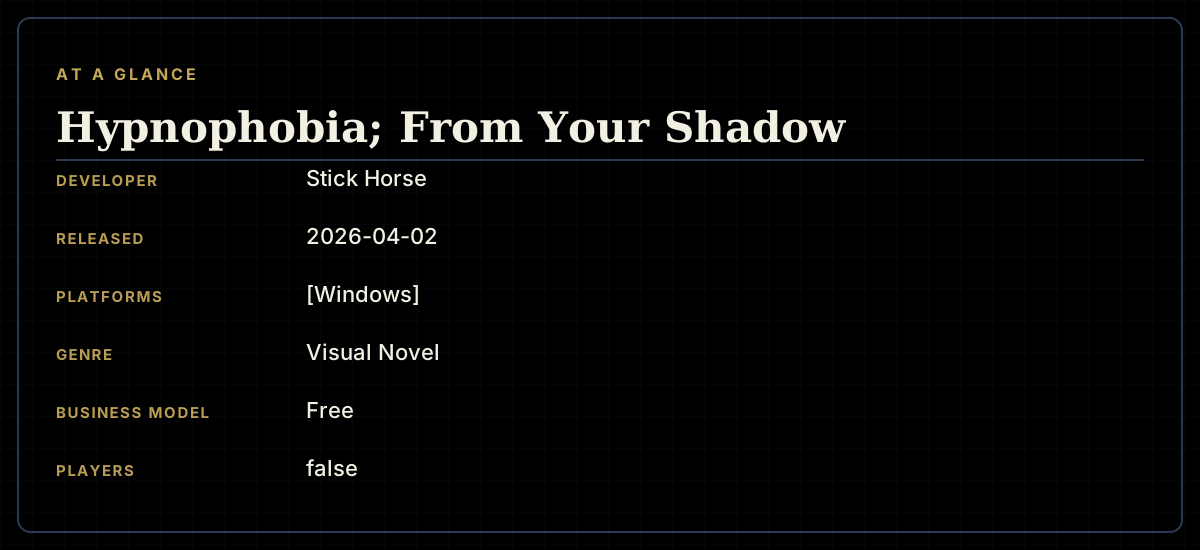
Key facts at a glanceWanderer Editorial -
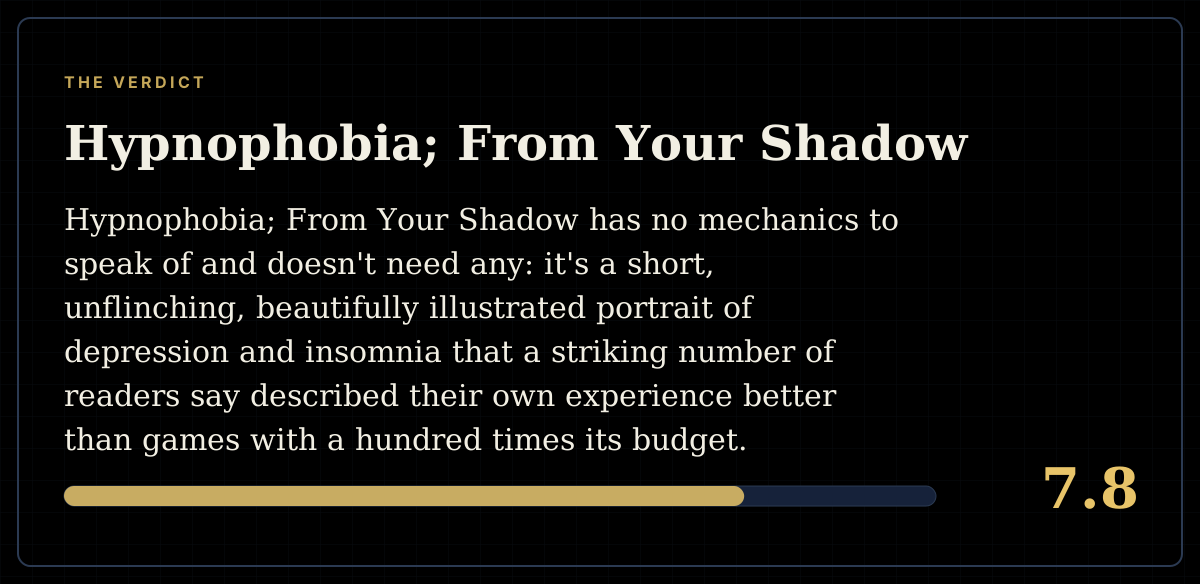
The short versionWanderer Editorial