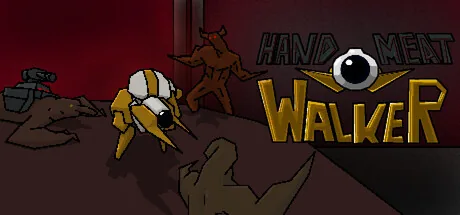
Game review
Hand Meat Walker Review: A Boomer Shooter Carried by Its Robot Buddy
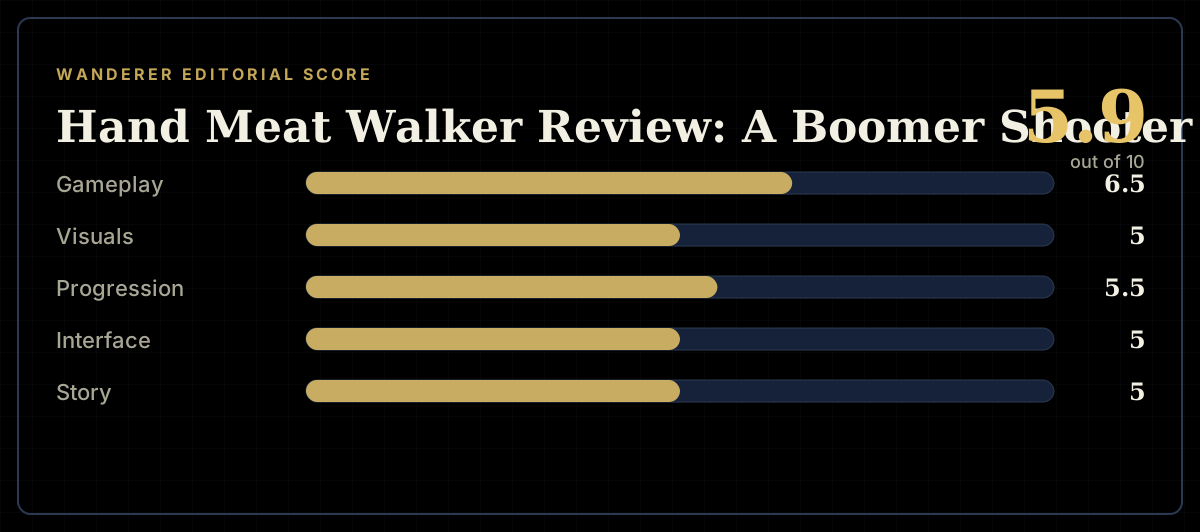
5.9 / 10
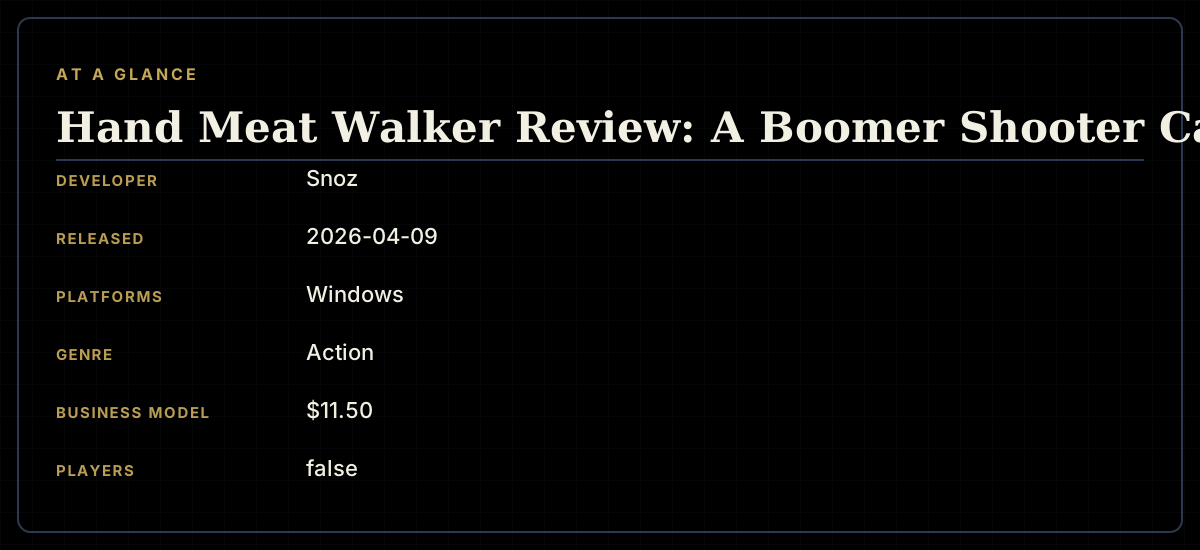
- Developer
- Snoz
- Publisher
- Snoz
- Released
- 9 April 2026
- Platforms
- Windows
- Genre
- Action
- Monetisation
- $11.50
- Players
- false
The short version
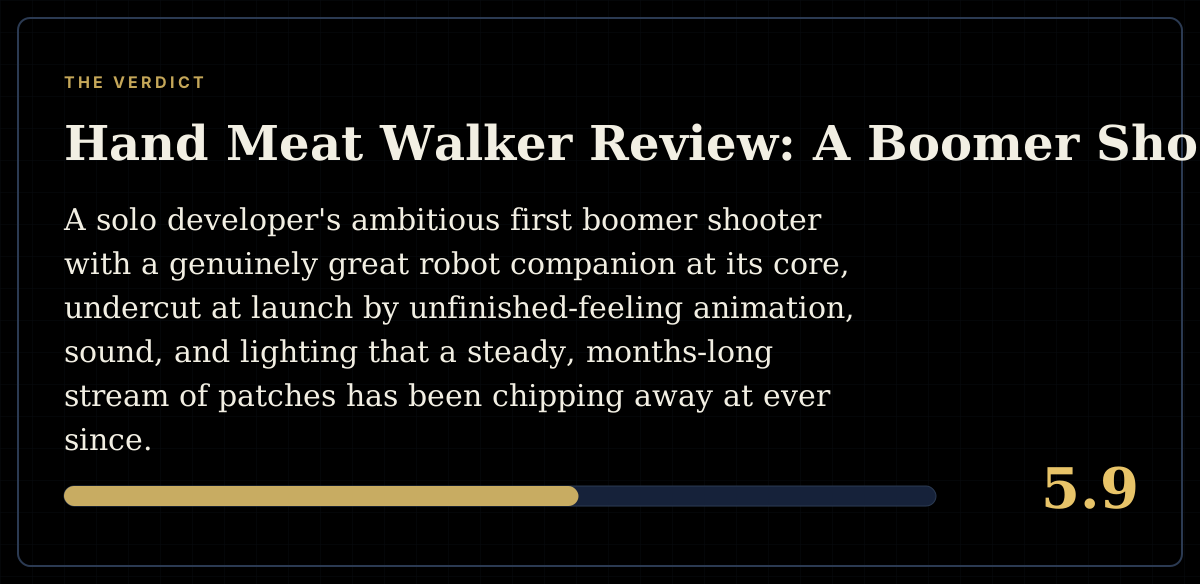
A solo developer's ambitious first boomer shooter with a genuinely great robot companion at its core, undercut at launch by unfinished-feeling animation, sound, and lighting that a steady, months-long stream of patches has been chipping away at ever since.
Biggest strengths
- A genuinely memorable robot companion, praised by nearly every reviewer as the game's best idea and biggest source of personality
- Competent, fun core gunplay backed by a fitting industrial soundtrack, according to the review sample's most detailed critiques
- A steady, extensive post-launch patch history (15 update posts, versions 1.2.0 through 1.2.5) directly targeting complaints reviewers actually raised, like ammo scarcity and companion survivability
Biggest weaknesses
- Multiple detailed reviewers describe unfinished-feeling models, animation, and sound design, especially early monster and environment audio
- Levels criticized as fairly basic and empty, with little incentive to explore beyond the main path
- Excessively dark environments in places, with no flashlight or alternate light source to help navigation
Who it's for: Boomer shooter fans with patience for rough production values and a soft spot for a scrappy companion character; not for anyone wanting a polished, AAA-tier retro FPS.
Our recommendation: Try the demo first, then buy on sale
5.9 / 10
A boomer shooter with a killer gimmick
Hand Meat Walker is a retro-styled, strategy-inflected FPS built around exploring chunky old-school maps and fighting bizarre creatures — standard boomer-shooter territory, elevated by one specific idea that every reviewer in the sample keeps coming back to: your robot companion. One reviewer put it best, calling him "not some cute mascot," but a creature who "spits napalm, gibs monsters into wet confetti, and drinks their blood like it's electrolyte gel," who gets stuck in doorways and wanders into danger and somehow becomes "more lovable" because of it. That's the game's real hook, and it's a genuinely distinctive one for the genre.
The two reviews that actually matter
Two reviewers put in the real work here, each logging around 12 hours to beat the game and writing detailed, balanced accounts of the experience. Neither disliked the game, and both explicitly said they never felt compelled to stop playing — but both also catalogued real, specific problems: ammo scarcity in the early maps (since patched), a robot companion who initially died too easily to certain enemies (also since patched), and a general sense, in one reviewer's words, that "many of the in-game models felt unfinished," with "many assets appearing untextured or lacking detail." That reviewer's breakdown covered graphics, sound, controls, animation, level design, and lighting in turn, and landed on a fair, measured conclusion: "a competent game with some genuinely good ideas" that "currently feels quite barebones," with clear potential once it gets more polish.
Real technical rough edges, honestly catalogued
Taking that detailed critique at face value is worth doing, since it's corroborated by other reviews rather than standing alone. Creature audio disconnected from on-screen action, a lack of ambient environmental sound, floaty rotation without transition animation on both enemies and the companion, unclear damage feedback during combat, and areas dark enough to make navigation frustrating rather than atmospheric — these are concrete, specific complaints, not vague dissatisfaction. A shorter, more enthusiastic review echoed the atmosphere praise while glossing over these issues, but didn't contradict them.
When it goes wrong early
The one negative review in the sample is short but pointed, and worth including precisely because it doesn't match the more positive accounts: a player who logged only 14 minutes described "a bunch of empty rooms and hallways with hoards of the same few enemies," no map, and running out of ammo while wandering lost, never even reaching the robot companion that everyone else calls the game's best feature. Read alongside the more detailed positive reviews' own mention of early-game ammo issues on the first two maps, this looks like a real, if since-patched, rough-start problem rather than an isolated complaint — a bad first fifteen minutes can be fatal for a first impression, even in a game that gets much better once its central mechanic kicks in.
A developer visibly listening
What's genuinely reassuring here is the sheer volume of post-launch attention: Steam's news feed shows 15 separate update posts since launch, running from version 1.2.0 through 1.2.5, plus a sale event. The very first detailed review explicitly credits several of these patches by name — more ammo added, Map 2 removed, the companion's survivability against laser enemies improved — describing changes that happened literally while they were still playing through the game. That's about as direct a confirmation as a review can offer that the developer is reading feedback and reacting to it quickly, for a solo project this size.
Is $11.50 the right price?
Both of the detailed reviewers raised the price directly, and both landed on some version of "it's a stretch, but not a dealbreaker." One noted they weren't sure they agreed with the current price tag but acknowledged they didn't know the game's development costs; the other said that at its current price, "it may be difficult to recommend," while still crediting the strong underlying ideas. That's a fair, honest tension to sit with as a buyer: the core concept and companion character are worth experiencing, but the production values haven't fully caught up to the asking price yet, even after months of patches.
A solo project, judged as one
It's worth keeping in mind throughout that this is, per one reviewer's own framing, "a first project from a solo developer." That context doesn't excuse rough edges, but it does explain their shape: the things that are missing (ambient sound design, transition animation, exploration incentives, a flashlight) are exactly the kind of production polish that tends to fall by the wayside when one person is building an entire game alone, rather than signs of a fundamentally broken design. The things that do work well — the core gunplay, the soundtrack, and especially the companion character's writing and behavior — are the parts that needed genuine creative judgment rather than raw headcount to get right, and those are the parts every reviewer singles out as successes. That split is a reasonable way to read a solo debut: judge the vision and the core feel charitably, and treat the technical gaps as a to-do list rather than a verdict on the whole project.
Verdict
Hand Meat Walker is a scrappy, ambitious solo debut with a genuinely great central idea in its robot companion, wrapped around a boomer-shooter shell that's still visibly rough around the edges — unfinished-feeling models and animation, patchy sound design, and level layouts that don't reward exploration. The extensive, ongoing patch history is a real point in its favor, addressing exactly the complaints its own most detailed reviewers raised. Try the demo first to see if the aesthetic and companion mechanic click for you, and consider waiting for a sale if the current price gives you pause — but there's a real, likable game underneath the rough edges.
Pros and cons
Pros
- A genuinely memorable robot companion, praised by nearly every reviewer as the game's best idea and biggest source of personality
- Competent, fun core gunplay backed by a fitting industrial soundtrack, according to the review sample's most detailed critiques
- A steady, extensive post-launch patch history (15 update posts, versions 1.2.0 through 1.2.5) directly targeting complaints reviewers actually raised, like ammo scarcity and companion survivability
- Real enemy escalation and boss design praised specifically for making earlier threats feel dangerous again later
Cons
- Multiple detailed reviewers describe unfinished-feeling models, animation, and sound design, especially early monster and environment audio
- Levels criticized as fairly basic and empty, with little incentive to explore beyond the main path
- Excessively dark environments in places, with no flashlight or alternate light source to help navigation
- A negative review reports running out of ammo and getting lost with no map before even reaching the robot companion — a genuinely rough early-game experience for at least one player
Screenshots
-
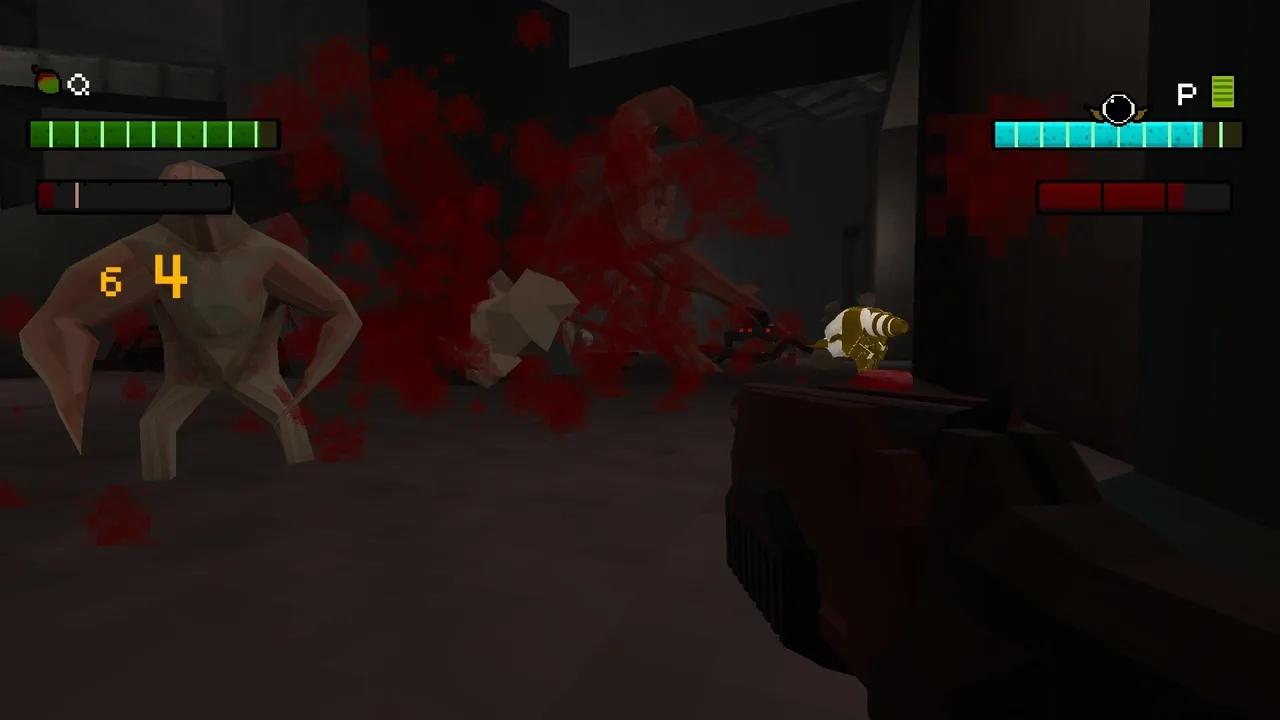
Image: Snoz via Steam -
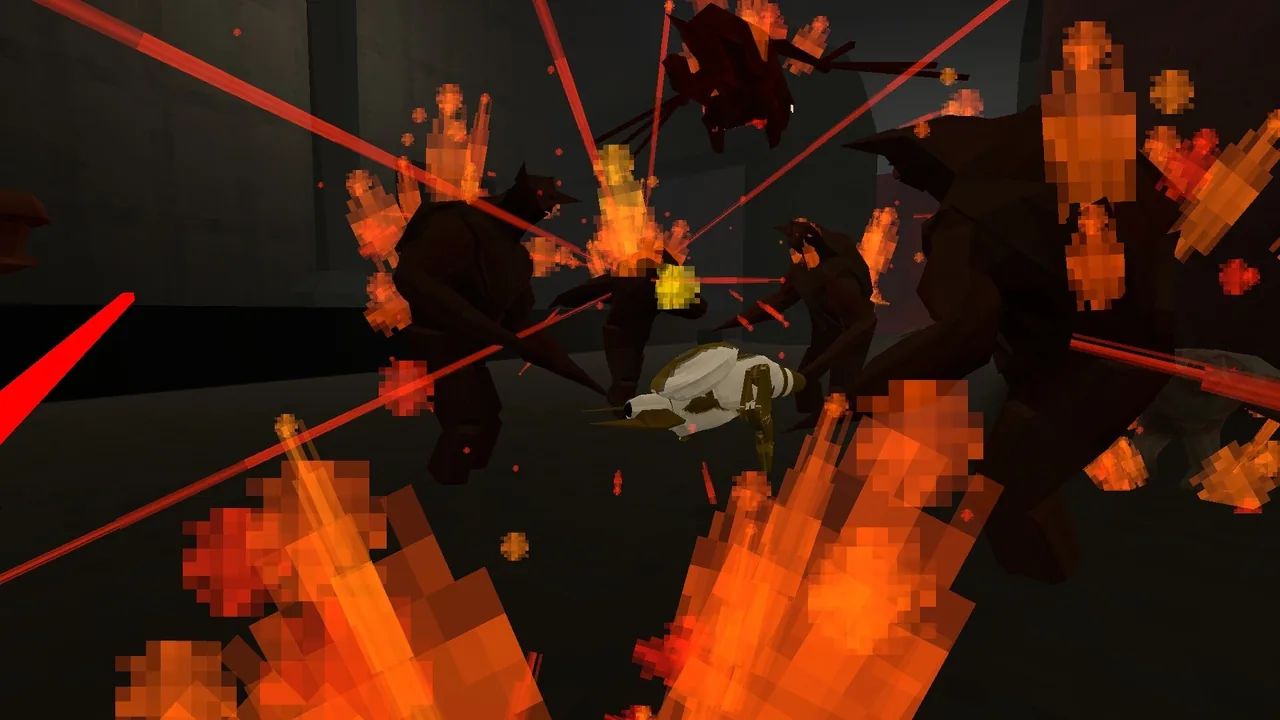
Image: Snoz via Steam -
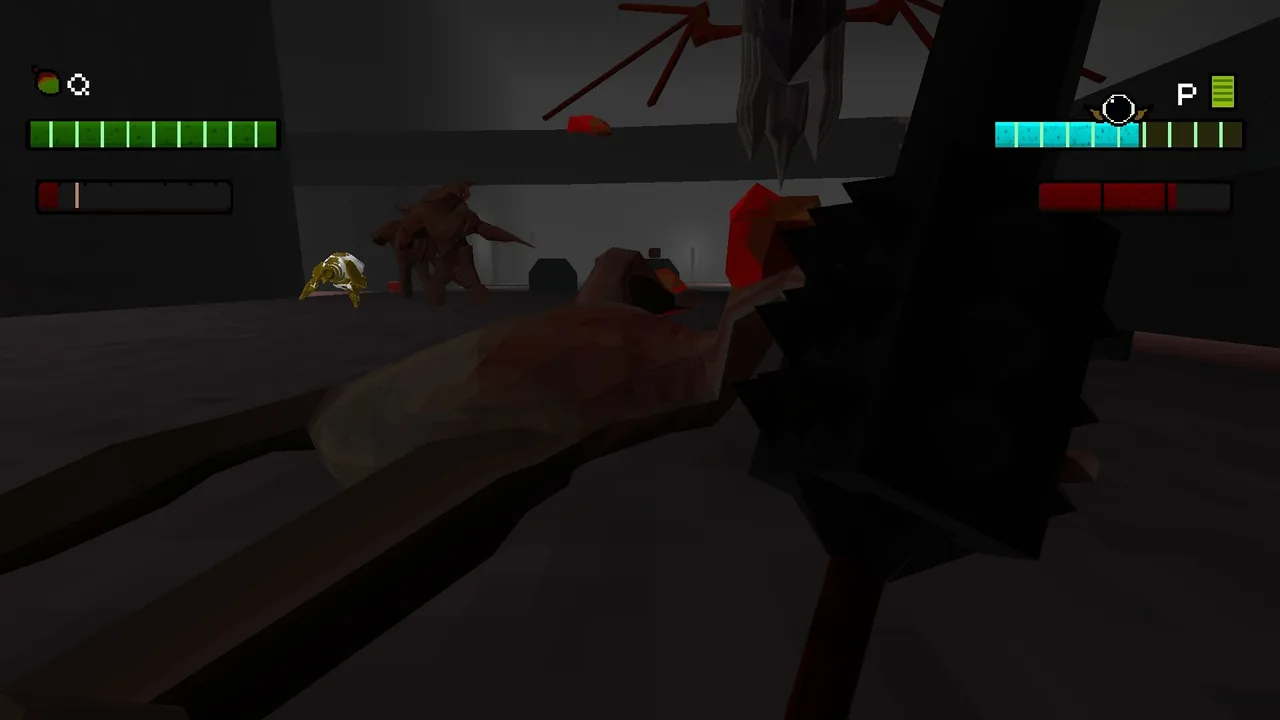
Image: Snoz via Steam -
Wanderer Editorial -
Wanderer Editorial -
Wanderer Editorial