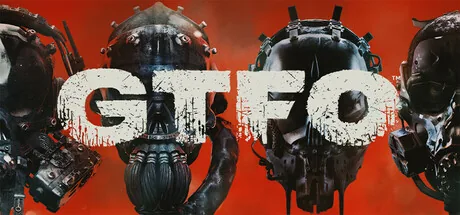
Game review
GTFO
6.5 / 10
- Developer
- 10 Chambers
- Publisher
- 10 Chambers
- Released
- 9 December 2021
- Platforms
- Windows
- Genre
- Co-op Horror Shooter
- Monetisation
- One-time purchase, NZ$59.99. No microtransactions, no DLC.
- Players
- Online co-op for up to 4 players, with AI bot teammates available to fill empty slots
The short version
GTFO is Very Positive at 85.1% across 36,588 reviews, built on a genuinely distinctive premise: four players descending into a hostile, resource-scarce complex where every gunshot risks alerting something far worse than what you can currently see. Reviewers consistently credit its atmosphere and tension as some of the best co-op horror design available.
The complaint that recurs with real consistency, across nearly every year since 2020, is structural rather than a design flaw in the missions themselves: GTFO has no built-in server browser or real matchmaking system, meaning players without a premade group of three friends are routed to external Discord servers to find teammates — a barrier that's grown more severe as the playerbase has shrunk. The 1.0 update in December 2021 added AI bot teammates specifically to make solo play viable, and that genuinely helped, but reviewers writing years after that update still describe wanting human co-op and being unable to reliably find it.
Biggest strengths
- A genuinely distinctive, tense atmosphere built around resource scarcity and the constant threat of drawing more danger than you can handle
- Deep, rewarding coordination-based gameplay that reviewers consistently rank among the best co-op horror design available
- AI bot teammates, added in the 1.0 update, make full solo campaign completion genuinely possible
Biggest weaknesses
- No built-in server browser or real matchmaking system, a structural gap reviewers have reported consistently since 2020, forcing reliance on external Discord communities to find human teammates
- A declining playerbase in recent years has made that gap worse, with reviewers in 2025 and 2026 describing very low concurrent population making pickup groups harder to find than in the past
- Difficulty does not scale down for two or three players, so smaller groups face the same challenge designed around a full four
Who it's for: Groups of three friends specifically looking for one of the most punishing, atmospheric co-op horror experiences available, who are prepared to commit to genuine, sustained coordination. Less suited to solo players or duos hoping to matchmake with strangers inside the game itself.
Our recommendation: Buy it only if you already have a committed group of three friends who'll play regularly — that's overwhelmingly where this game succeeds according to its reviewers. If you're going in solo, know that AI bot teammates make the campaign completable, but reviewers consistently say the human co-op experience the game is actually designed around isn't something you can reliably find through the game itself.
6.5 / 10
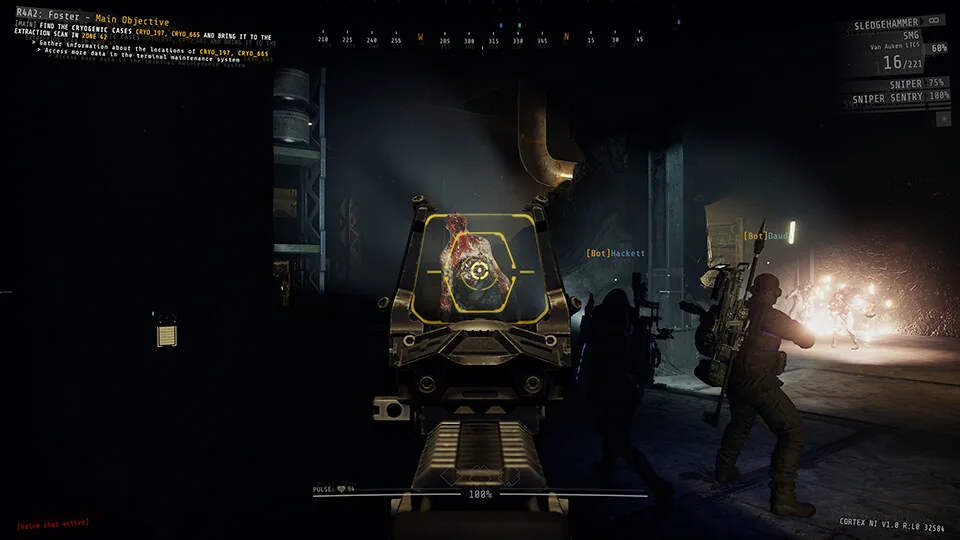
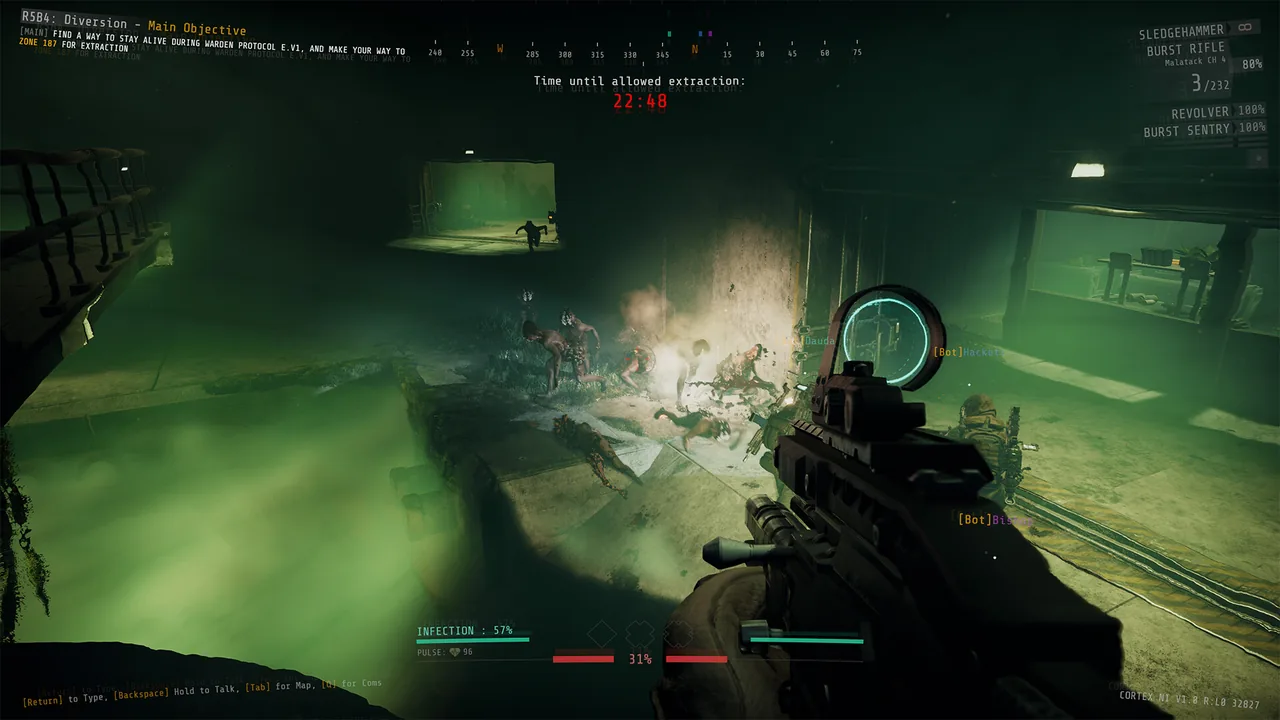
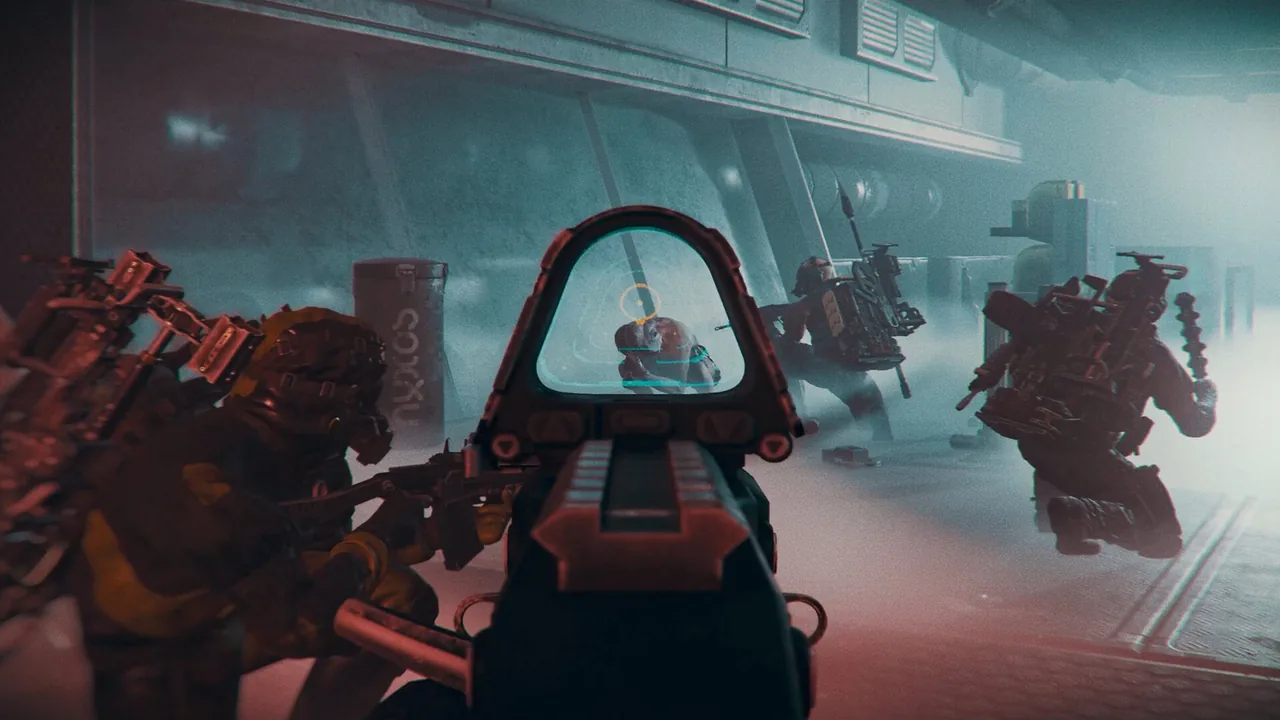
GTFO's pitch is simple to state and genuinely hard to execute well: four players, a flashlight, a scanner, and a complex full of things that will kill you the moment you make too much noise. Reading widely through its reviews, that pitch mostly delivers — and the game's biggest problem turns out to be less about what happens inside a mission than about getting a full team into one in the first place.
Tension that actually works
Reviewers across every year of this game's history describe a specific, distinctive kind of dread: scanning a room full of sleeping enemies knowing one stray shot could wake all of them at once, managing scarce ammo and resources across a long, unforgiving expedition, and the genuine relief of a team pulling off a difficult extraction together. "Every action you take abrades your resources, your options, your safety margin," reads one representative review describing the game's core tension. This isn't manufactured difficulty for its own sake — reviewers consistently credit it as some of the best-executed co-op horror atmosphere available, built specifically around forcing real communication rather than individual skill.
The problem that isn't in the missions
Here's what actually drives most of this game's negative reviews, and it recurs with striking consistency from 2020 through 2026: GTFO has no built-in server browser or meaningful matchmaking system. Players without an existing group of three friends are directed toward external Discord communities to find teammates, and reviewers describe that barrier as a genuine dealbreaker rather than a minor inconvenience. "Cool game, but utterly impenetrable for a solo new player. You cannot find people to do early content, not even on the discord," reads a 2025 review. Another, from early 2026, states it plainly: "If you don't have 3 other friends all willing to download and play, Just don't even bother." Worth noting: the December 2021 1.0 update added AI bot teammates specifically to let solo players complete the campaign, and that genuinely works as a way to finish the game — but reviewers writing well after that update still describe wanting the human co-op experience the game is actually built around and being unable to reliably find it, a gap that recent reviews describe as worsening alongside a shrinking concurrent playerbase.
A dated but real community controversy
Worth mentioning briefly: during Early Access, several reviewers describe a genuinely hostile relationship between 10 Chambers' Discord moderation team and the community over datamining accusations and vague legal threats tied to the game's EULA. This is corroborated beyond the reviews themselves — a 10 Chambers representative later acknowledged the moderation team had been "needlessly dogmatic at times" and said the approach had been toned down. It's a dated, largely pre-1.0 issue rather than a current one, but it left some longtime community members with lasting distrust worth being aware of.
Reading the completion data
With 57 tracked achievements, the completion curve reflects a genre built for a dedicated, committed core rather than broad casual play. Early milestones sit around 25-31%, a relatively low starting point for a first achievement tier, consistent with a game whose entry barrier — both in difficulty and in finding a team — filters out a meaningful share of buyers before they get far. The rarest achievements fall under 1%, reflecting how much sustained coordination full completion actually requires.
6.5 out of 10. GTFO succeeds completely at the tense, atmospheric co-op horror experience it set out to build, and reviewers across nearly six years back that up consistently. It's held below the top tier by a real, structural gap that's never been fully addressed: no reliable way to find human teammates inside the game itself, a problem that predates and outlasts the AI bots added to work around it. If you already have three committed friends, this is genuinely one of the best co-op horror experiences available. If you don't, go in with realistic expectations about how you'll find them.
Pros and cons
Pros
- A genuinely distinctive, tense atmosphere built around resource scarcity and the constant threat of drawing more danger than you can handle
- Deep, rewarding coordination-based gameplay that reviewers consistently rank among the best co-op horror design available
- AI bot teammates, added in the 1.0 update, make full solo campaign completion genuinely possible
- No microtransactions or grinding required to access the full intended experience once you own the game
Cons
- No built-in server browser or real matchmaking system, a structural gap reviewers have reported consistently since 2020, forcing reliance on external Discord communities to find human teammates
- A declining playerbase in recent years has made that gap worse, with reviewers in 2025 and 2026 describing very low concurrent population making pickup groups harder to find than in the past
- Difficulty does not scale down for two or three players, so smaller groups face the same challenge designed around a full four
- A 2021 Early Access-era controversy over the developer's Discord moderation and legal threats around community datamining, which 10 Chambers itself later acknowledged had been "needlessly dogmatic," left some longtime community members with lasting distrust
Screenshots
-
GTFOImage: 10 Chambers via Steam -
GTFOImage: 10 Chambers via Steam -
GTFOImage: 10 Chambers via Steam -
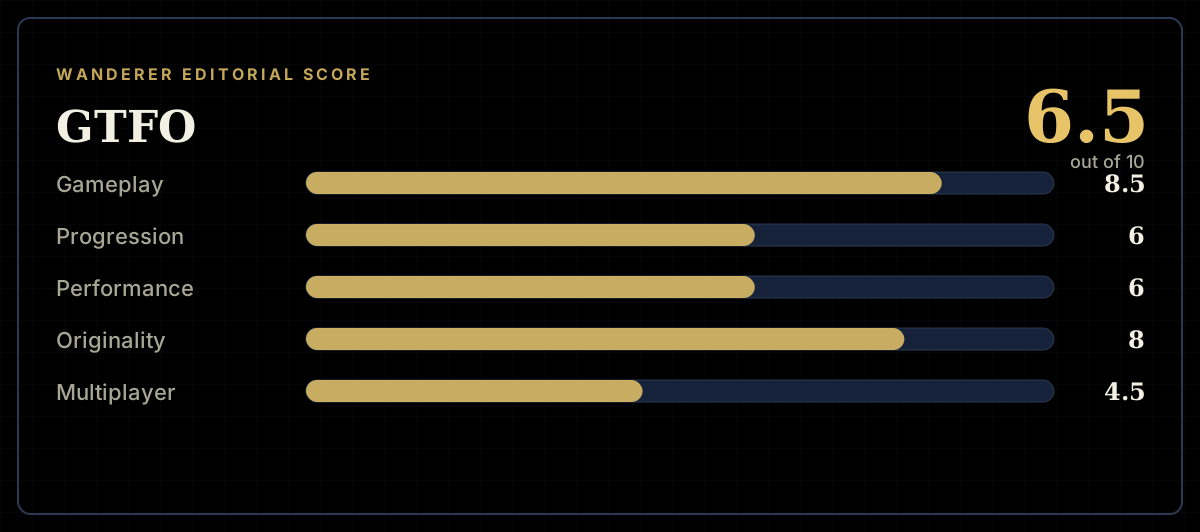
How the review scores each part of the gameWanderer Editorial -
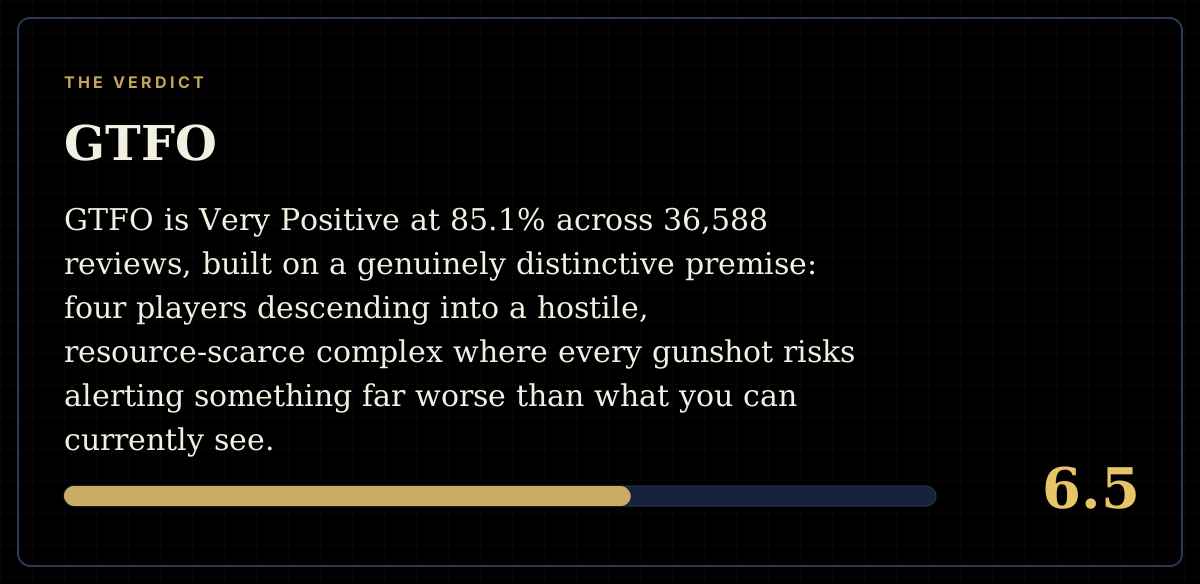
The short versionWanderer Editorial