Game review
FREERIDE
6.5 / 10
- Developer
- Flightyfelon Games Inc.
- Publisher
- Flightyfelon Games Inc.
- Released
- 1 May 2025
- Platforms
- Windows, macOS
- Genre
- Adventure, Indie, RPG
- Monetisation
- Premium, one-time purchase. No microtransactions.
- Players
- Single-player only.
The short version
FREERIDE, developed and published by Flightyfelon Games Inc., casts players as a passenger aboard a mystical train journeying through the Spirit World, helping strange spirits resolve their unfinished business across a looping, branching narrative that doubles as an unusually earnest personality test. Reviewers consistently praise its distinctive minimalist art style, ambient soundtrack, and the way its world rewards repeated loops with new context and characters. But a large, heavily corroborated share of the sample reports finicky, physics-based combat that undermines key moments, a choice-detection system several found unclear or unresponsive to their actual decisions, and diminishing narrative returns for players who push past the first few loops chasing the true ending.
Biggest strengths
- Praised for its distinctive presentation, with one reviewer calling it "a labour of love from its developers" whose "artstyle and music are absolutely stunning," and another describing it as having "a very unique art style with a pretty decent soundtrack."
- Praised for its emotional and narrative depth, with one reviewer writing "the game tricked me... made me care about the characters," and another describing the layered, loop-based storytelling as giving "that 'oh OH' moment" that felt "sooo satisfying" as pieces came together.
- Praised for rewarding repeated playthroughs with new context, with one reviewer noting "with every loop you'll learn more about the world and its inhabitants as well as different ways to advance through the story," calling the amount to discover "a little bit overwhelming" in a good way.
Biggest weaknesses
- The single most heavily corroborated complaint concerns combat and controls, with one reviewer calling "the controls for throwing... the worst most unresponsive thing I've used in a while," and another stating bluntly "the controls are really bad, and that sort of makes the whole thing break down."
- A second, widely corroborated complaint concerns the personality-test mechanic's choice detection, with one reviewer reporting the game commented on choices "I was literally just wrestling with the controls" to make rather than deliberately choosing, and another concluding "detection of choices is average at its best, so all of the personality component is kinda screwed."
- A third complaint concerns diminishing returns across the looping structure required to see the full story, with one reviewer reporting the game "starts on a high note" but "by the third the cracks start showing," ultimately giving up before the true ending because "the story doesn't change enough to justify the many loops needed."
Who it's for: Fans of introspective, choice-driven narrative games and unique art direction who can tolerate rough, physics-based combat and some structural repetition; players wanting tight, responsive controls or a single, clearly-paced playthrough may find the looping structure and combat friction frustrating.
Our recommendation: A genuinely distinctive, atmospheric narrative adventure with real emotional depth, undercut by clunky combat and a personality-test mechanic that doesn't always track player intent.
6.5 / 10
A distinctive, atmospheric premise
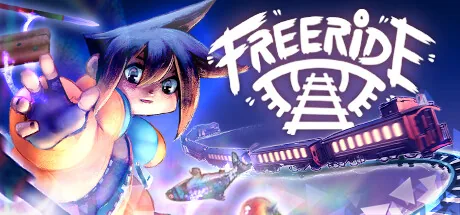
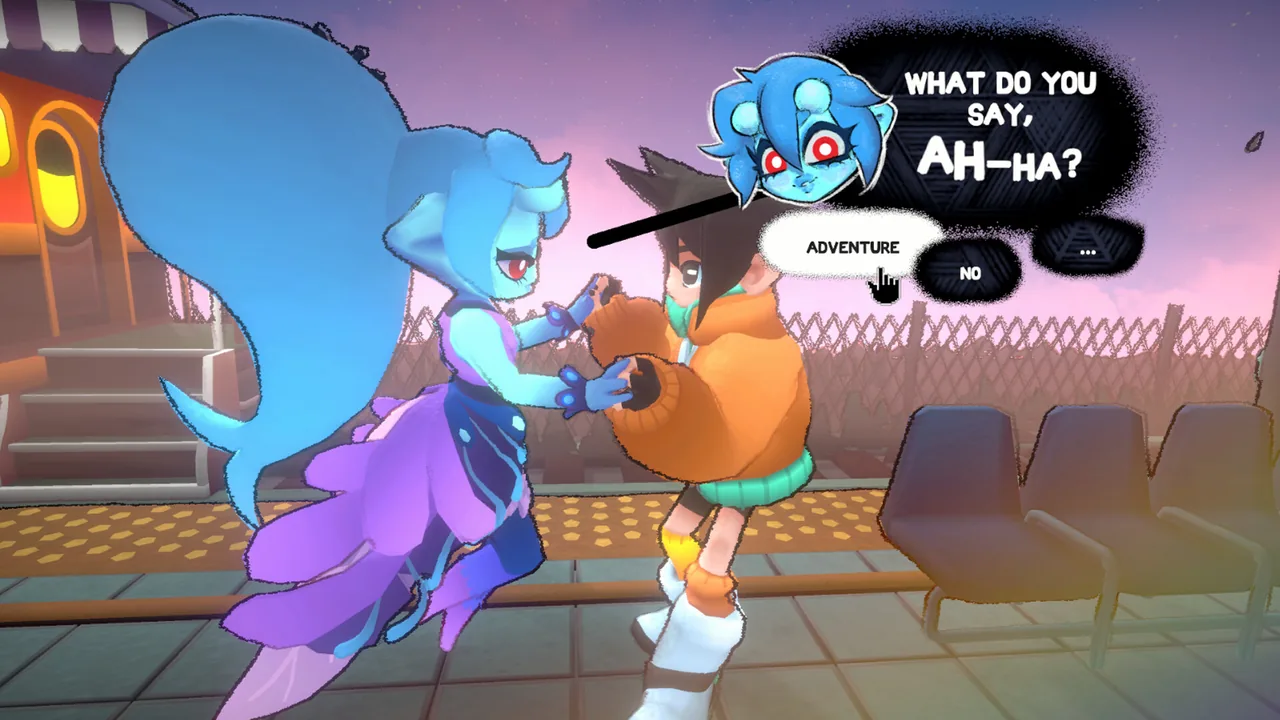
FREERIDE, released 1 May 2025 by developer and publisher Flightyfelon Games Inc., casts players as a passenger aboard a mystical train journeying through the Spirit World, tasked with helping strange spirits resolve their unfinished business or, alternatively, leaving them to despair. The game markets itself partly as a personality test, subtly reading player choices across a highly branching narrative that reveals only about a third of its full story in any single playthrough. Reviewers consistently single out its presentation as a genuine standout. One reviewer calls it "a labour of love from its developers," praising an "artstyle and music" that are "absolutely stunning," while another, who had followed the game since its earlier demo, describes "a very unique art style with a pretty decent soundtrack" carrying an otherwise "confusing" story that rewards patience and multiple playthroughs.
That narrative depth resonates strongly with reviewers who commit to its looping structure. One writes candidly that "the game tricked me... made me care about the characters," adding that by the end they "didn't even care that much about the results" of the personality test itself, more invested in "the characters and their well-being." Another reviewer frames the experience in almost puzzle-like terms, writing that piecing together the wider story across multiple loops "paints a beautiful picture," delivering an "'oh OH' moment" that felt "sooo satisfying," and calling the overall game "a gem." A further reviewer, summarizing the pitch directly, describes it as "a narrative RPG that doubles as a personality test," praising its "minimalist art style and ambient soundtrack" for enhancing "the introspective experience" despite a relatively brief runtime.
Combat and controls undermine the vision
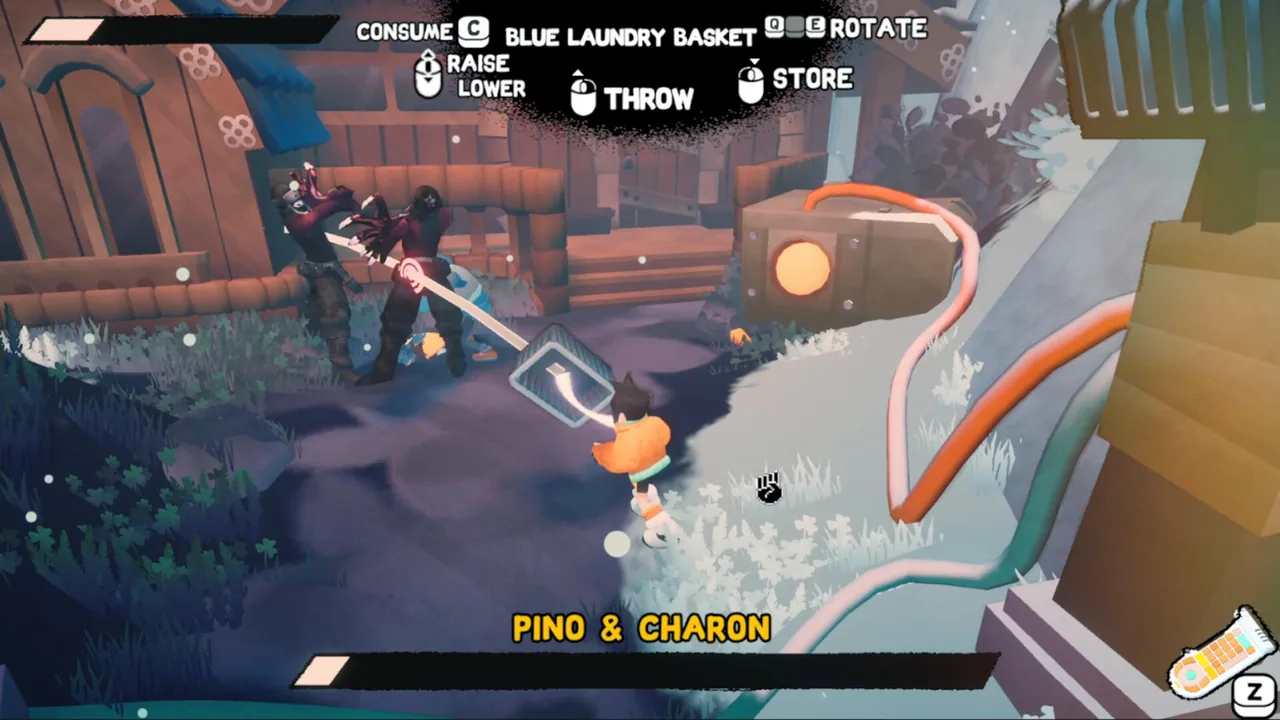
Set against that atmosphere, the review sample's single most heavily corroborated criticism concerns FREERIDE's combat and control scheme, which many reviewers describe as actively working against the experience the game is trying to create. One reviewer, who otherwise enjoyed multiple loops, singles out "the controls for throwing" as "the worst most unresponsive thing I've used in a while," a serious complaint for mechanics tied directly to resolving in-game encounters. Another reviewer is blunter still, stating "the controls are really bad, and that sort of makes the whole thing break down," describing a frustrating loop of "wrestling with the controls" rather than engaging meaningfully with the game's systems.
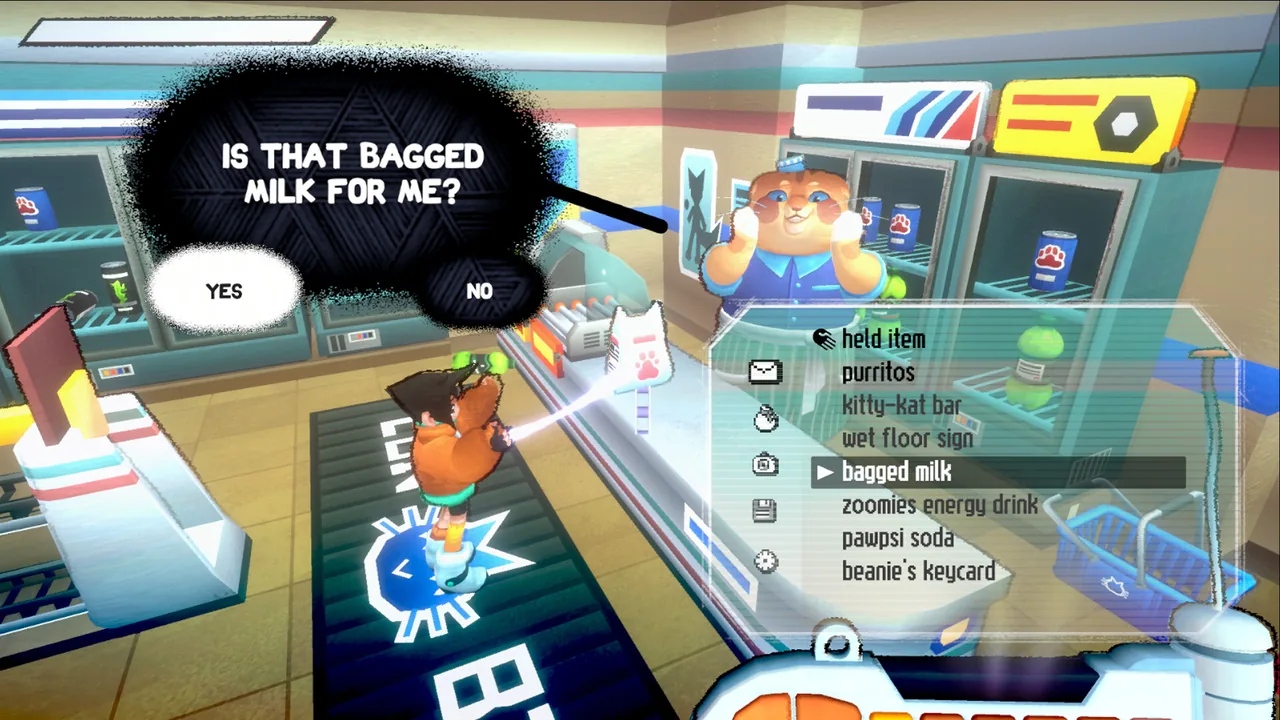
That control friction compounds into a second, closely related issue: several reviewers report the game's personality-test mechanic misreads player intent specifically because of these control problems. One reviewer recounts the game commenting on choices "I was literally just wrestling with the controls" to attempt, rather than choices deliberately made, undermining the entire premise of a system meant to reflect genuine player psychology. Another reviewer sums up the resulting frustration plainly: "detection of choices is average at its best, so all of the personality component is kinda screwed," a serious critique given that mechanic is the game's core marketing hook. A separate reviewer reports control mapping issues specific to controller play, noting confirm and back buttons are swapped relative to convention with "no rebind option in game," making the experience uncomfortable enough that they "can't comfortably recommend it" despite wanting to enjoy it.
Diminishing returns across repeated loops
Beyond mechanical friction, a third, recurring complaint concerns the game's core looping structure once players push past their first attempt chasing a "true" ending. One reviewer reports the game "starts on a high note and stays on it for the first and second loops," but "by the third the cracks start showing," ultimately abandoning the pursuit of the true ending because "the story doesn't change enough to justify the many loops needed." A separate reviewer describes losing narrative footing entirely partway through a single loop, writing the story "got weirdly big suddenly with wild themes" involving "human extinction and war without warning," a tonal shift that left them feeling "left in the dirt" relative to expectations set by the game's earlier, gentler marketing.
A smaller but genuine additional complaint concerns the game's fixed camera angles, which one reviewer reports caused unusually strong motion sickness, "more motion sick than any other game," despite finding nothing wrong with the content itself, and specifically cautions players prone to motion sickness to be wary. Combined with reports of unintentional sequence-breaking and reward prompts reappearing after quests are already completed, described by one longtime reviewer as leaving the game "feeling buggy and incomplete," these issues suggest FREERIDE's ambitious looping design occasionally outpaces its technical execution.
A game that keeps finding an audience
Despite its mechanical friction, several reviewers frame FREERIDE as the kind of game that earns fierce loyalty from exactly the players it's aimed at, particularly those who followed its earlier public demo. One reviewer, writing simply "so happy to see this released," describes loving both the demo and "how i change each time" across playthroughs, adding they expect to "enjoy the full game" even more. Another, self-described as writing their "first review ever," reports being immediately won over by the cast, calling the characters "all wonderful to interact with" and expressing being "very happy with my purchase." That pattern, players discovering the game through a lengthy pre-release demo period and arriving already invested in its world and characters, appears to explain some of the gap between its most enthusiastic supporters and reviewers encountering it cold, who are more likely to bounce off the combat and choice-detection issues before the narrative has had a chance to win them over.
Verdict
FREERIDE is, by its own review sample's account, a genuinely distinctive and atmospheric narrative adventure with real emotional depth, striking art direction, and a looping structure that rewards curious, patient players with a richer picture of its world across multiple playthroughs. But heavily corroborated complaints about unresponsive, physics-based combat, a personality-test mechanic that several reviewers found confused by control friction rather than genuinely reflective of player choice, and diminishing narrative payoff for those chasing its true ending all point to a game whose ambition occasionally exceeds its execution. Players drawn to introspective, choice-driven storytelling and willing to push through some rough mechanical edges should find a lot to love here; anyone expecting tight, responsive controls or a single clean playthrough may come away more frustrated than moved.
Pros and cons
Pros
- Praised for its distinctive presentation, with one reviewer calling it "a labour of love from its developers" whose "artstyle and music are absolutely stunning," and another describing it as having "a very unique art style with a pretty decent soundtrack."
- Praised for its emotional and narrative depth, with one reviewer writing "the game tricked me... made me care about the characters," and another describing the layered, loop-based storytelling as giving "that 'oh OH' moment" that felt "sooo satisfying" as pieces came together.
- Praised for rewarding repeated playthroughs with new context, with one reviewer noting "with every loop you'll learn more about the world and its inhabitants as well as different ways to advance through the story," calling the amount to discover "a little bit overwhelming" in a good way.
Cons
- The single most heavily corroborated complaint concerns combat and controls, with one reviewer calling "the controls for throwing... the worst most unresponsive thing I've used in a while," and another stating bluntly "the controls are really bad, and that sort of makes the whole thing break down."
- A second, widely corroborated complaint concerns the personality-test mechanic's choice detection, with one reviewer reporting the game commented on choices "I was literally just wrestling with the controls" to make rather than deliberately choosing, and another concluding "detection of choices is average at its best, so all of the personality component is kinda screwed."
- A third complaint concerns diminishing returns across the looping structure required to see the full story, with one reviewer reporting the game "starts on a high note" but "by the third the cracks start showing," ultimately giving up before the true ending because "the story doesn't change enough to justify the many loops needed."
Screenshots
-
FREERIDEImage: Flightyfelon Games Inc. via Steam -
FREERIDEImage: Flightyfelon Games Inc. via Steam -
FREERIDEImage: Flightyfelon Games Inc. via Steam -
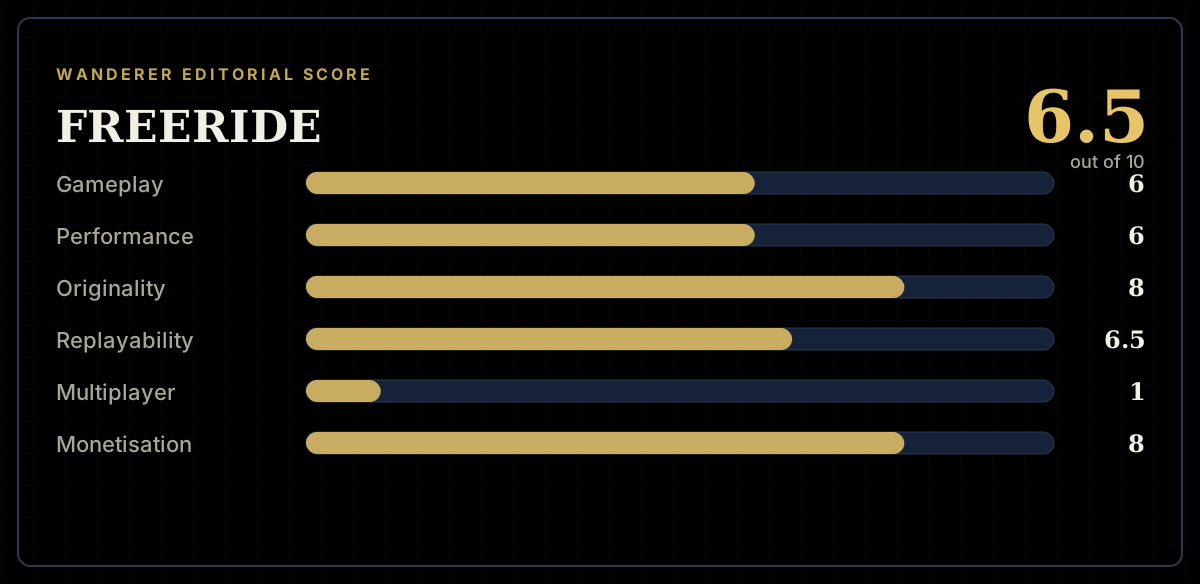
How the review scores each part of the gameWanderer Editorial -
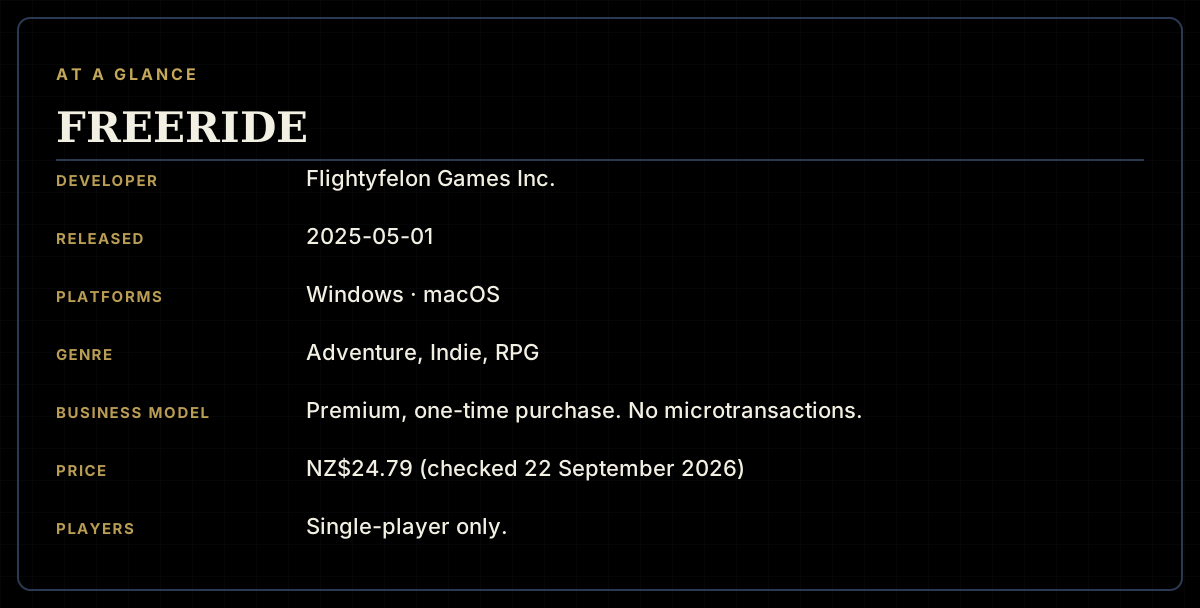
Key facts at a glanceWanderer Editorial -
The short versionWanderer Editorial