Game review
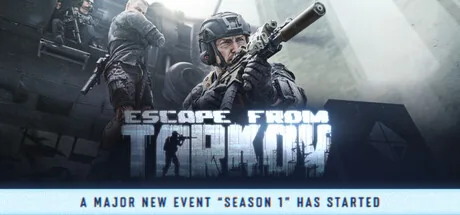
Escape from Tarkov
6 / 10
- Developer
- Battlestate Games
- Publisher
- Battlestate Games
- Released
- 15 November 2025
- Platforms
- Windows
- Genre
- Extraction Shooter / Survival RPG
- Monetisation
- NZ$85.99 for the base game. The PVE Zone mode is a separate NZ$51.99 purchase, taking the full single-player-capable package to NZ$137.98. There is also a premium currency, TarCoin, sold in packs from NZ$9.00, plus three paid edition upgrades. Checked 4 August 2026.
- Players
- Online PvPvE raids, with a separately-sold PvE mode
The short version
Nothing else makes a firefight feel like this. The weapon handling, the ballistics, the medical system, the way a raid turns from a looting trip into a fight for your own kit — Tarkov invented the extraction genre and still executes the core better than anything that copied it. Everything around that core is a warning. Two years of purchase to play the full thing, a decade of technical debt that surfaces as desync and server errors, an account and launcher layer that has cost players their progress, and a support operation its own customers describe as contemptuous. The game is a 9. The product is not.
Biggest strengths
- The best moment-to-moment gunfighting in any shooter — recoil, ballistics, attachments and wounds all modelled to a depth nobody else attempts
- Raid tension is genuinely unmatched, because everything you carried in is lost when you die
- Deep persistent progression across hideout construction, trader reputation, skills and a long quest chain
Biggest weaknesses
- The PvE mode is a separate NZ$51.99 purchase on top of an NZ$85.99 game, and there is a premium currency on top of that
- The Steam launch was catastrophic — 58 of the 100 most-upvoted negative reviews date from November 2025 alone, mostly login, account and launcher failures
- Long-standing owners from the pre-Steam era report being asked to pay again for Steam access
Who it's for: Players who want the most demanding, most rewarding firefights in gaming and have the patience to absorb genuine operational dysfunction. Not for anyone on a budget, not for players who need reliable service, and absolutely not for newcomers without a friend to teach them.
Our recommendation: If the loop appeals, watch someone play it for an hour before spending anything — this is not a game you can evaluate from a store page, and the refund window is easy to burn on login problems alone. Budget honestly: the PvE mode most solo players actually want is a separate NZ$51.99 on top of the NZ$85.99 base. And know that the sharpest recent complaints are about accounts, regions and support rather than gameplay, so factor in the possibility of needing help from a company that reviewers say is bad at giving it.
6 / 10
Escape from Tarkov costs NZ$85.99. The PvE mode — the one a lot of people actually want, where you can learn the maps without being hunted by players with three thousand hours — is a separate NZ$51.99. There is also a premium currency called TarCoin, and three paid edition upgrades.
Now hold that against this: of the hundred most-upvoted negative reviews on Steam, fifty-eight were written in November 2025, the month it arrived. The rest are spread thinly across the nine months since, at five to eight a month.
Both of those things are true, and so is a third: the raid loop underneath is the best in its genre and nothing has matched it in a decade of trying.
The thing it does better than anyone
A Tarkov raid is a looting trip that can become a fight for your life at any second, and losing means losing everything you brought.
That premise has been copied endlessly since — I reviewed SAND: Raiders of Sophie working the same seam a fortnight ago — and the copies consistently miss what makes it land. It isn't the loot. It's the fidelity. Weapons are assembled from individual parts that change handling in measurable ways. Ballistics model penetration against specific armour classes. You don't have a health bar, you have limbs, each of which can be broken, bleeding or blacked out, and treating them takes time you may not have while someone is flanking you.
That granularity means every firefight has a texture. You hear a footstep on a specific surface, you make a decision about angle and armour and whether the thing in your bag is worth the risk, and you're usually wrong. Few games produce fear this reliably.
The progression around it is genuinely RPG-shaped: a hideout you build out over months, trader reputations that gate the good equipment, skills that improve through use, and a long quest chain that teaches the maps by making you visit their worst corners. It survives the periodic wipes because the knowledge doesn't reset even when the character does.
The launch
November 2025 was a disaster, and the negative reviews from it are worth reading as a case study in how to sour a decade of goodwill in a fortnight.
The recurring account is this: buy the game, discover you need a separate Battlestate account, discover the website is in maintenance, wait hours, fail to log in, repeat. One of the most-upvoted reviews on the game is essentially a bulleted log of that experience. Another, with nearly six thousand helpful votes, is aimed less at the game than at Valve for allowing third-party launchers that can gate a purchase behind an authentication system that can't handle launch traffic.
The refund angle sharpened it. Two hours of failed logins is two hours of Steam playtime, and Steam's refund policy doesn't care why the clock was running.
Then there's the treatment of existing owners. Players who bought high-tier editions years earlier through the developer's own store — some of them for around a hundred US dollars — report being asked to pay again for Steam access, with no acknowledgement of prior purchase. Whatever the licensing reasoning, the reputational effect on the game's most invested customers is visible throughout the launch-month reviews.
What's still wrong in 2026
Sentiment has recovered a long way — 71 of the last hundred English reviews are positive, and the median among them has 101 hours logged. The game is being enjoyed.
But the criticism that persists has changed character in a way I'd want any buyer to understand. It is no longer mostly about gameplay. It's about the company.
The most-upvoted 2026 negatives concern support and moderation. A player with 779 hours describes raising a legitimate problem and being dismissed and timed out rather than helped. A player with 830 hours reports losing 365 hours of progress to what they describe as account-system and profile failures. Another describes regional edition handling changing under them after a country's status was reclassified, stranding their purchase. One reports being permanently banned after attempting a refund.
Those last few are individual accounts and I can't verify any of them, so treat them as what they are — but the pattern is broad enough to be a finding in itself: on a game this expensive, the sharpest current complaints are about what happens when you need the company to do something for you, and the answer reviewers describe is usually nothing.
Add the long-running technical inheritance — desync, cheating, server errors — and you have a product where the thing you're buying works brilliantly right up until the infrastructure around it has to.
6.0 out of 10. Rated 6.0 out of 10.
Judged purely as a design, Tarkov is a 9. It invented a genre, it still executes that genre's core better than any successor, and there is genuinely no substitute if what you want is a firefight that frightens you.
Judged as a thing you buy, it's much harder to defend. NZ$85.99 plus NZ$51.99 for the PvE mode, plus a premium currency, plus a mandatory external launcher and account, plus a support operation its own long-term players describe with real bitterness. Six out of ten is the average of a superb game and a poor product, and I don't think either half of that sentence is unfair.
If you want it, wait for a sale, buy the base game only until you're sure, and go in knowing that the worst thing that happens to Tarkov players in 2026 usually isn't losing a raid.
Pros and cons
Pros
- The best moment-to-moment gunfighting in any shooter — recoil, ballistics, attachments and wounds all modelled to a depth nobody else attempts
- Raid tension is genuinely unmatched, because everything you carried in is lost when you die
- Deep persistent progression across hideout construction, trader reputation, skills and a long quest chain
- Weapon customisation is a hobby in itself, with real mechanical consequences rather than stat bumps
- Sentiment has recovered strongly since launch — 71 of the 100 most recent English reviews are positive, against 49% lifetime
- The median recent reviewer has 101 hours logged, which is a lot for a game this punishing
Cons
- The PvE mode is a separate NZ$51.99 purchase on top of an NZ$85.99 game, and there is a premium currency on top of that
- The Steam launch was catastrophic — 58 of the 100 most-upvoted negative reviews date from November 2025 alone, mostly login, account and launcher failures
- Long-standing owners from the pre-Steam era report being asked to pay again for Steam access
- Still requires a third-party launcher and a separate account, and the login flow can consume your Steam refund window before you have played
- Individual players report losing hundreds of hours of progress to account and region handling errors
- Support and community moderation draw sustained, specific criticism from long-term players
- Cheating, desync and server instability remain live complaints a decade into development
Screenshots
-
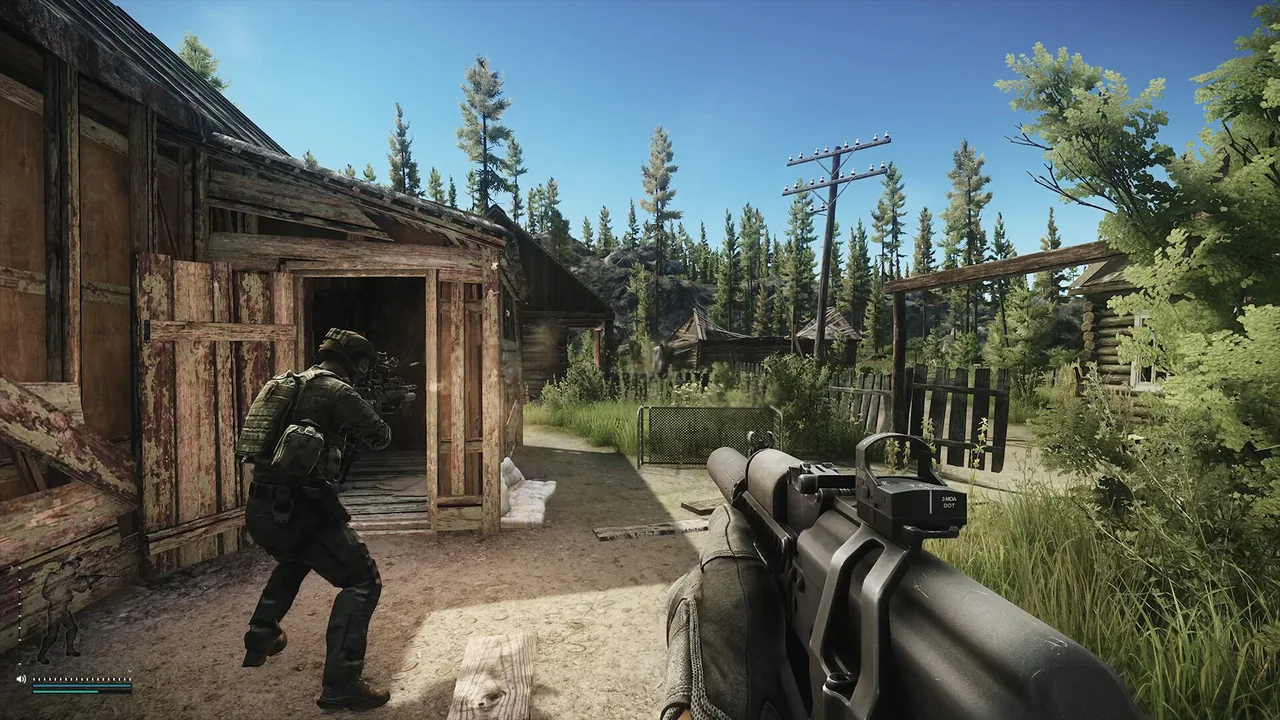
Escape from TarkovImage: Battlestate Games via Steam -
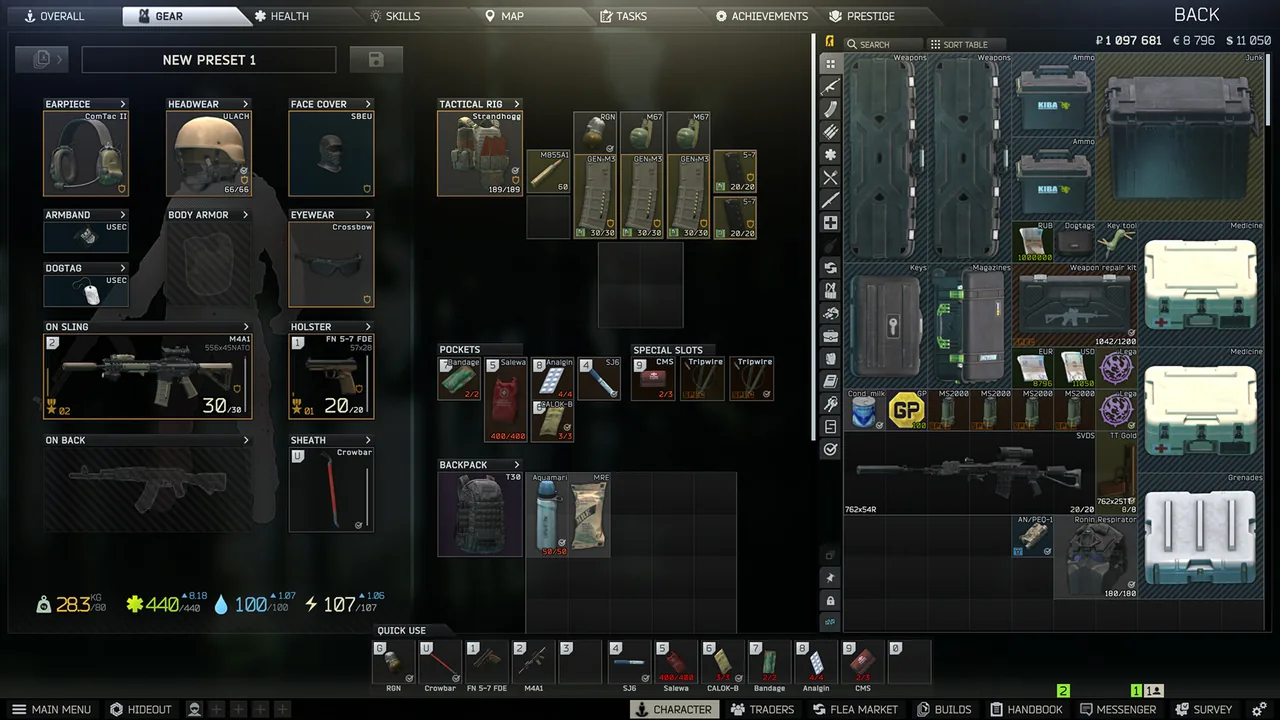
Escape from TarkovImage: Battlestate Games via Steam -
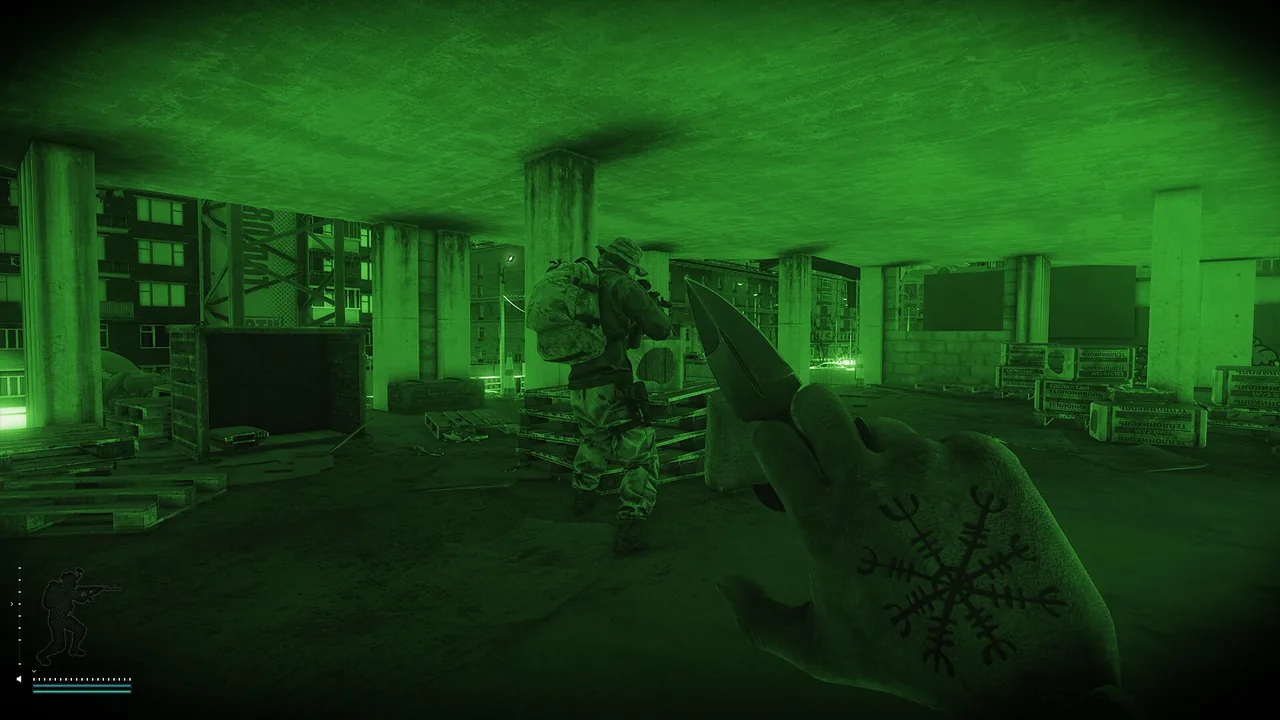
Escape from TarkovImage: Battlestate Games via Steam -
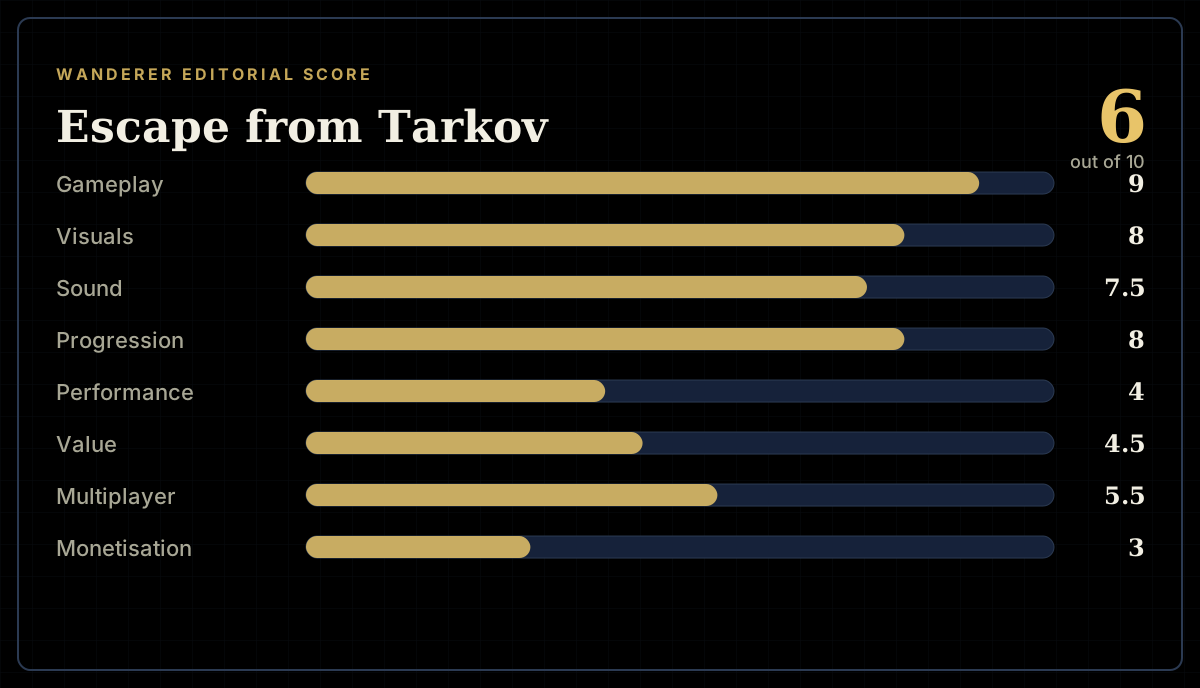
How the review scores each part of the gameWanderer Editorial -
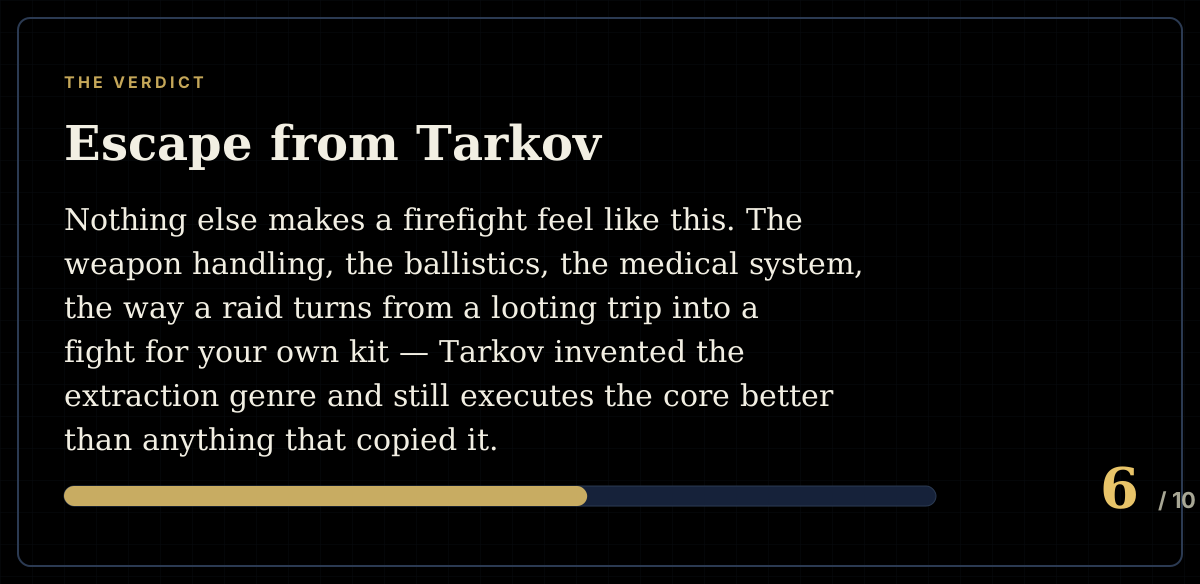
The short versionWanderer Editorial