Game review
Double Knight
7.5 / 10
- Developer
- Stickerbush Studios
- Publisher
- Stickerbush Studios
- Released
- 30 June 2026
- Platforms
- Windows
- Genre
- Action, Indie
- Monetisation
- paid
- Players
- false
The short version
Biggest strengths
- A genuinely fresh central mechanic, where defeating enemies spawns knights that mirror the player's movement exactly, turning positioning and pathing into an increasingly complex juggling act
- Fast, responsive controls on both keyboard and controller, praised consistently across reviewers of differing skill levels
- A satisfying difficulty curve that multiple reviewers described as easy to learn but genuinely hard to master, with real skill progression felt session to session
Biggest weaknesses
- Noticeable repetitiveness in some areas when played for extended sessions, with one reviewer specifically recommending it be played in short bursts rather than long ones
- A handful of visual glitches reported during early sessions, though none serious enough to affect a run's outcome
- Weapon balance issues, with at least two independent reviewers singling out one specific weapon type as close to useless compared to the rest of the roster
Who it's for: Fans of tightly-scoped arcade roguelikes who enjoy easy-to-learn, hard-to-master mechanics and don't mind a small amount of content played in short, replayable bursts
Our recommendation: recommended
7.5 / 10
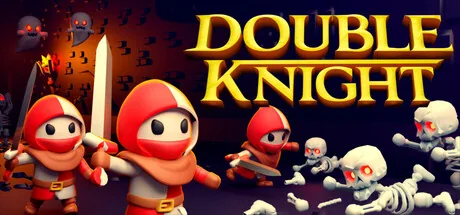
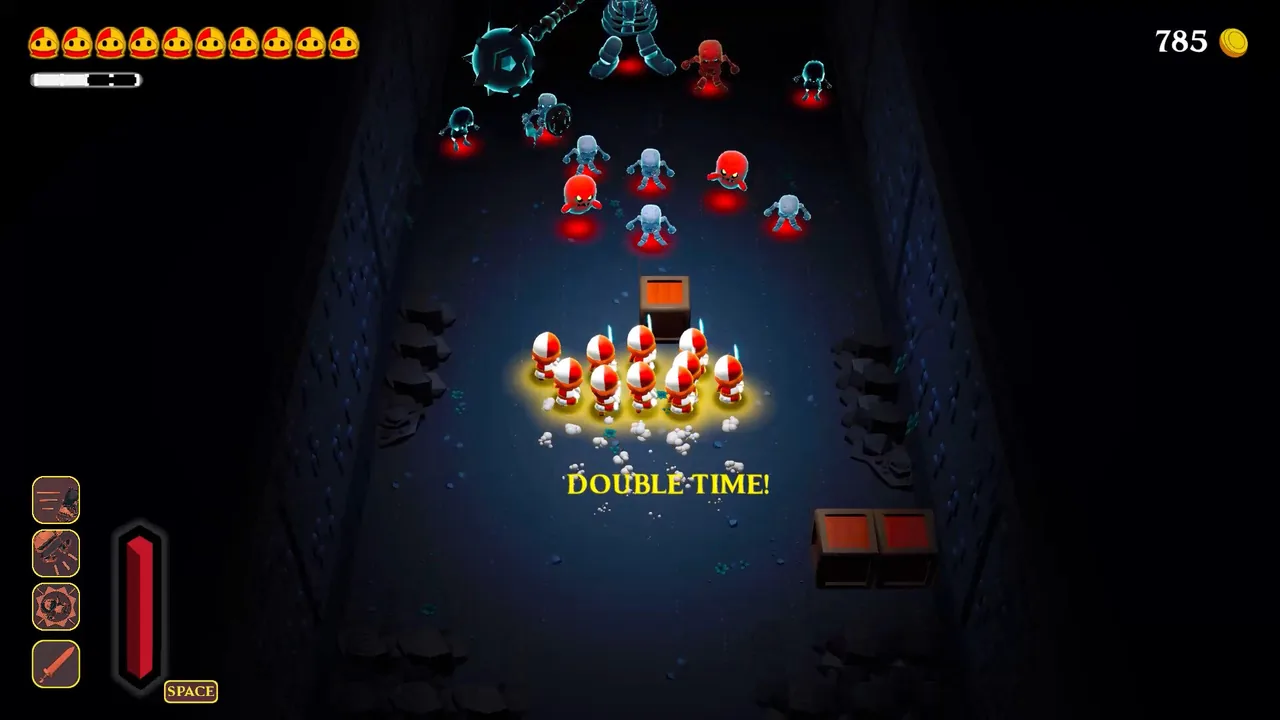
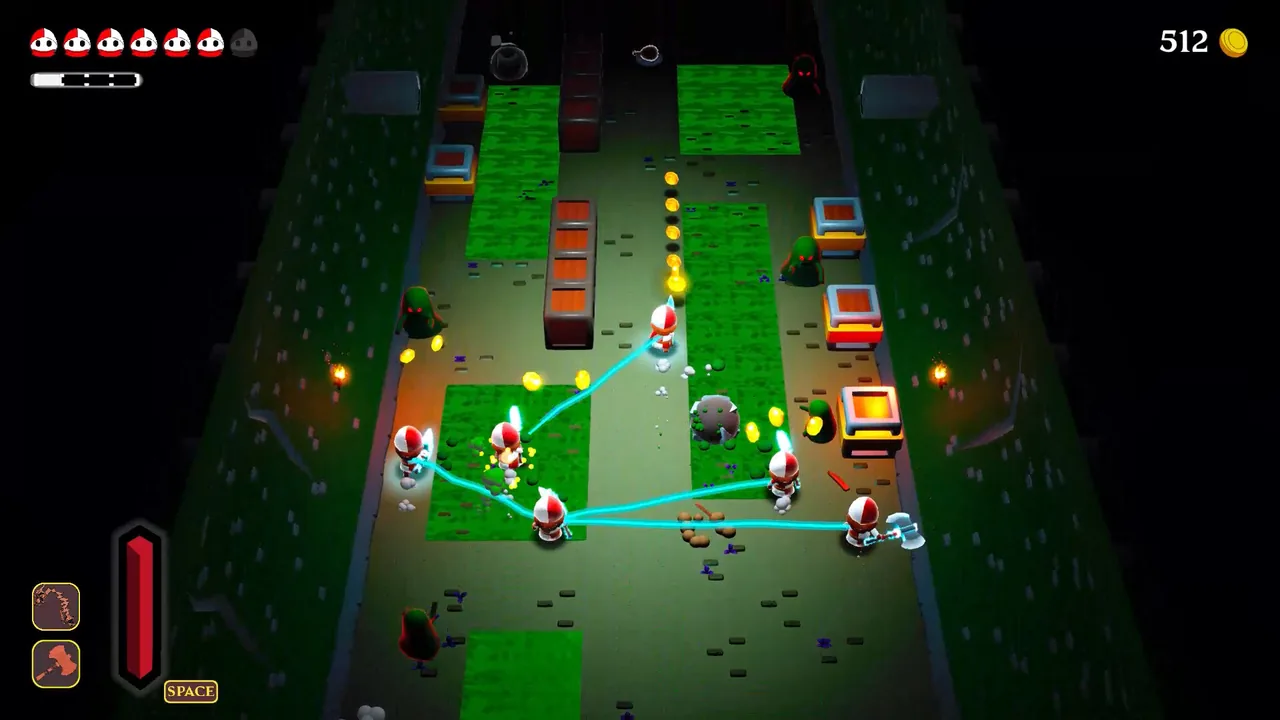
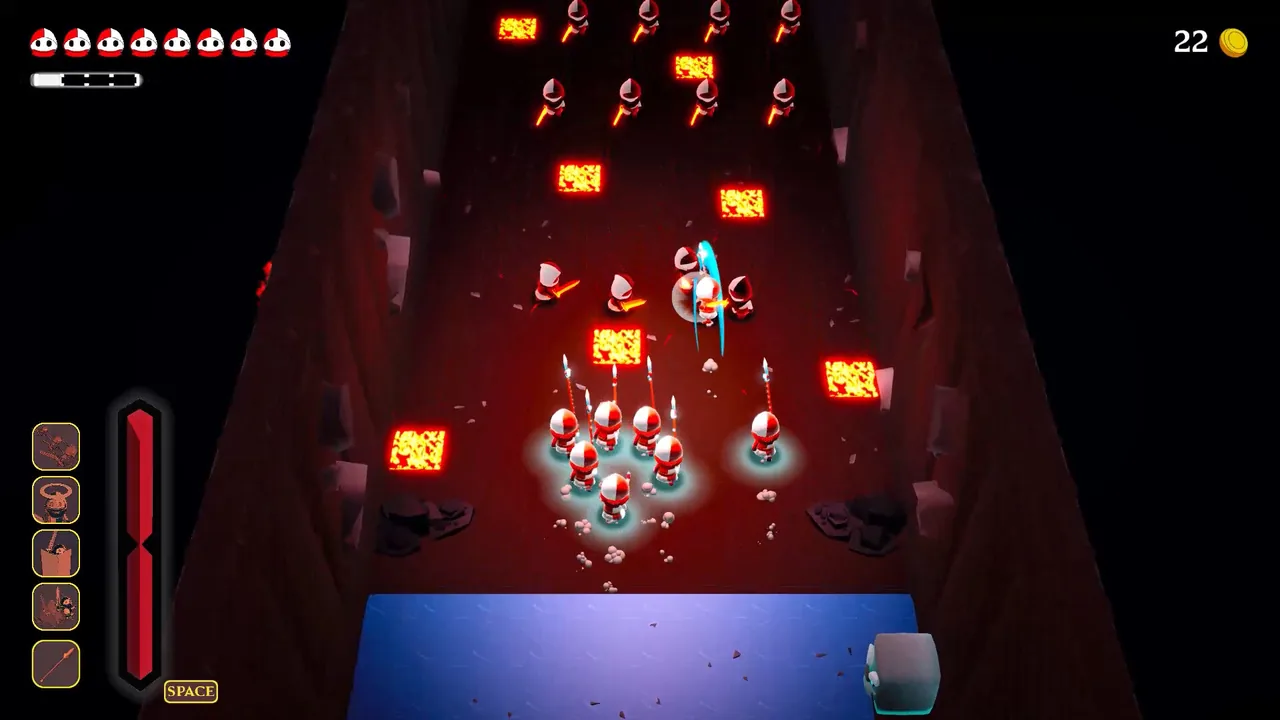
Double Knight released on Steam on June 30, 2026, a $4.99 top-down action roguelike from Stickerbush Studios built around a mechanic simple enough to explain in one sentence and complex enough to sustain an entire genre entry: defeat an enemy, and a new knight joins your formation, mirroring your movement exactly from that point on. What starts as a solo knight fighting through waves of enemies and environmental hazards quickly turns into managing a small army of clones, all moving in lockstep, through increasingly hostile level design. Its 16-review English pool is unanimously Positive, and the reviews describe a small, tightly-focused game that punches well above its modest price tag.
The mirrored-movement mechanic is, unsurprisingly, the thing every review circles back to. One reviewer described the core challenge precisely: "the main mechanic of the game is the addition of knights, that follow a singular command. The challenge is presented by the series of enemies and environmental hazards that act, in a way, like a puzzle game." Another reviewer, who initially assumed controlling multiple characters would be "overly difficult," found the opposite to be true, writing "it's actually really well thought out and after a few runs and silly deaths, I finally got the hang of it and actually managed to complete it." A third reviewer summed up the appeal in blunter terms: "double your pleasure, double your fun, double your knights for double hit stun," praising "a good mix of deceptively simple design combined with the brain burner of trying to keep track of all your knights."
Reviewers consistently framed the game as easy to pick up but genuinely difficult to master, a balance that's hard to strike and repeatedly credited here. One reviewer called it "a charmingly difficult little run-and-slash," while another, who logged 19 hours, compared the feel to "a new concept for those old coin-operated arcade games," praising it as "fun, challenging, engaging, and a little different each time through." A newer player admitted, "I'm not very good at it, but it's such an adorable game," describing the challenge of "trying to multiply your knights while trying to keep them all alive at the same time" as satisfyingly hard. Several reviewers specifically praised the responsiveness of the controls across both input methods, with one noting the game "can be controlled either by keyboard or controller, but both are very responsive."
The pool's few complaints are notably specific rather than vague, which lends them credibility despite the otherwise unanimous score. One reviewer flagged "some ugly glitches here and there" during an early playthrough, though characterized them as minor rather than run-breaking, and separately noted the game "does suffer with some repetitiveness at certain areas," recommending it be played "in short bursts" rather than in one long sitting. Weapon balance drew independent complaints from two different reviewers: one simply noted "well balanced mechanics except for those worthless daggers," while a longtime player echoed the same specific gripe about weapon distinctness elsewhere in the pool, suggesting the dagger's weakness isn't a one-off impression but a real balance gap worth a patch.
Value for money is the one point every reviewer agreed on without qualification. One wrote plainly, "it is worth $5 of anybody's money," while another called it "well worth the asking price" for the fast-paced, replayable run-and-slash structure on offer. A reviewer who described themselves as having reviewed the studio's prior release added useful context on the developer's track record, writing "Sticker Bush studios is now 2 for 2 with this release. Simple and fun. All the weapons feel distinct with their own challenges" — a claim worth flagging even as it sits slightly at odds with the dagger complaints raised elsewhere, suggesting weapon feel may vary meaningfully by playstyle rather than being uniformly weak.
The game's tone and presentation also earned consistent, if lighter, praise: several reviewers singled out its "cute," "chicken"-themed aesthetic and its arcade-inspired sound design, with one noting "graphics and sound design are super fun," and another joking about the game's recurring chicken motif standing in for what's "clearly a leg of ham." That kind of unpretentious, personality-driven presentation seems to be doing real work in making an otherwise mechanically dense roguelike feel approachable rather than intimidating to newer players.
The run structure itself follows a familiar roguelike shape, but the mirrored-clone mechanic changes how that structure actually plays out level to level. Each stage ends in a boss encounter, after which players return to a hub camp to spend coins gathered during the run on modifiers that shape their next attempt, alongside a persistent meta-progression layer that unlocks new skins, characters, and weapons as the player's profile levels up across runs. That structure gives the game a reason to keep pulling players back in even after an individual run ends badly, since a death doesn't erase the broader sense of accumulating unlocks the way a purer roguelike might. Several reviewers specifically cited the shop bonuses and unlock cadence as part of what kept them playing well past their first successful clear, with one reviewer at 38 hours still actively engaged with the game's harder difficulty tiers rather than having exhausted its content after a single victory lap.
Taken as a whole, Double Knight is a small, confidently-designed roguelike that delivers a genuinely novel mechanic without overstaying its welcome, and its unanimous reception reflects a game that knows exactly what it's trying to do and executes it well. The repetitiveness in longer sessions and uneven weapon balance are real, corroborated rough edges, but at $4.99 they're minor complaints against a game that reviewers across very different skill levels and playtimes all found worth recommending.
Pros and cons
Pros
- A genuinely fresh central mechanic, where defeating enemies spawns knights that mirror the player's movement exactly, turning positioning and pathing into an increasingly complex juggling act
- Fast, responsive controls on both keyboard and controller, praised consistently across reviewers of differing skill levels
- A satisfying difficulty curve that multiple reviewers described as easy to learn but genuinely hard to master, with real skill progression felt session to session
- Strong value at its $4.99 price point, with even critical reviewers agreeing it's well worth the asking price for the amount of replayable content on offer
Cons
- Noticeable repetitiveness in some areas when played for extended sessions, with one reviewer specifically recommending it be played in short bursts rather than long ones
- A handful of visual glitches reported during early sessions, though none serious enough to affect a run's outcome
- Weapon balance issues, with at least two independent reviewers singling out one specific weapon type as close to useless compared to the rest of the roster
- A thin unlock structure for players who burn through the weapon and skin roster quickly, leaving less incentive to keep replaying once everything is unlocked
Screenshots
-
Double KnightImage: Stickerbush Studios via Steam -
Double KnightImage: Stickerbush Studios via Steam -
Double KnightImage: Stickerbush Studios via Steam