Game review
DOOM: The Dark Ages
7 / 10
- Developer
- id Software
- Publisher
- Bethesda Softworks
- Released
- 14 May 2025
- Platforms
- Windows
- Genre
- First-Person Shooter
- Monetisation
- Full premium purchase, with a Premium Upgrade and the paid "Revelations" expansion; no in-app purchases or premium currency
- Players
- None. Single-player only, with the developers explicitly prioritising a focused single-player campaign over any multiplayer mode
The short version
DOOM: The Dark Ages sends the DOOM Slayer into a medieval-fantasy war against Hell, built around a genuinely different combat framework from either DOOM (2016) or DOOM Eternal — a slower, shield-and-parry-centred loop several reviewers frame as a deliberate creative risk rather than a simple sequel formula repeated. Very Positive across more than 30,000 Steam reviews, the sample consistently, almost universally acknowledges this is the "weakest" of the modern trilogy while still calling it a genuinely competent, often excellent shooter in its own right — "the fact that this game gets as mixed a reception as it does is more so evidence of how strong 2016 and Eternal are," as one review puts it. Separate from that gameplay debate, this review can confirm two real, distinct controversies shadowing the game's reception. The first is current and severe: Microsoft laid off 136 of id Software's roughly 250 staff — more than half the studio — with cuts beginning 6 July 2026, one day before the major "Revelations" expansion launched, timing an id developer publicly criticised given the team had reportedly crunched to finish it. The second is older and genuinely disputed: several reviewers connect the game's comparatively muted score to the continued absence of composer Mick Gordon, whose 2020-2021 public dispute with id Software executive producer Marty Stratton over the DOOM Eternal soundtrack remains unresolved, with both sides having given conflicting, contested accounts at the time.
Biggest strengths
- A genuinely distinct combat framework, built around shield-based parries and melee, draws real respect even from reviewers who prefer Eternal's faster weapon-juggling loop
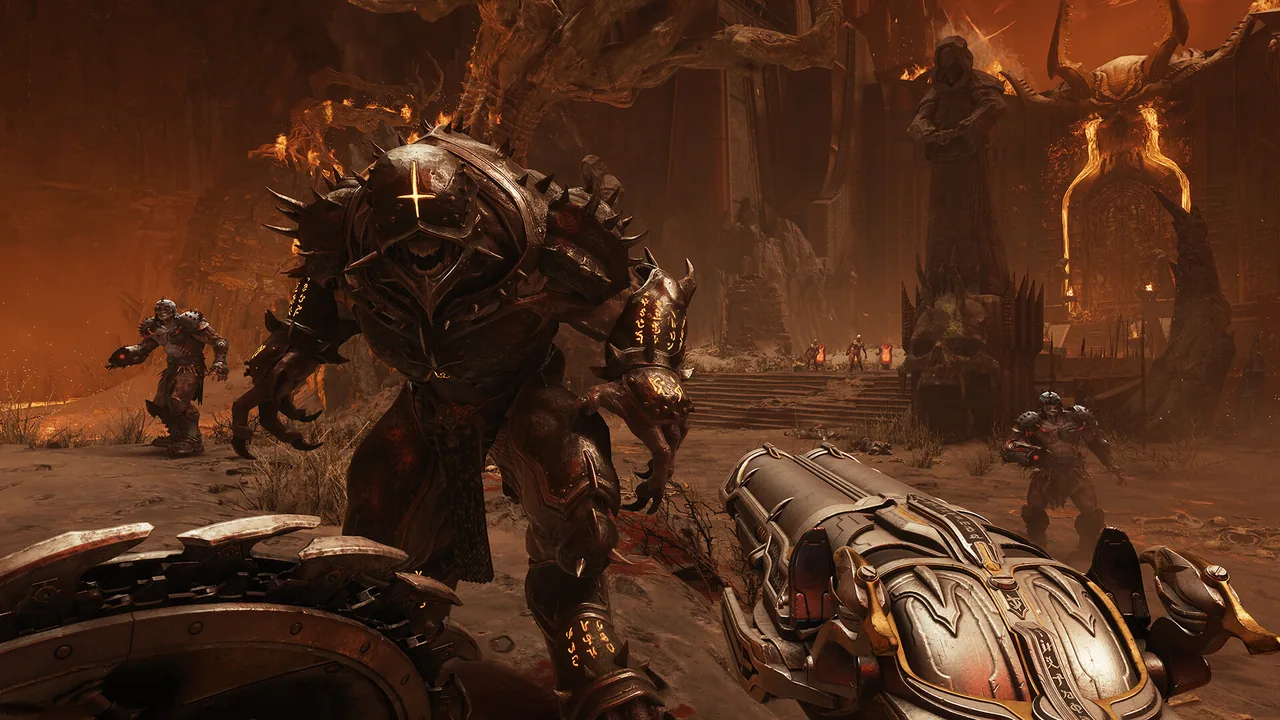
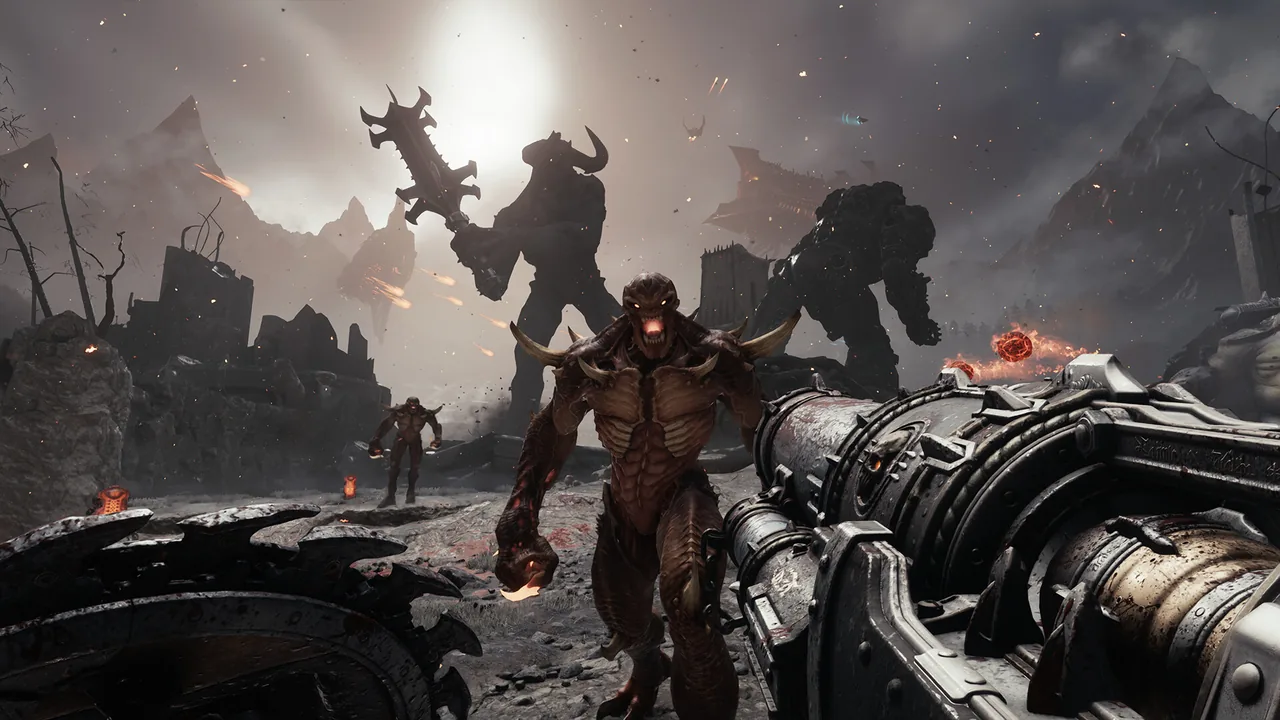
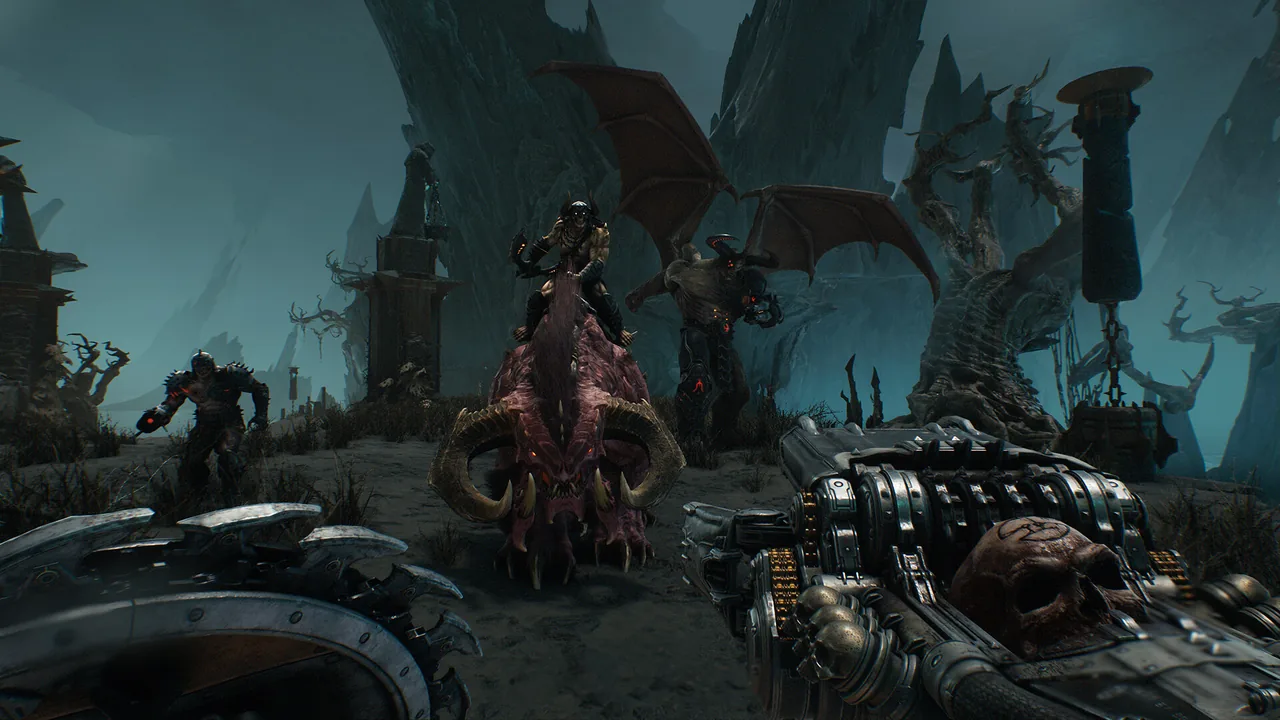
- Presentation and art direction for the medieval-fantasy setting draw consistent, specific praise as a bold visual departure that still feels distinctly DOOM
- Technical performance is genuinely excellent for many players, with multiple reviewers specifically praising stable, high frame rates and clean optimisation on capable hardware
Biggest weaknesses
- A wide, near-consensus share of the sample calls this the weakest entry in the modern trilogy, with the shift toward slower, parry-based combat drawing real, detailed criticism from players who preferred Eternal's faster pace
- The full NZ$129.95 launch price draws consistent, specific criticism relative to a campaign several reviewers clock at 13 to 16 hours, with "wait for a sale" recurring as close to a consensus recommendation
- A mandatory ray tracing requirement and reported crashes draw real, specific technical complaints from a meaningful share of players, contrasting with other reviewers' praise for the game's performance
Who it's for: DOOM series fans open to a genuinely different combat framework from Eternal, and FPS players generally who prioritise a distinct, deliberate creative direction over more of the same.
Our recommendation: A genuinely well-made, deliberately different DOOM — the weakest of the modern trilogy by wide consensus, but still a competent, often excellent shooter worth playing on sale given its real price-to-length ratio.
7 / 10
id Software has spent the last decade proving DOOM can reinvent itself without losing its identity, and DOOM: The Dark Ages, released 14 May 2025, is the boldest test of that idea yet — a medieval prequel trading Eternal's frantic weapon-juggling for a slower, shield-and-parry combat framework. Very Positive across more than 30,000 Steam reviews, the game earns a real, specific, wide consensus verdict: this is the weakest of the modern trilogy, and it's still genuinely good. Understanding both that verdict and two real, distinct controversies shadowing the studio behind it is what this review sets out to do.
A deliberate, respected departure
The review sample consistently frames The Dark Ages' combat shift as an intentional creative choice rather than a misstep, even among reviewers who prefer earlier entries. "It's incredible to see id Software put out 3 completely different combat frameworks for a FPS in the last decade. Each game is different while being distinctly DOOM. Not many publishers take that kind of risk," one review states, describing 2016's run-and-gun, Eternal's jump-and-shoot, and Dark Ages' new approach as a genuine, respected evolution rather than repetition. Presentation draws similarly consistent, specific praise: the medieval-fantasy art direction, dragon and mech-suit set pieces, and overall visual ambition recur as genuine highlights even in otherwise critical reviews.
What makes this game's reception distinctive is how openly the sample acknowledges its place in the trilogy's hierarchy. "The fact that this game gets as mixed a reception as it does is more so evidence of how strong 2016 and Eternal are," one detailed review states, framing the comparative weakness charitably. Another, more measured: "This is a DOOM for those who hated Eternal and the need to rapidly swap weapons when in combat against the hordes of Hell. The shield and melee options can help you beat the game without relying much on weapon" cycling — describing a real, coherent design philosophy rather than confusion about what the game wants to be, even as several other reviewers describe that same philosophy as a step backward from what they loved.
Real, specific technical and value complaints
Separate from the combat debate, two more concrete complaints recur across the sample. Price draws close to consensus criticism: "not worth $120... still fun for a Doom game," one review states simply, while another frames it with the same specific recommendation echoed constantly across the sample: "worth playing, but not worth paying 80 euro for it." Multiple reviewers specifically clock campaign length at 13 to 16 hours, a figure repeatedly cited as mismatched to the NZ$129.95 launch price regardless of how positively a given reviewer otherwise feels about the game itself.
Technical performance draws genuinely split reception. Several reviewers offer specific, enthusiastic praise: "no traversal stutters, no pre-caching shaders, looks fantastic and runs well above 100 frames on my 3080 on ultra nightmare preset settings," one review states, framing clean day-one optimisation as commendably rare. Others report the opposite experience in equally specific terms: "forced ray-tracing is ridiculous. Not everyone has the latest GPU," one review states, while another describes the game "constantly" locking up on a genuinely capable RTX 4070. That split — rather than a single, unified technical verdict — suggests real hardware- or configuration-dependent variance worth knowing about directly rather than either dismissing or overstating.
A real, current controversy this review can confirm directly
Separate from gameplay and price, this review can confirm a serious, well-documented event several reviewers reference directly and with real anger. Independent press coverage — including reporting from Windows Central, Pure Xbox and VideoGamesChronicle — confirms Microsoft's Xbox division laid off approximately 3,200 staff in mid-2026, with id Software specifically losing 136 of its roughly 250 employees, more than half the studio. The timing was specific and, to several observers, especially troubling: the cuts began 6 July 2026, one day before id's major "Revelations" expansion launched on 7 July. A departing id VFX artist publicly criticised that timing directly, stating the team had crunched to complete the expansion only to be laid off immediately around its release. Reviewers in this sample reflect that anger plainly: "a few hours before the release of Revelations and today Microslop laid off around half of iD Software. I raise my glass to one of the most memorable and incredible trilogies of recent times in our hobby," one review states, framing continued goodwill toward the game itself alongside real anger at its parent company's conduct. id Software has stated publicly that it retains sufficient staff to continue supporting the game and maintaining its engine, describing its new headcount as comparable to the team size that made DOOM (2016) — a real, verifiable claim worth noting alongside the scale of what was cut.
A genuinely disputed, older controversy resurfacing
A second, older and more contested controversy also recurs in the sample, tied to the game's comparatively muted soundtrack. "I feel bad for Mick Gordon, but this is an amazing game," one review states, while a more pointed review argues: "They should've fired Marty Stratton the moment Mick revealed the truth... The soundtrack is non existent." This references a real, well-documented but genuinely disputed 2020-2021 controversy: composer Mick Gordon, whose scores for DOOM (2016) and Eternal are widely beloved, published a detailed public account accusing id Software executive producer Marty Stratton of mismanaging Eternal's soundtrack production, withholding payment, and mischaracterising Gordon's role in the score's imperfect final mix. Bethesda publicly disputed Gordon's account at the time as a "mischaracterisation," and the underlying facts remain genuinely contested rather than settled — this review treats it as an unresolved dispute rather than taking a side. What's verifiably true and directly relevant here is that Gordon has not returned to compose for the series since, and several reviewers connect The Dark Ages' comparatively subdued score directly to that continued absence, a real, if subjective, quality complaint distinct from the underlying personnel dispute itself.
Where this leaves a buyer
At NZ$129.95, discounted to roughly $43 at the time of writing, DOOM: The Dark Ages delivers a genuinely competent, deliberately different entry in one of gaming's most respected shooter franchises — the shield-and-parry combat framework is a real creative risk that lands for many players even as a wide, near-consensus share of the sample ranks it below its two immediate predecessors. The honest, necessary context includes a real, current, well-documented crisis at the studio that made it — Microsoft's mid-2026 layoffs cutting id Software by more than half, timed one day before a major expansion the team had reportedly crunched to deliver — alongside an older, genuinely disputed soundtrack controversy that continues to shape how some longtime fans experience the game's music specifically. Players drawn to a genuinely distinct combat philosophy, and comfortable weighing this review's real price-to-length caveat, are likely to find a strong, if not best-in-series, DOOM experience. Fans of the franchise weighing how a publisher treats the studio behind it have real, well-documented reasons for the concern this review's sample expresses repeatedly.
Pros and cons
Pros
- A genuinely distinct combat framework, built around shield-based parries and melee, draws real respect even from reviewers who prefer Eternal's faster weapon-juggling loop
- Presentation and art direction for the medieval-fantasy setting draw consistent, specific praise as a bold visual departure that still feels distinctly DOOM
- Technical performance is genuinely excellent for many players, with multiple reviewers specifically praising stable, high frame rates and clean optimisation on capable hardware
- id Software has maintained real post-launch investment, including the substantial "Revelations" expansion released over a year after the base game
Cons
- A wide, near-consensus share of the sample calls this the weakest entry in the modern trilogy, with the shift toward slower, parry-based combat drawing real, detailed criticism from players who preferred Eternal's faster pace
- The full NZ$129.95 launch price draws consistent, specific criticism relative to a campaign several reviewers clock at 13 to 16 hours, with "wait for a sale" recurring as close to a consensus recommendation
- A mandatory ray tracing requirement and reported crashes draw real, specific technical complaints from a meaningful share of players, contrasting with other reviewers' praise for the game's performance
- This review can confirm Microsoft's July 2026 layoffs cut id Software's staff by more than half, with timing — one day before a major expansion launch the team had reportedly crunched to finish — that drew public criticism from within the studio itself
Screenshots
-
DOOM: The Dark AgesImage: Bethesda Softworks via Steam -
DOOM: The Dark AgesImage: Bethesda Softworks via Steam -
DOOM: The Dark AgesImage: Bethesda Softworks via Steam -
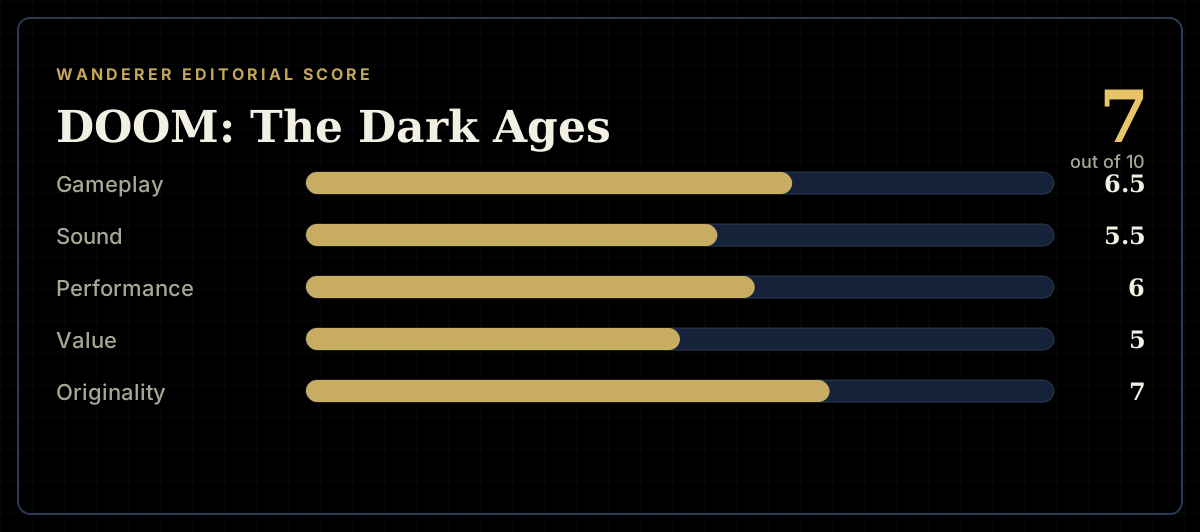
How the review scores each part of the gameWanderer Editorial -
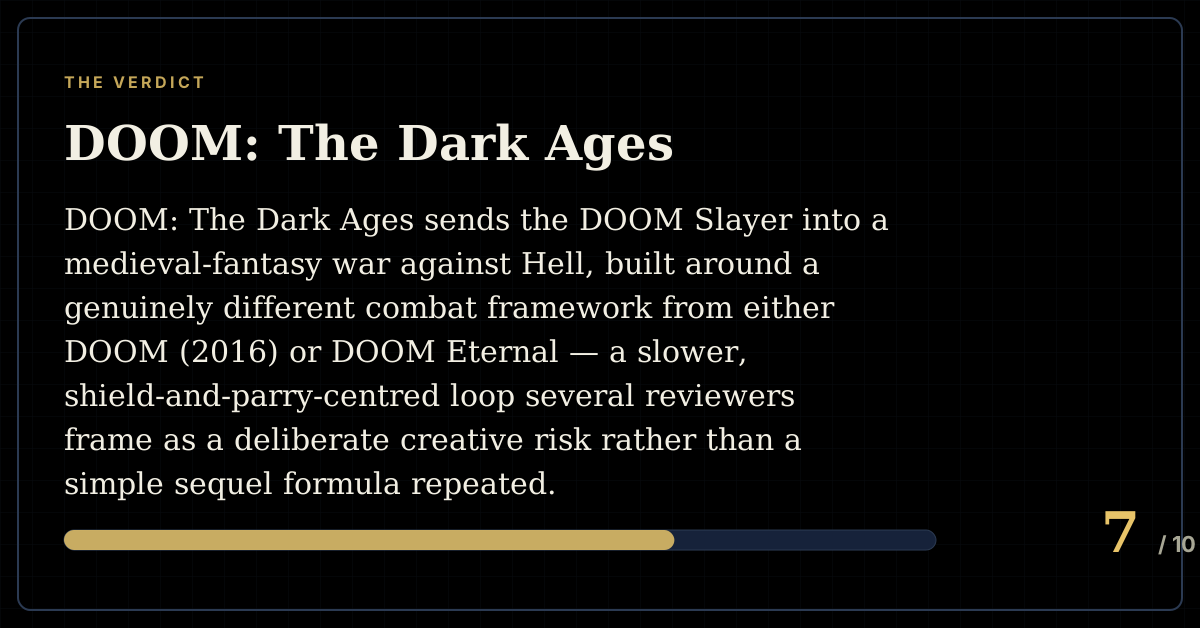
The short versionWanderer Editorial