Game review
Dart Racer
6.5 / 10
- Developer
- LubSoft
- Publisher
- Proteus Interactive
- Released
- 23 June 2026
- Platforms
- Windows
- Genre
- Action, Indie, Racing, Early Access
- Monetisation
- paid
- Players
- false
The short version
Biggest strengths
- Genuinely nostalgic, N64-inspired track design that multiple reviewers said triggered real fondness for the genre's classic era
- A distinctive, well-praised VR control scheme built around rotating both wrists to control thrust independently per engine, described as intuitive once learned
- Visually striking ship designs and a retro art style reviewers called a deliberate choice rather than a technical limitation
Biggest weaknesses
- Floaty, inconsistent physics, especially around collisions, with reviewers describing being "ping-ponged into a wall" with little recovery option
- No button remapping at launch, a dealbreaker for at least one reviewer hoping to use HOTAS-style controls
- Reported VR performance issues and frame-rate drops on specific tracks, serious enough that one reviewer requested a refund over it
Who it's for: Anti-gravity racer fans nostalgic for N64-era pod racers, and VR owners specifically curious about its inventive wrist-based throttle controls, more than competitive multiplayer racing fans
Our recommendation: recommended
6.5 / 10
Dart Racer entered Steam Early Access on June 23, 2026, an N64-inspired anti-gravity pod racer from solo developer LubSoft, published by Proteus Interactive, that supports both traditional desktop play and native VR with a genuinely distinctive control scheme. Its 38-review English pool lands at Positive (35 up, 3 down, 92%), and the reviews consistently separate two things worth evaluating on their own terms: a nostalgic, well-realized racing fantasy that's clearly resonating with players, and a set of physics and performance issues that are exactly the kind of thing Early Access exists to shake out.
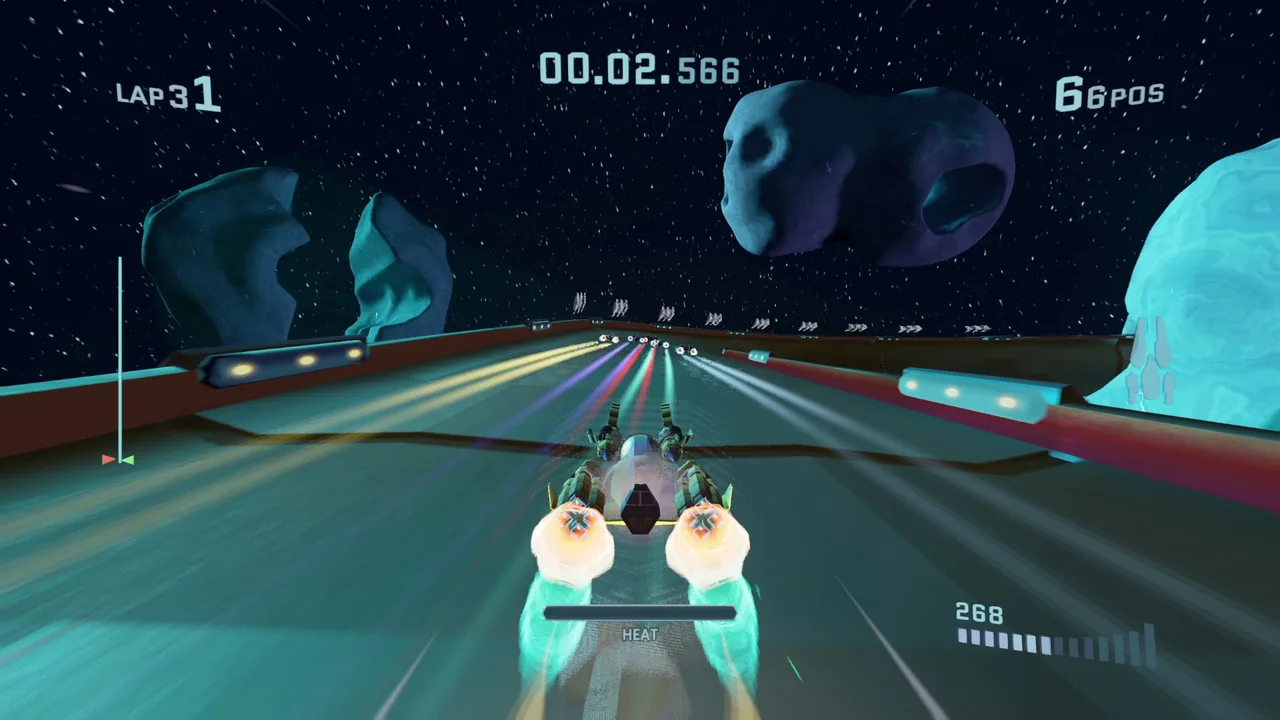
The genre nostalgia lands specifically and repeatedly. One reviewer flatly called the track design "fun" and said it "triggers my nostalgia," pairing that with praise for visually striking ship designs, while cautioning that "actual greatness is likely several years of development away" rather than dismissing the current build outright. Another reviewer, comparing it against genre veteran BallisticNG, said they'd expected a purely arcade feel but found the controls "immersive enough to fulfill what I imagine an anti-gravity racer should feel like," calling it "one of the best Early Access entries I've forked my money over" in a field of sci-fi racers they felt was thinner than it should be. A third reviewer went further on tone alone, describing it as "a more zen version of wipeout and podracing" with physics and feel they called "just amazing," specifically requesting the developers add head-tracking support to better complement the existing wrist-based controls.
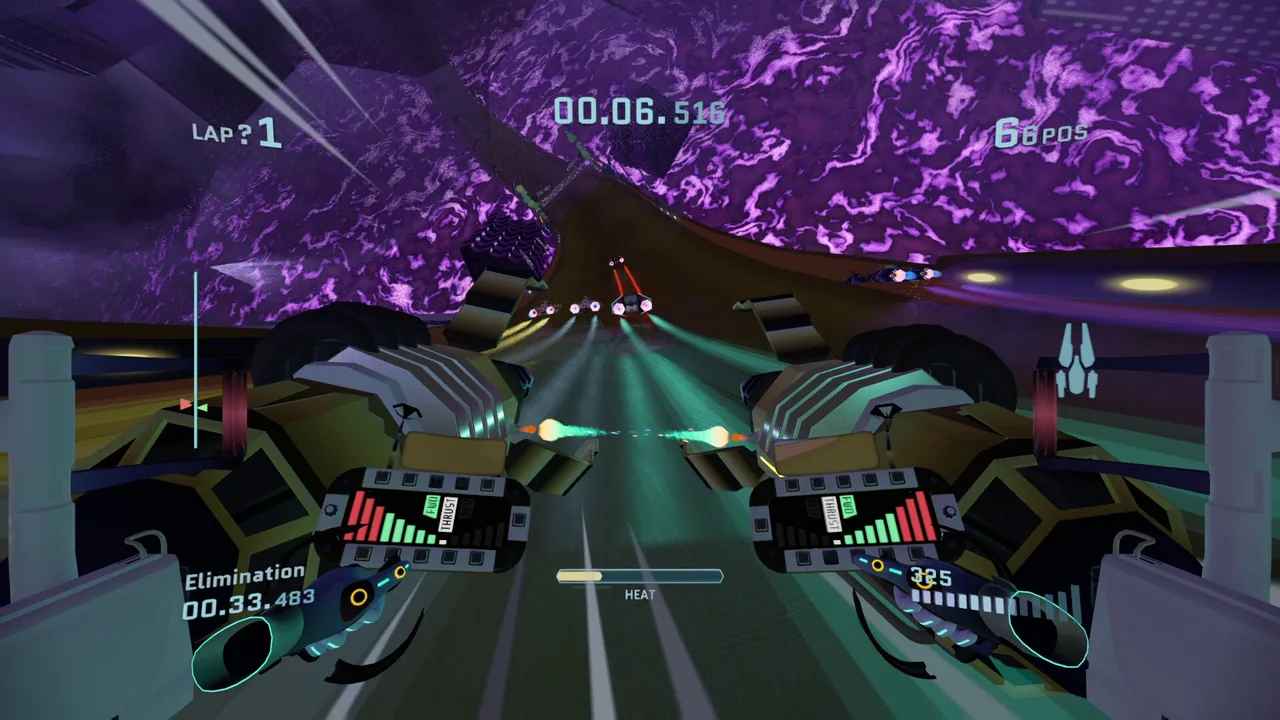
The VR implementation draws the pool's most detailed and technically specific praise. One reviewer, evaluating the VR aspect specifically as their sole reason for buying, wrote that "the developers have cut no corners with this game," describing the wrist-rotation throttle system, rotate both wrists inward to engage thrust, decrease power to one engine by rotating a wrist outward to turn, as "entirely unique and very intuitive," adding that it takes about fifteen minutes to click but rewards the learning curve once it does. Another reviewer who'd bought the game first on a standalone Meta Quest headset before buying it again on Steam confirmed the Steam version is generally the stronger release, with higher resolution and better performance, while noting the standalone Quest version "isn't too far behind" it, a useful data point for anyone weighing platforms.
Set against that praise, though, is a consistent, specific set of physics complaints that show up across multiple independent reviews rather than as an isolated gripe. One detailed negative review described the core problem plainly: "collisions with walls or other racers fling you all over the place, with no real recovery option other than letting it happen for a second," arguing that as an anti-gravity racer, ships should "magnetize" to the track in some way to prevent exactly this kind of chaotic knockback. A separate, more measured review echoed the same underlying issue from the positive side of the ledger, noting that strafing "feels like an addition that exists because other games in the genre have strafing, not because it actually adds to the gameplay experience," and that the ships' extreme agility makes air-braking largely redundant, undercutting two mechanics that should meaningfully differentiate skilled play from unskilled play in a racer like this.
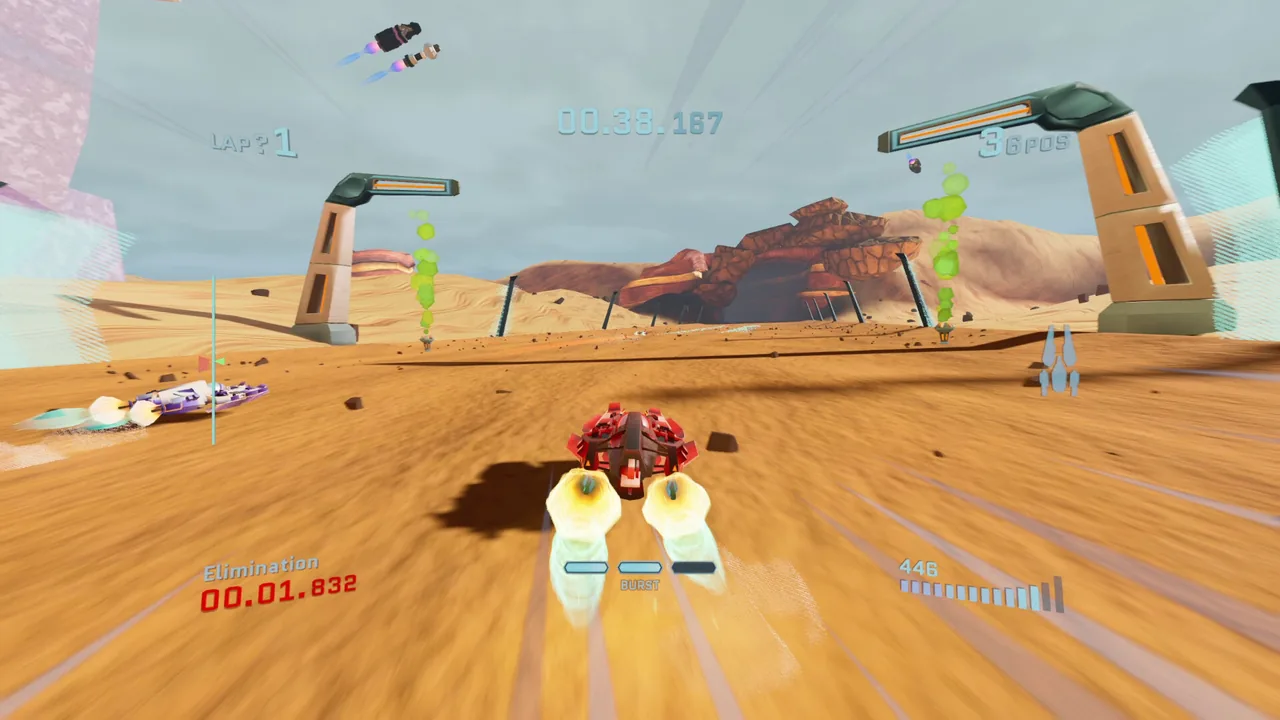
Performance and control-scheme gaps round out the pool's more substantive criticism. One reviewer reported VR-specific frame-rate drops and stutters localized to specific tracks, "cloud and desert tracks," serious enough that they requested a refund despite otherwise enjoying the game and expressing hope to return once those tracks were optimized further. A separate reviewer flagged the lack of button remapping as an outright dealbreaker for anyone hoping to use HOTAS-style flight controls, though they were careful to note the developer had been actively responsive in the review comments, a detail worth crediting given how much Early Access goodwill depends on visible developer engagement. A third reviewer summarized handling complaints more generally, calling the first available vehicle's grip "too slippery" and describing the knockback from collisions as excessive even after adjusting to it, while praising later unlockable track cups as a clear step up in quality over the earlier ones.
It's worth being direct about how these two threads, the strong nostalgic and VR-specific praise versus the physics and performance complaints, actually coexist in this pool rather than canceling each other out: reviewers overwhelmingly recommend the game while flagging the same handful of issues, which is a healthy sign for an Early Access title rather than a warning one. Nobody in the sampled pool described the core racing fantasy as broken, only as under-tuned, and the specific, reproducible nature of the complaints (collision knockback, particular track performance, missing remapping options) gives LubSoft a clear, actionable list rather than vague dissatisfaction to work from.
It's also worth flagging how the desktop and VR experiences diverge for players deciding which way to play. One reviewer testing gamepad support specifically inside VR mode found that the VR motion controllers remained active for menu navigation even while using a gamepad for racing, calling the resulting setup unnecessarily fiddly, and separately noted that first-person perspective made it hard to judge the size and positioning of their own vehicle, something they said felt noticeably better in third-person even within VR. That's a smaller complaint than the physics or performance issues above, but it points to the same broader pattern: a game whose two input paradigms, gamepad-and-screen and full VR immersion, were each designed thoughtfully on their own terms but haven't yet been fully reconciled with each other, and prospective buyers choosing between them should expect a slightly different, not equally polished, experience depending on which they pick.
At $9.99, Dart Racer is a reasonable, low-risk entry point for anti-gravity racing fans and VR owners specifically curious about its wrist-based control scheme, provided buyers go in understanding the physics and performance still need real tuning. It isn't yet the tight, high-skill-ceiling racer some reviewers are clearly hoping it becomes, but the foundation, distinctive controls, genuine retro-racing atmosphere, and a developer visibly engaging with feedback, is solid enough to make that trajectory believable.
Pros and cons
Pros
- Genuinely nostalgic, N64-inspired track design that multiple reviewers said triggered real fondness for the genre's classic era
- A distinctive, well-praised VR control scheme built around rotating both wrists to control thrust independently per engine, described as intuitive once learned
- Visually striking ship designs and a retro art style reviewers called a deliberate choice rather than a technical limitation
- Cross-platform continuity for players coming from the standalone Meta Quest version, with the Steam release generally regarded as the stronger version
Cons
- Floaty, inconsistent physics, especially around collisions, with reviewers describing being "ping-ponged into a wall" with little recovery option
- No button remapping at launch, a dealbreaker for at least one reviewer hoping to use HOTAS-style controls
- Reported VR performance issues and frame-rate drops on specific tracks, serious enough that one reviewer requested a refund over it
- Strafing and air-braking mechanics that several reviewers found redundant or actively unhelpful rather than meaningfully adding to the driving feel
Screenshots
-
Dart RacerImage: Proteus Interactive via Steam -
Dart RacerImage: Proteus Interactive via Steam -
Dart RacerImage: Proteus Interactive via Steam