Game review
Coinada
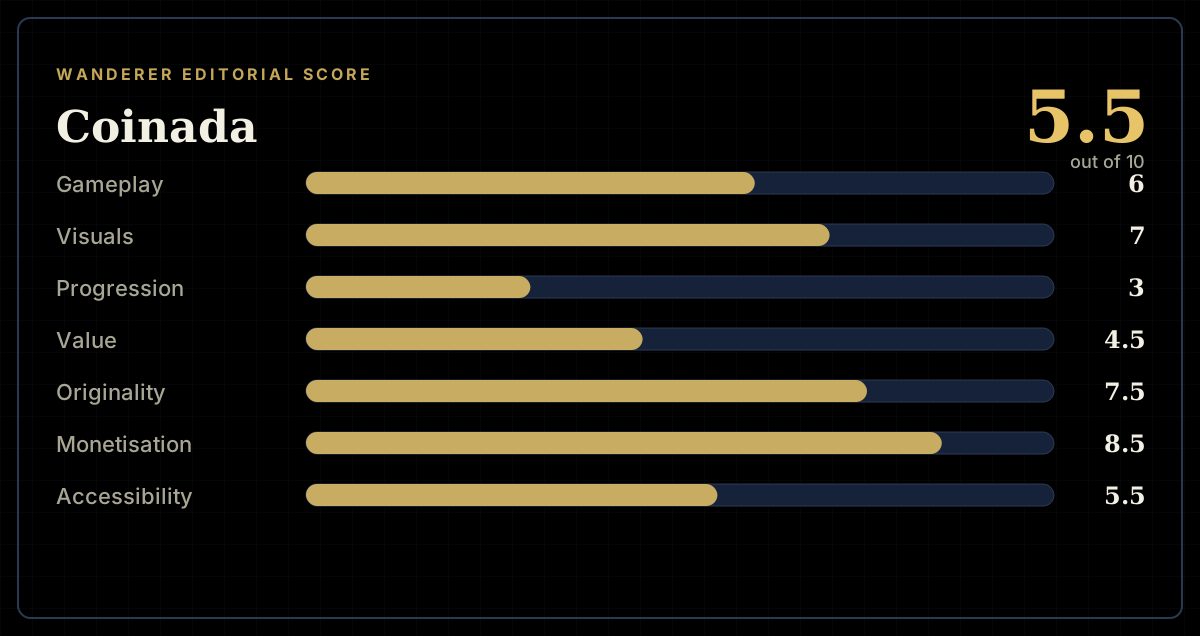
5.5 / 10
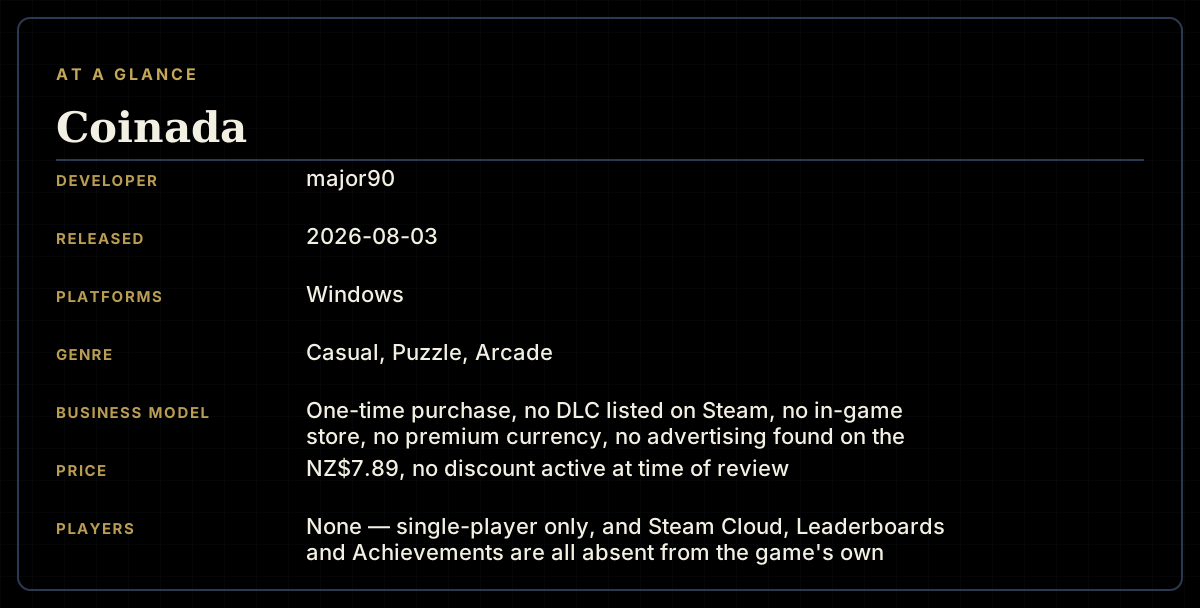
- Developer
- major90
- Publisher
- major90
- Released
- 3 August 2026
- Platforms
- Windows
- Genre
- Casual, Puzzle, Arcade
- Monetisation
- One-time purchase, no DLC listed on Steam, no in-game store, no premium currency, no advertising found on the store page
- Players
- None — single-player only, and Steam Cloud, Leaderboards and Achievements are all absent from the game's own category list
The short version
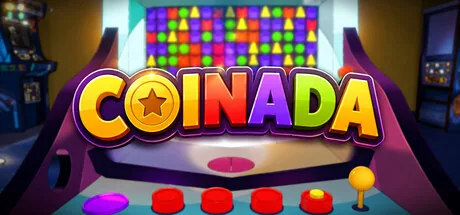
Coinada bolts a match-3 grid onto a physics-simulated coin-pusher tray: clear shapes on the board, the coins those matches produce spill down a chute and pile up in a tray below like an arcade redemption machine, and a timer counts down a short session before the coins convert into a dollar total. Large matches trigger bombs that clear whole sections of the board at once for a burst of coins. It's a genuinely unusual combination — most match-3 games don't bother simulating where the reward physically goes — and the developer's own Early Access FAQ is unusually candid that content, balance, polish and progression are all still limited. The starkest admission there: a level system "so that you can make progress" is listed as a planned full-release feature, meaning the build on sale today has no persistent progression loop at all, just repeatable timed sessions. Zero Steam reviews, zero recorded players and a completely empty achievement schema at the time of writing mean there's no outside evidence yet of how the sessions actually feel to play repeatedly.
Biggest strengths
- Matches produce coins that visibly fall and physically pile up in a tray below the board, an unusual and satisfying pairing of match-3 clearing with coin-pusher-style physics that most puzzle games don't attempt
- Large matches create bombs that clear a whole section of the grid in one burst, shown in the game's own screenshots wiping roughly a third of the board and paying out a stacked cash bonus on top of the per-tile coins
- A flat NZ$7.89 one-time purchase with no DLC, no in-game store and no premium currency anywhere on its Steam listing, and the developer states plainly they do not plan to change the price during or after Early Access
Biggest weaknesses
- By the developer's own account, the version on sale today has no persistent progression system at all — a "level system so that you can make progress" is listed as a planned full-release addition, not something the current build has
- Zero Steam user reviews, a current player count of zero at the time of checking, and a completely empty global achievement schema mean there is no independent evidence yet of how the core loop holds up beyond a handful of timed sessions
- Windows-only, with no macOS or Linux build, no controller support and no online leaderboard listed despite "Score Attack" being one of the game's own most-voted community tags
Who it's for: Puzzle and arcade-score players who like the physical satisfaction of watching a reward pile up rather than just reading a number go up, and anyone specifically curious about an Early Access prototype at its earliest, roughest stage rather than a finished game.
Our recommendation: Wait, unless the coin-pusher-meets-match-3 hook is worth NZ$7.89 to you purely as a novelty right now. The developer's own FAQ says the current build is a "prototype stage" with no progression system yet, no independent reviews exist to check that against, and the developer's stated six-month Early Access window means a meaningfully different, more complete game could exist here well before the end of the year.
5.5 / 10
Coinada opens with a promise most match-3 games never bother making: that the coins your matches produce are not just a number ticking upward, they're objects, falling down a chute and piling up in a tray below the board like the payout tray of an arcade redemption machine. It's a genuinely odd pairing — piece-matching puzzle on top, physics-simulated coin pusher underneath — and it's also, at this exact moment, an Early Access prototype with zero Steam reviews, zero recorded players and, by the developer's own account, no progression system to speak of yet. Both things are true at once, and the honest version of this review has to hold them together rather than picking one.
A grid that pays into a machine
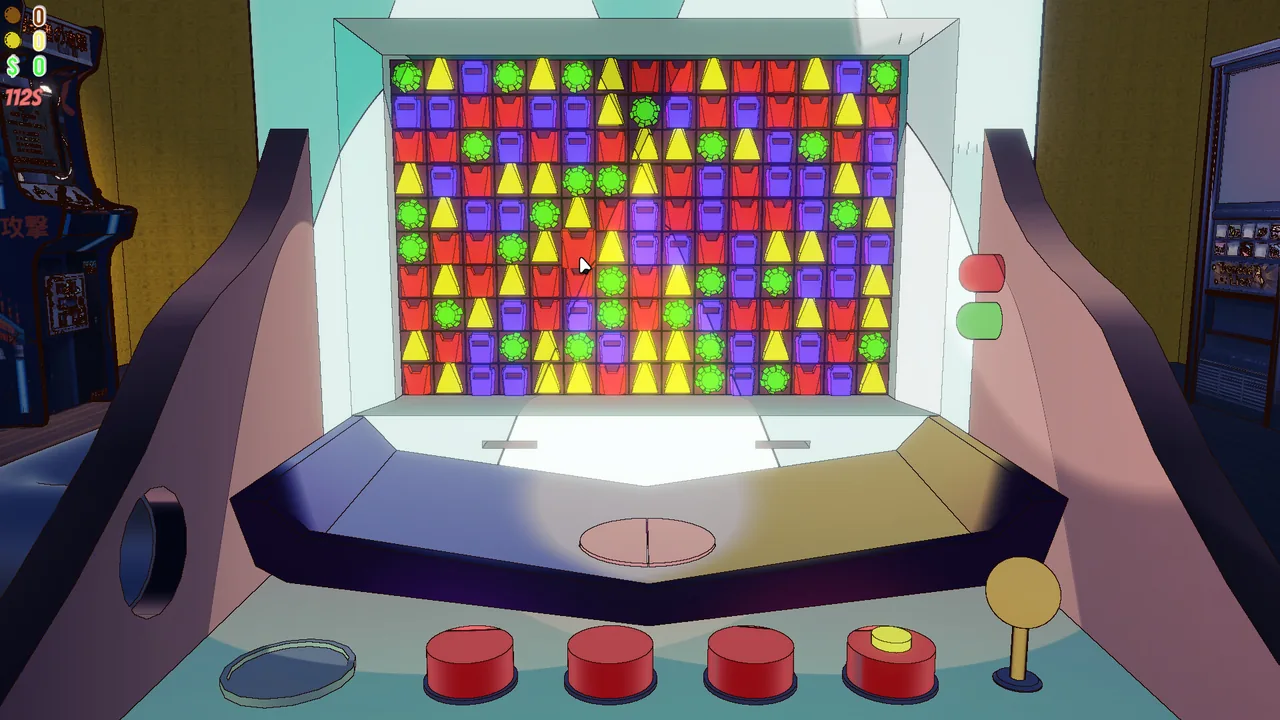
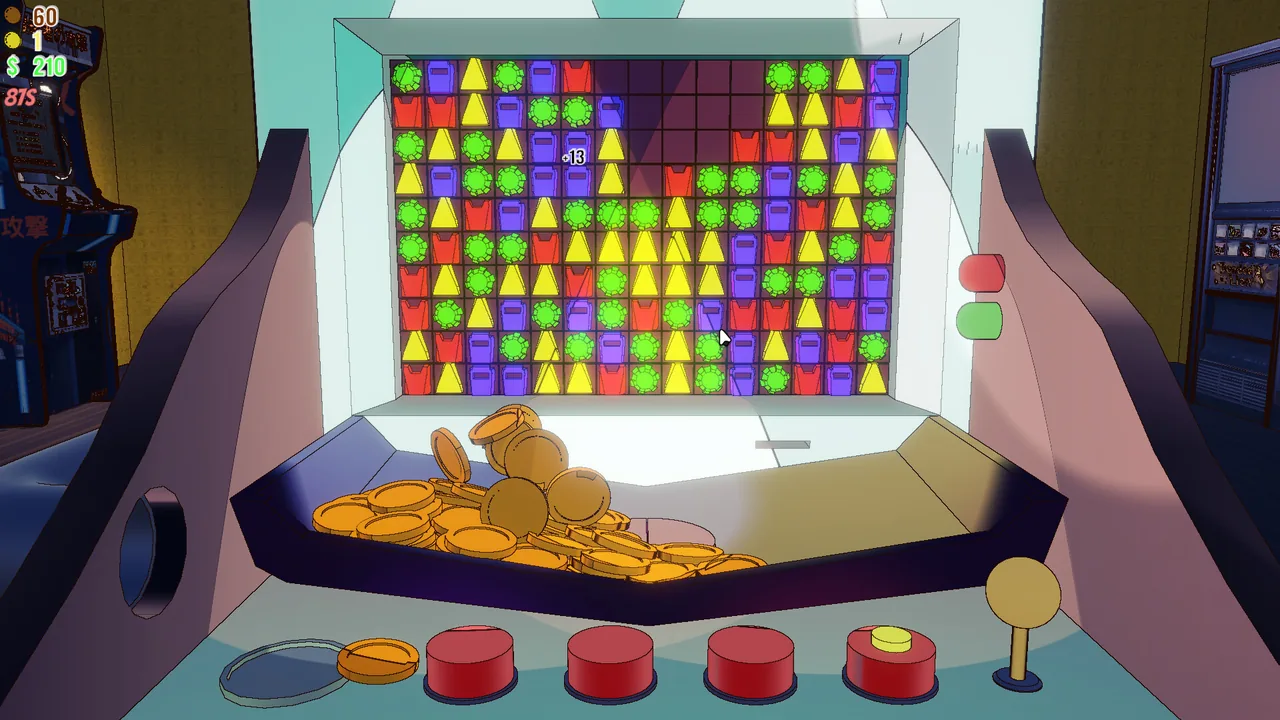
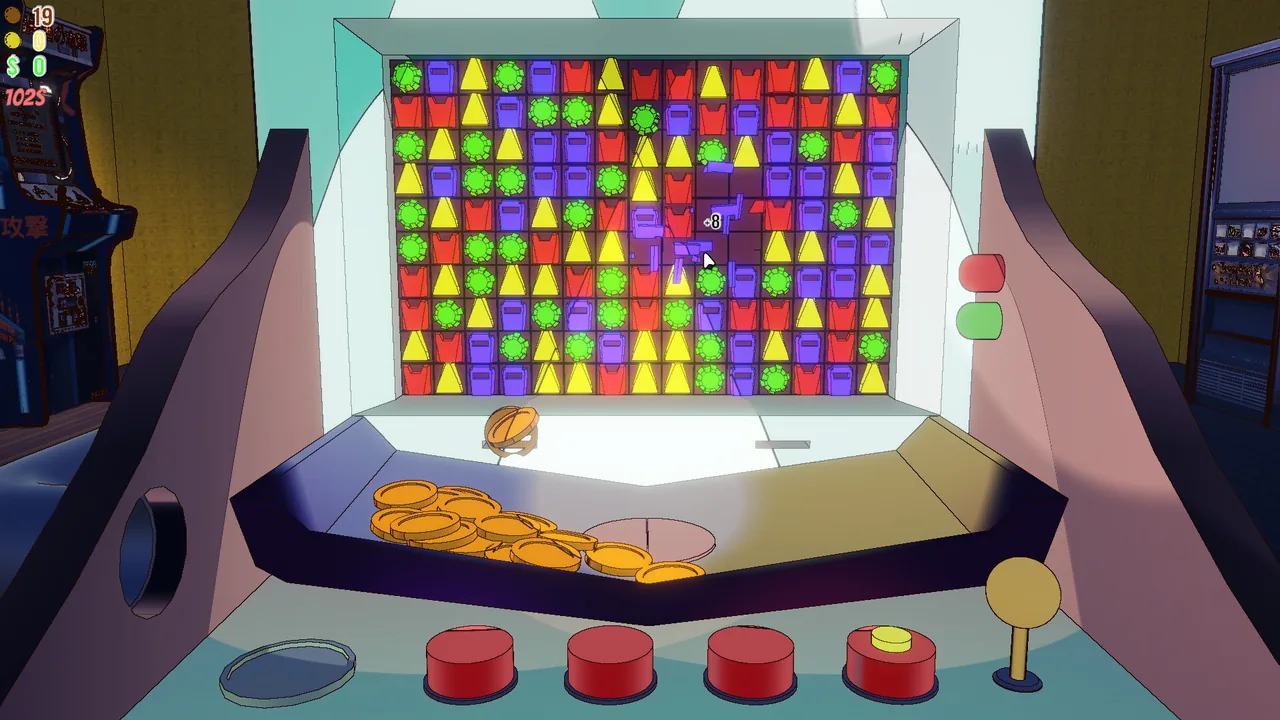
The board is a dense grid of coloured shapes — green gems, yellow triangles, purple cups, red vases — laid out roughly ten columns wide and eight rows deep, viewed from a first-person perspective inside what reads as an arcade cabinet, complete with a coin slot, a lever, a bank of red buttons and a rotating dial along the front panel. Matching shapes clears them from the board and drops coins that fall with real physics into a tray beneath the play area, where they land, bounce and settle into a growing pile rather than simply incrementing a counter offscreen. A HUD in the top-left tracks a coin count, a separate token count, a running dollar total and a countdown timer that, across the game's own screenshots, runs anywhere from roughly 70 to 155 seconds remaining — short, score-attack-length sessions rather than long sitting-down play. The store page's own pitch — match pieces, trigger bombs, watch coins drop, convert them into dollars before the timer runs out — matches exactly what the screenshots show, which isn't always true of an Early Access store page.
Larger matches create bombs, and one screenshot catches the payoff directly: a detonation clears an entire quadrant of the board in one burst, stamping a "+1" over every tile it destroys and tacking on a stacked "$10 $10" cash bonus above the coin tray as a shower of extra coins tumbles in. It's the single most dynamic moment across the six screenshots available, and it's the part of the pitch that reads as genuinely thought-through rather than a reskin of an existing puzzle template — most match-3 games treat a big combo as a number multiplier, not an event with its own physical payoff you watch happen in the tray.
What "Early Access" means here, in the developer's own words
Coinada's Early Access FAQ, sitting on the store page rather than buried in a forum post, is more candid than most about exactly how unfinished the current build is. Asked why the game is in Early Access at all, the developer writes: "The reason why Coinada is in early access is because of the fact that there is some much work to be done at this point. We believe that with the current state of the game, players might enjoy the game and give us some feedbacks so that we can improve the game." Asked how long that period will last: "We plan to keep Coinada in early access for about 6 months. But this period of time might change in the future with player feedback." Asked what the full version adds that the current one doesn't: "Add new types of explosions, card mechanics, level system so that you can make progress."
That last line is the one worth sitting with, because it means the build on sale today has no level system and no way to "make progress" in any lasting sense — just the timed session described above, played once and then played again. The developer's own summary of the current state agrees: "Coinada is currently in an early but playable prototype stage... The current version is fully playable, but content variety, balancing, polish, progression, and additional gameplay features are still limited and will be expanded during Early Access." A shopper reading that FAQ before buying knows exactly what they're getting, which is more than most Early Access listings offer, but it also means this review has almost nothing to say about long-term structure because there currently isn't one to assess.
A price with nothing yet to weigh it against
Everything that would normally corroborate or contradict a store page's own description — a review corpus, an achievement completion curve, a player count worth reading as a trend — is empty for Coinada. The Steam reviews API returns zero total reviews on repeated checks days after launch. The current-player-count endpoint returned zero at the moment of checking. The global achievement percentages endpoint didn't return a small or skewed curve, the kind that at least implies a handful of early players poking at the game — it returned a bare, empty object, meaning no achievement schema has been built into the game at all yet. There is, in short, no outside signal to check the developer's own "early but playable prototype" description against. That isn't a strike against the game itself, but it does mean the NZ$7.89 asking price is currently being paid entirely on the strength of the pitch and the screenshots, with no community track record standing behind it and no verifiable history from major90 elsewhere on Steam either — the developer and publisher search both return Coinada as the only title under this credit.
Clean money, modest accessibility, one disclosure worth flagging
On the numbers that are checkable, Coinada is straightforward. It's a flat one-time purchase with no discount active at the time of writing, no DLC listed, no in-game store and no premium currency anywhere on its Steam page — about as clean a monetisation model as this library sees, and the developer states plainly they don't plan to change the price during or after Early Access. Accessibility is thinner: the only relevant Steam categories are Custom Volume Controls and Playable without Timed Input, with no controller support, no colourblind options and no text scaling mentioned anywhere. And the store page's own AI Generated Content Disclosure is worth quoting rather than summarising, since it applies to the marketing a shopper sees before the purchase: "Generative AI was used to create the initial artwork for the game's shortcut icon and certain promotional graphical assets. These assets were reviewed and selected by the developer before being included. The game does not generate AI content in real time." That's a narrower claim than "the game uses AI art" — it's specifically the icon and some promotional images, not the in-game assets shown in the screenshots — and the disclosure itself is exactly the kind of plain statement this library wants to see more publishers make.
One more small oddity: the minimum system requirements list an Intel Core i5-7400, a GTX 1050 and 8GB of RAM, a heavier floor than a grid of flat-shaded shapes and a coin tray would suggest at a glance. The most likely explanation is the coin physics itself — simulating dozens of individually tumbling, colliding coins in real time costs more than it looks like it should, and it's the one part of Coinada's pitch that genuinely needed a physics budget instead of a fixed animation.
Final verdict
Coinada earns a 5.5 for a hook worth taking seriously — turning match-3 payouts into a physically simulated coin-pusher tray is a more interesting piece of design than the bare word "Casual" on its store page suggests, and the bomb mechanic shown in its own screenshots backs that up. It loses ground for exactly the reason its own FAQ names: there's no progression system in the build being sold today, and with zero reviews, zero recorded players and an empty achievement schema, there's no way yet to check whether repeated timed sessions hold up past a first sitting. None of that makes it a bad idea — a developer being this candid about a prototype-stage Early Access build is worth crediting — but it does make NZ$7.89 an early bet on where six months of development takes it, not a verdict on a finished game.
Pros and cons
Pros
- Matches produce coins that visibly fall and physically pile up in a tray below the board, an unusual and satisfying pairing of match-3 clearing with coin-pusher-style physics that most puzzle games don't attempt
- Large matches create bombs that clear a whole section of the grid in one burst, shown in the game's own screenshots wiping roughly a third of the board and paying out a stacked cash bonus on top of the per-tile coins
- A flat NZ$7.89 one-time purchase with no DLC, no in-game store and no premium currency anywhere on its Steam listing, and the developer states plainly they do not plan to change the price during or after Early Access
- The developer's Early Access FAQ is unusually direct about the game's limitations rather than papering over them, stating outright that "content variety, balancing, polish, progression, and additional gameplay features are still limited"
- Sessions are short and timed, so the format suits quick score-attack play rather than demanding a long sitting
Cons
- By the developer's own account, the version on sale today has no persistent progression system at all — a "level system so that you can make progress" is listed as a planned full-release addition, not something the current build has
- Zero Steam user reviews, a current player count of zero at the time of checking, and a completely empty global achievement schema mean there is no independent evidence yet of how the core loop holds up beyond a handful of timed sessions
- Windows-only, with no macOS or Linux build, no controller support and no online leaderboard listed despite "Score Attack" being one of the game's own most-voted community tags
- The minimum system requirements ask for an Intel Core i5-7400, a GTX 1050 and 8GB of RAM, a heavier spec floor than the simple grid-and-coin-tray visuals in its own screenshots would suggest, likely a cost of simulating the coin physics in real time
- The store page's own AI disclosure confirms generative AI was used for the shortcut icon and some promotional artwork, so at least part of what a shopper sees before buying wasn't hand-made, even though the developer states the game itself does not generate content in real time
Screenshots
-
CoinadaImage: major90 via Steam -
CoinadaImage: major90 via Steam -
CoinadaImage: major90 via Steam -
How the review scores each part of the gameWanderer Editorial -
The game at a glanceWanderer Editorial -
The short versionWanderer Editorial