
Game review
Cheese Co-op Clicker Simulator
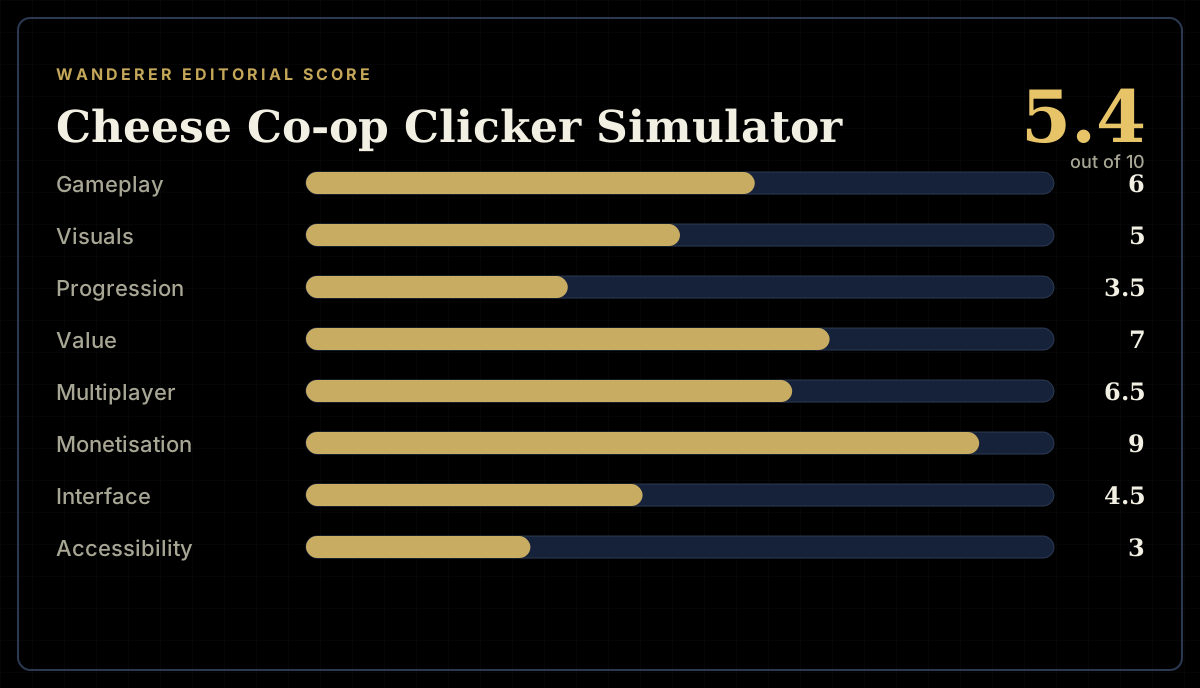
5.4 / 10
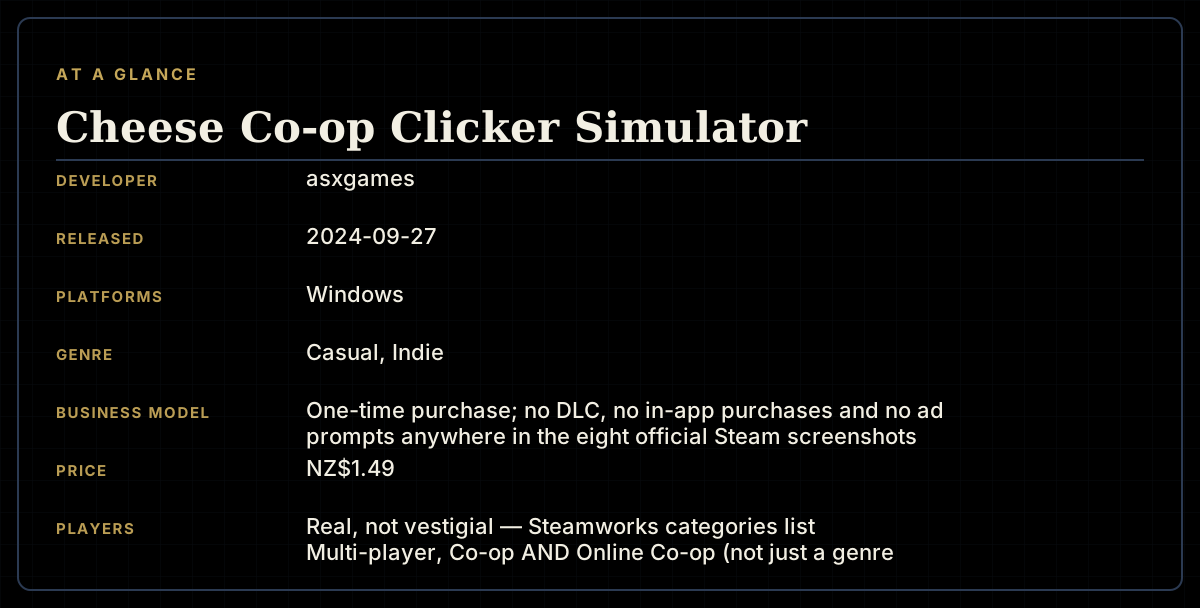
- Developer
- asxgames
- Publisher
- asxgames
- Released
- 27 September 2024
- Platforms
- Windows
- Genre
- Casual, Indie
- Monetisation
- One-time purchase; no DLC, no in-app purchases and no ad prompts anywhere in the eight official Steam screenshots
- Players
- Real, not vestigial — Steamworks categories list Multi-player, Co-op AND Online Co-op (not just a genre tag), the store's up-to-100-players claim shows up in official screenshots as multiple simultaneous mouse avatars sharing one persistent world, and the two most-helpful reviews in the entire corpus independently describe playing it with a friend. It is also fully single-player: the Single-player Steamworks category and a "Singleplayer" community tag are both present too
The short version
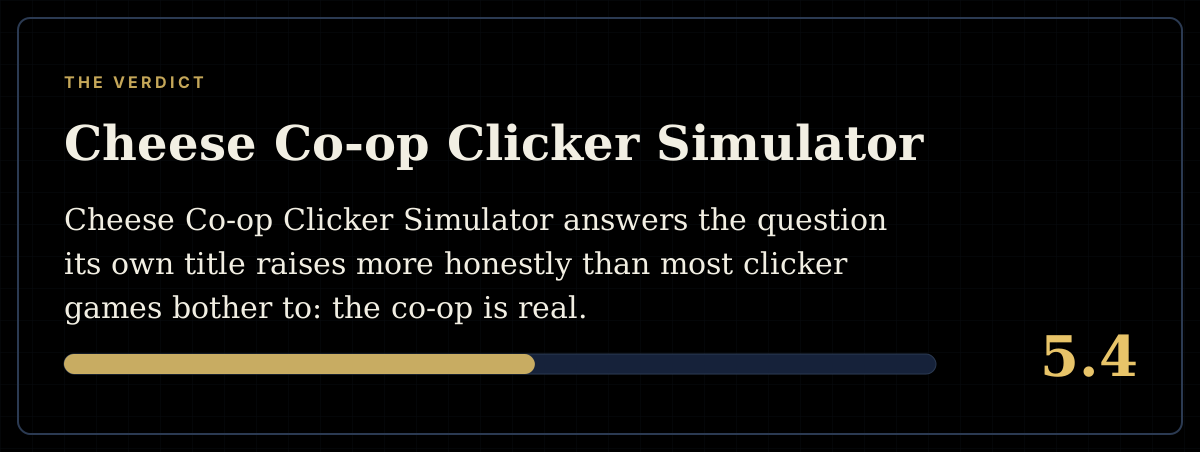
Cheese Co-op Clicker Simulator answers the question its own title raises more honestly than most clicker games bother to: the co-op is real. It isn't a marketing word bolted onto a solo game — the Steamworks category flags include Multi-player, Co-op and Online Co-op alongside Single-player, and the official screenshots back that up directly, showing several mouse avatars mining the same wedge of cheese and standing in front of the same shared castle at once. The corpus agrees: the single most-helpful review in the whole 30-review history of this game, from a player with 522 minutes logged, calls the co-op chaos "where this game really shines," and the second most-helpful review — in German, from a player with 476 minutes — describes going through the game specifically with a friend.
What it can't do is dodge the rest of the genre's usual problems. The achievement data shows a much steeper cliff than a click-earn-fight loop should have — only 10.6% of players ever complete a single World Reset, the prestige system, and the two lowest-earned achievements in the whole 21-achievement list are literally named "World Overlord" (4.6%) and "Team Spirit" (3.6%). The developer's own AI Generated Content Disclosure confirms "GAI was used to generate the base for the sprites," which is exactly what two of the ten English reviews complain about by name. And the store's accessibility panel lists every single category — resizable UI, subtitles, colour alternatives, difficulty options — as false. At NZ$1.49 with genuinely working multiplayer, it's hard to call a bad deal; it's just a rougher one than the price tag alone suggests.
Biggest strengths
- The co-op is genuinely real and functioning, not a marketing label: Steamworks categories list Multi-player, Co-op and Online Co-op specifically (not just a genre tag), official screenshots show several player avatars sharing one persistent world at the same cheese blocks and the same shared castle, and the two most-helpful reviews in the whole corpus (26-vote English, 22-vote German) both independently describe playing it with a friend
- About as clean as monetisation gets in this genre for NZ$1.49 — a single one-time purchase, no DLC of any kind, and no currency shop, gacha panel or ad prompt in any of the eight official screenshots
- The developer is still actively patching the game: a security fix for a Unity runtime CVE shipped in October 2025, more than a year after launch, rather than the game being abandoned the way most sub-$2 clickers are
Biggest weaknesses
- The developer's own AI Generated Content Disclosure states plainly that "GAI was used to generate the base for the sprites" — confirming, rather than merely alleging, the complaint two of the ten English reviews make by name ("AI slop," "AI art")
- Achievement data shows a much steeper progression cliff than the review corpus's mostly-positive tone suggests: only 10.6% of players have ever completed a single World Reset (the prestige loop), and the two lowest-earned achievements in the game are "World Overlord" (4.6%) and, notably for a co-op game, "Team Spirit" (3.6%)
- The store's accessibility information panel lists every category as false — no resizable UI, no subtitles, no colour alternatives, no difficulty levels, nothing — so there is no documented accessibility support at all
Who it's for: Players who want a genuinely cheap, genuinely working shared-world clicker to run with a friend or two for a few dollars and a few hours, and who aren't expecting a deep or well-explained upgrade system underneath the co-op hook.
Our recommendation: Worth the NZ$1.49 specifically for the co-op — it's the real, functioning differentiator the store page promises — but go in with a friend rather than solo, expect the interface to explain almost nothing, and don't expect to still be playing after the first World Reset; the achievement data says almost nobody is.
5.4 / 10
Is the co-op real or vestigial?
This is the question worth answering before anything else, because "Co-op" sits right there in the title and this library has learned, review after review, not to take a title's word for it. Here the answer is unusually clean: it's real.
Start with the Steamworks category flags, which cost the developer nothing to fake but are hard to fake convincingly, because Valve gates them behind actual networking features. This game's appdetails categories list Multi-player, Co-op and Online Co-op as three separate entries, alongside Single-player — not one vague "multiplayer" genre tag standing in for the whole claim, but the specific co-op flag that Valve reserves for games with actual shared sessions. The community agrees, and weighted its votes accordingly: on the store page's own tag-voting widget, "Co-op" sits at 52 votes and "Online Co-Op" at 40, both comfortably ahead of "Indie" (21), one of the two official genre labels.
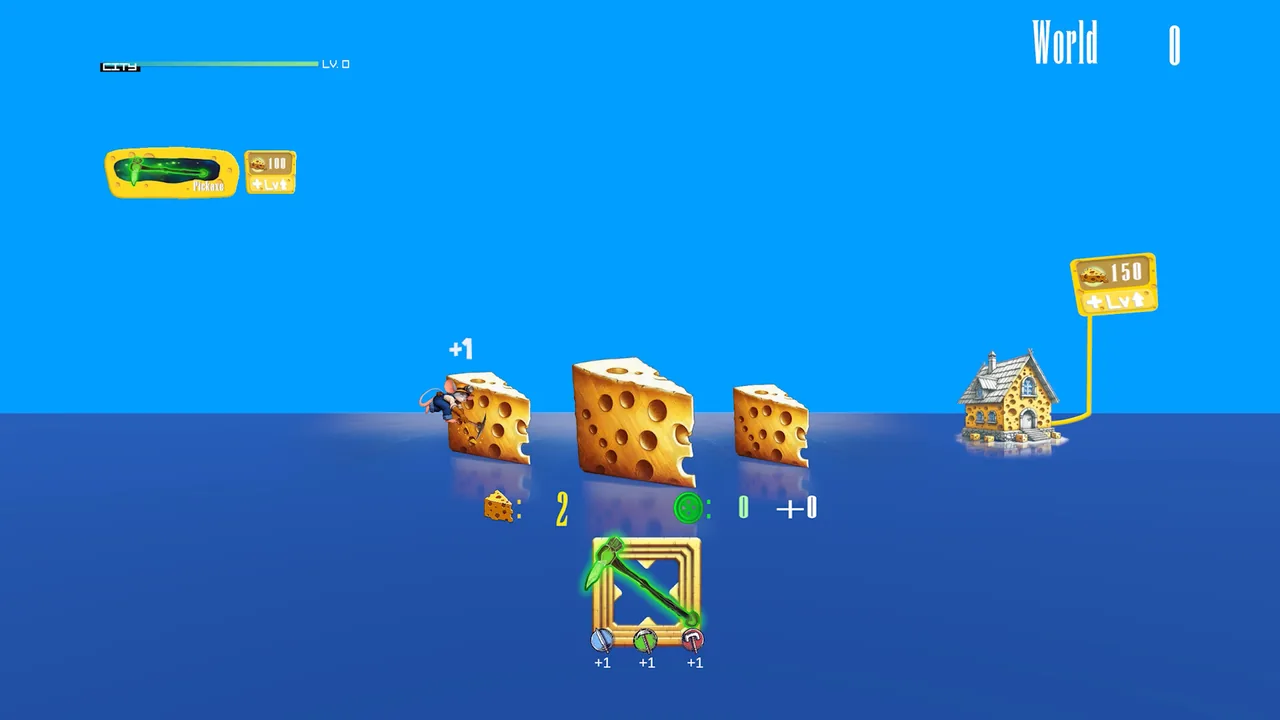
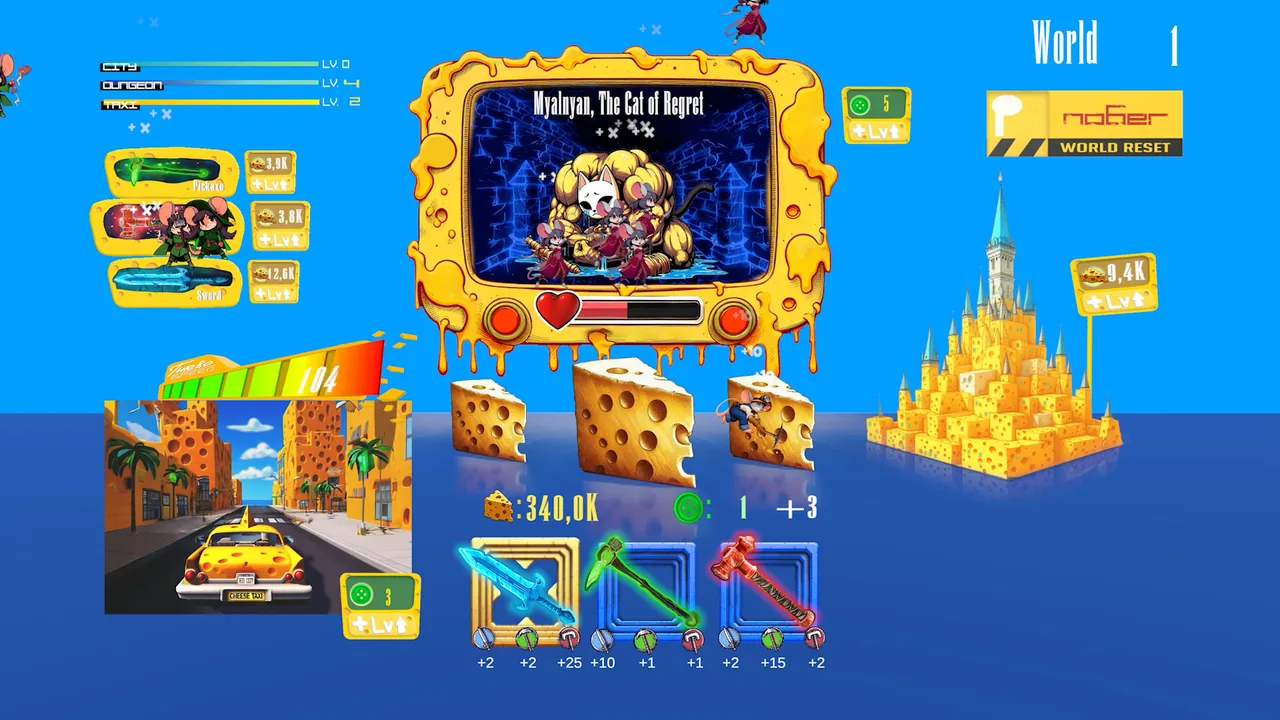
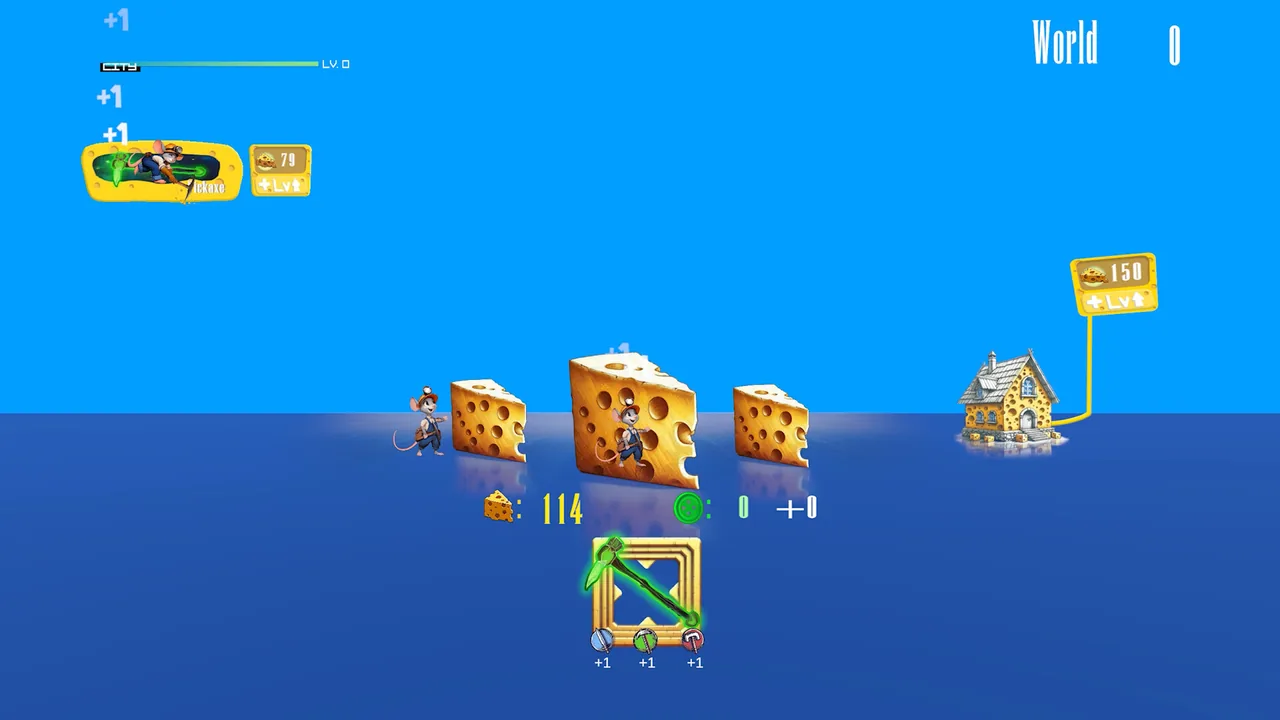
Then there's the visual evidence, which is the part a store page can't manufacture. Steam's own screenshot set shows a persistent, shared game world rather than a solo view with a co-op label slapped on top. One screenshot shows at least four visually distinct mouse avatars — different outfits, different tools, different colours — simultaneously mining separate wedges of the same piece of cheese and standing near the same shared castle. Another shows a boss-fight cutscene with a crowd of mouse characters converging on a single enemy at once, framed inside an in-game "TV" that reads more like a shared combat log than a personal kill-cam. And running across every screenshot regardless of how many mice are visible are three progress bars labelled CITY, DUNGEON and TAXI, plus a World counter in the top corner — shared meters that track collective progress rather than one player's personal stats.
The review corpus closes the loop. Read the single most-helpful review this game has ever received — 26 votes, from a player with 522 minutes logged — and the co-op is the thing it singles out for praise by name: "the co-op aspect is where this game really shines... you'll find yourself shouting (well, typing) things like, 'Hey, someone fix the robot!'" The second most-helpful review in the entire 30-review corpus, in German with 22 votes and 476 minutes played, independently describes going through the game specifically alongside a friend they'd been given the game by. Two reviewers, two languages, no coordination between them, telling the same story about the same feature.
It isn't unanimous. One negative English review, at 6 votes, states flatly: "Co-op mode (up to 100 players) feels pointless for this type of game." That's a real dissent worth keeping rather than smoothing over — the feature working as designed and the feature being worth building are different claims, and at least one reviewer who tried it wasn't convinced by the second one. And the achievement data adds its own asterisk: the lowest-earned achievement in the whole 21-achievement list is named "Team Spirit," sitting at just 3.6% completion. Steam's global stats API doesn't expose what an achievement actually requires, only its name and its completion rate, so this can't be stated as proof of anything specific — but a co-op-sounding achievement resting at the very bottom of the list, in a game whose co-op otherwise checks out as real, is at least suggestive that deep team engagement is rare even where the option genuinely exists.
The click-earn-fight loop underneath it
Strip the co-op framing away and the moment-to-moment game is the standard clicker shape: click the cheese to earn cheese, spend cheese on upgrades, repeat. Three equippable tools do different jobs — a pickaxe for mining cheese faster, a hammer for speeding up structure upgrades, and a sword for fighting the monsters that show up in dungeon encounters. Two semi-automated systems, a cheese-collecting taxi and a "mechbay" robot, are supposed to let the loop run itself a little once you've invested in them.
Reviewers who liked it liked it for being exactly this simple. "The gameplay mechanic is quite simple, but the more you click, the more you get hooked and simply can't stop," reads one 480-minute review. Reviewers who didn't liked pointed at the same two automated systems as the weak spot: one negative review calls the mechbay "poorly executed... left unexplained, creating unnecessary confusion," and a positive review from the game's first week asks outright, "what does the mech bay do??? it is unclear what it accomplishes" — a question from a fan, not a critic, which says something about how thin the in-game explanation is regardless of which side of the review split you're reading. There's also no resolution or display-settings menu mentioned anywhere in the corpus, which for a Windows-only release is a small but real omission.
Where progression falls off a cliff
The achievement-completion curve is the most useful objective evidence this review has, because Update 1.01 — the patch that added all 21 achievements — shipped on 6 October 2024, nine days after launch. That timing matters: it rules out the "achievements added late in Early Access" trap that has invalidated achievement-curve arguments elsewhere in this library, since almost every buyer of this game has had the achievement schema present for the entire time they owned it.
The curve itself opens gently and then drops hard. The first five achievements — first click, first cheese spend, first monster kill, and two early tool-upgrade milestones — all sit between 72% and 81% completion, a normal opening-hour spread for the genre. From there it declines steadily through the 40s and 50s before the real fall: GreenHundred at 15.9%, Dungeons & Dairy at 14.8%, and then ResetMaster — the achievement for completing a single World Reset, this game's prestige system — at just 10.6%. Fewer than one in nine players who've ever earned an achievement in this game have prestiged even once. The two lowest achievements of all, World Overlord (4.6%) and Team Spirit (3.6%), sit past that point entirely. Whatever the review corpus's mostly-positive tone suggests about the overall experience, the hard data says most players are gone well before the game's own headline systems — the reset loop, whatever "Team Spirit" measures — ever come into play.
AI-generated art meets a small, opinionated corpus
Two of this game's ten English reviews raise the same complaint independently and without prompting each other: one, at 176 minutes played, calls the game "AI slop" outright; another, at just 9 minutes, opens with "AI art, janky unresponsive controls, terrible gameplay loop." Neither review offers evidence beyond the claim itself — which is normally where this kind of allegation would have to be left as an allegation, unverifiable without playing the game.
It doesn't have to be left that way here. The store page carries its own AI Generated Content Disclosure, and the developer's wording is unambiguous: "GAI was used to generate the base for the sprites." That's not a reviewer's inference or an unverified accusation — it's the developer confirming, in their own words, exactly what those two reviews describe. Whether that matters to a given buyer is a matter of taste this review won't settle, but unlike several AI-art disputes this library has covered where the allegation and the disclosure pointed in different directions, here they agree completely.
A clean price, and unusually persistent support
On the numbers that don't need much interpretation, this is an honestly priced, honestly monetised game. NZ$1.49, one time, no DLC of any kind, and nothing resembling a currency shop, gacha panel or ad prompt in any of the eight official screenshots. Even reviewers who otherwise marked it down don't raise monetisation as a complaint — the closest anyone gets is the value argument itself, that the loop "becomes stale after 5 minutes," which is a design complaint, not a pricing one.
What's more unusual is the support tail. The developer's Steam news feed shows a real post-launch patch cadence through the end of 2024 — a Halloween update, a New Year update, each adding music, balance changes and cosmetics — which is a normal amount of day-one attention for an indie release. What isn't normal for a NZ$1.49 clicker is a security patch for a Unity runtime CVE dated 4 October 2025, more than a year after launch, addressing a vulnerability that had nothing to do with content and everything to do with keeping the game safe to run. Most games at this price point are abandoned well before their first birthday; this one was still being patched for security on its second. The same feed also cross-promotes a February 2025 demo for "SEKA II," a separate up-to-8-player co-op game from the same developer, suggesting asxgames' interest in shared-world mouse games didn't end here.
Final verdict
Cheese Co-op Clicker Simulator earns the most important word in its own title. The co-op is real, confirmed independently by Steamworks category flags, official screenshots showing multiple simultaneous players in one world, and the two most-helpful reviews this game has ever received — and that's worth crediting plainly in a genre where "multiplayer" is too often marketing shorthand for nothing at all. Set against that: an achievement curve showing most players never reach the prestige loop, a developer-confirmed AI-art disclosure that validates rather than merely echoes its critics, an accessibility panel with every box unchecked, and an interface that several reviewers — fans and critics alike — found under-explained. At NZ$1.49 with a friend to play it with, it's a fair, occasionally chaotic few hours. Solo, or expecting it to hold up past the first World Reset, expect less than the price tag's optimism promises.
Pros and cons
Pros
- The co-op is genuinely real and functioning, not a marketing label: Steamworks categories list Multi-player, Co-op and Online Co-op specifically (not just a genre tag), official screenshots show several player avatars sharing one persistent world at the same cheese blocks and the same shared castle, and the two most-helpful reviews in the whole corpus (26-vote English, 22-vote German) both independently describe playing it with a friend
- About as clean as monetisation gets in this genre for NZ$1.49 — a single one-time purchase, no DLC of any kind, and no currency shop, gacha panel or ad prompt in any of the eight official screenshots
- The developer is still actively patching the game: a security fix for a Unity runtime CVE shipped in October 2025, more than a year after launch, rather than the game being abandoned the way most sub-$2 clickers are
- It's also fully playable solo — the Single-player Steamworks category and a "Singleplayer" community tag both sit alongside the co-op ones, so the multiplayer is additive rather than mandatory
Cons
- The developer's own AI Generated Content Disclosure states plainly that "GAI was used to generate the base for the sprites" — confirming, rather than merely alleging, the complaint two of the ten English reviews make by name ("AI slop," "AI art")
- Achievement data shows a much steeper progression cliff than the review corpus's mostly-positive tone suggests: only 10.6% of players have ever completed a single World Reset (the prestige loop), and the two lowest-earned achievements in the game are "World Overlord" (4.6%) and, notably for a co-op game, "Team Spirit" (3.6%)
- The store's accessibility information panel lists every category as false — no resizable UI, no subtitles, no colour alternatives, no difficulty levels, nothing — so there is no documented accessibility support at all
- Multiple reviewers describe automation systems like the "mechbay" robot and the cheese taxi as unexplained and confusing, and note there's no resolution or display-settings menu
- One negative review disputes the entire premise this review leans on, calling the up-to-100-player co-op "pointless for this type of game" — the feature is real, but not every player who tried it agrees it adds anything
- The review base is small: 30 lifetime Steam reviews (10 of them English) roughly two years after launch, though every English review on record — all 10 — was read in full for this piece
Screenshots
-
Cheese Co-op Clicker SimulatorImage: asxgames via Steam -
Cheese Co-op Clicker SimulatorImage: asxgames via Steam -
Cheese Co-op Clicker SimulatorImage: asxgames via Steam -
How the review scores each part of the gameWanderer Editorial -
The game at a glanceWanderer Editorial -
The short versionWanderer Editorial