
Game review
Cast n Chill
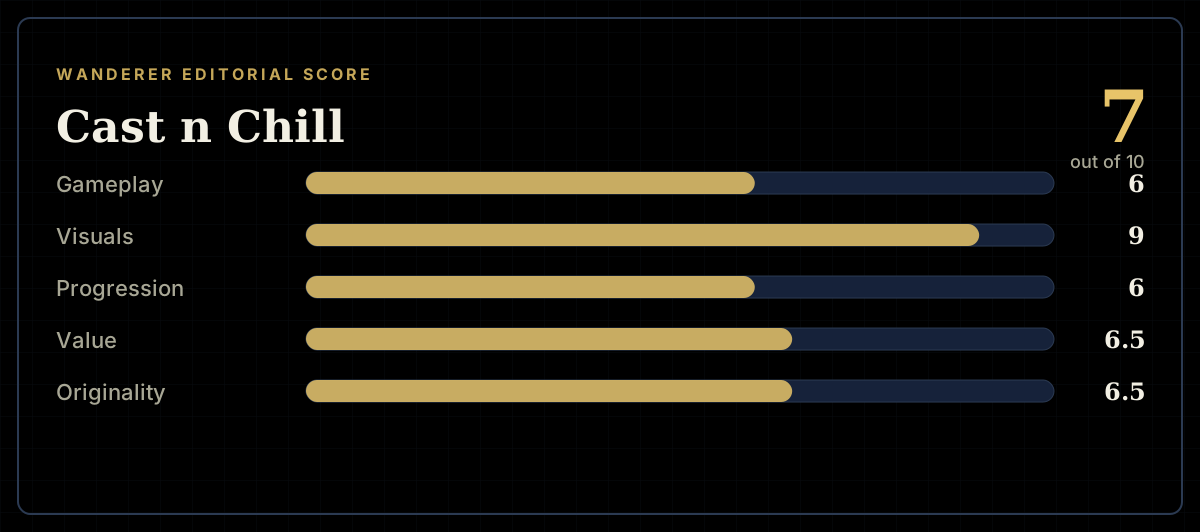
7 / 10
- Developer
- Wombat Brawler
- Publisher
- Wombat Brawler
- Released
- 16 June 2025
- Platforms
- Windows, macOS
- Genre
- Cozy Idle Fishing
- Monetisation
- One-off premium purchase, with two optional cosmetic/content DLC packs; no in-app purchases and no premium currency
- Players
- Online and split-screen co-op, added via a post-launch update; fully playable solo as well
The short version
Cast n Chill lets players fish across sixteen peaceful lakes, rivers and coastal waters, either actively casting and reeling or switching to a passive idle mode and letting the game handle it while a companion pet keeps watch. It's earned a genuinely devoted, Very Positive following across 7,850 Steam reviews — some of the most heartfelt in this reviewer's experience, including players who credit the game with getting them fishing with their own families again. The honest complication, raised consistently at launch and specific enough to take seriously, is a real paradox at the game's core: idling frequently outperforms actively playing, since your character won't waste time changing gear the way an attentive player would, which undercuts the appeal of the "active" mode the fishing itself is built around. A related, equally consistent complaint described the game as beautiful but thin on content at launch — a criticism the developer has spent the following year addressing directly with new lakes, a cabin-restoration feature, co-op, and a steady stream of seasonal content.
Biggest strengths
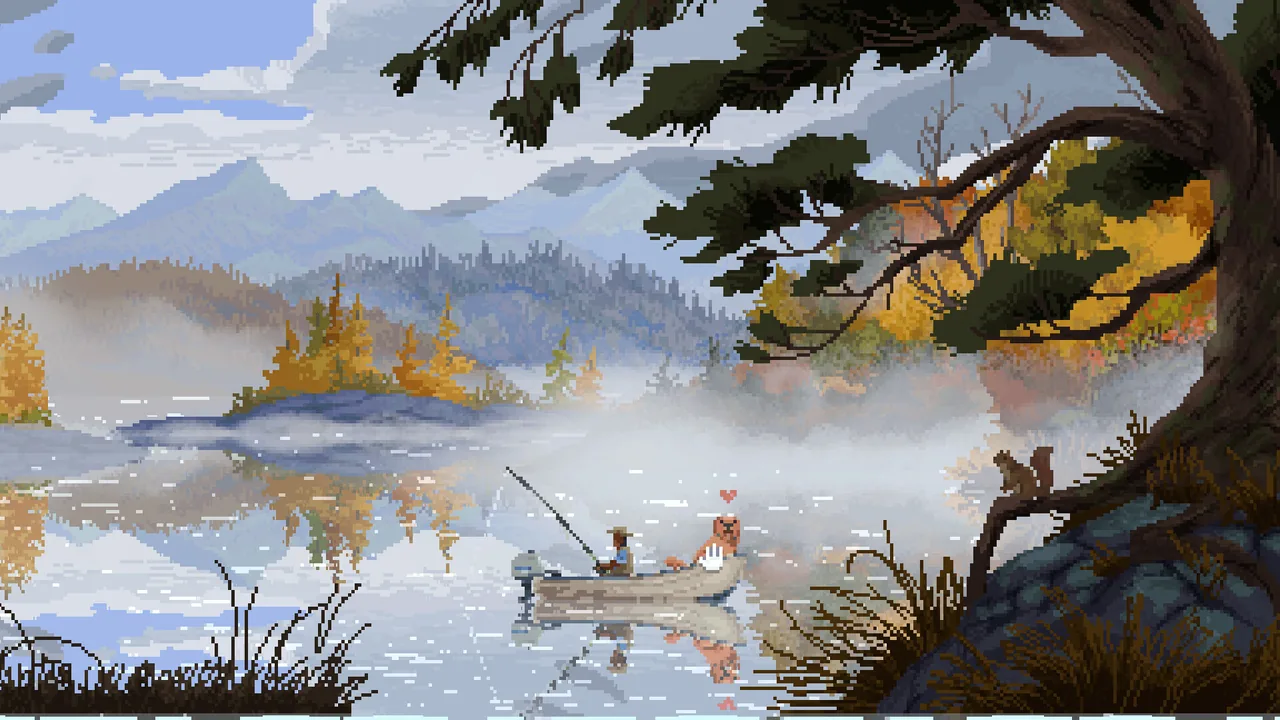
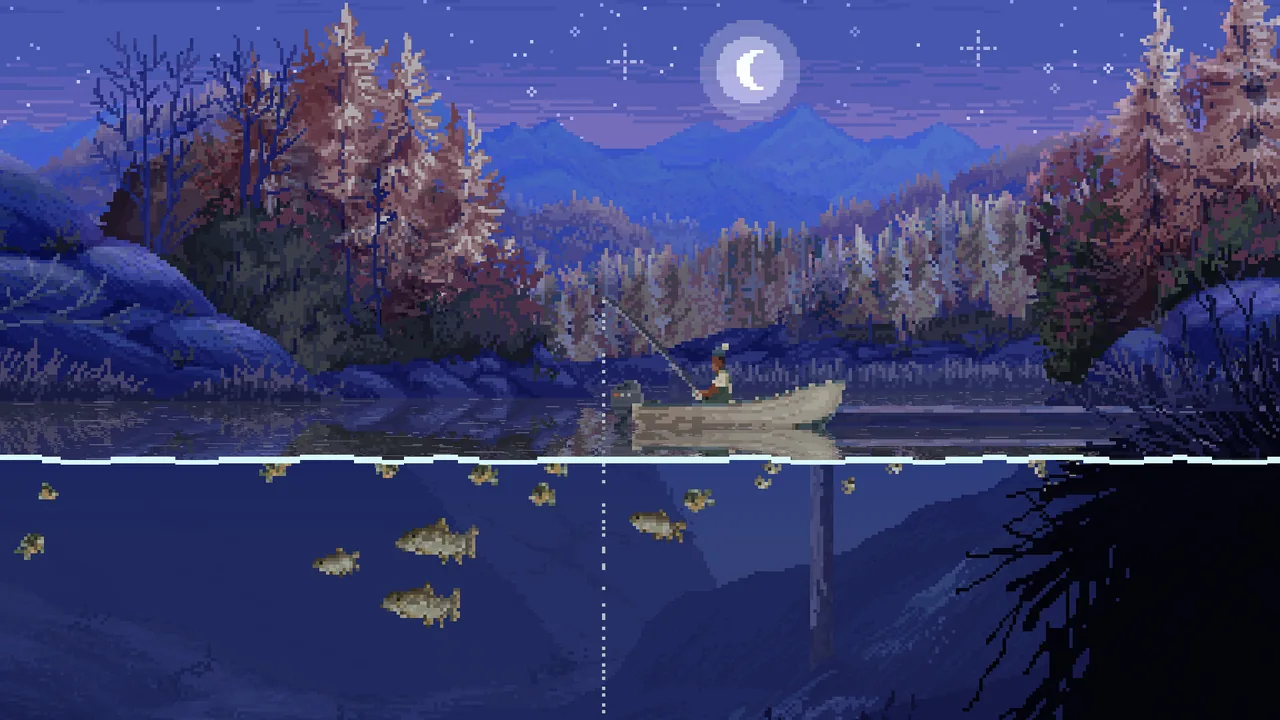
- Pixel art and overall atmosphere draw close to universal praise, with several reviewers describing individual scenes as functioning like a "wallpaper generator" on top of being a real game
- Genuine flexibility between actively fishing and letting an idle mode handle it makes the game unusually accommodating for players with limited energy, time, or mobility
- Several reviewers describe the game's chill fishing loop as directly inspiring them to go fishing with real family members, a genuinely warm and specific kind of praise
Biggest weaknesses
- A specific, consistently documented design paradox holds that idling frequently outperforms actively playing, since an idling character won't waste time switching gear the way an attentive player naturally would, undercutting the appeal of engaging directly with the fishing mechanics
- Several detailed reviews describe the active fishing mechanics themselves as unclear, citing a "stop reeling when the fish is fighting too hard" instruction with no visible indicator of when that's actually happening
- A consistent launch-era complaint described the game as content-thin for its price, with a small map and a fishing loop several reviewers said they'd fully explored within a few hours
Who it's for: Fans of cozy, low-pressure simulation games who want genuine flexibility between active and idle play, and anyone looking for a soothing, visually gorgeous game to leave running on a second monitor.
Our recommendation: A genuinely beautiful, soothing cozy game worth its discounted price for the atmosphere and idle-friendly design alone, with the honest caveat that the fishing itself is mechanically simple and has grown its content library gradually rather than launching complete.
7 / 10
Cozy games live or die on whether the vibe they're selling actually holds up once the initial charm wears off, and few recent examples have earned as devoted — and as candid — a following as Cast n Chill. Wombat Brawler's pixel-art fishing game lets players drift across sixteen lakes, rivers and coastal waters, casting and reeling by hand or handing the rod to an idle mode and letting a loyal companion pet keep watch instead. More than a year after its June 2025 release, it sits at a Very Positive 94.9% across 7,850 Steam reviews, and some of the praise in that sample is genuinely moving in ways few game reviews manage.
A game that got real players back on real water
The most striking thread running through the positive review sample isn't about mechanics at all — it's about what the game inspired players to do away from their screens. "This game literally got me to get off my butt and go fishing with my dad in real life," one review states plainly. Another, considerably more affecting: a reviewer describes their recently widowed mother-in-law, given a grim medical prognosis, wanting to go fishing one more time while she still could, and finding real comfort in the game's low-pressure version of that experience. These aren't isolated sentiments — reviewer after reviewer describes the game succeeding specifically at capturing the calm, unhurried feeling of actual fishing rather than gamifying it into a grind, and crediting that authenticity for genuine real-world impact. "Give a man a fish, and you feed him for a day. Teach a man to Cast n Chill, and he'll chill for a lifetime," one review puts it, capturing the tone the game's fans keep returning to.
Presentation is where the near-universal praise concentrates most consistently. "Beautiful art, a relaxed atmosphere, and gameplay that's engaging," reads a typical assessment, while another distills the appeal to its simplest form: "Actually you buy one cozy game and get infinite wallpaper generator also." For a genre where atmosphere is often the entire selling point, that level of consistent, specific visual praise across thousands of reviews is a genuine achievement.
A real design paradox at the game's core
What keeps this review from simply celebrating that atmosphere is a specific, consistently documented tension that a meaningful slice of the review sample identifies independently. The game offers both active fishing — casting, watching for bites, timing your reel — and a passive idle mode for players who'd rather let it run in the background. The problem several detailed reviews raise is that idling frequently performs better than active play, precisely because an idling character doesn't waste time deliberating over gear the way a real, attentive player naturally does. "In idle your character will not change rods/lure, so its perfectly possible" for idle fishing to out-produce a player manually second-guessing their setup, one review explains. Another makes the underlying tension explicit: "While it markets itself as a playable/idle game, I feel that this is an afterthought when you realize how much more beneficial it is for the game to idle" than to actually engage with it. That's a genuinely awkward design outcome for a game whose core pitch is flexibility between the two modes — if one mode is mechanically superior regardless of player preference, the choice stops feeling like a real choice.
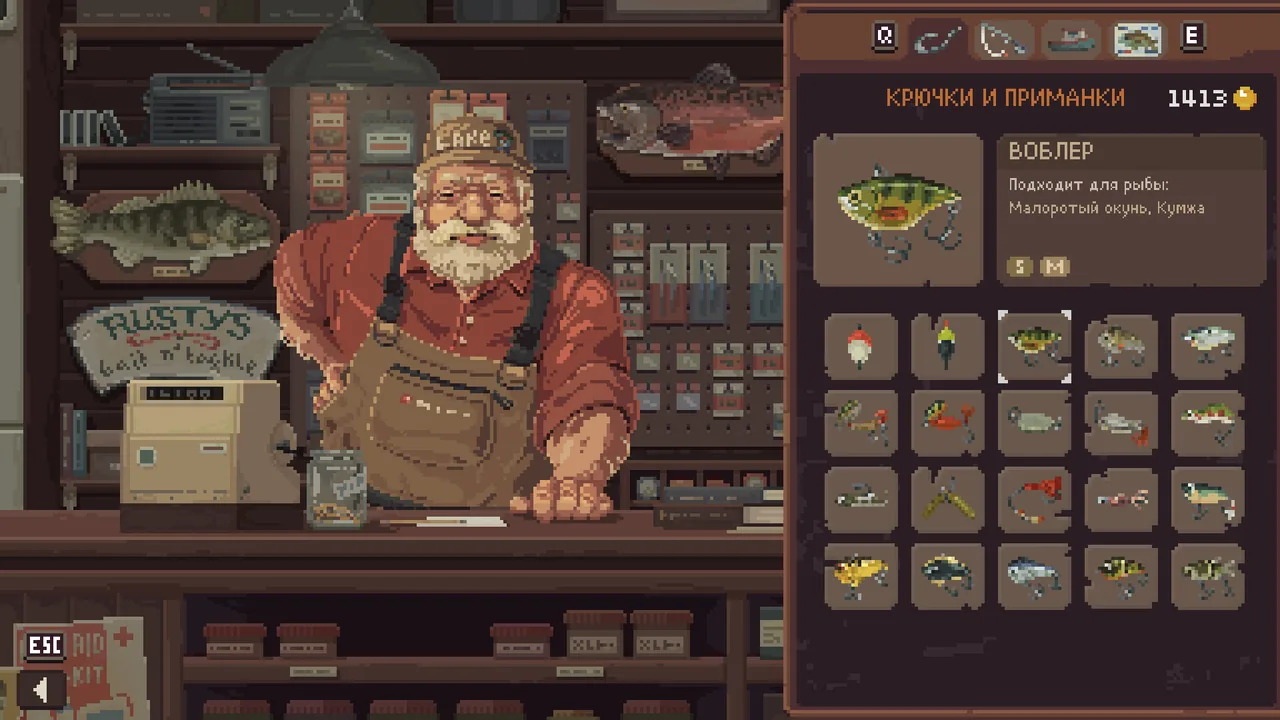
The active fishing mechanics themselves draw a separate, more specific complaint about clarity. "'Stop reeling when the fish is fighting too hard.' Except... what exactly is the indication that it's doing that?" one review asks, describing a core interaction with no clear visual feedback for when it's actually being executed correctly — a real usability gap rather than a design-philosophy disagreement. Fish identification draws a related, smaller complaint, with at least one detailed review describing insufficiently distinctive visual differences between species as a genuine source of frustration when trying to plan the right bait and lure combination.
The content-thinness complaint, and what's happened since
A separate, equally consistent launch-era criticism concerned scope. "Beautiful game, but not a lot of content for $15. The map doesn't have a whole lot of locations, there isn't much to do," one review states, a sentiment echoed closely by others who describe fully exploring the game's systems within a handful of hours. "I feel like it has potential to be a great game in the future, but right now it's just boring," reads another, dated close to launch.
What's notable, checking the developer's own patch history, is how directly Wombat Brawler appears to have responded to exactly that criticism over the following year. Autumnwood Lake opened as new content shortly after launch; a full winter seasonal update, Lake Hunkerdown, followed; co-op mode and new outfits arrived together; and an entire cabin-restoration feature, Old Moose Cabin, gave players a persistent home base to develop over time rather than just a fishing loop to repeat. The studio has since announced a standalone follow-up, Wild n Chill, suggesting continued investment in the format rather than treating the original as a finished, static product. Several reviewers who initially criticised the content volume explicitly note they'd be open to revising their opinion as updates land — a fair, good-faith framing that the ongoing patch cadence appears to be actively earning.
Where this leaves a buyer
At its discounted price of roughly NZ$14, Cast n Chill delivers real, well-earned value for what it does best: an unusually soothing, gorgeous cozy fishing experience that a genuine number of players credit with meaningfully improving their actual lives, not just their screen time. The honest caveats are specific rather than vague — a real design tension between its active and idle modes that undercuts the flexibility it markets itself on, some genuine clarity gaps in the core fishing interaction, and a launch that was thinner on content than its price initially justified. A year of substantial, responsive free updates has narrowed that last gap considerably, and buyers checking in now are getting a meaningfully more complete game than the one its earliest, more critical reviews describe.
Pros and cons
Pros
- Pixel art and overall atmosphere draw close to universal praise, with several reviewers describing individual scenes as functioning like a "wallpaper generator" on top of being a real game
- Genuine flexibility between actively fishing and letting an idle mode handle it makes the game unusually accommodating for players with limited energy, time, or mobility
- Several reviewers describe the game's chill fishing loop as directly inspiring them to go fishing with real family members, a genuinely warm and specific kind of praise
- Substantial free post-launch content has addressed the launch-era thinness complaint over the following year, adding new lakes, a cabin-restoration feature, seasonal events and co-op
Cons
- A specific, consistently documented design paradox holds that idling frequently outperforms actively playing, since an idling character won't waste time switching gear the way an attentive player naturally would, undercutting the appeal of engaging directly with the fishing mechanics
- Several detailed reviews describe the active fishing mechanics themselves as unclear, citing a "stop reeling when the fish is fighting too hard" instruction with no visible indicator of when that's actually happening
- A consistent launch-era complaint described the game as content-thin for its price, with a small map and a fishing loop several reviewers said they'd fully explored within a few hours
- Fish identification is criticised by at least one detailed review as frustrating due to insufficiently distinctive visual differences between species
Screenshots
-
Cast n ChillImage: Wombat Brawler via Steam -
Cast n ChillImage: Wombat Brawler via Steam -
Cast n ChillImage: Wombat Brawler via Steam -
How the review scores each part of the gameWanderer Editorial -
The short versionWanderer Editorial