
Game review
Cascadium
7 / 10
- Developer
- ABoxWithinABox
- Publisher
- ABoxWithinABox
- Released
- 30 June 2026
- Platforms
- Windows
- Genre
- Casual, Indie, Simulation
- Monetisation
- paid
- Players
- false
The short version
Biggest strengths
- A satisfying, self-contained math puzzle at its core, with reviewers praising layered exponent, multiplier, discount, and prestige-timing systems that reward careful planning
- Genuinely huge amounts of confirmed playtime across the pool, with several reviewers reporting 100 to over 200 hours and still not finished with the content
- A design several reviewers specifically praised for not requiring a wiki, guide, or Discord server to make meaningful progress, unlike many peers in the genre
Biggest weaknesses
- A glacially slow early game that multiple reviewers said nearly caused them to give up, with one reporting it took over 100 hours to unlock a single major new mechanic
- Thin in-game explanations of its prestige and upgrade mechanics that several reviewers said could cost players hours of progress if they act without fully understanding a system first
- No sound effects for the game's core ball-dropping action, a gap one heavily invested reviewer flagged directly as making the experience feel oddly dull
Who it's for: Idle and incremental game fans who enjoy planning prestige timing and optimizing math-driven upgrade paths without needing an external wiki or guide
Our recommendation: recommended
7 / 10
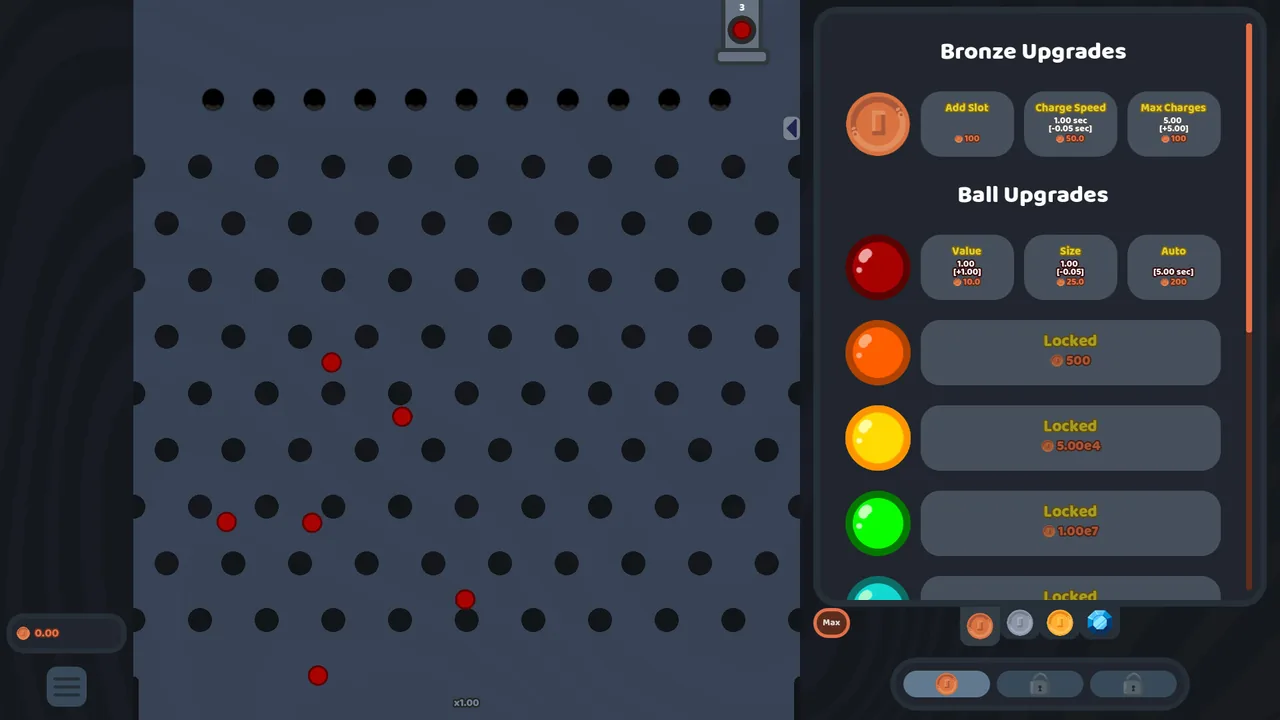
Cascadium released on Steam on June 30, 2026, a $2.99 physics-based idle game from solo developer ABoxWithinABox. The premise is simple on its surface: drop balls plinko-style down a board to generate money, then reinvest that money into upgrades, multipliers, and eventually a series of prestige systems that reset progress in exchange for permanent bonuses. Its 13-review English pool leans clearly Positive at 81% (13 up, 3 down, out of 16 total reviews), and the reviews describe a deceptively deep incremental that rewards enormous time investment while frustrating players who bounce off its slow start.
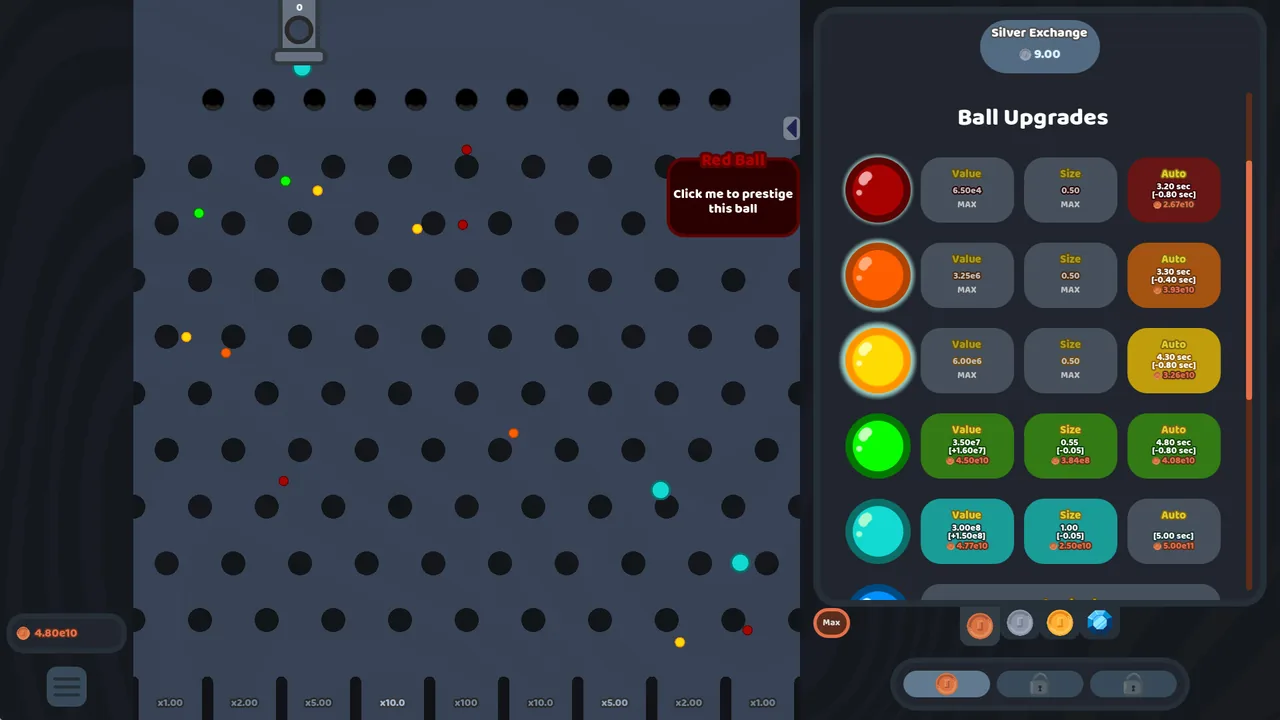
The math-driven prestige and upgrade systems draw the pool's most detailed, enthusiastic praise, particularly from reviewers who identify strongly with the genre. One reviewer, framing their recommendation explicitly for fellow "idle and incremental lovers," wrote that "exponent, multi, discount, probabilities, prestige timing... if you're into math, you will have a blast carefully choosing and planning your upgrades," while cautioning that "this probably isn't for" players chasing "high luck - high reward plinko dopamine" instead. Another reviewer who had logged over 100 hours praised the game specifically for not gatekeeping progress behind outside resources, writing "I got sick of incrementals that require a guide, or discord, which I actually despise, to accomplish meaningful gains. This is not like those games," calling it "fun without being brainless but doesn't require a degree in rocket surgery to figure out."
The sheer scale of playtime logged across this small pool is itself a meaningful signal. Multiple reviewers reported well over 100 hours, with one confirming "worth the money, nowhere near done with this game at 125 hours," and another, at 213 hours, still actively engaged enough to request a specific feature improvement rather than having abandoned the game. A reviewer with 131 hours summed up the appeal in blunt, self-aware terms: "very addicting, been great to have on in the background while I clean and things. Me like when balls drop and number go up: it's that simple, gang." Another described it as "a fantastic idle game that definitely keeps me hooked," specifically praising how "upgrading the balls and watching the numbers explode with the exponent mechanics is super satisfying."
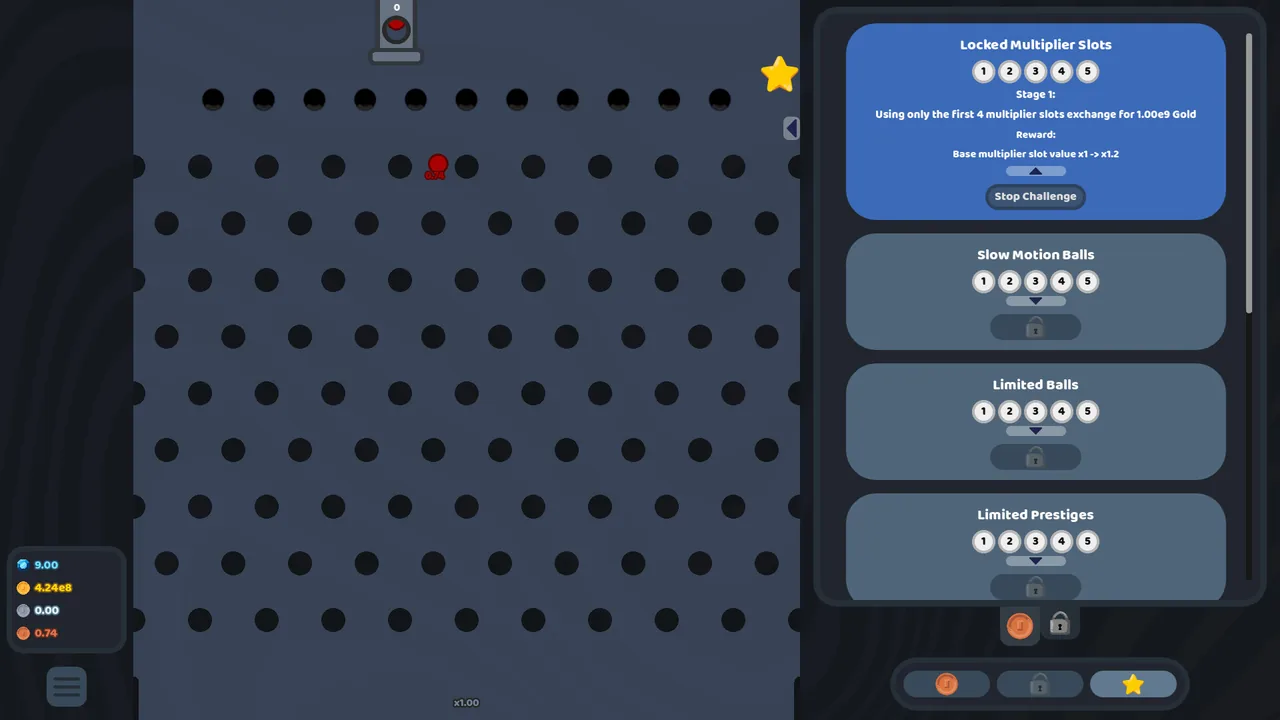
That same slow-burn structure is also the pool's clearest, most consistently corroborated weakness. One reviewer, who ultimately recommended the game, admitted "it takes a long time to unlock anything past the basic game" and that they "almost gave up the game before unlocking challenges because it took so long and got repetitive." A second reviewer quantified the problem starkly, noting it took them "more than 100 hours to unlock mutations, for example," and warned that "some math and mechanics would benefit from more explanations." That lack of clarity carries real stakes given the game's prestige systems: the same reviewer cautioned other players to "be careful what you're doing... you might easily lose many hours of grind by clicking without carefully reading," since a misunderstood prestige mechanic can undo substantial progress. Two of the pool's three negative reviews focus on the same underlying issue from the opposite direction, with one describing the game as "very bare-bones" with "no story" and "not much to this," and another calling it flatly "one of the more boring incrementals I've played recently," noting that after 18 hours they'd found "no interesting mechanics, strategies, interesting unlocks, etc."
A handful of more specific, practical complaints round out the picture. One heavily invested reviewer flagged the complete absence of sound design for the game's core action, asking directly, "would it be possible to include bouncing sound effects for the balls? The current lack of sound makes the experience somewhat dull," a fair critique for a game whose entire loop revolves around watching balls fall. A separate reviewer reported a functional bug on Steam Deck, writing the game is "broken on steamdeck, can select some UI but can't buy upgrades," a serious issue for anyone hoping to play the long-haul incremental on a handheld.
It's worth noting that even the pool's harshest critics didn't dispute the game's value for money; the complaints center almost entirely on pacing, clarity, and polish rather than on the core loop or the price being unfair. Several reviewers who found the slow start genuinely frustrating still ultimately recommended the game once they pushed past it, framing their thumbs-up as a qualified one rather than an enthusiastic default.
A couple of reviewers also offered a useful framing for prospective buyers trying to gauge fit before purchasing, since the game's appeal is unusually polarized along genre lines even within its own positive reviews. One reviewer put it plainly: "let's be real: you know looking at this game if it's a game you're going to like. If you think you're going to like it, you'll like it." Another reviewer who compared it to a well-known incremental they'd sunk thousands of hours into called Cascadium genuinely distinct within the genre, writing they'd found a demo on itch.io, tried it, and "liked it enough to actually buy it after the demo," a low-friction way for undecided players to test the fit for themselves before spending. That demo availability is worth flagging directly: it's a rare, low-risk way to find out which side of this pool's real divide a given player is likely to land on before committing even the modest $2.99 asking price.
Taken as a whole, Cascadium is a small, math-rich incremental that earns real, sustained devotion from players willing to push through a punishingly slow opening stretch, offering a rare design in its genre that doesn't demand outside guides to progress meaningfully. Its thin explanations, missing sound design, and a real Steam Deck bug are legitimate rough edges worth knowing about going in, but for patient fans of the genre at a $2.99 price, it's a reasonable recommendation with eyes open about the slog ahead.
Pros and cons
Pros
- A satisfying, self-contained math puzzle at its core, with reviewers praising layered exponent, multiplier, discount, and prestige-timing systems that reward careful planning
- Genuinely huge amounts of confirmed playtime across the pool, with several reviewers reporting 100 to over 200 hours and still not finished with the content
- A design several reviewers specifically praised for not requiring a wiki, guide, or Discord server to make meaningful progress, unlike many peers in the genre
- A very low $2.99 price that most reviewers, even critical ones, agreed represented fair value for the amount of playtime the game offers
Cons
- A glacially slow early game that multiple reviewers said nearly caused them to give up, with one reporting it took over 100 hours to unlock a single major new mechanic
- Thin in-game explanations of its prestige and upgrade mechanics that several reviewers said could cost players hours of progress if they act without fully understanding a system first
- No sound effects for the game's core ball-dropping action, a gap one heavily invested reviewer flagged directly as making the experience feel oddly dull
- A confirmed Steam Deck bug preventing players from purchasing upgrades through parts of the UI, reported by at least one reviewer
Screenshots
-
CascadiumImage: ABoxWithinABox via Steam -
CascadiumImage: ABoxWithinABox via Steam -
CascadiumImage: ABoxWithinABox via Steam