Game review
Brigador Killers Review
5.5 / 10
- Developer
- Stellar Jockeys, Gausswerks
- Publisher
- Stellar Jockeys
- Released
- 20 August 2026
- Platforms
- ["Windows"]
- Genre
- Isometric Action
A Long-Awaited Sequel Lands in Early Access
Brigador Killers, from Stellar Jockeys and Gausswerks, entered Steam Early Access on August 20, 2026, roughly a decade after the original Brigador carved out a small but devoted following as an isometric mech-and-tank demolition sim. This sequel promises the same core fantasy, piloting hulking war machines through a dystopian corporate city, leveling entire blocks of buildings, and building a private arsenal by stealing and crafting vehicles, but this time layered with an on-foot infantry mode and a proper rags-to-riches campaign structure. 549 English-language reviews put it at "Mostly Positive," 77%, a number that undersells just how contentious this particular launch has been among the very fans it was built for.
The Bones Are Genuinely Great
Nobody in the review pool disputes that the foundation is strong. The Early Access build's atmosphere, sound design, and original soundtrack draw near-universal praise, with multiple reviewers calling the OST "some of the best music ever to be in a video game" and describing the moody, neon-lit destruction as everything they wanted from a spiritual successor to Syndicate, Jungle Strike, and the original Brigador. The core gunplay, when it's given room to breathe, still delivers the specific, hard-to-replicate thrill of watching a city block crumble under cannon fire while EBM synths pound in the background. Several reviewers who've stuck with it since the demo describe genuinely losing dozens of hours to it, and even most negative reviews go out of their way to say they still believe in the eventual game this is building toward.
Less Content Than the Free Demo
The single most repeated, most heavily upvoted complaint across the entire review pool, by a wide and consistent margin, is that the paid Early Access release shipped with noticeably less content than the free public demo that preceded it. Reviewer after reviewer lists the same specific cuts: several craftable vehicles available in the demo, including a grav tank and a light mech, are gone; a vendor that let players spend credits on gear has been removed, making the currency largely pointless; multiple story missions present in the demo are absent from the paid build; and the narrative campaign that follows is described by several reviewers as dramatically shorter than what they'd already played for free. One widely-upvoted review opens by calling this a "bold move," and another says plainly that new players curious about the game should "just play the demo for now" rather than spend money on the current release. This isn't a matter of one or two disgruntled players; it's the same complaint, with the same specific missing features named, from dozens of independent reviewers across a wide range of playtimes.
Rough Edges Beyond the Content Gap
Beyond the demo comparison, reviewers report a genuinely unbalanced difficulty curve, with some missions capable of one-shotting the player without much warning, and long, slow opening stretches that several found tedious before the game hands over its more interesting toys. Interface complaints are common too: item tooltips, vehicle stat readouts, and crafting-slot information are frequently described as missing or placeholder, leaving players guessing what a given gun or vehicle actually does. None of this is unusual for Early Access, and several reviewers explicitly frame their criticism as constructive rather than damning, but it does compound the sense that this build shipped before it was ready, especially at a $24.99 asking price that a number of reviewers feel is steep for the amount of finished content currently on offer.
Verdict
Brigador Killers is a strange case: a game whose most passionate critics are also, almost without exception, its most enthusiastic potential fans. The atmosphere, music, and destructive isometric combat that made the original Brigador beloved are clearly present and clearly cared for, and the handful of reviewers willing to look past the current content gap describe a genuinely promising foundation. But shipping a paid Early Access build with less crafting, fewer missions, and a shorter story than an already-available free demo is a real, well-documented misstep, not a matter of taste, and it's soured a launch that should have been a celebration for a long-patient fanbase.
For now, this is a game to watch rather than buy outright, unless you're specifically interested in shaping its Early Access feedback loop or are already deeply invested in the Brigador universe and can tolerate a rougher, thinner version of what the demo promised. The developers have a clear, specific roadmap of community-identified gaps to close, craft options to restore, missions to reinstate, and interface polish to add, and the goodwill in the review pool suggests plenty of players are ready to come back once those gaps close. Anyone new to the series would do better to try the free demo first and treat the current Early Access build as a preview of a promising game still very much under construction.
It's worth stressing how unusual this particular Early Access complaint pattern is. The genre's typical warning, "wait for more content," usually means a game is thin because it hasn't been built out yet, not that a previous, freely available build somehow offered more to do. Several reviewers make exactly that distinction explicit, arguing that a straightforward feature-incomplete Early Access release would have drawn far less anger than one that visibly regressed from a build the same audience had already played for free. That framing matters for anyone deciding whether to buy in now: the missing grav tank, the gutted vendor, and the trimmed campaign aren't necessarily permanent losses, and the studio's own post-launch hotfixes and a "responding to your feedback" update within the first two weeks suggest they're listening. But it does mean prospective buyers are effectively paying twenty-five dollars today for a promise that the game will eventually catch back up to where its own demo already stood, which is a harder sell than the usual Early Access pitch of paying to watch something grow from nothing.
Screenshots
-
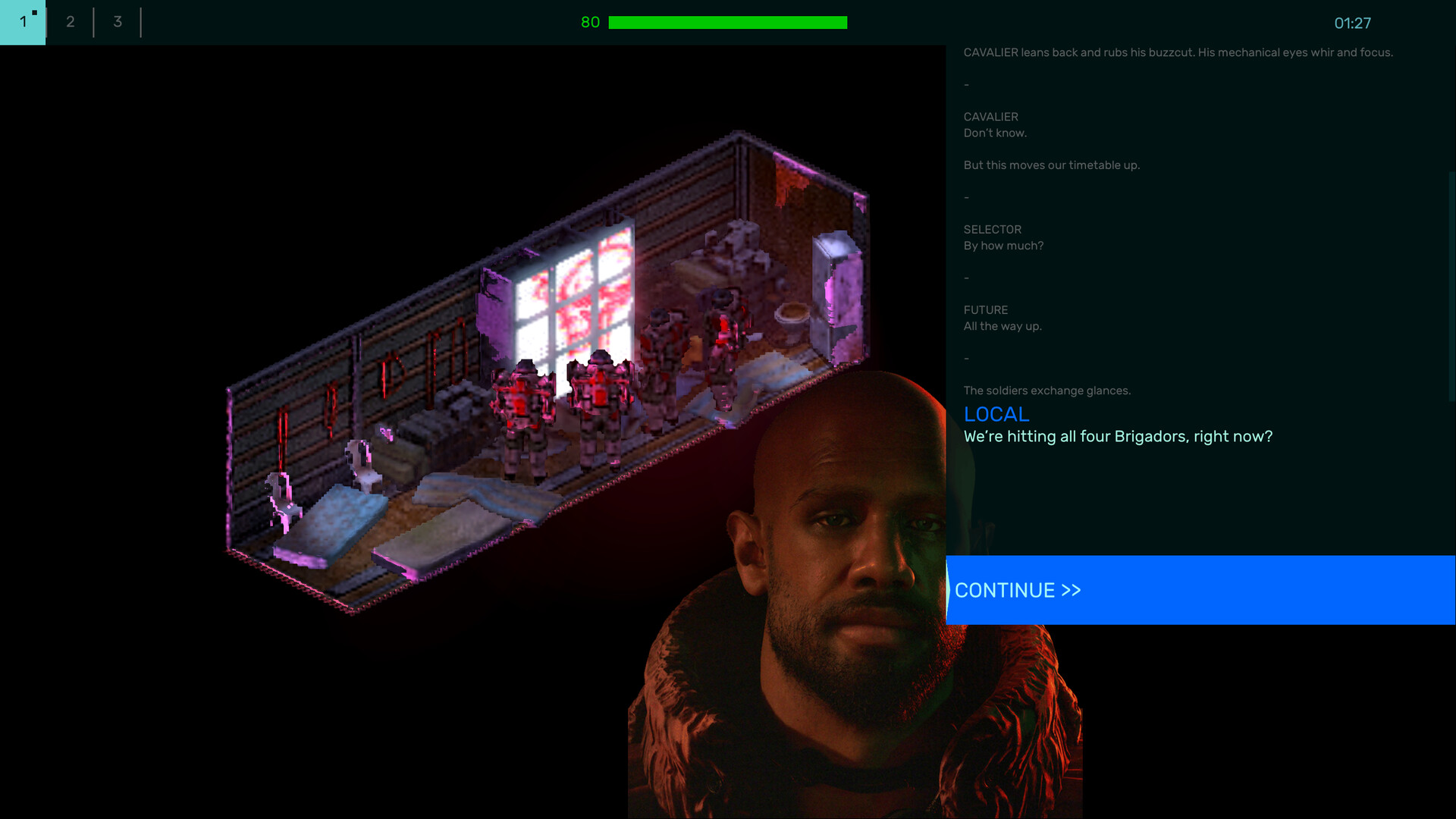
One of the story's dialogue scenes, isometric pixel-art conspirators plotting in a cramped barracks room while a fully-voiced portrait carries the conversation up close.Image: Stellar Jockeys via Steam -
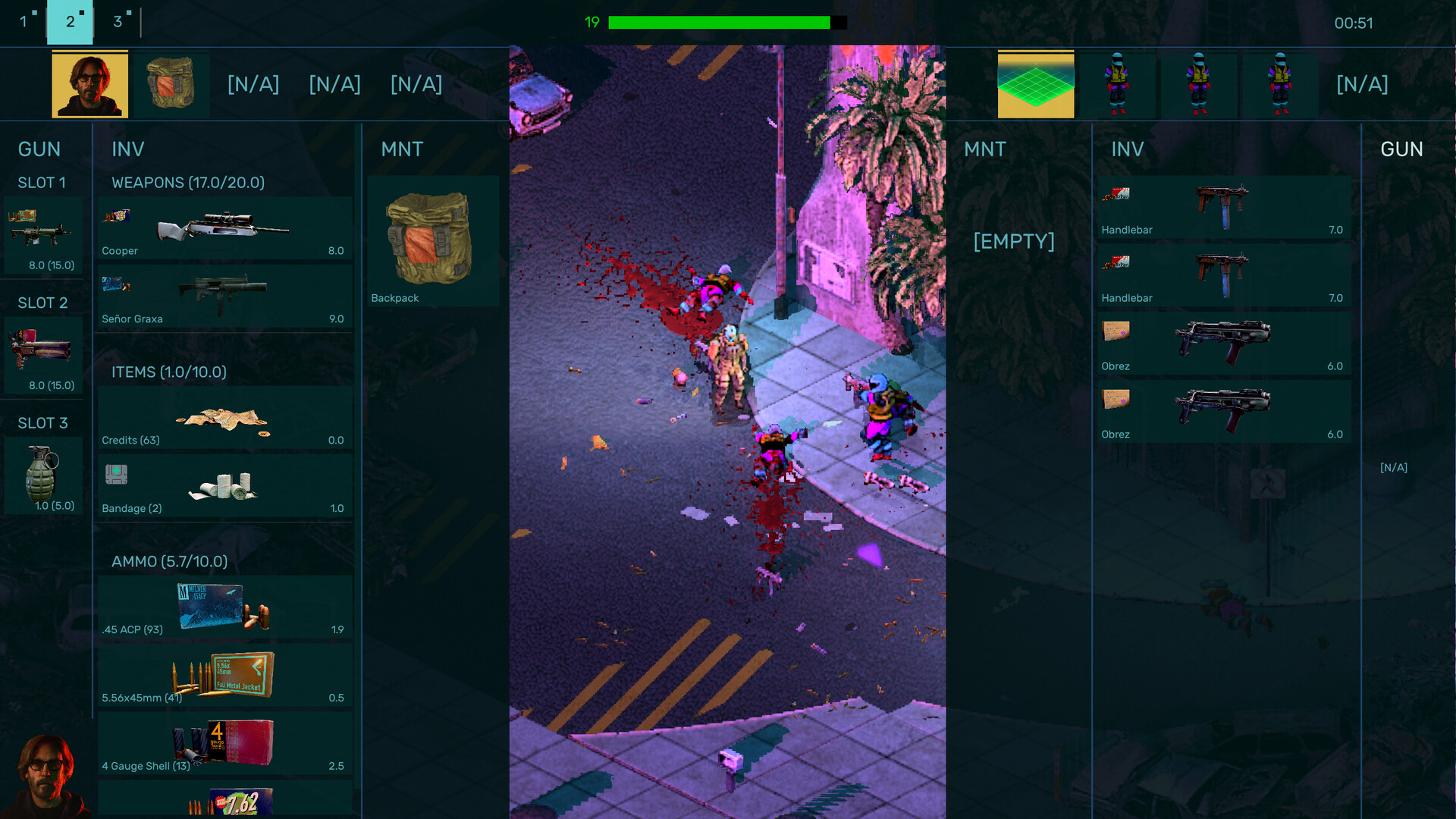
The on-foot combat and inventory management side of the game, guns, ammo, and gear tallied on both sides of a small isometric skirmish playing out between the panels.Image: Stellar Jockeys via Steam -
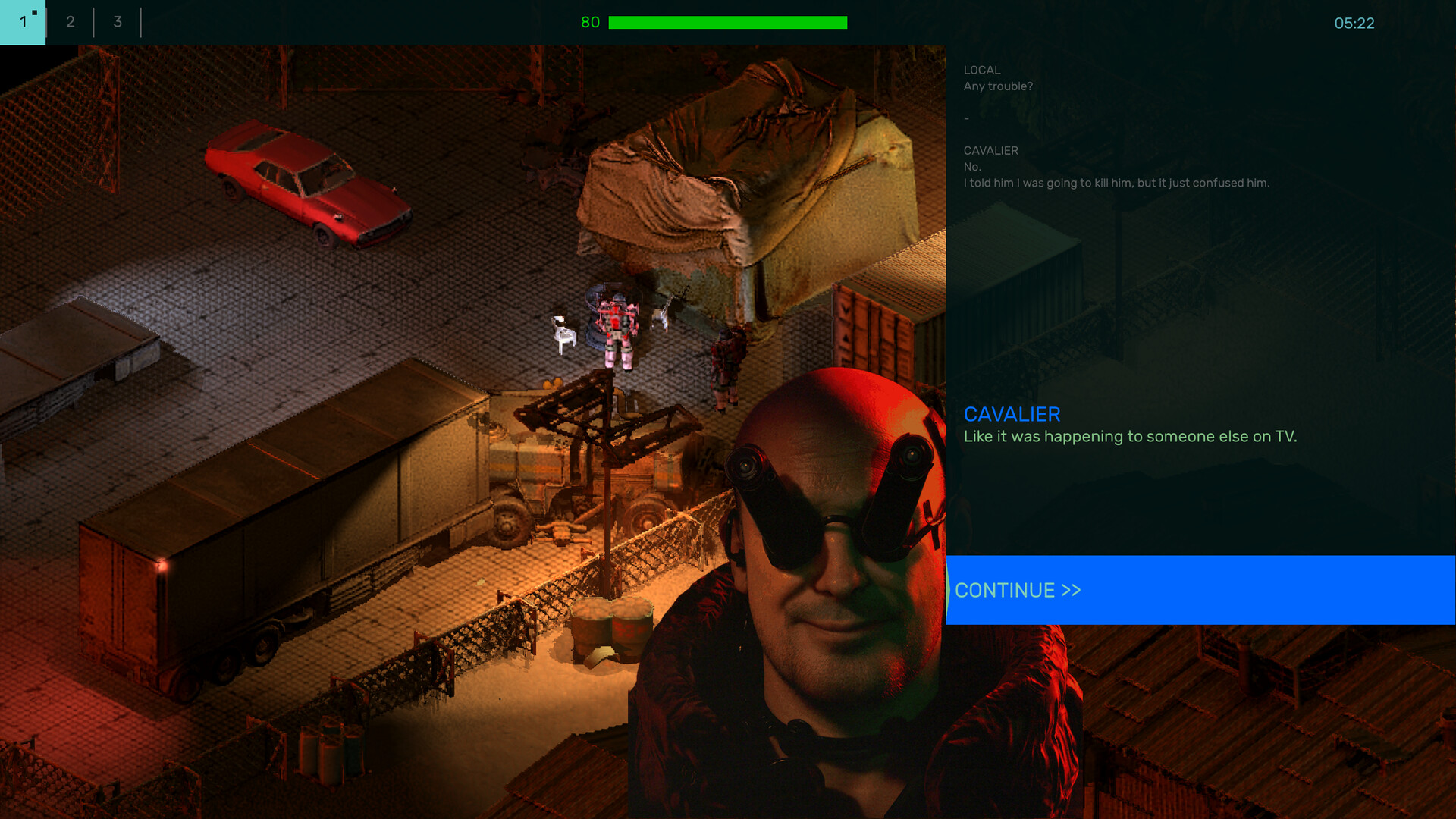
A quieter moment between missions, the game's dry, noir-inflected writing paired with the same moody isometric cityscape that carries its combat scenes.Image: Stellar Jockeys via Steam