
Game review
Blue Oath
7.5 / 10
- Developer
- SwordStack Studios
- Publisher
- ISART DIGITAL
- Released
- 30 June 2026
- Platforms
- Windows
- Genre
- Action, Adventure, Casual, Indie
- Monetisation
- free-to-play
- Players
- false
The short version
Biggest strengths
- A genuinely novel combat mechanic, dashing to impale enemies and objects on your swordfish's beak, stacking them, and throwing them back as weapons, that multiple reviewers found immediately satisfying to learn
- Striking, atmospheric underwater art direction and a subtle, well-regarded soundtrack, repeatedly described as far above what players expected from a student project
- Approachable, lightly-taught design that trusts players to read enemy behavior rather than leaning on tutorials or hint text
Biggest weaknesses
- Corroborated by multiple independent reviewers as very short, roughly 45 minutes to an hour, with several wishing for a full commercial-length expansion of the same systems
- A fixed or auto-scrolling camera drew repeated, independent complaints, including one detailed report of the character becoming invisible or catching on the environment during forced-movement segments
- Turning and movement were independently described by two reviewers as clunky, tank-control-like, particularly noticeable during the game's single no-hit achievement challenge
Who it's for: Anyone curious about a free, beautifully crafted 45-60 minute underwater action-adventure with a genuinely novel combat hook, not recommended for players wanting more than an hour of content or full camera control
Our recommendation: recommended
7.5 / 10
Blue Oath released in full, and entirely free, on Steam on June 30, 2026, a student-made action-adventure from SwordStack Studios and publisher ISART DIGITAL in which players control a warrior swordfish on a quest to free a giant, cursed moray eel. Its small but unanimous 13-review English pool sits at Positive (13 up, 0 down, 100%), and the reviews consistently describe a strikingly polished, visually gorgeous student project whose biggest problem is simply that it ends almost as soon as it gets going.
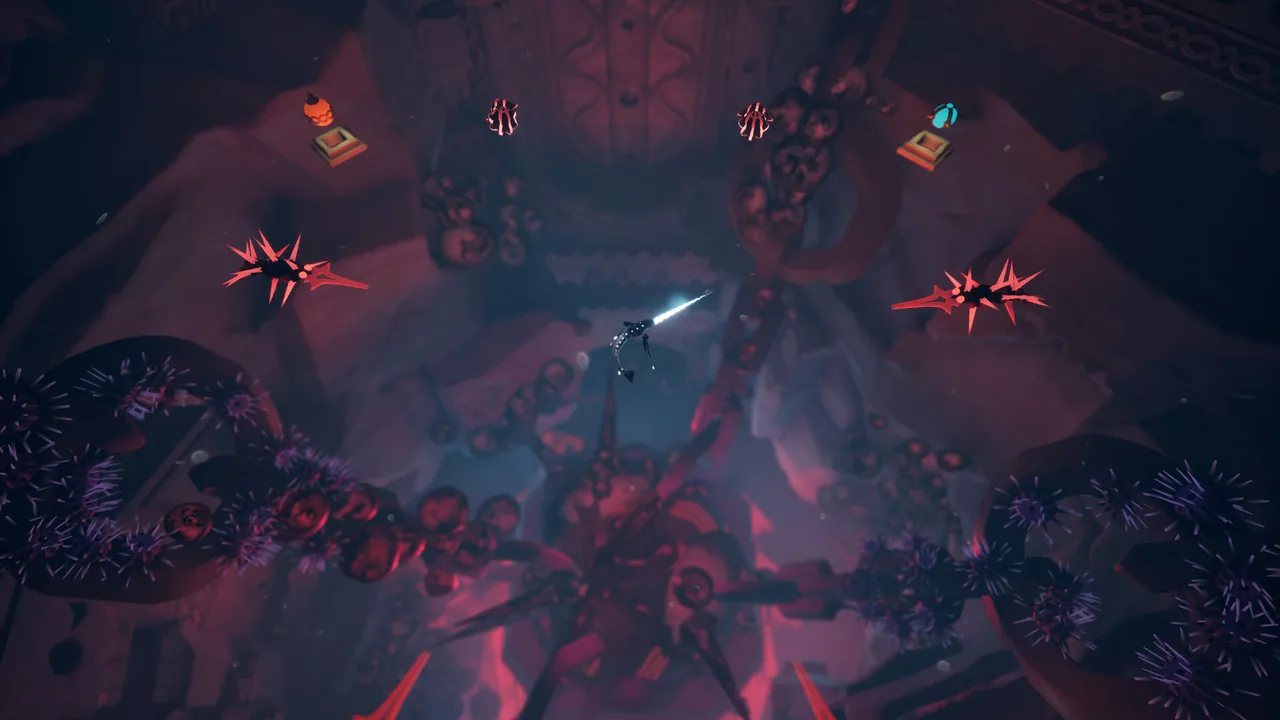
The combat hook is the pool's most consistently praised feature, and it's a genuinely inventive one. Players dash into enemies and environmental objects to impale them on their swordfish's beak, stack multiple impaled objects at once, and throw the resulting spear back as a weapon or tool. One reviewer called the combat "smooth and surprisingly satisfying," while another specifically praised the design choice of making "acceleration makes the character a weapon" as the game's standout idea. A third reviewer, evidently a fellow game-design student, called out how the streamlined two-input control scheme, movement and dash-attack, with no separate strafe or multi-move combo system, "works in its favour" for a game this length, arguing that added complexity would have diluted rather than improved it.
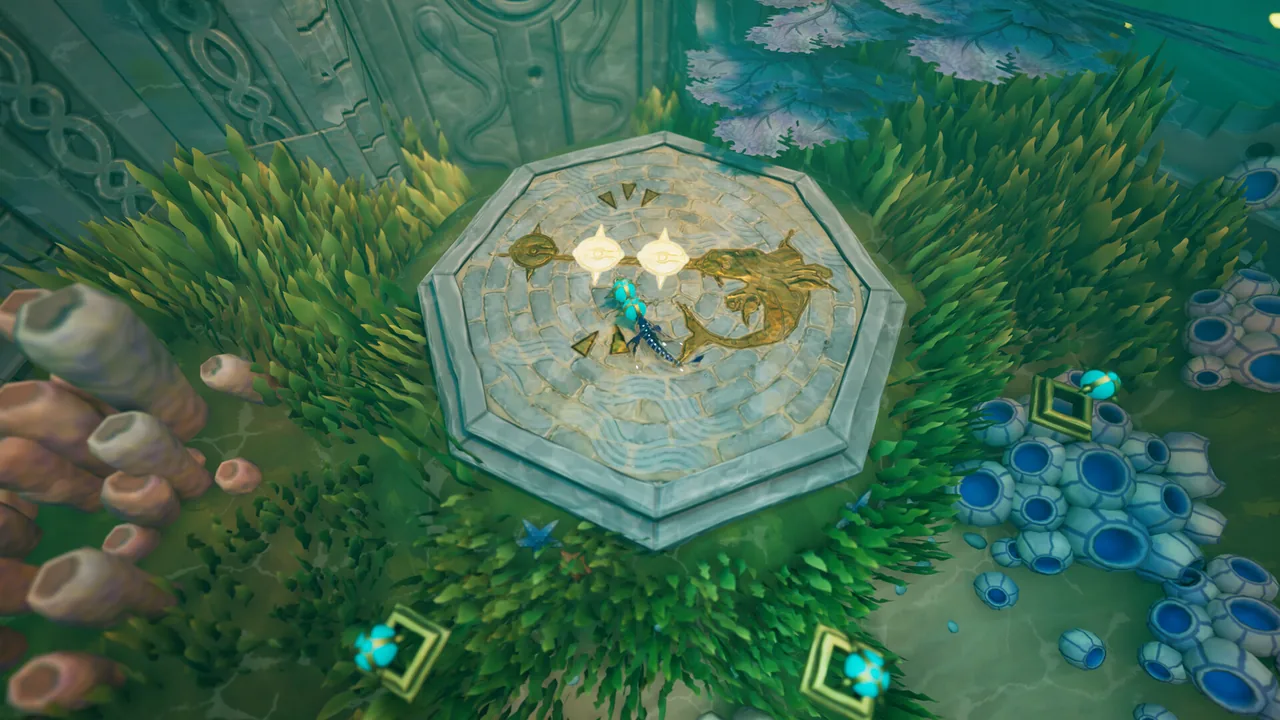
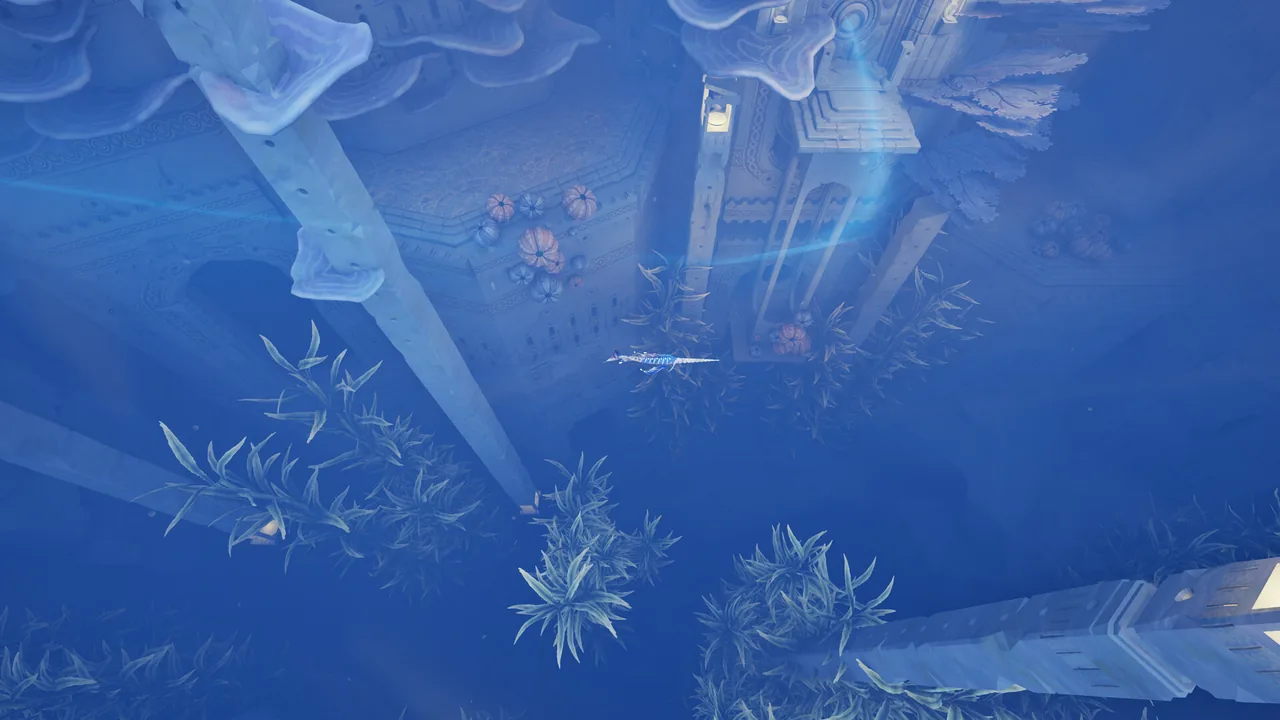
Presentation draws the pool's warmest and most surprised praise, repeatedly framed around the fact that this is unpaid student work. One reviewer called the visual design "breathtaking" with "so much life packed into this tiny adventure," while another described being "enchanted since the first time I saw the screenshots," adding that discovering it was a student project given "this MUCH quality" left them planning to follow the developers' future work closely. A third reviewer singled out the soundtrack specifically as "subtle yet incredibly atmospheric," a detail echoed by others praising the game's mood and atmosphere without prompting.
Length is where the pool's near-total agreement turns from praise into its clearest, most repeated complaint. One reviewer called it "honestly my only real complaint," writing that "it feels like the world has only just started, as you master the system right where the game ends," and adding they would have happily paid for a longer version. Another reviewer put a number on it directly, estimating "around an hour" for a full playthrough, while a third compared the experience to Ecco the Dolphin and said they "could see this one expanding into a much deeper game." That comparison recurs enough across the pool that it functions almost as the reviewers' own unprompted pitch for what a full commercial sequel could look like.
Camera and movement draw the pool's most substantive technical criticism, corroborated across multiple independent reviews rather than appearing as an isolated complaint. One detailed reviewer described the game's auto-scrolling rail segments fighting back against player input, causing the character to visibly "catch on thin air" and fail to exit the sequence cleanly, single-handedly identifying it as their one fair complaint in an otherwise glowing review. A separate reviewer flagged "no camera control" and reported the character becoming invisible in a few spots "for (I think) no reason," while a third, playing on a controller, described turning and drift as feeling "a bit tricky" specifically during the game's no-hit achievement challenge, a complaint echoed independently by a fourth reviewer who called the turning "clunky at times, almost reminds me of tank controls."
Combat depth and a couple of loose ends draw smaller but real criticism from the pool's more analytical reviewers. One reviewer felt there "aren't many types of enemies, so you don't even need to think much during combat," while a separate, detailed review described a specific missed opportunity at the final boss: a speed-based bomb-impaling mechanic introduced late that, when executed correctly, produced no reward or acknowledgment from the scripted encounter, leaving "a sense of dissatisfaction" despite understanding why boss-gate scripting often works that way. Two separate reviewers also independently reported trouble with the game's final achievement, one describing a late-game puzzle they weren't sure they'd solved intentionally, and another reporting the no-hit achievement failing to unlock despite three clean runs, suggesting a genuine, if minor, tracking bug rather than a single unlucky player.
It's worth noting how much of the pool's tone comes specifically from reviewers evaluating the game against the standard of a student project rather than a commercial release, and how that framing seems to genuinely raise rather than lower their enthusiasm. One international reviewer, writing partly in French, called it "impressive" and awarded it a literal "20/20," while a separate reviewer flagged the game working cleanly even at an unusual 32:9 ultrawide resolution, a small but telling sign of technical care from a small team. Several other reviewers explicitly used the phrase "student made" or "student game" in their opening line before praising it, treating that context less as an excuse for rough edges and more as a reason to be genuinely impressed by how few rough edges there actually were. That pattern of goodwill doesn't excuse the camera and length issues raised elsewhere in the pool, but it does help explain why a game this short and this light on content still landed a unanimous positive score.
Taken together, Blue Oath is an unusually accomplished piece of student work: a free, gorgeous, mechanically inventive hour of underwater combat that leaves nearly every reviewer wanting substantially more of it. Its camera and turning issues are real and independently corroborated, and its length will disappoint anyone hoping for more than a brief afternoon's play, but at zero cost and with a genuinely novel hook at its center, it's very easy to recommend trying for yourself.
Pros and cons
Pros
- A genuinely novel combat mechanic, dashing to impale enemies and objects on your swordfish's beak, stacking them, and throwing them back as weapons, that multiple reviewers found immediately satisfying to learn
- Striking, atmospheric underwater art direction and a subtle, well-regarded soundtrack, repeatedly described as far above what players expected from a student project
- Approachable, lightly-taught design that trusts players to read enemy behavior rather than leaning on tutorials or hint text
- Completely free, with reviewers near-unanimously calling it an easy recommendation purely on the strength of its craft
Cons
- Corroborated by multiple independent reviewers as very short, roughly 45 minutes to an hour, with several wishing for a full commercial-length expansion of the same systems
- A fixed or auto-scrolling camera drew repeated, independent complaints, including one detailed report of the character becoming invisible or catching on the environment during forced-movement segments
- Turning and movement were independently described by two reviewers as clunky, tank-control-like, particularly noticeable during the game's single no-hit achievement challenge
- A shallow enemy roster that one detailed reviewer felt required little tactical thought during combat, alongside at least two independent reports of a bugged or unclearly signposted late-game puzzle and achievement
Screenshots
-
Blue OathImage: ISART DIGITAL via Steam -
Blue OathImage: ISART DIGITAL via Steam -
Blue OathImage: ISART DIGITAL via Steam