Game review
U.V.S. Nirmana
7.5 / 10
- Developer
- Coincidence
- Publisher
- Klei Publishing
- Released
- 4 May 2026
- Platforms
- Windows, macOS, Linux
- Genre
- Indie, Simulation
- Monetisation
- Paid, one-time purchase.
- Players
- Single-player only.
The short version
U.V.S. Nirmana is a Zach-like engineering puzzle game from Coincidence, the studio led by the creators of Kaizen and the inventors of the genre, set aboard the Unreturning Void Ship Nirmana as it journeys through countless eons toward the edge of the universe. Its English review sample rates it Very Positive, praising satisfying circuit-logic puzzles and striking art, tempered by fair, corroborated complaints about restrictive grid space and a short runtime.
Biggest strengths
- Praised repeatedly for a well-designed, satisfying circuit-logic puzzle system, with multiple reviewers crediting a smooth, well-taught difficulty curve where every level introduces something new.
- Praised for striking pixel art and atmosphere, with reviewers crediting gorgeous background art and a distinctive sci-fi-spiritual tone as a strong motivator to keep progressing through the campaign.
- Praised by several returning genre fans as an improvement over the developer's previous game, Kaizen, with reviewers describing this puzzle design as more logical and less reliant on grinding through many similar tool combinations.
Biggest weaknesses
- A fair, corroborated complaint from multiple reviewers is that the game's limited grid space turns some puzzles into an awkward spatial-arrangement exercise on top of the intended logic puzzle, occasionally more frustrating than the underlying logic itself.
- A fair, corroborated complaint from several reviewers is that the campaign is short, with some calling it the developer's shortest work yet, offering around 30 puzzles with limited surrounding narrative.
- A fair complaint from this review's own assessment is that its strict, boolean-logic-driven puzzle design will have narrow appeal, offering little for players who don't already enjoy circuit or programming-style reasoning.
Who it's for: Fans of Zach-like engineering puzzle games such as Opus Magnum, Shenzhen I/O, and Kaizen looking for a fresh, well-paced circuit-logic system wrapped in striking sci-fi-spiritual atmosphere; players who dislike strict boolean logic puzzles, or want a longer campaign with a fuller story, should temper expectations.
Our recommendation: A satisfying, well-paced Zach-like puzzler with striking atmosphere, let down by restrictive puzzle-space constraints and a short campaign.
7.5 / 10
Circuit logic at the edge of the universe
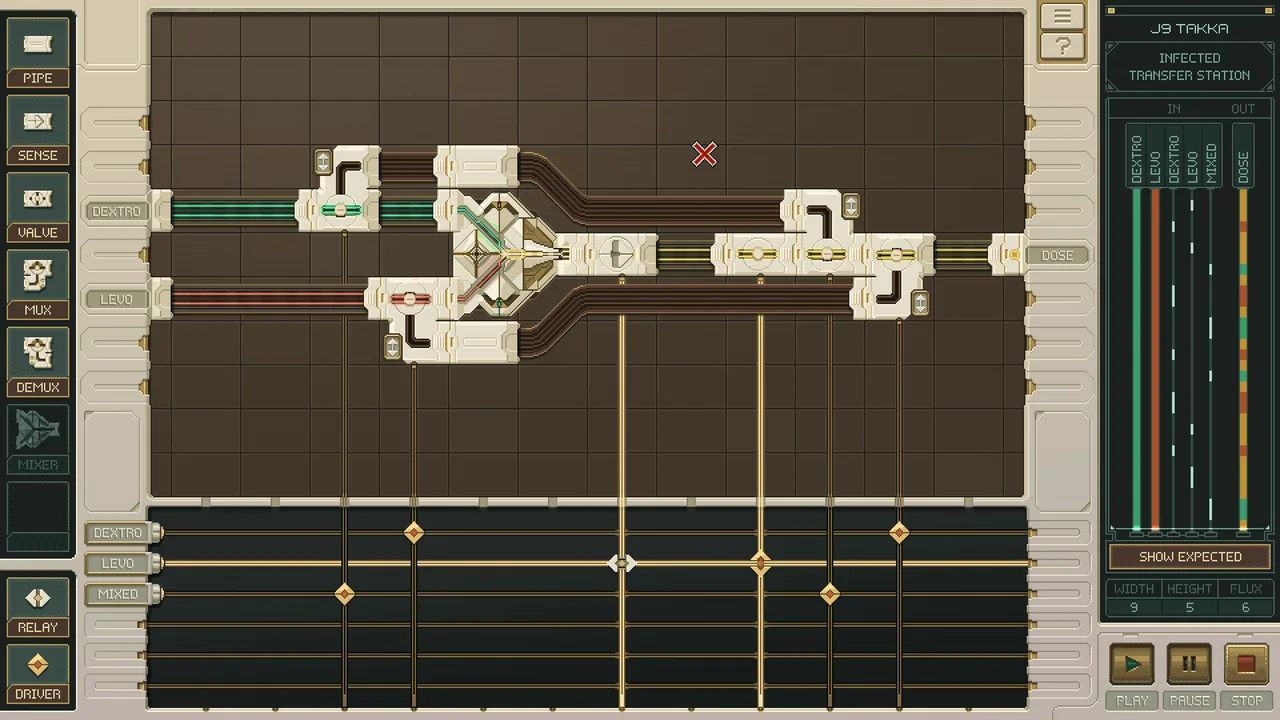
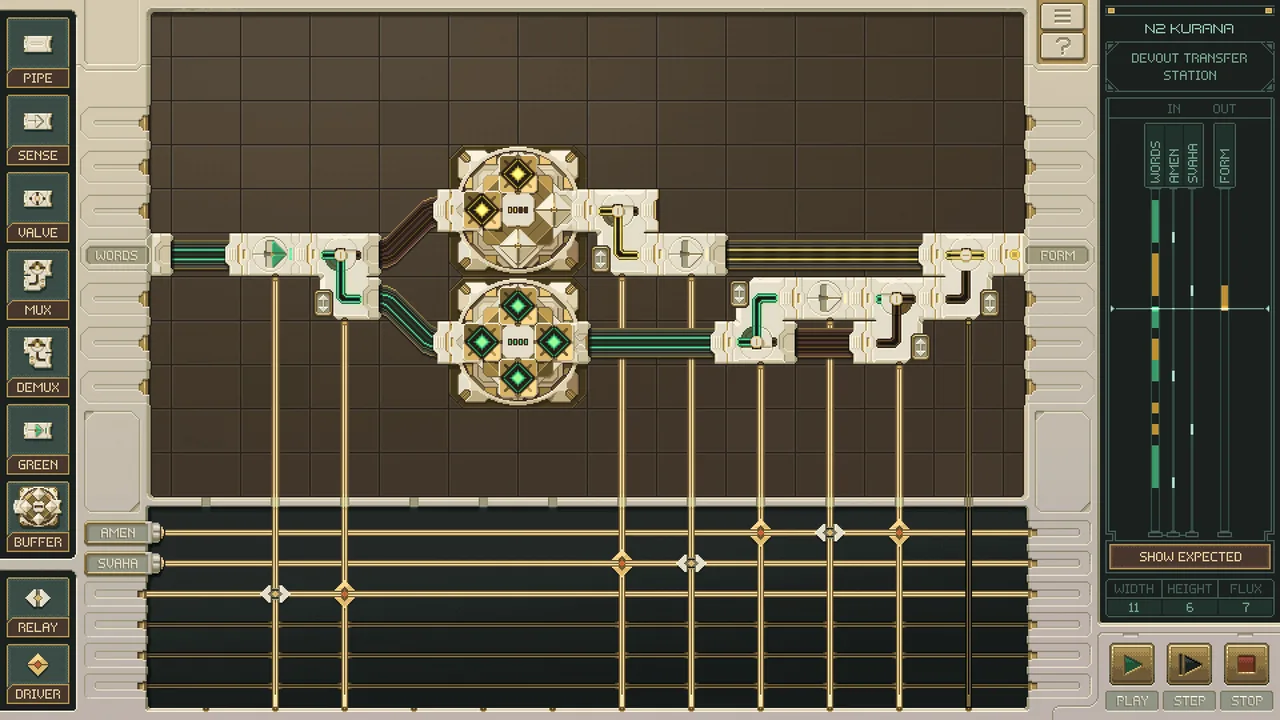
U.V.S. Nirmana is an engineering puzzle game from Coincidence, the studio behind Kaizen: A Factory Story and led by the inventors of the Zach-like genre. Players solve around 30 circuit-logic puzzles aboard the Unreturning Void Ship Nirmana, wiring plasma beams and electrical signals through limited grid space to match a required output, all wrapped in a distinctive sci-fi-spiritual atmosphere. This review draws on an English review sample, 179 reviews at the time of research, rated Very Positive overall.
Praised repeatedly for a well-taught, satisfying puzzle system
The sample's most consistent theme is how cleanly the game teaches and escalates its circuit-logic mechanics. "Every level feels like it taught me something new, and there was (almost) never a ridiculous leap of logic to get there. The difficulty is mostly there; the final level in particular is an absolute masterclass in how to hide complexity despite looking straightforward," reads one detailed review. A separate reviewer independently praises the same pacing: "The difficulty curve is great, with each puzzle generally asking for a new consideration on the presented mechanics, while not being overwhelming in the earlier stages." This review treats that convergence as fair and meaningful: multiple reviewers independently crediting a smooth, well-paced difficulty curve is credible evidence of thoughtful, deliberate puzzle design.
Praised for striking art and atmosphere
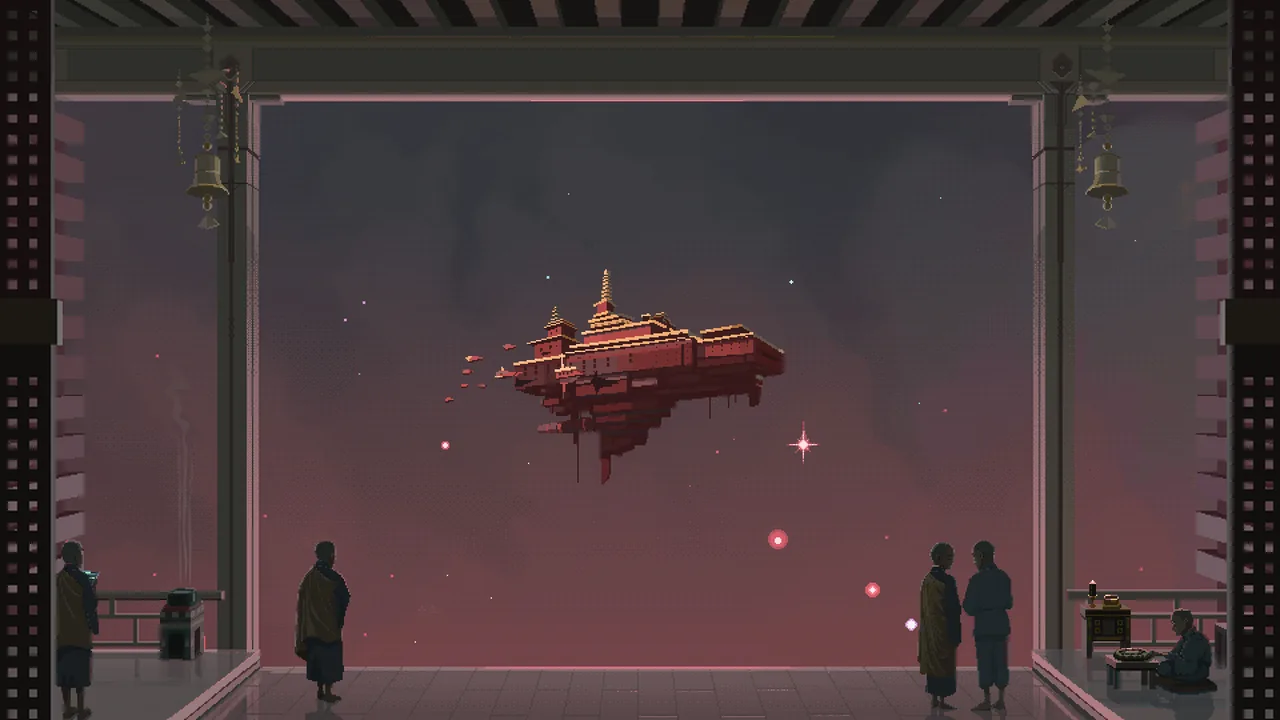
Reviewers also specifically credit the game's presentation. "This game looks stunning. The atmosphere is gorgeous, the planets look amazing, the lore blurbs for each world are amazing. The tone is very spiritual yet very spacey," reads one review. A separate reviewer independently credits the same visual pull: "I love pixel art in general and I feel like discovering the next piece of gorgeous background art was one of the main drivers behind me finishing the game in 3 days." This review treats that as fair: reviewers repeatedly identifying the art and atmosphere as a genuine motivator to keep playing, not just a surface layer, is credible evidence of real presentation strength.
Praised by returning fans as an improvement over the developer's previous game
This review also found specific, credible comparative praise from players of the developer's prior title, Kaizen. "After being somewhat let down by Kaizen, this is really a refreshing and fun game, much more in the spirit of the original Zachtronics games... Kaizen was very nice but it felt like the challenges were less logical and more 'grindy'... This game however is much more in the spirit of Shenzhen I/O," reads one detailed review. A separate reviewer independently agrees: "I'd also say the difficulty curve is MUCH better than Kaizen, which took too long to ramp up and was often more annoying than hard for the later levels." This review treats that as fair: multiple reviewers with direct points of comparison to the studio's previous release both crediting this game as a stronger, more logically satisfying successor is credible, well-qualified praise.
A fair, corroborated complaint about restrictive grid space
Set against that praise, this review found a specific, recurring complaint about the game's limited puzzle space. "It's just not a fun engineering puzzle... it's mostly a case of arranging awkwardly connecting blocks in a very limited amount of space. I often find that with many such games I don't get stuck because I can't solve the engineering side, I get stuck because I run out of space," reads one detailed review. A separate reviewer independently reports the same friction, despite an otherwise positive review: "At least three times I had the puzzle solved but needed to spend 15 minutes shimmying cables around and fixing pathing with pipes." This review treats that as fair: multiple reviewers, including some who otherwise recommend the game, independently identifying the same specific spatial-constraint frustration is a credible, corroborated design complaint.
A fair, corroborated complaint about a short campaign
This review also found a related complaint about the game's overall length. "It's unfortunately short, possibly their shortest ever," reads one review, while a separate reviewer independently notes the trade-off with its presentation: "The art is standout, with the worldbuilding in second. It would be true (if a bit over harsh) to say they overdid it considering the games brevity." This review treats that as fair: multiple reviewers independently flagging the campaign's short length, one explicitly framing it against the developer's back catalogue, is a credible complaint worth weighing against the asking price.
Achievement data corroborates a demanding, niche puzzle design
This review's own check of Steam's global achievement data, across five tracked milestones, shows the main campaign-completion achievement sitting at just 19.3%, notably low for a puzzle game and consistent with reviewer warnings that its strict, boolean-logic-driven design has narrow appeal. Its optional bonus and solitaire-variant content sits even lower, from 4.4% to 1.1%, suggesting most players who do finish the main campaign don't go on to explore its extended replay content.
Final verdict
U.V.S. Nirmana is a satisfying, well-paced Zach-like puzzler that earns real, credible praise, including from returning fans of the developer's previous game, for a smoothly escalating circuit-logic system wrapped in genuinely striking sci-fi-spiritual art and atmosphere. This review found that praise tempered by fair, corroborated complaints about restrictive grid space turning some puzzles into spatial-arrangement exercises, and a campaign that several reviewers found unusually short. For fans of Zach-like engineering puzzlers wanting a fresh, focused entry in the genre, it's a strong recommendation; players who don't already enjoy strict logical reasoning, or who want a longer campaign, should weigh those gaps before buying.
Pros and cons
Pros
- Praised repeatedly for a well-designed, satisfying circuit-logic puzzle system, with multiple reviewers crediting a smooth, well-taught difficulty curve where every level introduces something new.
- Praised for striking pixel art and atmosphere, with reviewers crediting gorgeous background art and a distinctive sci-fi-spiritual tone as a strong motivator to keep progressing through the campaign.
- Praised by several returning genre fans as an improvement over the developer's previous game, Kaizen, with reviewers describing this puzzle design as more logical and less reliant on grinding through many similar tool combinations.
- This review's own check of achievement data shows a meaningful share of the playerbase not reaching full completion, corroborating reviewer accounts of a demanding, niche-appeal puzzle design that rewards strong logical thinking.
Cons
- A fair, corroborated complaint from multiple reviewers is that the game's limited grid space turns some puzzles into an awkward spatial-arrangement exercise on top of the intended logic puzzle, occasionally more frustrating than the underlying logic itself.
- A fair, corroborated complaint from several reviewers is that the campaign is short, with some calling it the developer's shortest work yet, offering around 30 puzzles with limited surrounding narrative.
- A fair complaint from this review's own assessment is that its strict, boolean-logic-driven puzzle design will have narrow appeal, offering little for players who don't already enjoy circuit or programming-style reasoning.
- This review's own check of achievement data shows very low completion of the game's bonus and optional solitaire-style content, suggesting most players engage only with the core campaign rather than its extended replay value.
Screenshots
-
U.V.S. NirmanaImage: Klei Publishing via Steam -
U.V.S. NirmanaImage: Klei Publishing via Steam -
U.V.S. NirmanaImage: Klei Publishing via Steam -
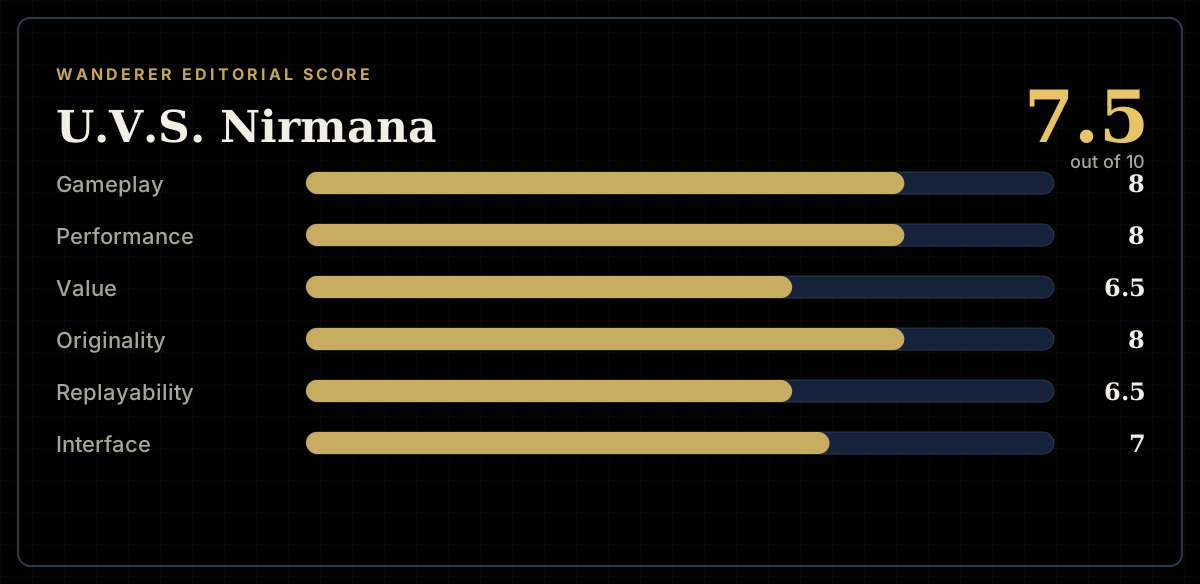
How the review scores each part of the gameWanderer Editorial -
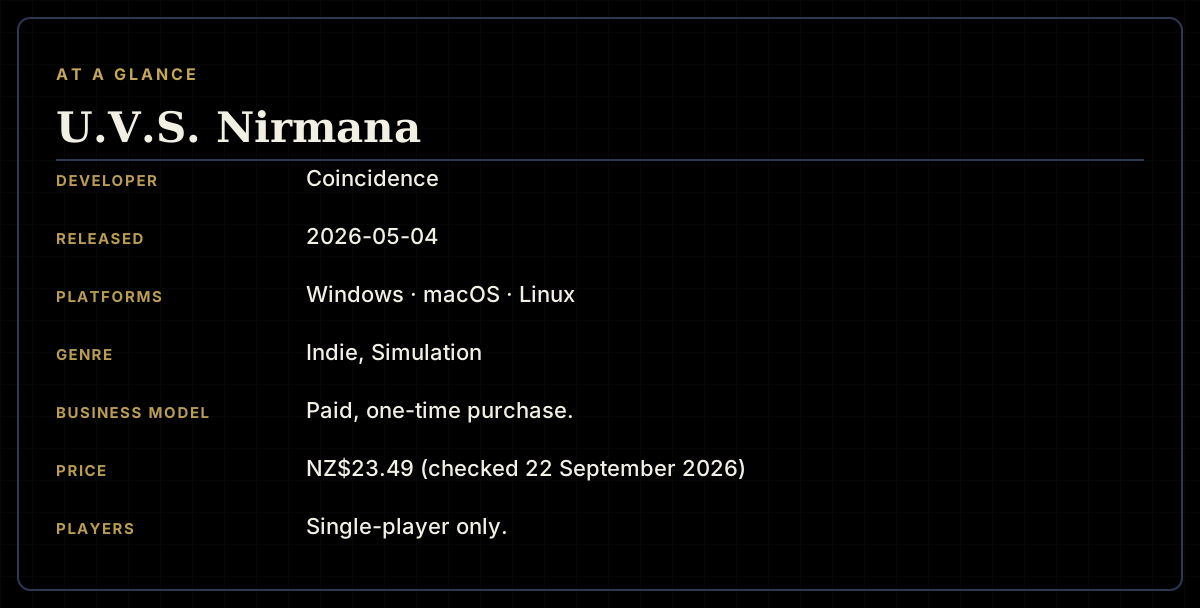
The specs at a glanceWanderer Editorial -
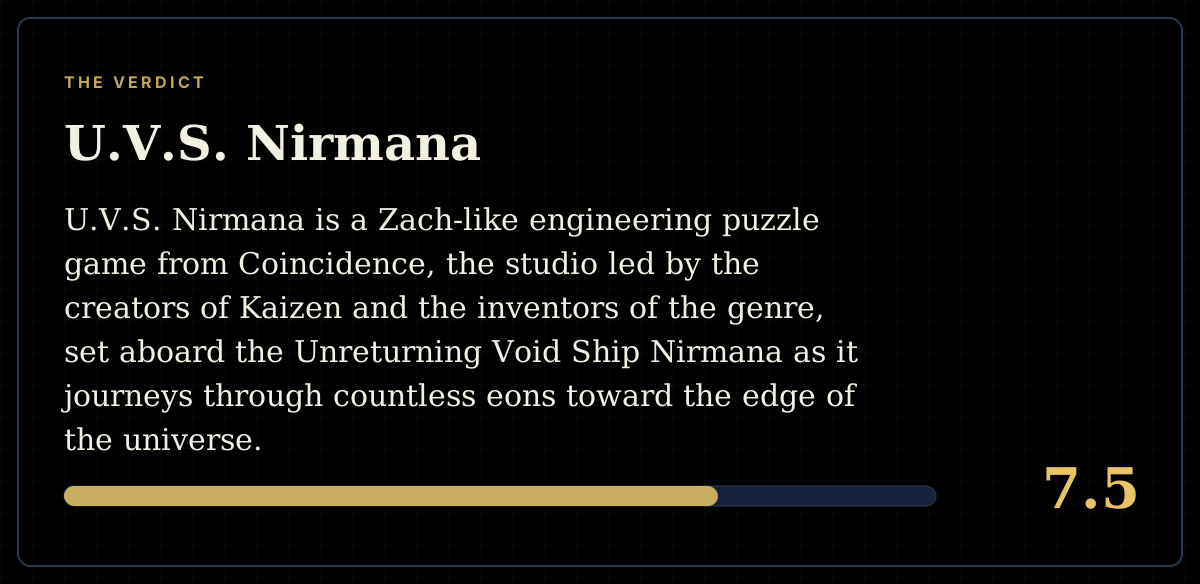
The short versionWanderer Editorial