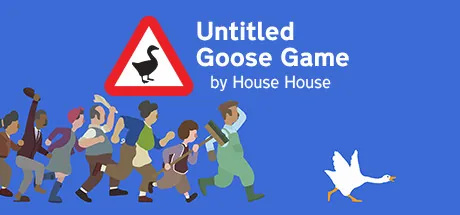
Game review
Untitled Goose Game
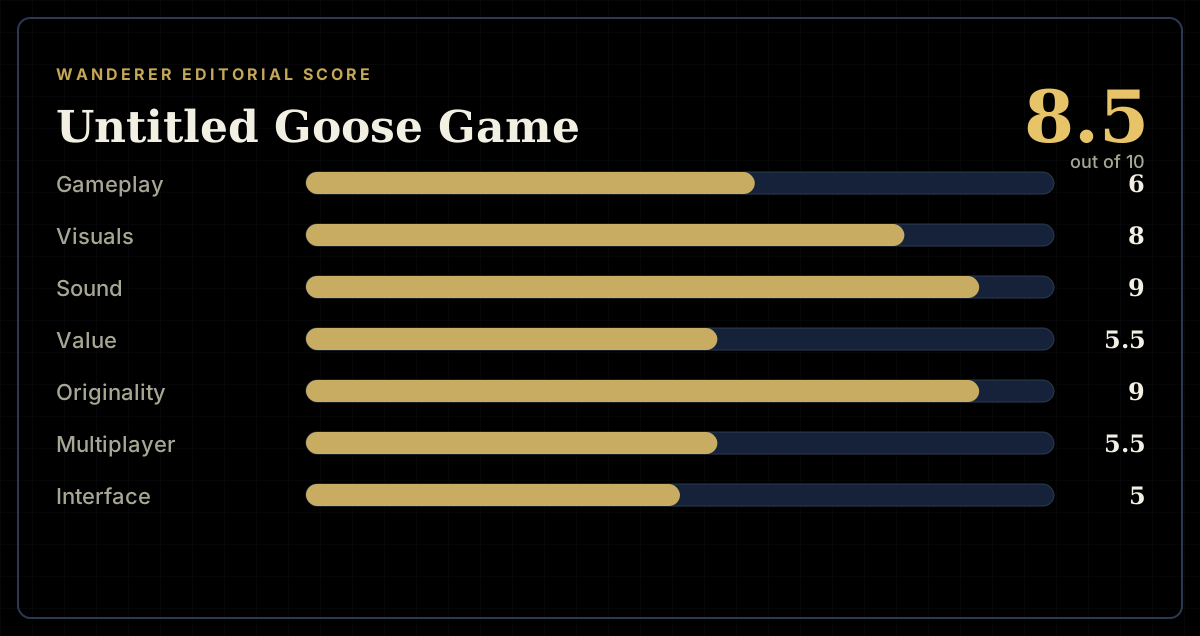
8.5 / 10
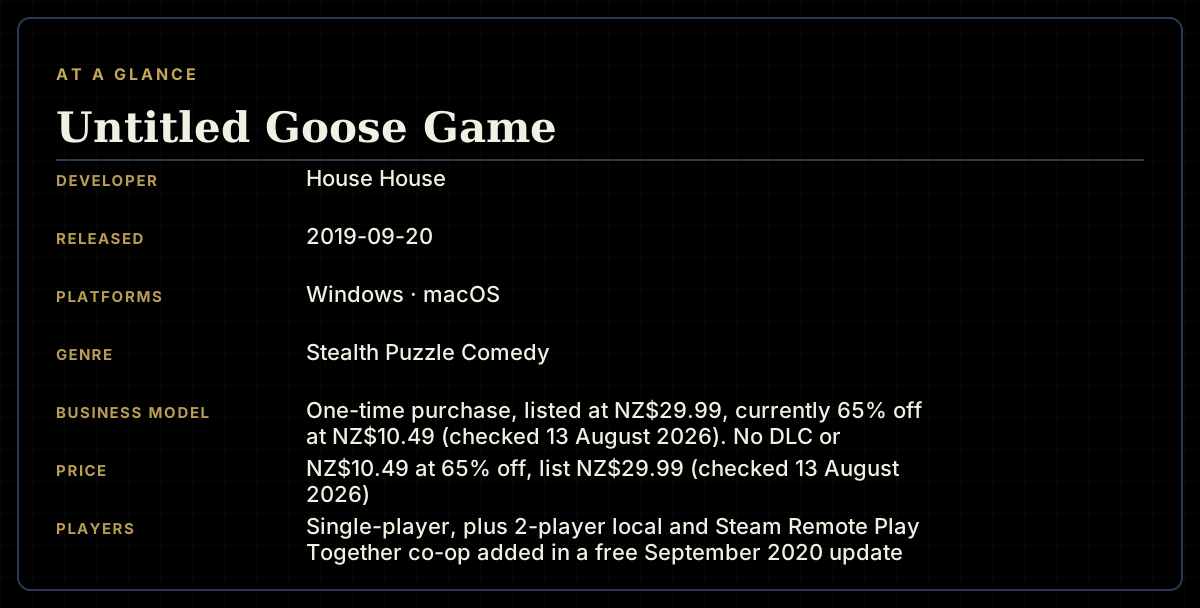
- Developer
- House House
- Publisher
- Panic
- Released
- 20 September 2019
- Platforms
- Windows, macOS
- Genre
- Stealth Puzzle Comedy
- Monetisation
- One-time purchase, listed at NZ$29.99, currently 65% off at NZ$10.49 (checked 13 August 2026). No DLC or microtransactions.
- Players
- Single-player, plus 2-player local and Steam Remote Play Together co-op added in a free September 2020 update
The short version
Untitled Goose Game asks a simple question -- what if you were a horrible goose terrorising an English village -- and answers it with a physics-comedy stealth puzzler scored by a reactive Debussy soundtrack, made by a four-person Melbourne studio whose entire pitch reportedly started with a stock photo of a goose in a work chat. It became one of 2019's biggest cultural moments, topped Nintendo's Switch sales charts ahead of Link's Awakening, sold over a million copies by year's end, and swept the D.I.C.E. and GDC Game of the Year awards plus a BAFTA. Steam agrees it's held up: Overwhelmingly Positive, 95.9% of 24,929 reviews seven years later.
The negative sample that exists names two specific, consistent things, both present since launch reviews and unchanged since: deliberately fussy, awkward controls -- a design choice meant to make the goose feel goose-like, which nearly a third of a 100-review negative sample singles out as frustrating rather than charming -- and a runtime commonly described as too short for the original asking price, now considerably softened by a 65% permanent-feeling discount. A 2020 free update added co-op, which draws its own smaller but real complaint cluster around Steam Remote Play reliability.
Biggest strengths
- A genuinely novel, purely comedic premise executed with real craft -- physics-based mischief stealth built specifically around causing chaos rather than avoiding it
- A reactive Debussy-based score that dynamically responds to the goose's actions, singled out by critics and players alike as one of the best uses of music in the genre
- Real critical and cultural prestige backing up the Steam score -- D.I.C.E. and GDC Game of the Year, a BAFTA in the Family category, and a Switch launch that outsold Link's Awakening
Biggest weaknesses
- Controls are the most common specific complaint in the current negative-review sample, cited by nearly a third of the reviews checked -- a deliberate design choice some players find genuinely frustrating rather than funny
- A short runtime -- commonly finished in a handful of hours -- draws repeated value complaints at the original NZ$29.99 price, though the game is very frequently discounted
- Co-op, added in a September 2020 free update, has a real reliability problem via Steam Remote Play Together, with crashes and connection issues reported specifically for that mode
Who it's for: Anyone curious what a genuine indie cultural moment plays like, and fans of short, focused physics-comedy puzzlers. A weak fit for players who want controls that feel responsive and precise rather than deliberately, comedically clumsy.
Our recommendation: Absolutely worth experiencing at least once, especially at its current steep discount -- go in expecting a few hours of a single, well-executed joke rather than a long game, and expect the controls to be part of the bit rather than a bug to route around.
8.5 / 10
Somewhere inside House House, a four-person studio in Melbourne, someone shared a stock photo of a goose in an internal chat. The rest of Untitled Goose Game's origin story is almost that simple: a small team recognised the comic potential, built a physics-based stealth puzzler around the idea of being deliberately, gleefully awful to an unsuspecting English village, and submitted early footage to a festival under a placeholder title that stuck for lack of anything funnier. What shipped on 20 September 2019 — Windows, macOS and Switch first, PlayStation 4 and Xbox One that December — became one of the defining indie moments of its year: it outsold The Legend of Zelda: Link's Awakening to top Nintendo's global Switch charts within its first fortnight, crossed a million copies sold by the end of 2019, and went on to sweep both the D.I.C.E. and Game Developers Choice Awards for Game of the Year, plus a BAFTA in the Family category. Steam's own listing shows a September 2020 release date — that's the game's arrival on that specific storefront after an Epic Games Store exclusivity period, alongside a free co-op update, not the original launch a full year earlier.
One joke, executed with real precision
The entire game is a to-do list of minor village atrocities, worked through with nothing but a goose's honk, a grabbing beak, and a genuinely inspired physics engine: steal a man's keys, trap a groundskeeper out of his own toolshed, get a shopkeeper's radio confiscated by making him think a child stole it. It's a single joke — you are a horrible goose, and everyone around you is a put-upon straight man — but House House commits to it with a level of craft that critics singled out unanimously at launch and Steam reviewers still credit seven years later. The reactive score, arrangements of Debussy's Préludes curated by composer Dan Golding that shift and stab in time with the goose's actions, draws some of the most consistent praise in the entire review sample checked for this piece — critics compared its comic timing to a Buster Keaton film at launch, and that comparison holds up as well as anything in the review data does.
The controls are the joke, and also the complaint
Here's the tension at the centre of Untitled Goose Game, and it's one the negative-review sample makes unusually clear: the goose is designed to feel a little clumsy and hard to fully control, because that friction is part of the comedy — mischief that goes slightly wrong is funnier than mischief executed perfectly. Nearly a third of a 100-review negative sample pulled for this piece names the controls directly as a source of genuine frustration rather than charm. "The controls are so horrible like oh my god," reads one representative complaint; another, more measured, describes "excessively complex" controls "for the limited range of things you can actually do." This isn't really a bug report — it's a real, recurring disagreement about where the line sits between "comedically imprecise" and "actually annoying to play," and the review data shows a meaningful minority landing decisively on the annoying side of that line, consistently, across the entire seven years since launch. It's worth knowing going in: if slightly uncooperative controls sound like an obstacle rather than a bit, this specific game's central mechanic may not land the way it's intended to.
Length is the second recurring theme. Untitled Goose Game is short by design — most players finish its four areas in a small number of hours — and a steady stream of reviews across the whole review history call that thin for the original NZ$29.99 asking price. "Too short and simple," reads one; "Not worth the money for a game that short," reads another. This is a genuinely fair criticism of the original pricing on its own terms, though it's substantially softened by how the game is actually sold today: at a current, apparently near-permanent 65% discount to NZ$10.49, the value calculation the negative reviews are making changes considerably, and several of the negative reviews themselves say as much, recommending the game specifically at a discount rather than at full price.
Co-op arrived a year later, and it shows
The two-player co-op mode wasn't part of the original release — it landed as a free update in September 2020, built around Steam's Remote Play Together for players who don't have a second local controller. It's a smaller slice of the review sample than controls or length, but where it shows up, the complaints are specific and technical rather than about the concept: connection failures, the game "always crashing" during two-player sessions, and one detailed review describing hours spent getting a session working only to have Remote Play fail regardless. It's worth flagging plainly for anyone buying specifically to play with a friend, since it's clearly the least mature part of the package — added after the fact to a game built, at its core, around a single player being a nuisance alone.
A smaller, more particular complaint concerns the game's four speedrun-timed achievements, which several reviewers feel actively work against the unhurried, mischievous pace the rest of the game is built around. The global achievement data backs up just how far outside the norm those specifically are: the four "speedy" achievements sit between 1.6% and 2.2% completion, a real outlier next to the 44.5% who've earned the first main-area achievement through ordinary, unhurried play — a design choice that reads, per the review sample, as bolted onto a game whose whole appeal was never about the clock.
Verdict
Untitled Goose Game earned its cultural moment honestly: a small team took one very good idea and executed it with a level of comic and musical precision that both critics and a genuine mainstream audience responded to in 2019, and neither the critical prestige nor the Steam community's regard for it has faded in the seven years since. The complaints that exist are real and specific rather than vague — controls that are deliberately imprecise land as charming for most and as genuinely frustrating for a real minority, the runtime is short enough that full price drew fair criticism at launch, and the co-op mode added a year later hasn't matched the polish of the base single-player game. None of that changes what the game actually achieves in its few hours: a tightly executed, genuinely funny piece of physics comedy that more than earned its place as one of 2019's defining indie releases.
8.5 out of 10. A small, perfectly executed joke that's aged into a genuine modern classic — just go in expecting a short, deliberately clumsy few hours rather than a long game, and grab it on sale rather than at list price.
Pros and cons
Pros
- A genuinely novel, purely comedic premise executed with real craft -- physics-based mischief stealth built specifically around causing chaos rather than avoiding it
- A reactive Debussy-based score that dynamically responds to the goose's actions, singled out by critics and players alike as one of the best uses of music in the genre
- Real critical and cultural prestige backing up the Steam score -- D.I.C.E. and GDC Game of the Year, a BAFTA in the Family category, and a Switch launch that outsold Link's Awakening
- Charming, low-poly art direction that gives the village and its cast of frustrated NPCs real personality on a clearly small budget
Cons
- Controls are the most common specific complaint in the current negative-review sample, cited by nearly a third of the reviews checked -- a deliberate design choice some players find genuinely frustrating rather than funny
- A short runtime -- commonly finished in a handful of hours -- draws repeated value complaints at the original NZ$29.99 price, though the game is very frequently discounted
- Co-op, added in a September 2020 free update, has a real reliability problem via Steam Remote Play Together, with crashes and connection issues reported specifically for that mode
- Speedrun-timed achievements are broadly disliked as an add-on to a game whose whole appeal is unhurried mischief -- global data shows completion rates of just 1.6-2.2% for the four "speedy" achievements, versus over 40% for the first main-area achievement
Screenshots
-
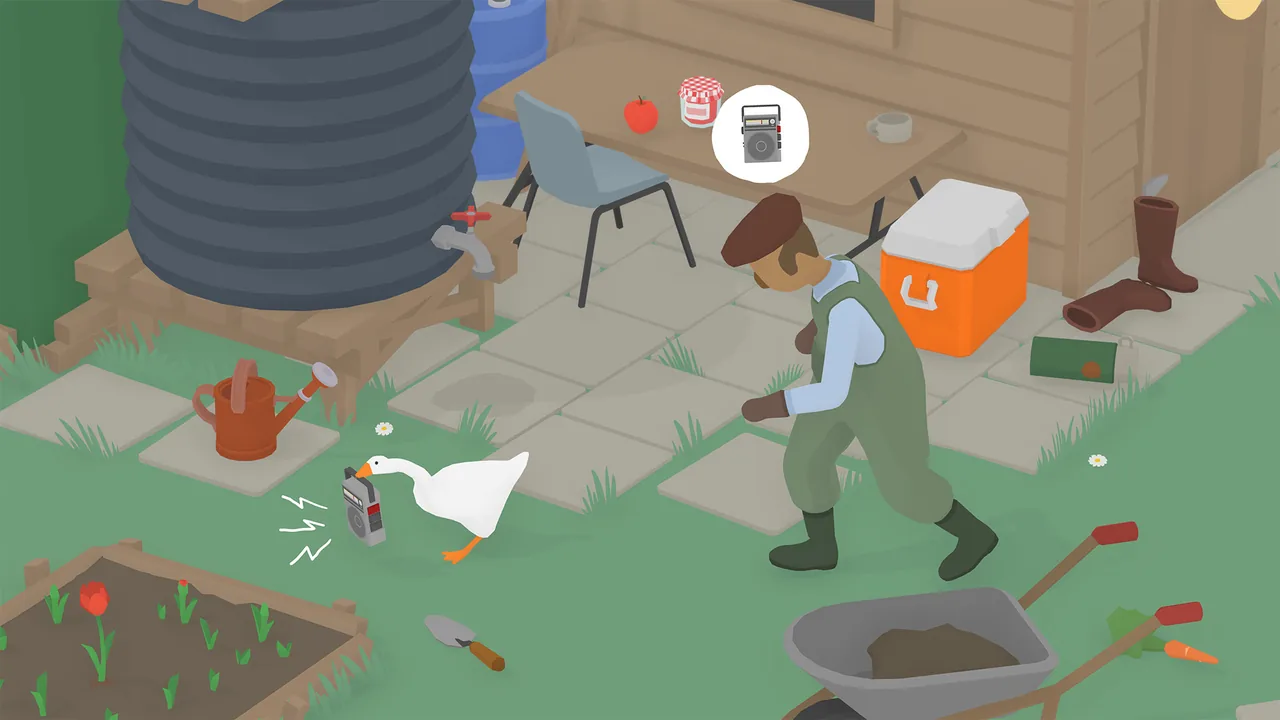
Untitled Goose GameImage: Panic via Steam -
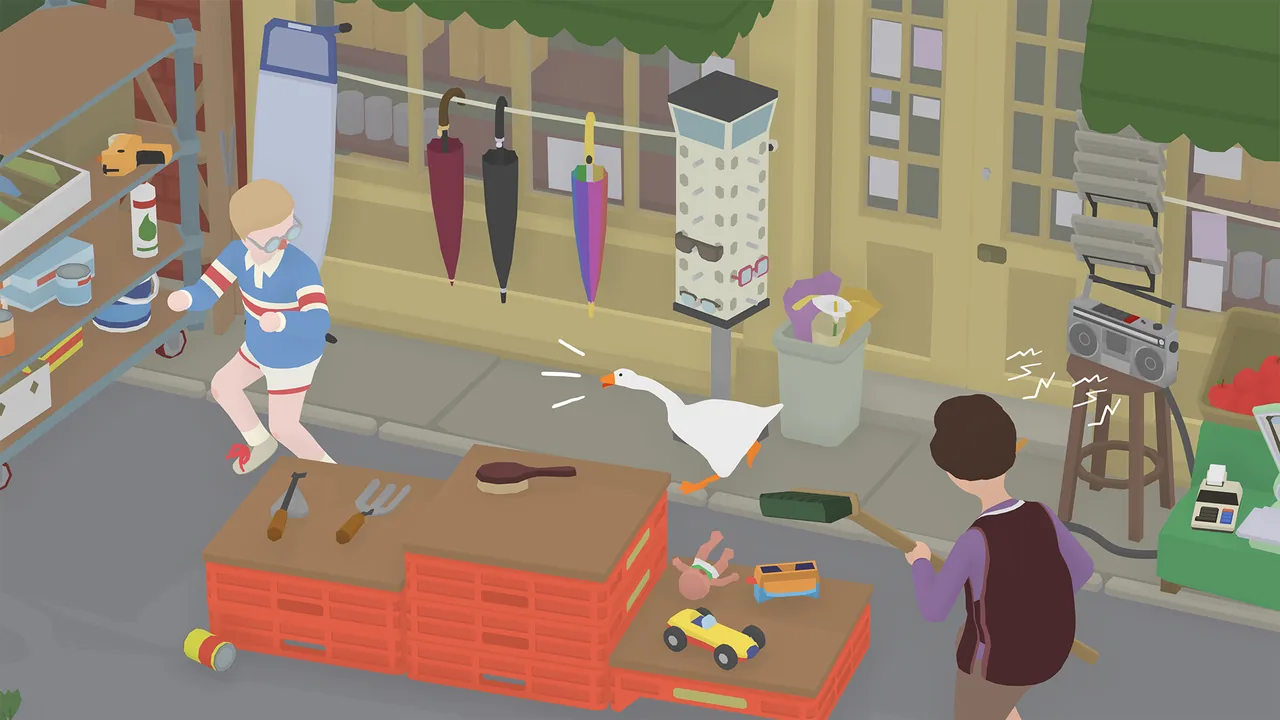
Untitled Goose GameImage: Panic via Steam -
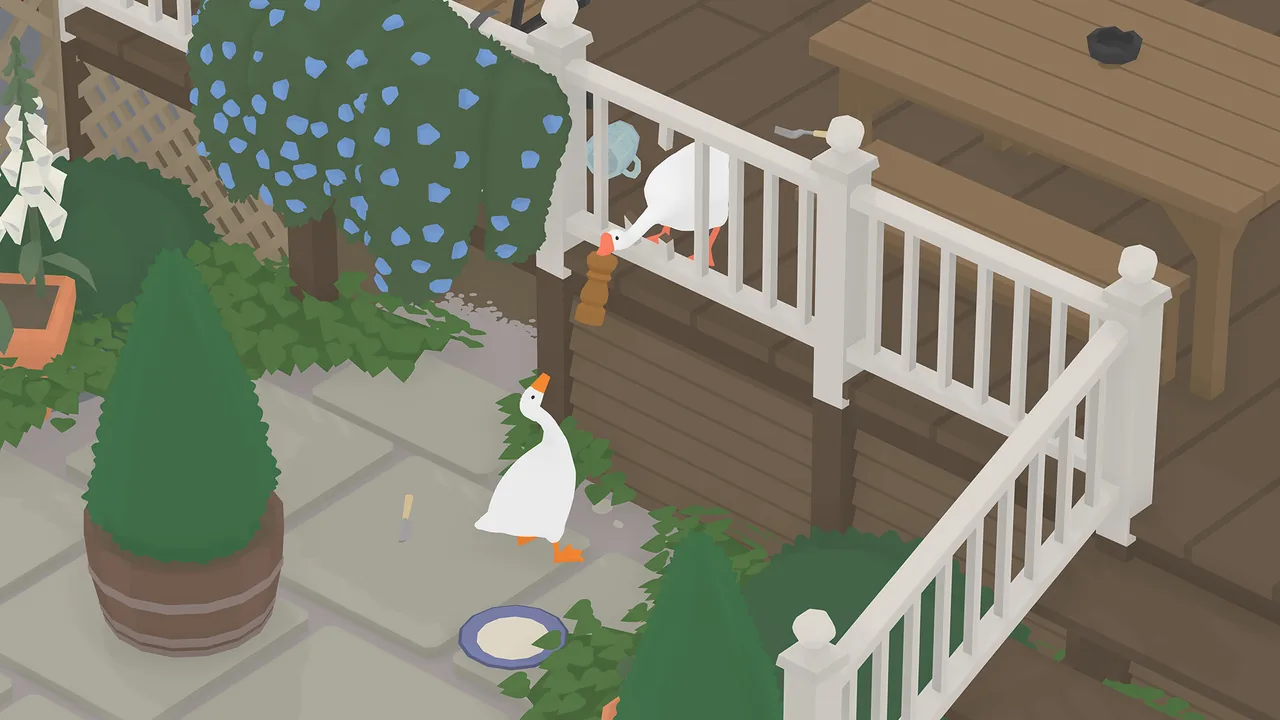
Untitled Goose GameImage: Panic via Steam -
How the review scores each part of the gameWanderer Editorial -
The essentialsWanderer Editorial -
The short versionWanderer Editorial