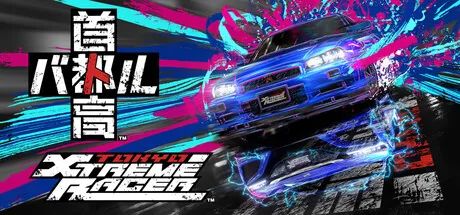
Game review
Tokyo Xtreme Racer
7.5 / 10
- Developer
- Genki Co., Ltd.
- Publisher
- Genki Co., Ltd.
- Released
- 24 September 2025
- Platforms
- Windows
- Genre
- Arcade Racing
- Monetisation
- One-time purchase, no in-game store
- Players
- Single-player only
The short version
Tokyo Xtreme Racer is an arcade highway-battle racer from Genki, the original series creator, marking the studio's first major platform release in 18 years. It entered Early Access in January 2025 and reached a full 1.0 release, per Steam's own listing, on 24 September 2025. It holds a very large, strong review base — 95.5% positive across 10,560 English-language reviews (Overwhelmingly Positive), a somewhat lower but still strong 93.7% across its wider 15,593-review all-language corpus. This review reads the 100 most-relevant English negative reviews, split almost evenly between the Early Access and post-1.0 periods, and finds a specific, persistent complaint running through both: rubberbanding, occasionally described outright as cheating, enemy AI that accelerates faster than physically plausible, raised in 10 of the 48 post-1.0 negatives alone. A related, broader complaint concerns repetitive race structure, with several reviewers across both periods noting the core loop — brief highway duels resolved mostly by holding the accelerator — doesn't meaningfully deepen over dozens of hours. Set firmly against that, this review's positive sample shows extraordinary, specific enthusiasm for the game's honest business model, repeatedly praised by name as a rejection of live-service and microtransaction norms in modern racing games.
Biggest strengths
- The game's business model draws extraordinary, specific praise by name across the entire review sample — no live-service structure, no microtransactions, no subscriptions, repeatedly contrasted favourably against modern racing game norms
- Faithfully recreates the specific PS2-era Tokyo Xtreme Racer feel that longtime fans have been without for 18 years, with reviewers crediting genuine nostalgia rather than a hollow reskin
- Presentation earns real credit for optimisation and technical execution, with one detailed review specifically praising how well the game runs given its use of Unreal Engine 5
Biggest weaknesses
- Rubberbanding, occasionally described outright as cheating, is this review's most specific recurring post-1.0 complaint — 10 of the 48 negatives dated after the full release describe AI opponents accelerating faster than the player's own vehicle under identical conditions
- A broader, related complaint concerns repetitive race structure spanning both the Early Access and post-1.0 periods, with several reviewers describing individual races as brief, 30-to-90- second duels resolved mostly by holding the accelerator rather than genuine racecraft
- Several post-1.0 reviewers, including some who played extensively through Early Access, describe the full release as a smaller step forward from the Early Access build than the "1.0" label implies
Who it's for: Fans of PS2-era arcade racing and the original Tokyo Xtreme Racer or Import Tuner Challenge games looking for a faithful, honestly-priced revival; a tougher sell for players wanting deep driving simulation or a race structure that evolves significantly over a long campaign.
Our recommendation: A genuinely beloved nostalgia revival executed with real care and an admirably honest business model, held back by AI and repetition complaints that a meaningful, persistent share of its own players raise across the whole year since Early Access began.
7.5 / 10
Introduction
Tokyo Xtreme Racer revives Genki's PS2-era highway-battle racing series, sending players onto Tokyo's expressways to challenge rival racers in brief, tense duels, 18 years after the studio's last major platform release. It entered Early Access in January 2025 and reached a full 1.0 release, per Steam's own listing, on 24 September 2025. It holds an exceptional review base — 95.5% positive across 10,560 English-language reviews, a still-strong 93.7% across its wider 15,593-review all-language corpus. This review reads the 100 most-relevant English negative reviews, roughly evenly split between Early Access and post-1.0 periods, and finds a corpus whose criticism is specific and persistent enough to name precisely, sitting alongside genuinely extraordinary enthusiasm for one particular aspect of the game most racing games don't get praised for at all.
The praise that stands out: an honest business model
Before the criticism, it's worth dwelling on what makes this review base unusual. Reviewers across the entire sample single out Tokyo Xtreme Racer's business model by name, repeatedly and specifically, as a reason to support it. "No online 'games as a service' bs. No microtransactions or subscriptions bs," reads a 481-vote review, explicitly framing the purchase as a statement against industry norms. Another, 746 votes: "The racing genre is saved... Buy. This. Game. And support Genki making the game even better." A third calls it "a modern day PS2 game in the best possible way. No live service, no sim-cade, no open world." That's a consistent, specific pattern this outlet rarely sees at this intensity — positive reviews here aren't just praising the driving, they're praising the absence of predatory design choices this library documents constantly elsewhere.
A persistent, specific technical complaint
Set against that enthusiasm, this review's negative sample raises one complaint specifically and repeatedly enough to name precisely: rubberbanding AI. Ten of the 48 post-1.0 negative reviews describe enemy racers accelerating faster than physically plausible under matched conditions, with several reviewers using the word "cheating" directly rather than a softer term like "unfair." "They can accelerate faster than yo[u]," reads one representative post-1.0 review, describing races that devolve into "spamming nitrous against a very glitchy and advantaged AI." What matters about this complaint's dating is that it isn't confined to launch week — it recurs across reviews spanning September 2025 through mid-2026, suggesting it's a persistent design characteristic rather than a bug patched away.
A broader, related complaint concerns the fundamental race structure. Several reviewers, across both the Early Access and post-1.0 periods, describe individual races as brief — 30 to 90 seconds — and resolved mostly by holding the accelerator down rather than by genuine tactical driving. "The most repetitive racing game I've ever played," reads one post-1.0 review, describing the core premise wearing off by the midgame. That's a structural critique distinct from the AI complaint, though the two compound each other: a short, simple race format leaves less room to work around an opponent that's already accelerating unfairly.
Did 1.0 actually add much?
A smaller but specific thread concerns the substance of the full release itself. Several post-1.0 reviewers who played extensively through Early Access describe the jump to 1.0 as smaller than the label implies. "Having played most of my hours in the early access, the full release doesn't seem that big of a leap forward," reads one representative review. This review can't independently verify the scope of content added between builds, but the pattern recurring across multiple accounts from players with direct EA experience is worth reporting as a real, specific perception rather than dismissing it.
What the numbers say
Steam's achievement data shows a moderate completion curve — a median of 15.7% across 45 achievements, with the top rate at 59.4% — consistent with a game many players enjoy for a meaningful stretch without necessarily pushing to full completion, which fits comfortably alongside both the enthusiastic positive reviews and the "wears thin by the midgame" complaint from some critics.
Final Verdict
Tokyo Xtreme Racer succeeds as exactly what it sets out to be: a faithful, technically well-executed revival of a beloved PS2-era racing series, delivered with a business model its own players praise by name as a rejection of modern industry norms — that combination alone makes it an easy recommendation for the specific audience it's built for. Where this review's careful reading of the negative sample finds real, persistent substance is a rubberbanding AI complaint that recurs across the whole year from Early Access through mid-2026, and a race structure a meaningful share of players find too repetitive to sustain a long campaign. Neither undoes what the game does well, but both are specific enough, and dated widely enough, to weigh seriously against the near-universal praise for everything else it gets right.
Pros and cons
Pros
- The game's business model draws extraordinary, specific praise by name across the entire review sample — no live-service structure, no microtransactions, no subscriptions, repeatedly contrasted favourably against modern racing game norms
- Faithfully recreates the specific PS2-era Tokyo Xtreme Racer feel that longtime fans have been without for 18 years, with reviewers crediting genuine nostalgia rather than a hollow reskin
- Presentation earns real credit for optimisation and technical execution, with one detailed review specifically praising how well the game runs given its use of Unreal Engine 5
- A genuinely addictive core loop for the players it clicks with, with several long-playtime reviewers describing dozens of hours invested without regret and citing the absence of "games as a service" pressure as part of the appeal
Cons
- Rubberbanding, occasionally described outright as cheating, is this review's most specific recurring post-1.0 complaint — 10 of the 48 negatives dated after the full release describe AI opponents accelerating faster than the player's own vehicle under identical conditions
- A broader, related complaint concerns repetitive race structure spanning both the Early Access and post-1.0 periods, with several reviewers describing individual races as brief, 30-to-90- second duels resolved mostly by holding the accelerator rather than genuine racecraft
- Several post-1.0 reviewers, including some who played extensively through Early Access, describe the full release as a smaller step forward from the Early Access build than the "1.0" label implies
- A cluster of reviews raise the roughly NZ$85.50 asking price as steep for what they consider a relatively narrow content offering, particularly compared to the genre's typical value proposition
Screenshots
-
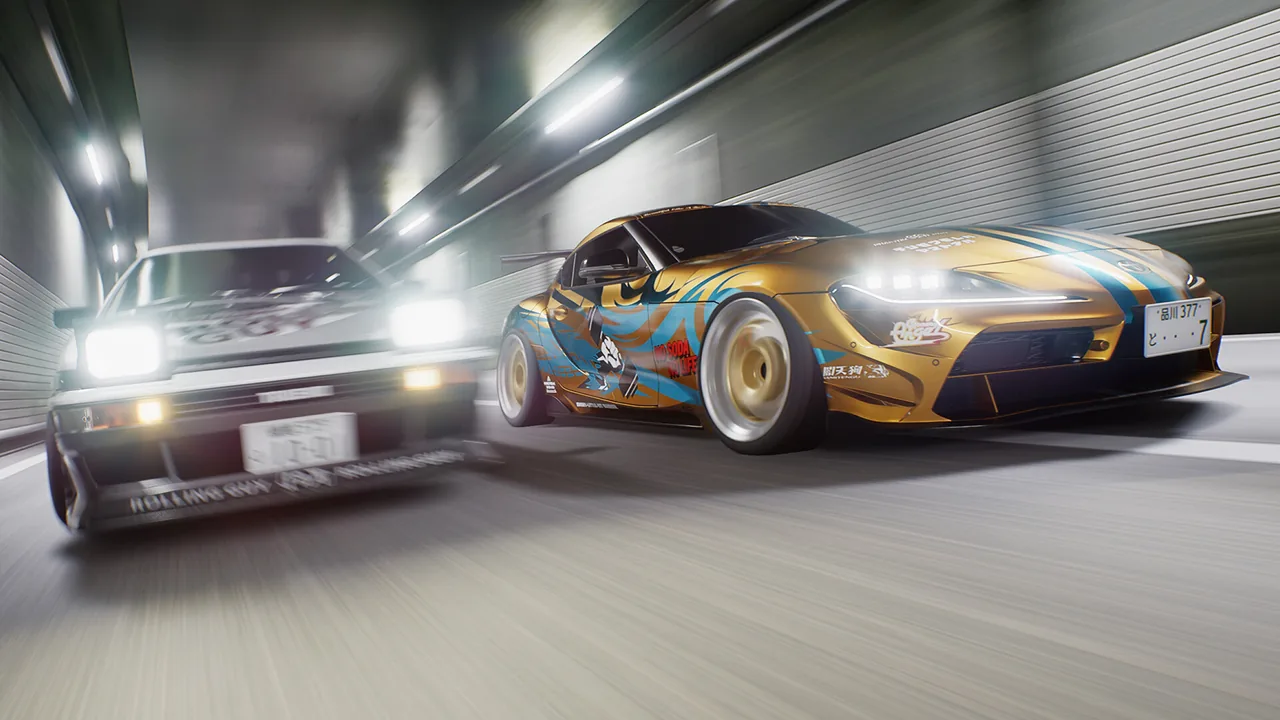
Tokyo Xtreme RacerImage: Genki Co., Ltd. via Steam -
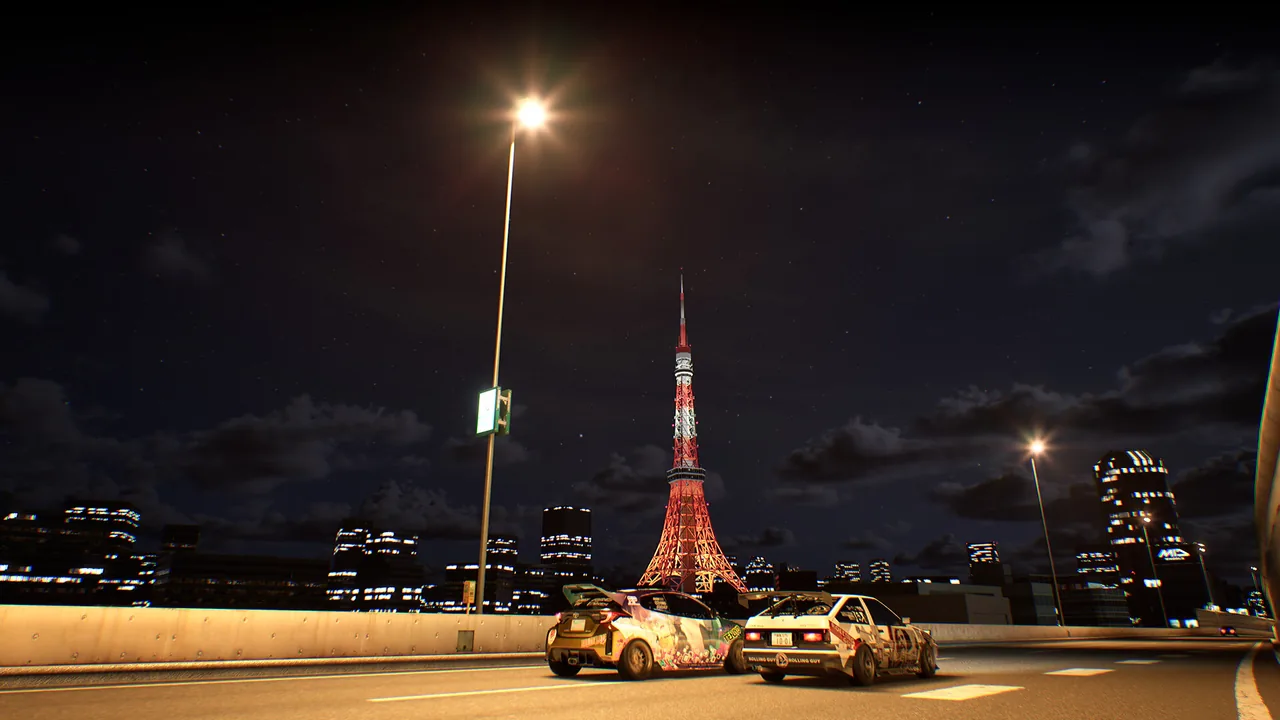
Tokyo Xtreme RacerImage: Genki Co., Ltd. via Steam -
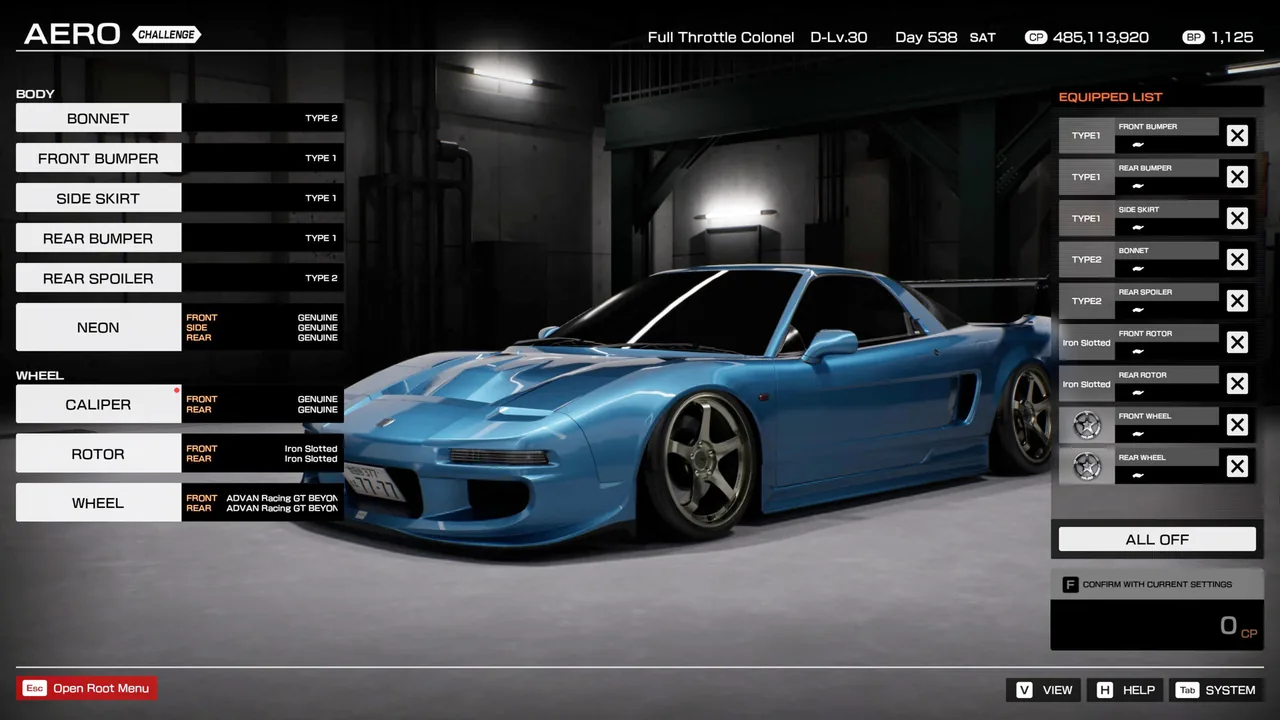
Tokyo Xtreme RacerImage: Genki Co., Ltd. via Steam -
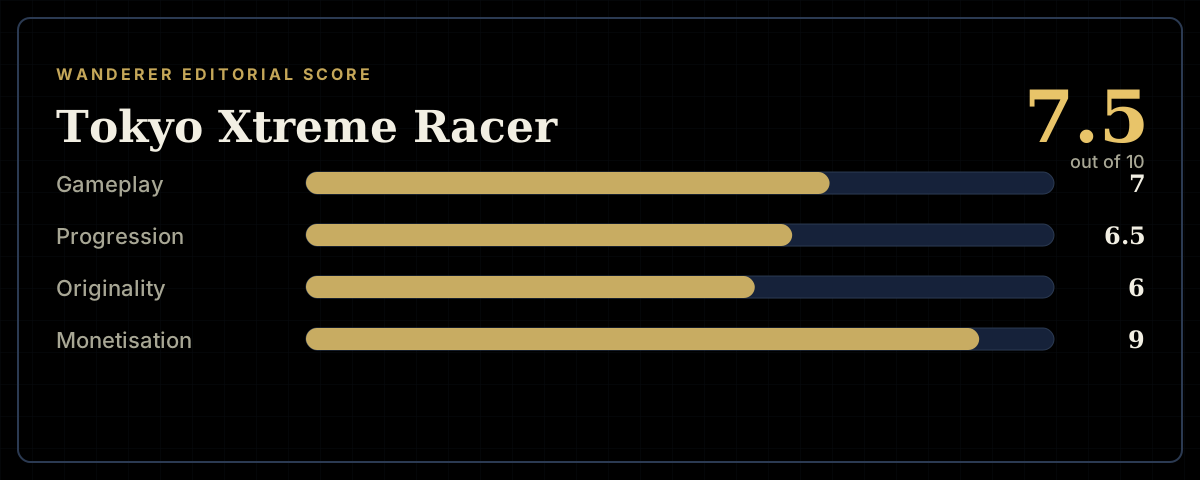
How the review scores each part of the gameWanderer Editorial -
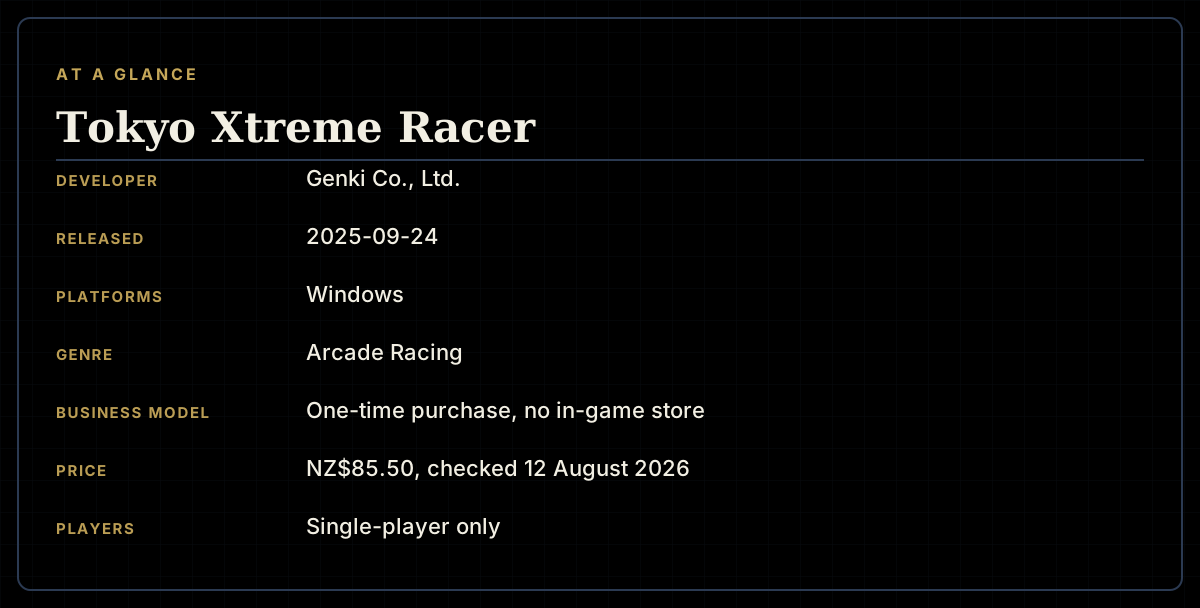
The essentials at a glanceWanderer Editorial -
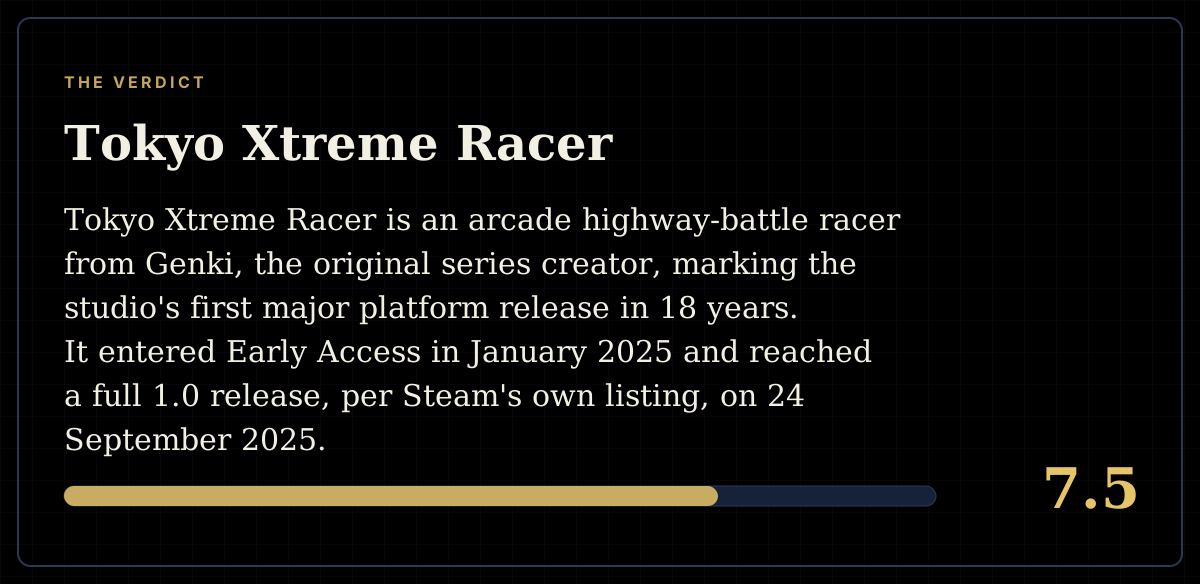
The short versionWanderer Editorial