Game review
Soulstone Survivors
7 / 10
- Developer
- Game Smithing Limited
- Publisher
- Game Smithing Limited
- Released
- 17 June 2025
- Platforms
- Windows
- Genre
- Action Roguelite / Bullet Heaven
- Monetisation
- One-off premium purchase, no DLC at time of writing, no in-app purchases and no premium currency
- Players
- None. Single-player only, with no leaderboard, co-op or shared-progress feature
The short version
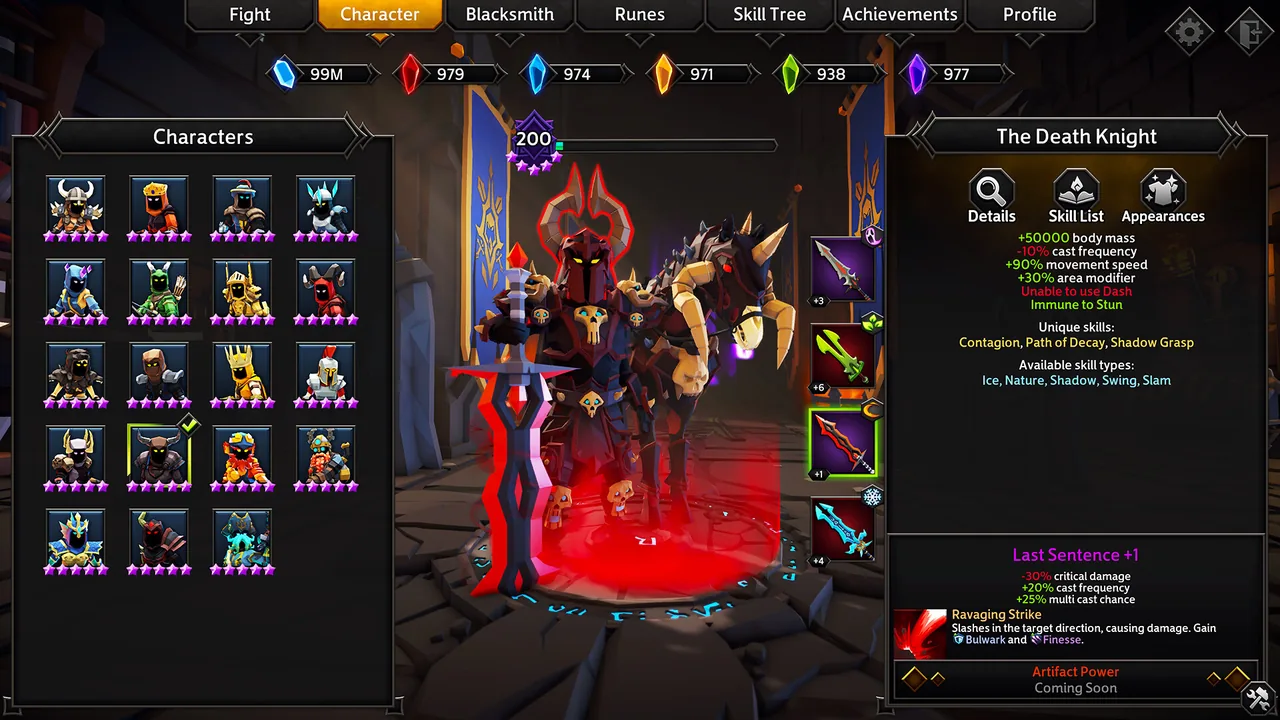
Soulstone Survivors casts players as a Void Hunter mowing down endless hordes of monsters in pursuit of godlike power, offering 22-plus characters, more than 350 skills and over 100 craftable weapons across its bullet-heaven roguelite loop. Very Positive across more than 25,000 Steam reviews following a lengthy Early Access period, it's widely, specifically praised as one of the more content-rich entries in a genre popularised by Vampire Survivors, backed by a small development team reviewers describe as exceptionally responsive to player feedback. What keeps this review from simply celebrating that scope is a real, remarkably consistent complaint that recurs across the sample regardless of whether a given reviewer ultimately recommends the game: despite the huge nominal variety on offer, most characters and builds converge on a handful of functionally similar optimal choices, and the game's higher difficulties settle into what reviewers repeatedly, almost identically describe as a "dodging simulator" — circling to avoid a screen full of red danger indicators rather than making meaningful tactical decisions. That specific, vividly repeated framing, appearing in reviews that love the game as often as in ones that don't, is the review sample's real, load-bearing finding.
Biggest strengths
- An enormous amount of nominal content — 22-plus characters, more than 350 skills, over 100 craftable weapons — delivers real, substantial value at a low price point
- The core moment-to-moment combat feels smooth and satisfying in its earlier hours, with genuine variety between characters before builds begin to converge later on
- The small developer team draws specific, detailed praise for customer responsiveness, including at least one detailed account of a rapid, personal resolution to a lost-progress support ticket
Biggest weaknesses
- A remarkably consistent complaint, repeated across both positive and negative reviews, describes most builds converging on the same handful of functionally similar optimal choices despite the game's huge nominal character and skill variety
- Higher difficulties are repeatedly, almost identically described by reviewers as a "dodging simulator" — circling to avoid overwhelming on-screen danger indicators rather than making meaningful tactical decisions
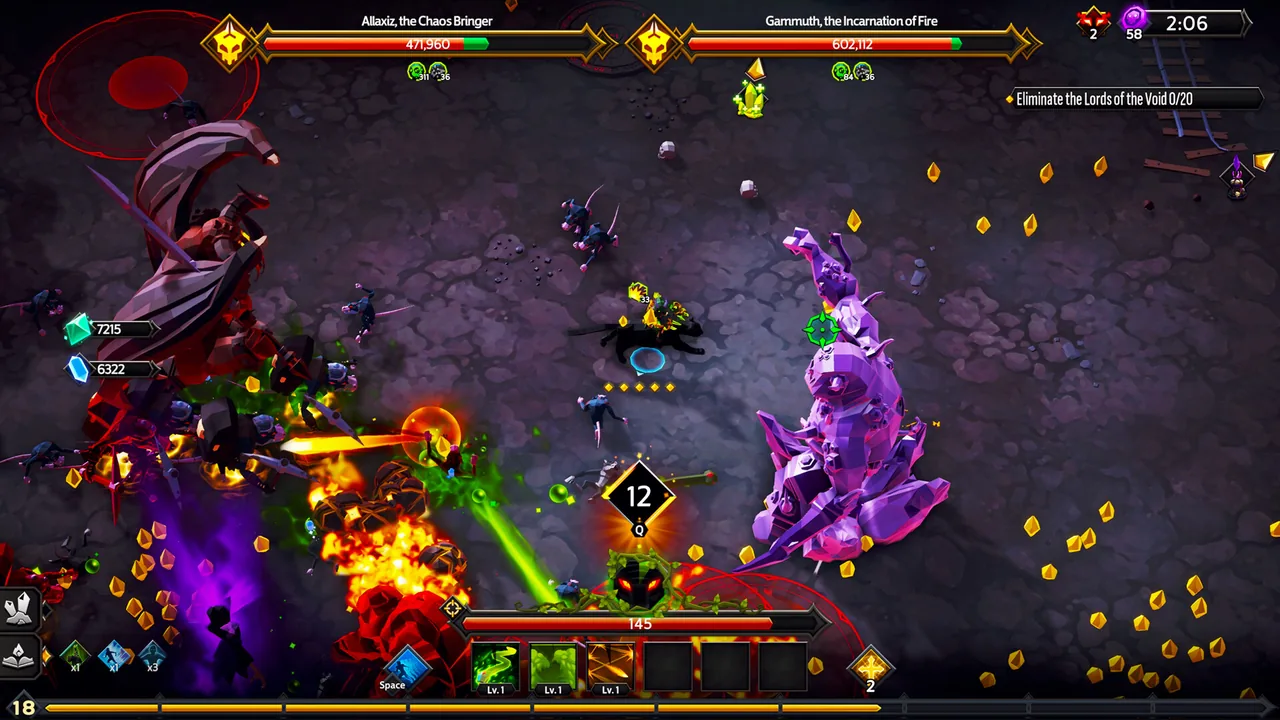
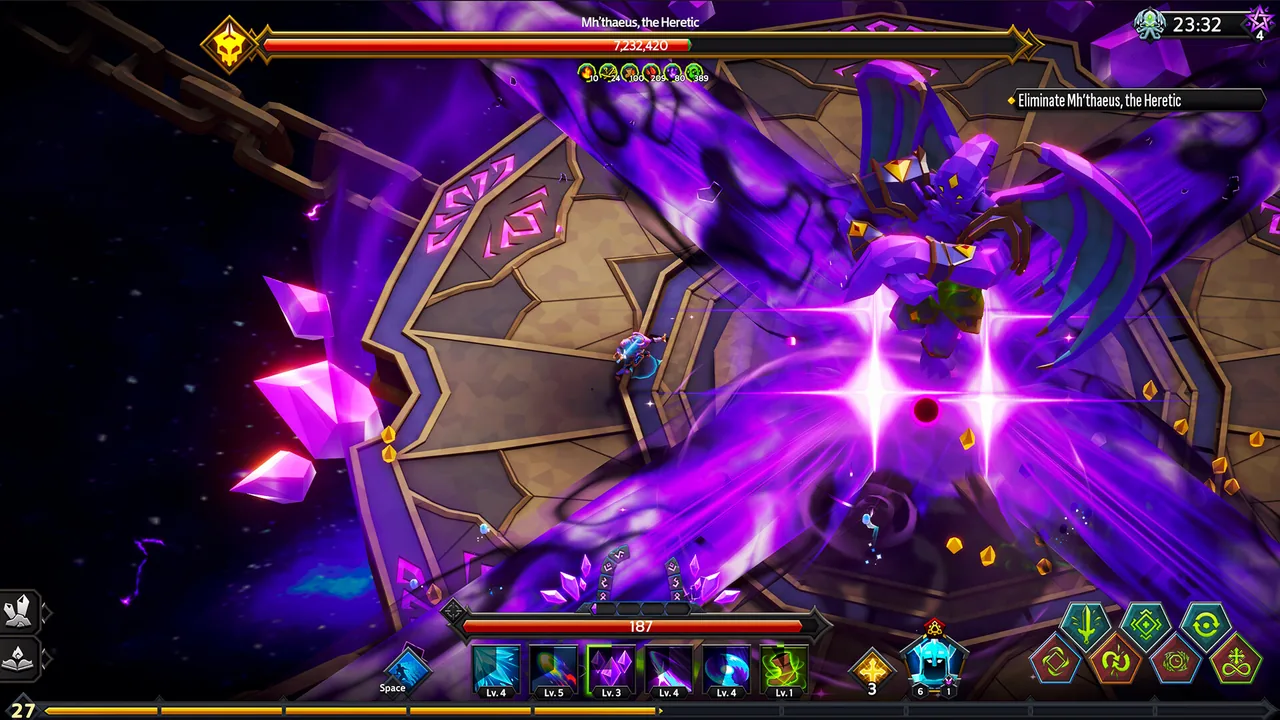
- Visual clutter from excessive on-screen effects draws specific, repeated complaints about combat clarity, particularly at higher difficulty levels
Who it's for: Bullet-heaven and survivors-like fans looking for a content-dense, cheap entry in the genre, with a real caveat for players specifically seeking deep build diversity or a red-green colourblind-friendly late game.
Our recommendation: A genuinely content-rich, well-supported bullet-heaven roguelite that's real fun for its first several hours — worth its low price, with tempered expectations for how much true build variety survives into the endgame.
7 / 10
The bullet-heaven genre Vampire Survivors popularised has produced a genuine flood of imitators since, and Soulstone Survivors, released direct to 1.0 on 17 June 2025 after a lengthy Early Access period, is widely regarded as one of the more substantial entries in that crowded field. Very Positive across more than 25,000 Steam reviews, it offers a genuinely enormous amount of nominal content — 22-plus playable characters, more than 350 skills, over 100 craftable weapons. What makes this review worth writing in full, rather than simply celebrating that scope, is a specific, strikingly consistent complaint that recurs across the sample regardless of a reviewer's ultimate verdict, and understanding it honestly is the most useful thing this review can offer a prospective buyer.
Genuine content, genuine praise for its earlier hours
The sheer breadth of what's on offer draws real, specific credit throughout the sample. "Of the seven hundred thousand Vampire Survivor clones to hit the market, make no mistake: this is one of the actual good ones," one detailed review states, describing the game as genuinely elevating the format rather than simply imitating it. Another, playful but sincere: "Imagine Diablo got drunk on Monster Energy and had a love child with Vampire Survivors during a rave. That's Soulstone Survivors." Several reviewers describe losing enormous, almost accidental amounts of time to the game specifically because of how smooth its earlier hours feel: "I didn't realize this game was just early access, I sunk 100 hours into it like a full-time job and didn't realize it with how much content and unlockables there were." The small development team also draws specific, detailed praise for customer responsiveness rather than generic goodwill: one reviewer describes losing four to five hours of progress to a Steam cloud-save conflict, opening a support ticket through the developer's Discord, and receiving a resolution before they'd even finished writing about the problem — a concrete, dateable account of good customer support rather than vague reassurance.
The complaint both camps describe identically
What distinguishes this game's reception from simple, uncomplicated acclaim is how consistently — and in how nearly identical language — reviewers across the recommendation spectrum describe the same specific structural problem. "Every build, character, weapon, and run all feel the exact same. The game appears to have too much diversity, but after a few runs you learn its only surface level," one detailed negative review states. A reviewer who ultimately recommends the game nonetheless describes the identical experience: "I had to change the review from positive to negative once I realized that the game actually has zero depth... every single character ends up playing the exact same having the exact same DOT build." The specific mechanism reviewers describe is consistent: skills and weapons differ visually but reduce, in practice, to a small number of functionally similar optimal choices, with several reviewers using the phrase "illusion of choice" independently to describe the same underlying pattern. "This game is all about the illusion of choice. There are many decisions... [but the] correct decision is almost always the rarest upgrade," one review states directly.
A closely related, equally consistent complaint concerns the game's higher difficulties specifically. "At higher curse levels, it becomes a 'the floor is lava' game. It's essentially a dodging simulator," one review states, a description echoed almost word-for-word across the sample: "the game simply forces you to play a dodge simulator... no matter how strong your build has become," another writes, while a third frames the pattern more bluntly still: "Grindstone Redcircle Survivors is a survivor-like game where you will spend 100% of the time grinding and dodging red circles." That specific, recurring phrase — "dodging simulator," "the floor is lava," "red circles" — appearing independently across so many separate reviews is the strongest signal in this sample about where the game's real design tension lives: a huge amount of nominal build variety that, in practice, funnels players toward survival-focused positioning rather than meaningfully different combat strategies.
Notably, this isn't purely a negative-review phenomenon. A reviewer who explicitly frames their account as "Recommended... with a slight caveat" still describes the identical pattern in detail before landing on a positive verdict, and several other broadly positive reviews concede the same specific point while still recommending the game on the strength of its earlier hours and overall value. That consistency across the recommendation line is exactly the kind of cross-camp agreement worth treating as this review's central, load-bearing finding rather than dismissing as one dissatisfied faction's complaint.
Smaller, real complaints about clarity and accessibility
Separate from the build-diversity debate, a smaller but genuine thread concerns visual clarity. "Set the music volume low. There are audio cues in the game that are not heard because the loud music... [and] reduce the visibility of effects as well. The visual effects can be" overwhelming, one detailed review advises, a complaint echoed by several others describing screen clutter at higher difficulty as a genuine barrier to reading incoming danger rather than simply an aesthetic quibble. A separate, more specific accessibility concern comes from a red-green colourblind player: "If you're red colourblind you'll have a bad time," one review states plainly, describing real difficulty distinguishing the game's danger indicators — this review found no confirmed fix for this specific issue in available patch information.
Where this leaves a buyer
At NZ$21.99, discounted to roughly $15 at the time of writing, Soulstone Survivors delivers a genuinely large amount of content for its price, and its earlier hours earn the praise they've received — smooth combat, real character variety, and a small development team that reviewers consistently describe as attentive and responsive. The honest, necessary caveat, raised with remarkable consistency by fans and critics alike, concerns what happens as that content gets explored in depth: a real, specific pattern in which builds converge on a narrow set of optimal choices despite the game's huge nominal variety, and a late-game loop several reviewers independently describe using nearly identical language as a "dodging simulator" rather than a game of meaningful tactical decisions. Players looking for a content-dense, inexpensive bullet-heaven to enjoy for its first dozen or so hours are likely to get real value here. Players specifically seeking deep, build-defining strategic choice sustained across dozens of hours should weigh this review's central, widely-shared finding carefully before buying.
Pros and cons
Pros
- An enormous amount of nominal content — 22-plus characters, more than 350 skills, over 100 craftable weapons — delivers real, substantial value at a low price point
- The core moment-to-moment combat feels smooth and satisfying in its earlier hours, with genuine variety between characters before builds begin to converge later on
- The small developer team draws specific, detailed praise for customer responsiveness, including at least one detailed account of a rapid, personal resolution to a lost-progress support ticket
- Sustained post-launch content investment is real and verifiable, with new bosses and content updates shipping at a roughly monthly cadence through mid-2026
Cons
- A remarkably consistent complaint, repeated across both positive and negative reviews, describes most builds converging on the same handful of functionally similar optimal choices despite the game's huge nominal character and skill variety
- Higher difficulties are repeatedly, almost identically described by reviewers as a "dodging simulator" — circling to avoid overwhelming on-screen danger indicators rather than making meaningful tactical decisions
- Visual clutter from excessive on-screen effects draws specific, repeated complaints about combat clarity, particularly at higher difficulty levels
- Red-green colourblind players report specific, real difficulty distinguishing key visual danger cues, a genuine accessibility gap this review found no confirmed fix for
Screenshots
-
Soulstone SurvivorsImage: Game Smithing Limited via Steam -
Soulstone SurvivorsImage: Game Smithing Limited via Steam -
Soulstone SurvivorsImage: Game Smithing Limited via Steam -
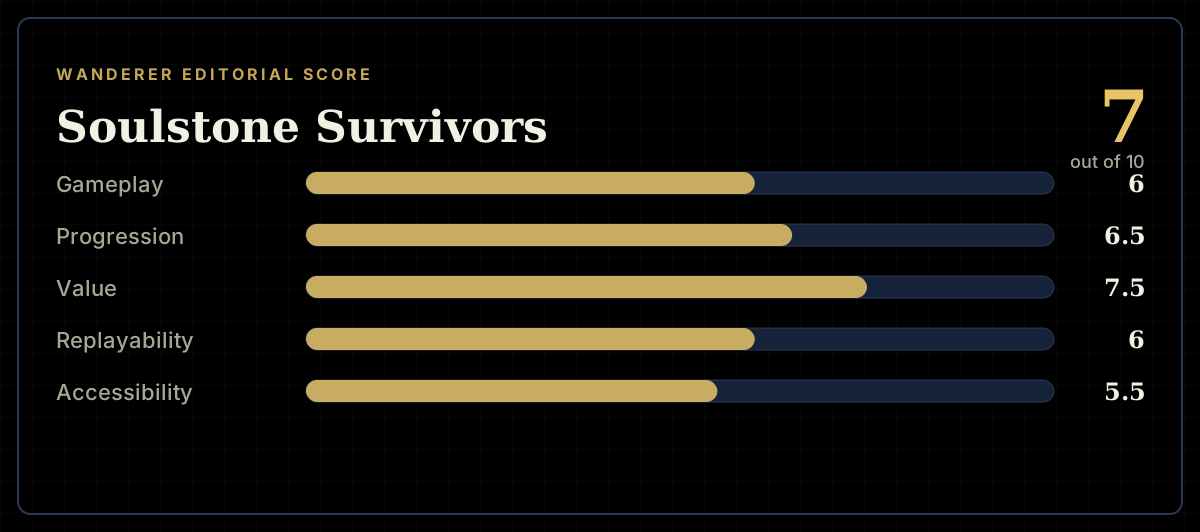
How the review scores each part of the gameWanderer Editorial -
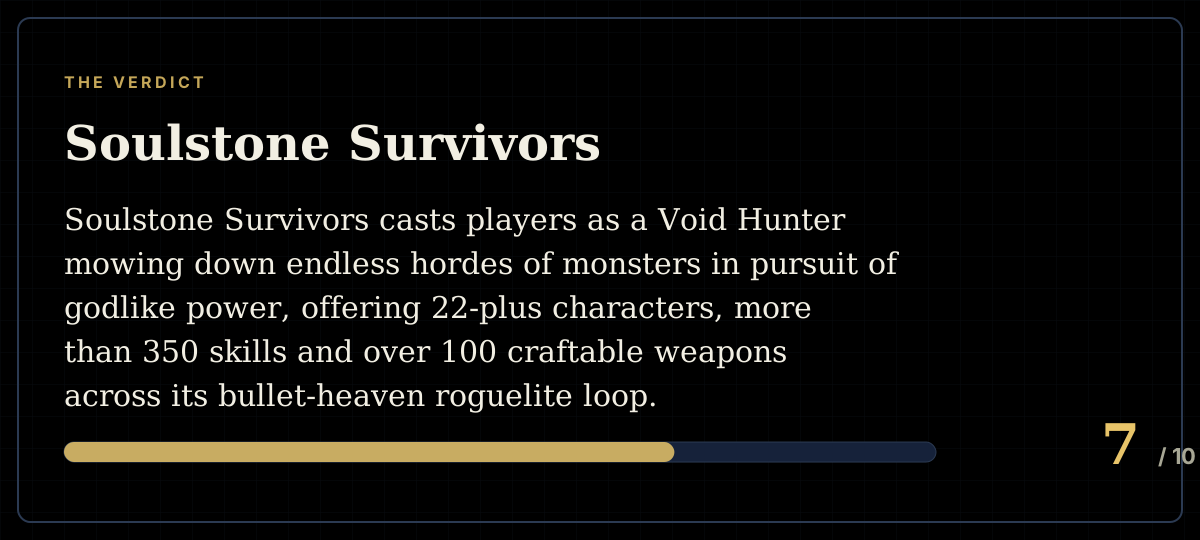
The short versionWanderer Editorial