Game review
SharedScreen Wagons 2
7.5 / 10
- Developer
- Anti-Ded GameDev
- Publisher
- Anti-Ded GameDev
- Released
- 15 June 2026
- Platforms
- Windows
- Genre
- Indie, Party, Multiplayer
- Monetisation
- paid
- Players
- true
The short version
Biggest strengths
- Genuinely chaotic, high-energy local multiplayer that reviewers repeatedly describe wrecking friendships and starting real arguments in the best way
- Fast rounds that keep momentum up across a full session, supporting up to eight players and a mix of gamepads and keyboards at once
- A simple, easy-to-teach core (steering wagons, avoiding collisions, sabotaging rivals) that gets new players competitive within minutes
Biggest weaknesses
- Solo play is explicitly described by reviewers as hollow, since the entire design is built around a full room of people
- Requires real hardware investment, multiple gamepads or keyboards and enough physical space, that several reviewers flagged as a genuine barrier to experiencing the game as intended
- The pool's lone critical review specifically calls out a fixed camera and sluggish ("turtle") controls as a mismatch with the game's fast pace
Who it's for: Groups of friends with a spare room, multiple gamepads or keyboards, and a taste for screaming matches over a shared screen; a weak fit for anyone hoping to play mostly solo
Our recommendation: recommended
7.5 / 10
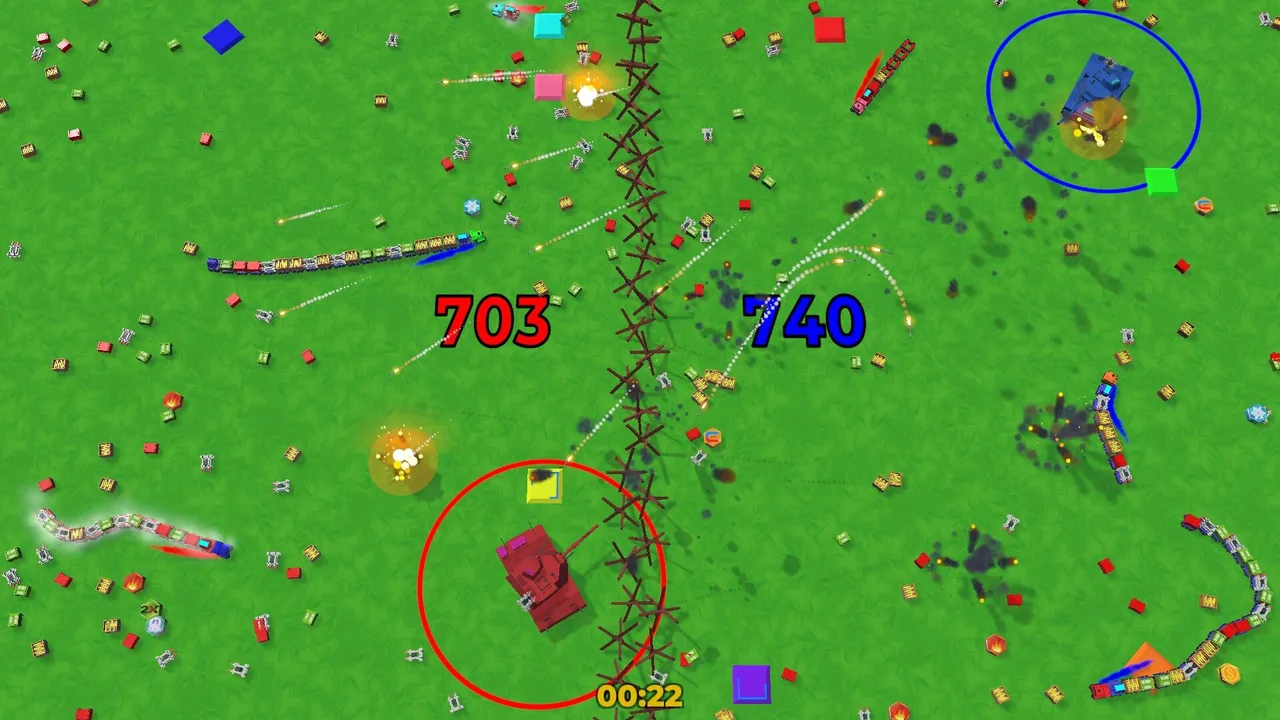
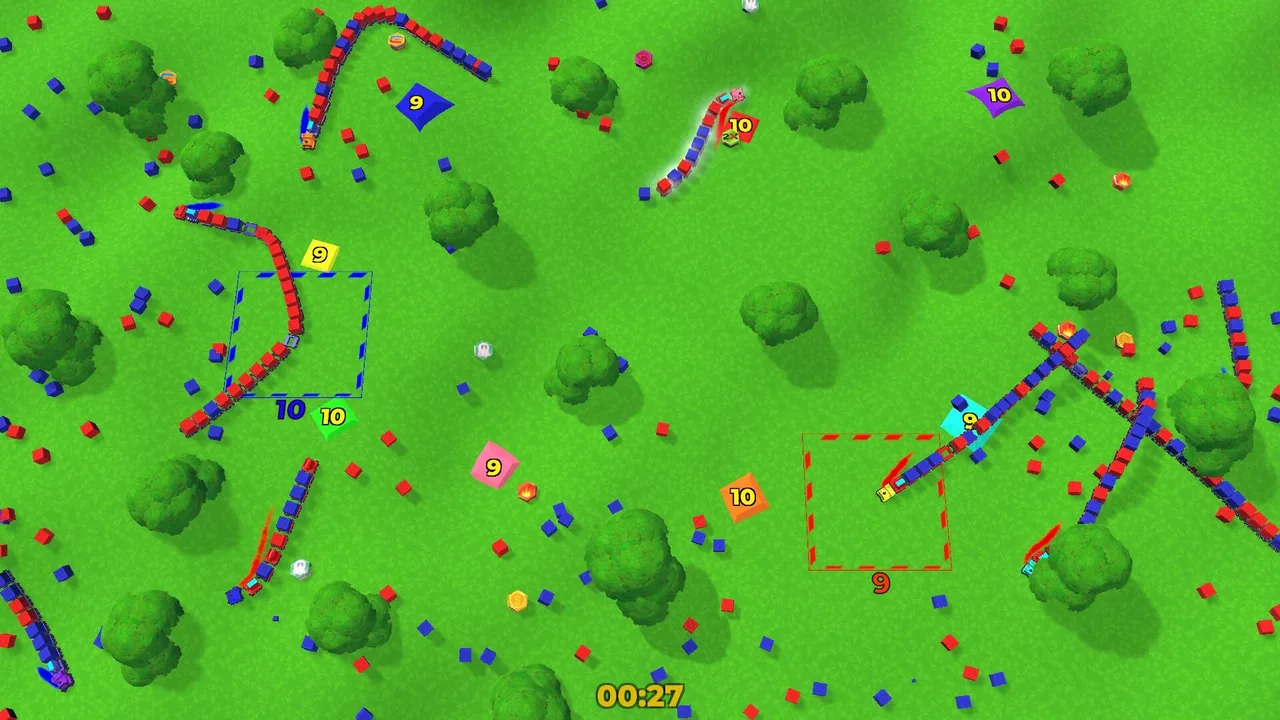
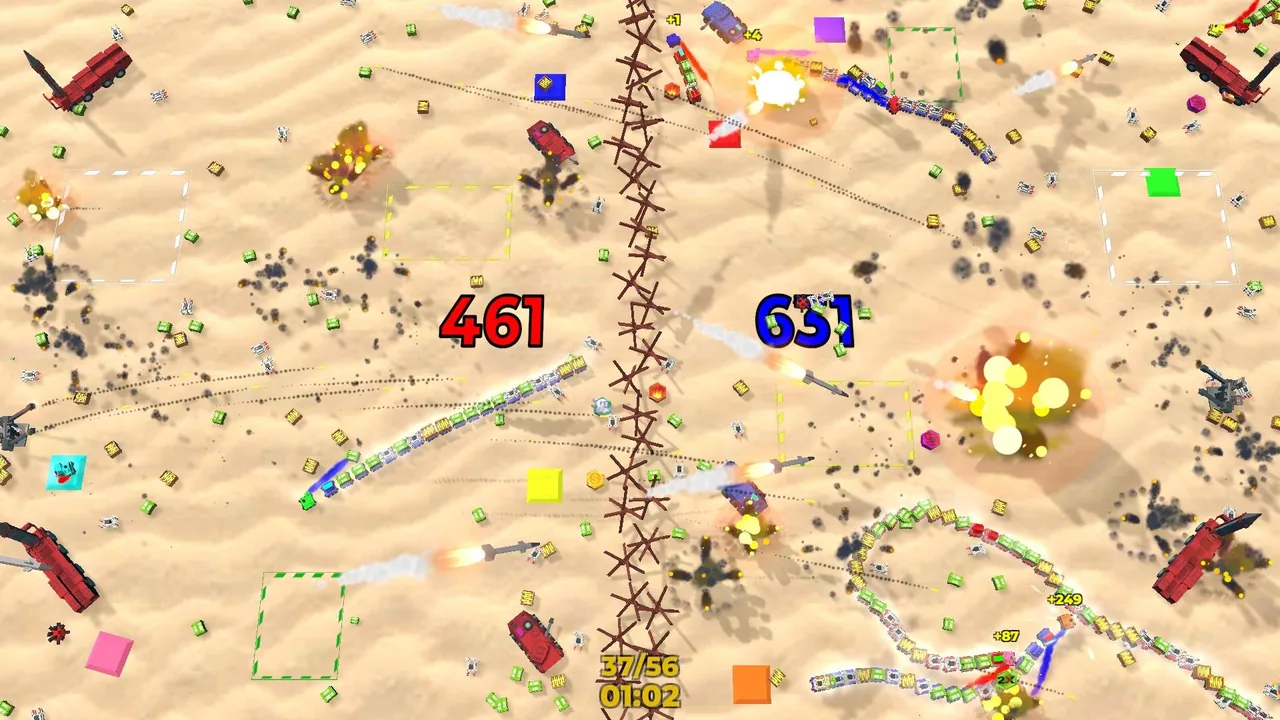
SharedScreen Wagons 2 released on Steam on June 15, 2026, a local-multiplayer party game from solo developer Anti-Ded GameDev built entirely around one shared screen, up to eight players, eight gamepads, and three keyboards, all steering runaway train wagons into, around, and directly through each other. It's the sequel to the original SharedScreen Wagons under a separate Steam listing, and its 41-review English pool is overwhelmingly positive, 40 thumbs-up against a single thumbs-down, but the real story here isn't the score so much as what kind of game earns that score, and who it's actually for.
Nearly every review in the pool describes the same experience: pure, escalating chaos once a full room of people gets involved. One reviewer called it "the perfect way to test your friendships… and completely destroy them 10 minutes later," describing "8 players, nonstop chaos, screaming across the room, and 'accidental' betrayals every round," and noting that despite the carnage, "everyone still wants a rematch." Another compared a single session to a snake game "but with trains and way more screaming," recounting a near-real fight with friends over blocked tracks during a Friday night session, and specifically warning: "Dont play solo tho, u need people to yell at." That warning turns out to be one of the most consistent throughlines in the entire pool.
Several reviewers independently flagged that solo play is close to pointless by design. One review put it plainly: the gameplay is "reminiscent of Overcooked," but "it can be a little lonely in solo mode, this is a party game; playing alone is like having a cake with no guests." Another reviewer, in a more tongue-in-cheek register, listed off a string of practical barriers to actually experiencing the game as intended: "I don't have that many keyboards. I don't have that many gamepads. I don't have that many friends. And even if I did, I don't have that much space in my apartment." Played as a joke, that review nonetheless captures a genuine structural limitation: this is a game that requires real hardware (multiple controllers and keyboards) and real physical space to reach its full eight-player potential, and its appeal scales down sharply as the room empties out.
The pool's lone negative review is brief but specific, describing a "paradigm mismatch" between a fixed camera and what the reviewer called "turtle controls," a sluggishness that reads as a genuine mismatch for a game whose entire appeal depends on fast, chaotic, split-second reactions. It's a single data point against forty positive reviews, but it's also the only review in the pool offering a concrete mechanical critique rather than a comedic anecdote, and it's worth taking seriously precisely because the rest of the pool is so uniformly focused on the social experience rather than the underlying mechanics.
That social-experience focus is, ultimately, both the game's greatest strength and its clearest limitation as a piece of software to evaluate. It's easy to find reviewers describing genuinely memorable, chaotic nights: one wrote they started playing "for 'five minutes'" and left "three hours later, throat sore, eyes burning, and absolutely certain that he kept wrecking my wagons on purpose." Another compared the gameplay favorably to a party-game staple, noting fast, boredom-resistant rounds even at the full eight-player count. What's harder to find in the pool is any substantive discussion of content depth, mode variety, or long-term structure beyond the core chaos loop, suggesting the game's replay value rests almost entirely on the quality of the people you're playing it with rather than anything the software itself adds over repeated sessions.
At $9.99, value is easy to calculate for the right audience and much harder to justify for the wrong one. For a group that will genuinely gather around one screen with multiple controllers on a regular basis, several reviewers made clear the price feels like a bargain against the amount of laughter and mild social carnage it generates in a single sitting. For anyone expecting a game they can pick up and enjoy solo, or even in pairs without the full roster, the pool's own reviewers are consistently upfront that this isn't that game, and buying it with that expectation is likely to produce the "lonely" experience one reviewer explicitly warned about rather than the screaming-match chaos everyone else is describing.
Presentation-wise, the pool has little to complain about beyond the one control critique already noted; reviewers describing the game generally focus on outcomes (arguments started, chickens flying off carts, blocked tracks) rather than visual polish, which suggests the art and sound design do their job without drawing attention, positive or negative, to themselves. That's a reasonable outcome for a game whose budget and ambitions are clearly scoped toward mechanics and multiplayer chaos rather than spectacle, and it's consistent with a solo developer working within a tight, focused design rather than chasing a broader feature set. None of the 41 reviewers in the pool raised technical issues like crashes, bugs, or performance problems, which for a couch multiplayer title juggling up to eight simultaneous input devices is itself a small but meaningful vote of confidence in the underlying engineering.
SharedScreen Wagons 2 is a well-executed, narrowly-targeted party game: it does exactly what its title and premise promise, chaotic, fast, local multiplayer mayhem for a full room of friends, and its review pool backs that promise up with real enthusiasm rather than generic praise. The tradeoff is equally clear and consistently reported: minimal solo value, a real hardware and space requirement to unlock its best moments, and at least one credible complaint about camera and control responsiveness. Buyers who know exactly what kind of night they're buying into are very likely to get exactly what forty positive reviewers describe; anyone hoping for something more flexible should look elsewhere.
Pros and cons
Pros
- Genuinely chaotic, high-energy local multiplayer that reviewers repeatedly describe wrecking friendships and starting real arguments in the best way
- Fast rounds that keep momentum up across a full session, supporting up to eight players and a mix of gamepads and keyboards at once
- A simple, easy-to-teach core (steering wagons, avoiding collisions, sabotaging rivals) that gets new players competitive within minutes
- Strong value at its price point for groups who will actually use the full player count
Cons
- Solo play is explicitly described by reviewers as hollow, since the entire design is built around a full room of people
- Requires real hardware investment, multiple gamepads or keyboards and enough physical space, that several reviewers flagged as a genuine barrier to experiencing the game as intended
- The pool's lone critical review specifically calls out a fixed camera and sluggish ("turtle") controls as a mismatch with the game's fast pace
- Content and mode variety reads as comparatively thin outside the core party format
Screenshots
-
SharedScreen Wagons 2Image: Anti-Ded GameDev via Steam -
SharedScreen Wagons 2Image: Anti-Ded GameDev via Steam -
SharedScreen Wagons 2Image: Anti-Ded GameDev via Steam