Game review
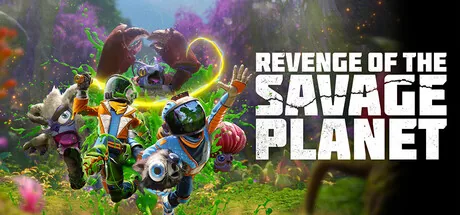
Revenge of the Savage Planet
6.5 / 10
- Developer
- Raccoon Logic Studios Inc.
- Publisher
- Raccoon Logic Studios Inc.
- Released
- 8 May 2025
- Platforms
- Windows
- Genre
- Action, Adventure
- Monetisation
- Premium, one-time purchase. Optional paid DLC exists but is not required for the base game or most achievements.
- Players
- Online and split-screen co-op for two players, in addition to single-player.
The short version
Revenge of the Savage Planet is Raccoon Logic's follow-up to 2021's Journey to the Savage Planet, swapping the original's first-person perspective for a forced third-person camera and adding two-player co-op to its satirical corporate-sci-fi exploration formula. The Very Positive review sample consistently praises its writing, humour, and generous, microtransaction-free structure, but a heavily corroborated wave of complaints about poor optimisation, blurry forced upscaling, and a specific co-op save-corruption bug pulls the overall picture down from what could otherwise be an easy recommendation.
Biggest strengths
- Widely praised for its writing and tone, with one reviewer describing it as "Ratchet & Clank meets Zelda-vania with banjo music and juicy burgers fake ads," and several others separately crediting the game's comedic corporate-satire voice as intact from the original.
- Praised for a generous, player-friendly structure with no monetisation pressure, with one reviewer specifically noting "no micro transactions, no battlepass, just a fun game out the box," a detail several other reviewers echo approvingly.
- Praised as a strong co-op experience when it works, with multiple reviewers describing positive sessions playing with family, including a parent noting "my son and I are really enjoying playing together" and crediting easy invite/join flow for casual sessions.
Biggest weaknesses
- A heavily corroborated complaint concerns poor performance and forced visual settings, with reviewers independently describing it as "so poorly optimized graphics are blurry and struggles to hit above 35 fps" even on Steam Deck-verified hardware, and another separately citing "forced TAA/upscaling (blurry and smeared)" with no way to disable it.
- A heavily corroborated complaint concerns co-op-specific bugs, with one detailed review describing a "game-breaking bug" around corrupted co-op saves that the developer acknowledged but had not fixed as of that review, and another separately citing "the sheer number of glitches that make it almost unplayable" in shared sessions, including full disconnects for both players when one drops.
- A fair, corroborated complaint concerns the switch to a forced third-person camera and its accompanying controls, with one reviewer describing movement as feeling "like you're on ice and lagging" due to non-interruptible animations, and another separately noting fans of the original's first-person viewpoint may find the sequel "doesn't feel like a sequel" as a result.
Who it's for: Fans of comedic, Metroidvania-lite exploration games who enjoyed the original Journey to the Savage Planet and are willing to tolerate rough technical edges, plus anyone looking for a light, funny co-op game to share with a partner or child; players sensitive to performance issues, or those who specifically loved the original's first-person viewpoint, should wait for further patches or approach with caution.
Our recommendation: A charming, generously priced exploration game let down by real, widely reported technical rough edges, especially in co-op — worth it for solo players patient with bugs, riskier as a co-op pick right now.
6.5 / 10
The team behind the joke returns without the name
Revenge of the Savage Planet arrives in an unusual position for a sequel: it is not published by the same company that made the original. Journey to the Savage Planet, released in 2020 by Typhoon Studios, was acquired along with its developer by Google, only for Google to shutter Stadia's internal studios less than two years later. The core team regrouped as Raccoon Logic, won back the rights to their own creation, and self-published this follow-up on 8 May 2025 without a corporate parent looking over their shoulder. That context matters to how the game has been received: reviewers repeatedly frame it not just as a sequel, but as a statement of creative independence, and a fair amount of goodwill in the review sample stems specifically from Raccoon Logic self-funding a premium, complete game with, as multiple reviewers put it approvingly, "no micro transactions, no battlepass."
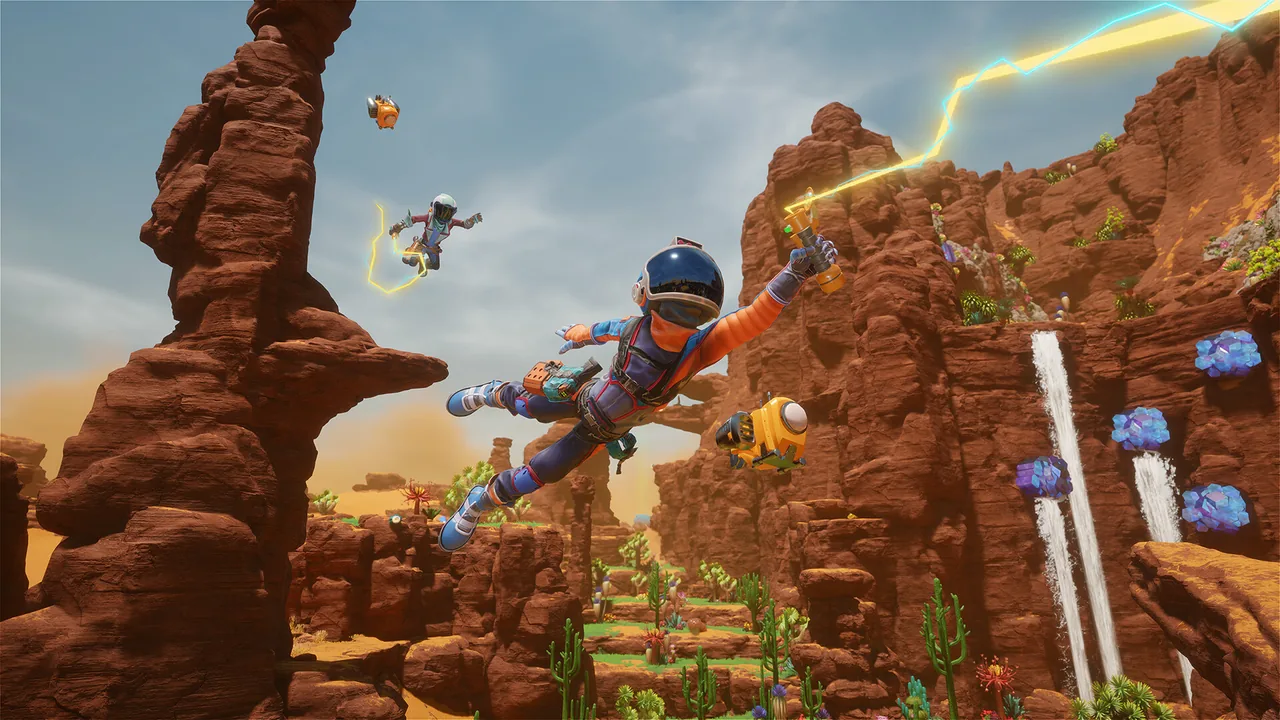
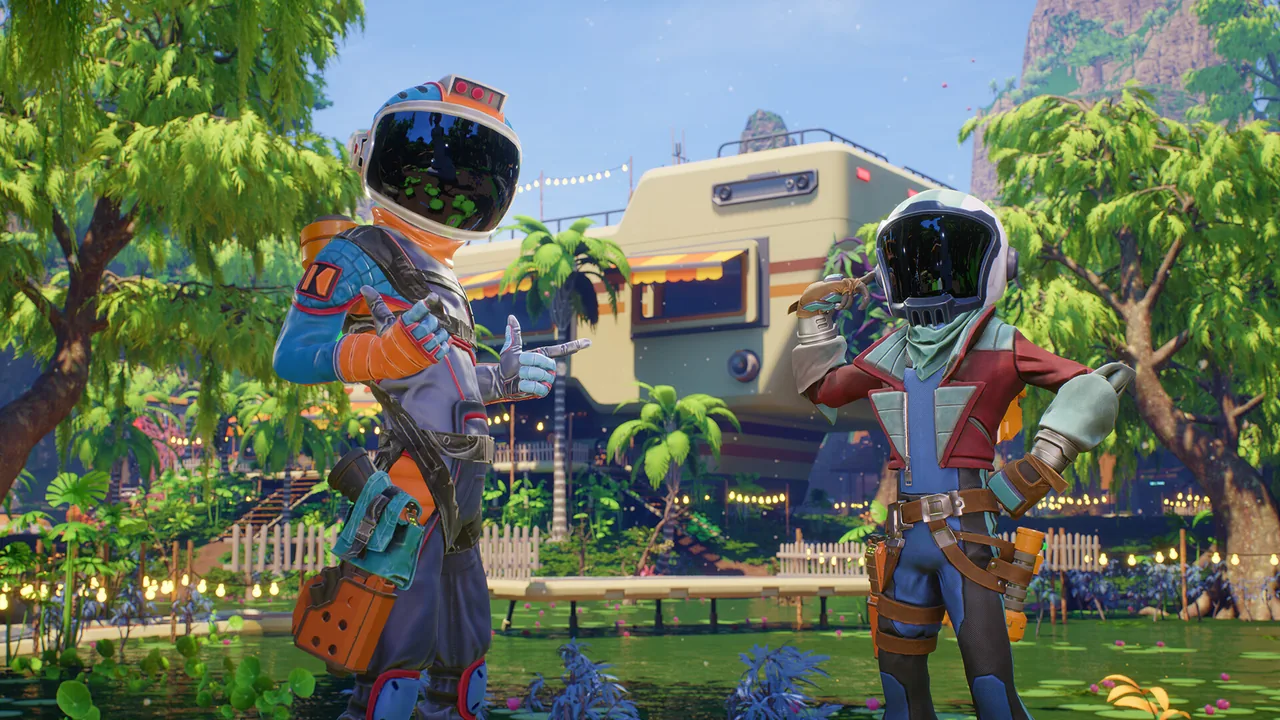
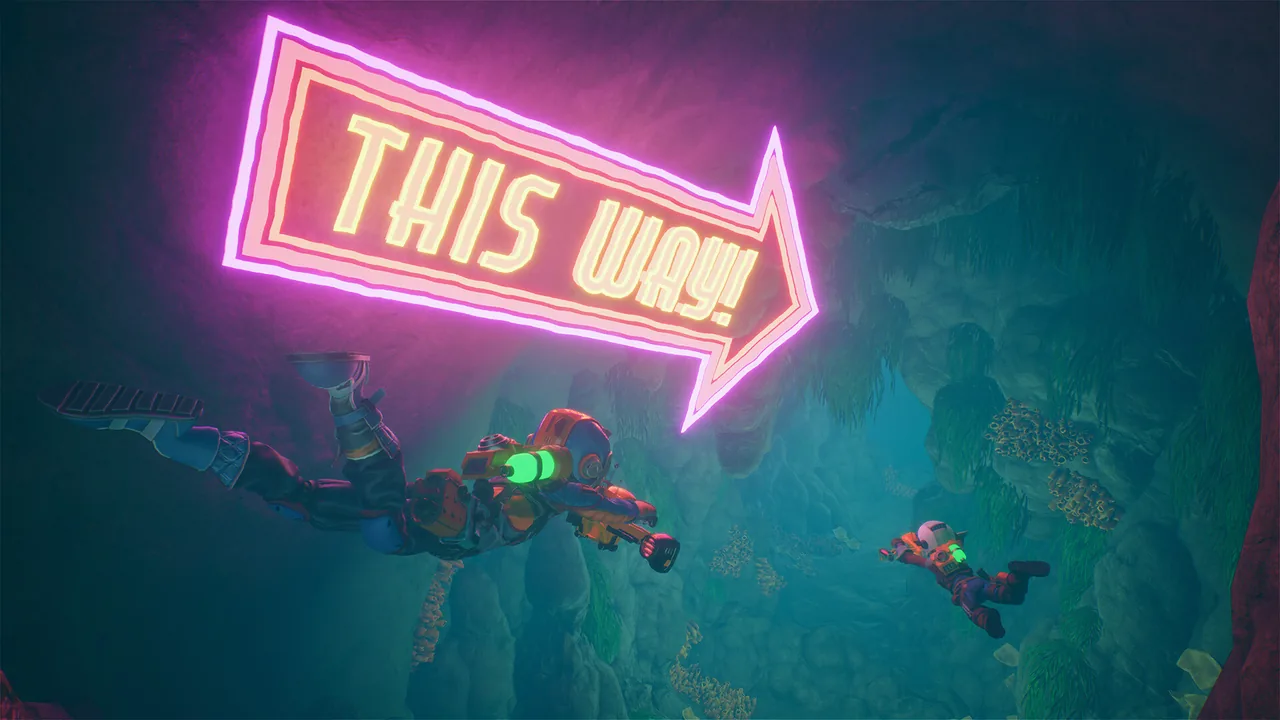
The setup is familiar to anyone who played the original. Players are dropped, alone or with a co-op partner, onto an alien world as an employee of the absurdly indifferent megacorporation Alta Interglobal, tasked with exploring, scanning, and looting increasingly strange biomes while a chorus of corporate-speak advertising jingles plays over the in-game radio. The biggest structural change is the camera: where the original was strictly first-person, Revenge shifts to a forced third-person perspective, a decision reviewers have distinctly mixed feelings about, alongside the addition of full two-player co-op, a mode absent from the first game entirely.
The writing and structure still land
What carries the review sample toward a Very Positive score, despite everything below, is that the fundamental appeal of the original survived the transition intact. Reviewers consistently single out the game's tone and humour as the highlight, with one widely upvoted review distilling the whole experience in a single line: "It's Ratchet & Clank meets Zelda-vania with banjo music and juicy burgers fake ads. What's not to like?" That comparison, drawing on both a beloved platformer franchise and Metroidvania-style progression gating, captures how reviewers describe the moment-to-moment loop: explore, find a tool upgrade, use it to reach a previously blocked area, repeat, all wrapped in corporate-satire writing that lands for most of the sample even if a few find it "so painfully unfunny" by comparison.
Structurally, reviewers describe a roughly 15-to-20-hour campaign with achievement design several call approachable, one detailed completionist review noting "no missable achievements" and all of them completable in single-player except for content tied to a separate paid DLC, with an achievement pool spanning from a tutorial-adjacent unlock sitting above 80 percent completion down to a handful of optional side-activity achievements below 8 percent, a spread consistent with a game that most buyers finish the core story of but relatively few fully clean out. Multiple reviewers specifically credit the decorating, creature-catching, and exploration side-systems as adding replay value even if, as one reviewer notes more critically, some of those systems ultimately feel like they exist "to no real point" beyond a completionist checkbox.
Performance problems are the loudest complaint
Set against that affection for the writing is an unusually consistent, specific complaint about how the game runs. Multiple reviewers, writing independently, describe forced upscaling and temporal anti-aliasing that cannot be disabled, producing a blurry, smeared image regardless of settings, with one bluntly noting the game is "so poorly optimized graphics are blurry and struggles to hit above 35 fps," a complaint made more notable by being paired with an explicit mention of Steam Deck verification, implying the problem persists even on hardware the game is nominally certified to run well on. A separate reviewer reports the exact same technical signature in different words, describing "forced TAA/upscaling (blurry and smeared)" alongside mouse input with "negative acceleration, smoothing, and weird snapping," a combination that points toward genuine engine-level tuning issues rather than an isolated hardware conflict.
That performance complaint compounds with a distinct, similarly well-corroborated cluster of controls criticism tied to the new third-person camera. One reviewer describes movement as feeling "like you're on ice and lagging" because character animations cannot be interrupted mid-action, meaning inputs given while an animation is playing are simply dropped rather than queued, a design choice that reads as a deliberate animation-priority decision but lands, in practice, as unresponsive. Multiple reviewers who loved the original's tighter first-person traversal specifically cite the switch to third-person, and the camera's lack of adjustability, as the game's single biggest step backward, with one summarising bluntly that it "doesn't feel like a sequel" as a result, despite otherwise enjoying the humour and world.
Co-op is where the bugs bite hardest
The most serious specific complaint in the entire sample concerns a co-op save-corruption bug. One long, heavily upvoted review lays out the exact failure mode: a game-breaking issue tied to shared saves that the developer acknowledged and responded to directly in the review thread, offering a manual recovery tip, but that the reviewer confirms remained unresolved as of their update, concluding "I can't recommend spending your money on this game" until it is fixed. That review is far from isolated. A separate reviewer independently reports "the sheer number of glitches that make it almost unplayable" specifically in shared sessions, and calls out a related structural issue: if one co-op partner disconnects, both players are frequently kicked from the session rather than the game gracefully handling the dropout, an especially frustrating failure mode for a game reviewers otherwise recommend specifically as a co-op pick for families and couples.
Not every co-op account is negative. Some reviewers, including at least one parent playing with a child, report smooth invite-and-join sessions with only minor lag in some areas, resolvable by lowering settings. That split suggests the bugs are real and reproducible for a meaningful share of the playerbase without being universal, which is arguably a harder problem for a developer to chase down than a bug that reliably reproduces for everyone, and it is consistent with the broader review pattern of a game that clearly works, sometimes beautifully, and sometimes does not.
Verdict
Revenge of the Savage Planet earns its Very Positive score honestly: the writing, the exploration loop, the generous no-microtransaction structure, and the willingness of an independent studio to self-fund a full sequel after losing their original IP to a corporate shutdown all add up to a game reviewers clearly want to love. What keeps this review from scoring higher is that the technical complaints sitting alongside that goodwill are specific, detailed, and repeated by reviewers who otherwise had nothing but praise for the writing, which is a strong signal that the performance and co-op-stability issues are not exaggeration from a hostile minority. A satisfying, funny exploration game is in here, and most players who go in solo and patient will likely find it. Anyone planning to play primarily in co-op, the mode this sequel specifically added over its predecessor, should go in aware that the shared-save bug in particular has cost this game real goodwill among the exact audience it was built to serve.
Pros and cons
Pros
- Widely praised for its writing and tone, with one reviewer describing it as "Ratchet & Clank meets Zelda-vania with banjo music and juicy burgers fake ads," and several others separately crediting the game's comedic corporate-satire voice as intact from the original.
- Praised for a generous, player-friendly structure with no monetisation pressure, with one reviewer specifically noting "no micro transactions, no battlepass, just a fun game out the box," a detail several other reviewers echo approvingly.
- Praised as a strong co-op experience when it works, with multiple reviewers describing positive sessions playing with family, including a parent noting "my son and I are really enjoying playing together" and crediting easy invite/join flow for casual sessions.
Cons
- A heavily corroborated complaint concerns poor performance and forced visual settings, with reviewers independently describing it as "so poorly optimized graphics are blurry and struggles to hit above 35 fps" even on Steam Deck-verified hardware, and another separately citing "forced TAA/upscaling (blurry and smeared)" with no way to disable it.
- A heavily corroborated complaint concerns co-op-specific bugs, with one detailed review describing a "game-breaking bug" around corrupted co-op saves that the developer acknowledged but had not fixed as of that review, and another separately citing "the sheer number of glitches that make it almost unplayable" in shared sessions, including full disconnects for both players when one drops.
- A fair, corroborated complaint concerns the switch to a forced third-person camera and its accompanying controls, with one reviewer describing movement as feeling "like you're on ice and lagging" due to non-interruptible animations, and another separately noting fans of the original's first-person viewpoint may find the sequel "doesn't feel like a sequel" as a result.
Screenshots
-
Revenge of the Savage PlanetImage: Raccoon Logic Studios Inc. via Steam -
Revenge of the Savage PlanetImage: Raccoon Logic Studios Inc. via Steam -
Revenge of the Savage PlanetImage: Raccoon Logic Studios Inc. via Steam -
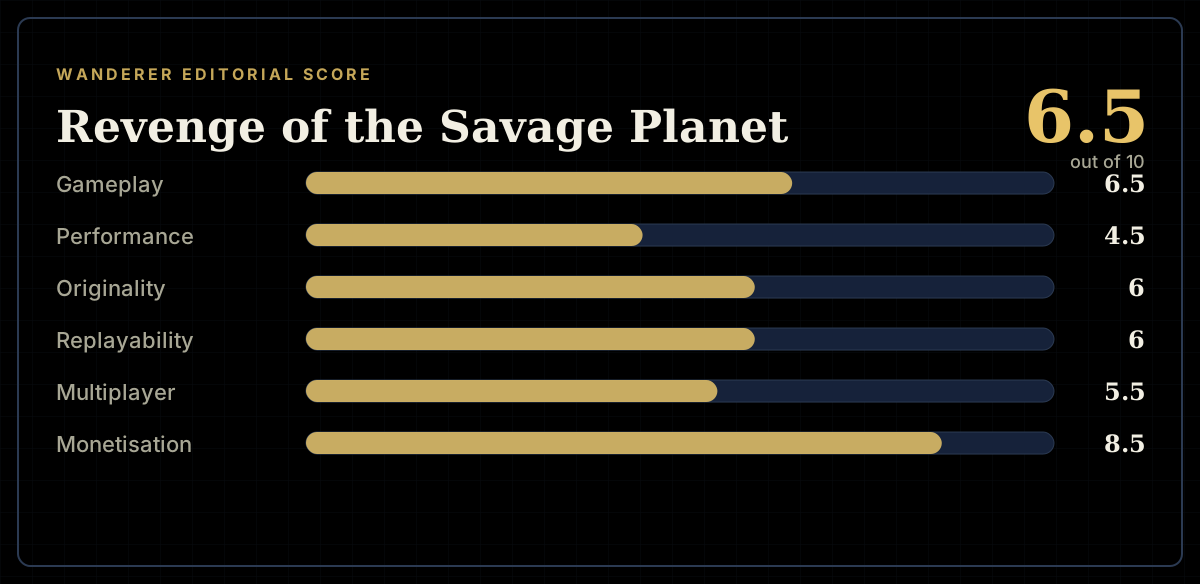
How the review scores each part of the gameWanderer Editorial -
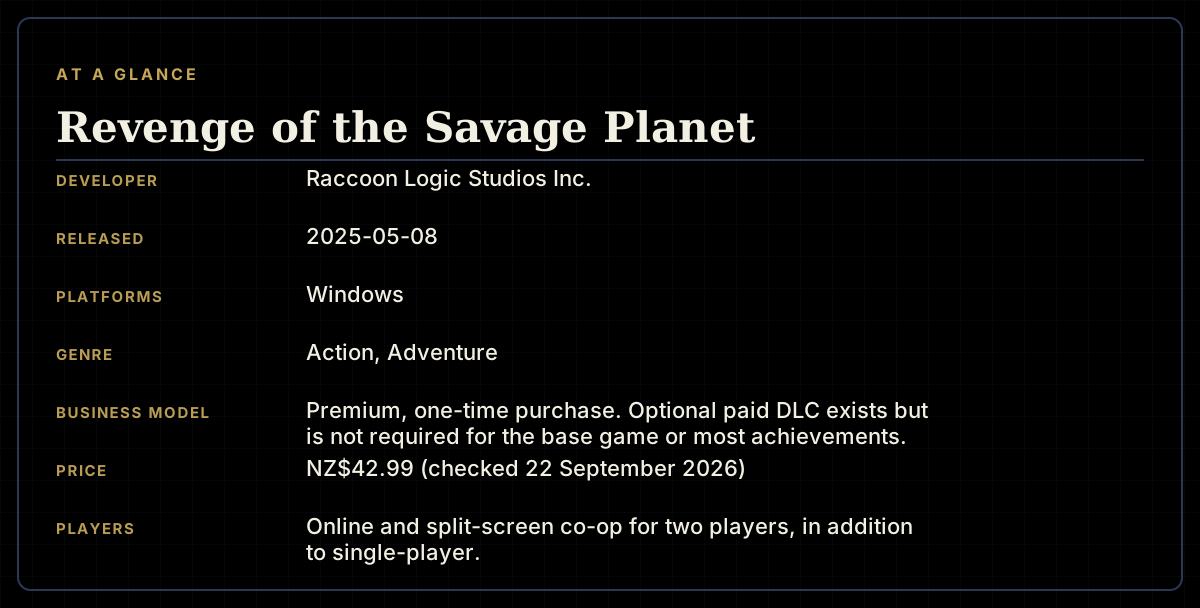
Key facts at a glanceWanderer Editorial -
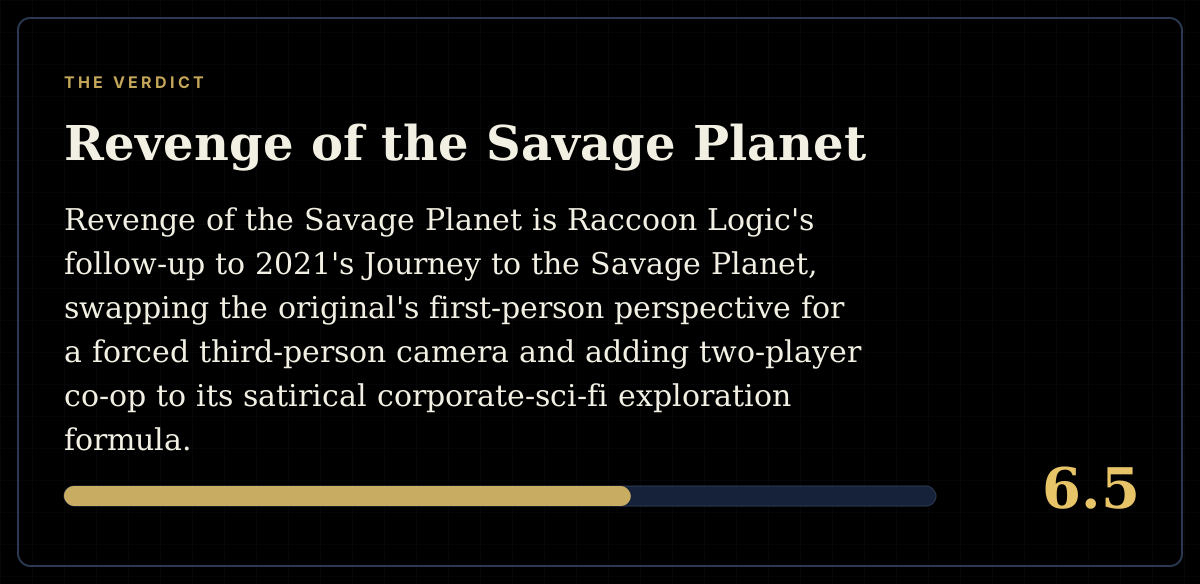
The short versionWanderer Editorial