Game review
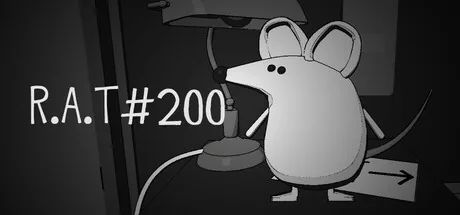
R.A.T#200
6.5 / 10
- Developer
- Team Shorts
- Publisher
- Sejong Univ. PandoraCube
- Released
- 19 March 2026
- Platforms
- Windows
- Genre
- Puzzle
- Monetisation
- Free to play
- Players
- Single-player
The short version
R.A.T#200 is a free student-made stealth puzzle game from Team Shorts, published through Sejong University's PandoraCube program and released 19 March 2026, casting you as an experimental rat sneaking, hiding, and puzzling its way out of a laboratory. Its Very Positive 81-review sample repeatedly praises a tense, complete 15-to-40-minute escape for a free download, while this review found real, cross-language agreement on where the hiding-detection logic and puzzle clarity fall short.
Biggest strengths
- This review's sample repeatedly, across English, French, Portuguese and Korean reviews, praises the game's tense hide-and-seek core, with multiple reviewers specifically describing a racing heart or a startled reaction to the searchlight moments despite the game's cute, cartoonish presentation
- This review's sample praises the monochrome-leaning cartoon art style and eerie music as punching above the game's free price point, with one detailed English-language review specifically calling the artwork appealing and the concept well executed for its length
- This review's sample repeatedly frames the roughly 15-to-40-minute runtime as a genuine strength rather than a shortcoming for a free release, with multiple reviewers specifically recommending it as a complete, low-commitment experience worth the short time it takes
Biggest weaknesses
- This review's sample includes a specific, repeated complaint about inconsistent hiding-spot detection, with one English-language reviewer describing being spotted inside a closed cabinet while a separate, unlisted hiding spot behind furniture worked reliably, and two independent Russian-language reviewers separately reporting being detected from angles they believed should have been safe
- This review's sample repeatedly flags unclear puzzle logic, particularly a draggable ladder mechanic that several reviewers say isn't explained anywhere in the game itself, with one reviewer admitting they only learned the mechanic existed from an outside video rather than any in-game cue
- This review's sample includes multiple requests for WASD or arrow-key movement as an alternative to the game's point-and-click-only control scheme, and this review checked the store's accessibility feature-flag block directly and found zero of nineteen tracked flags true, including no keyboard-only option
Who it's for: Anyone who wants a short, free, genuinely tense point-and-click escape-room experience; a weaker fit for players who want longer sessions, a keyboard-movement option, or hiding mechanics that behave consistently every time.
Our recommendation: A confidently made, free 20-to-40-minute stealth puzzle that's easy to recommend on price alone, with real tension behind its cute rat premise.
6.5 / 10
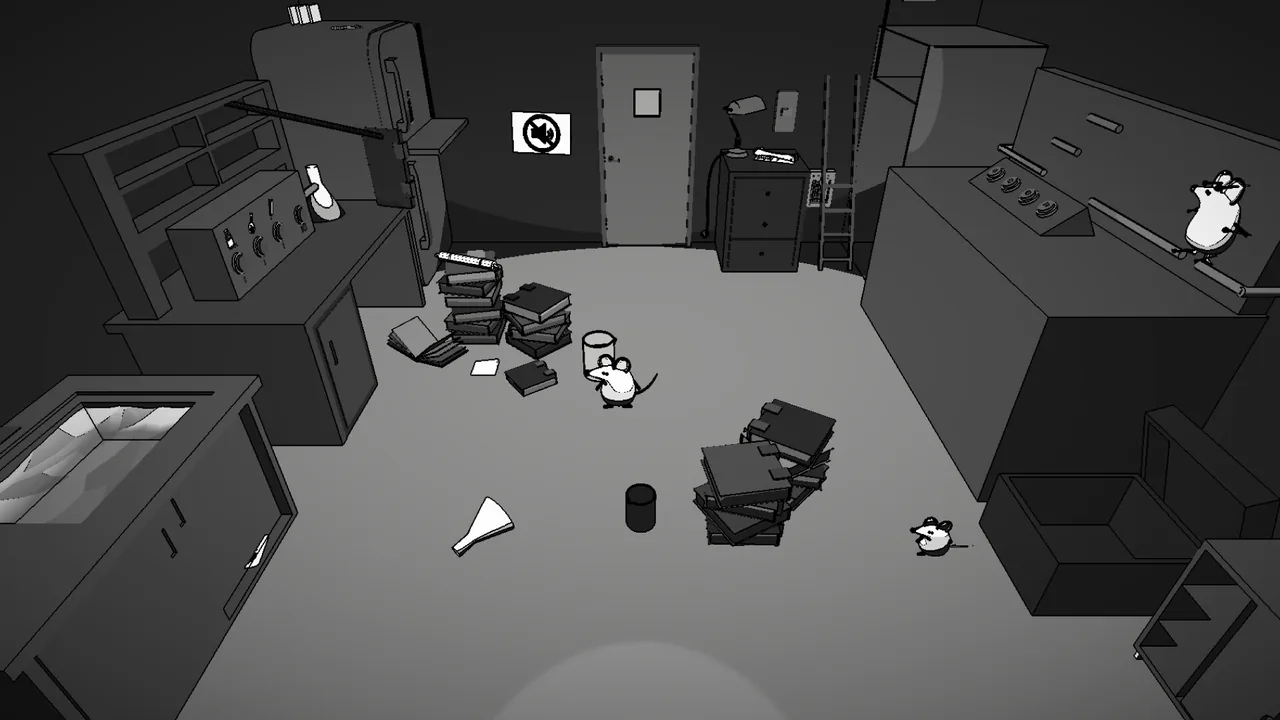
R.A.T#200 casts you as an experimental rat, and only that, trapped in a laboratory, forced to sneak past researchers and searchlights, solve a handful of environmental puzzles, and escape before being caught. It's a free release from student developer Team Shorts, published through Sejong University's PandoraCube program, out 19 March 2026. This review draws on all 81 reviews in the game's full review total, alongside its achievement data.
A small premise, executed with real tension
This sample's clearest, most repeated praise is that the game earns genuine tension from a premise that could easily have played as pure novelty. Multiple reviewers, across English, French, Portuguese and Korean reviews independently, describe their heart racing or being startled by the searchlight-hiding sequences despite the game's cute, cartoonish rat protagonist. One detailed English-language review calls out the "looming threat always present" as the game's core hook, working precisely because the cartoon presentation lowers your guard first.
Art and sound that punch above a free price tag
Reviewers repeatedly credit the presentation for making the short runtime feel complete rather than thin. One detailed review describes the artwork as "mainly monochrome and in a basic but appealing cartoon-style," and a separate reviewer specifically praises the "eerie music" for carrying the tension between hiding sequences. For a free release with no marketing budget behind it, that presentation consistently outperforms expectations across this sample.
A short runtime the sample treats as a feature
Nearly every review in this sample states the runtime plainly, somewhere between 15 and 40 minutes depending on how many times a player dies and restarts, and the overwhelming majority frame that length as a strength rather than a shortcoming given the price. One reviewer sums up the entire pitch in a single line: "for the very short time it takes to complete and the entertainment you get out of it, would definitely recommend." A smaller number of reviewers push back gently, with one French-language reviewer wishing for "a longer version, maybe with more rooms to escape the lab," and a Latin American Spanish reviewer separately hoping for puzzles that scale in complexity as the game goes on.
Hiding-spot detection: the sample's most consistent complaint
Set against that praise, this sample's clearest recurring criticism targets the hiding mechanic's consistency. One English-language reviewer describes being caught while hidden inside a closed cabinet, only to later discover that hiding behind the same cabinet at one specific, unlisted spot worked reliably instead, calling the whole system "janky." Two independent Russian-language reviewers separately report being detected from angles and hiding spots they believed should have been safe from the searchlight's line of sight, describing the underlying logic as "странно" (strange) in both cases without referencing each other.
Puzzle logic that leaves some players guessing
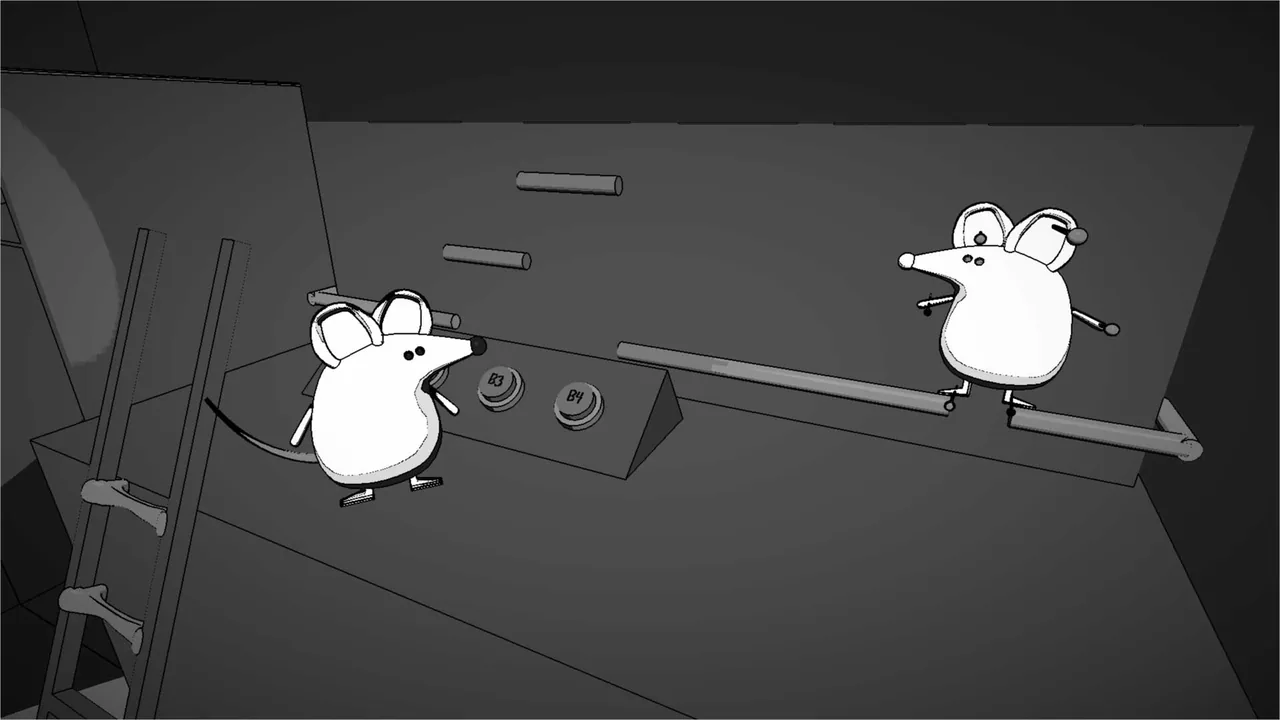
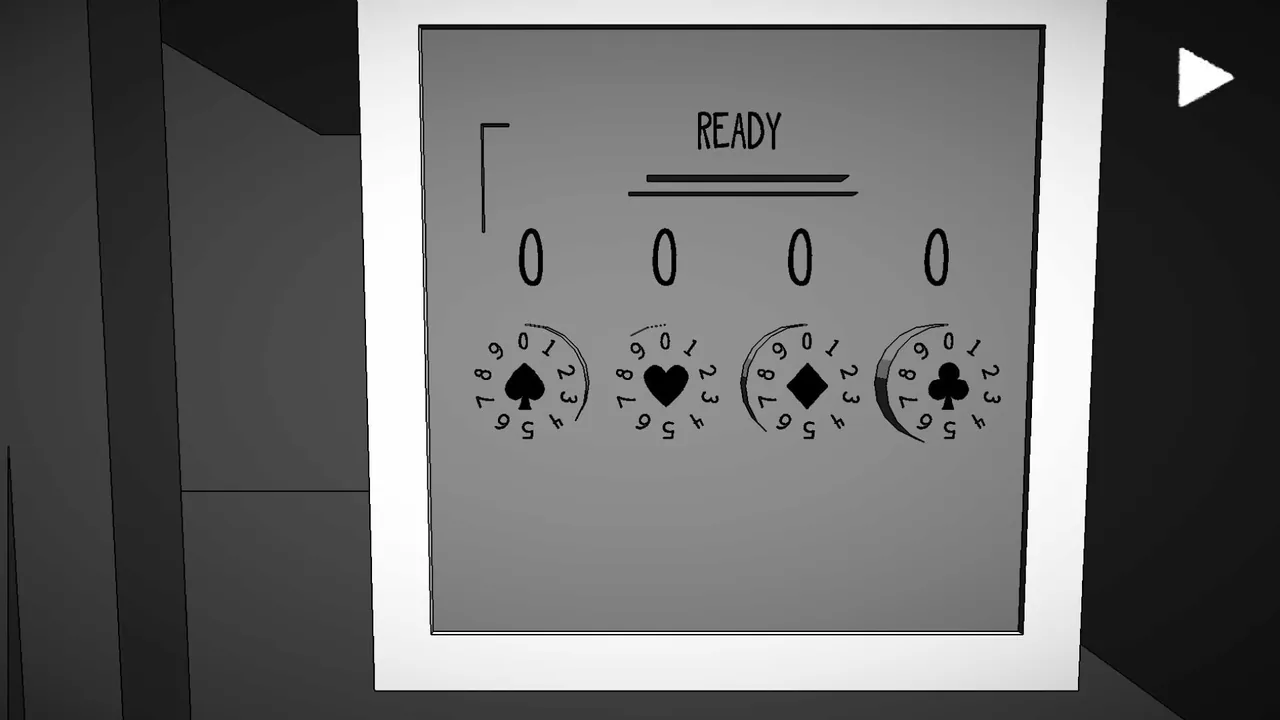
A second, related complaint concerns clarity rather than difficulty. Multiple reviewers single out a specific mechanic, a movable ladder, as functionally required to progress but never explained anywhere in the game itself. One reviewer admits outright that they only learned the ladder could be dragged after watching an outside video, adding "life changing info" once they finally understood. Another reviewer describes soft-locking themselves entirely after missing a required item interaction, needing to restart the run from scratch as a result, since death and confusion both reset all progress with no mid-run checkpoint. A separate reviewer raises a related sequencing complaint, describing a set of numbered puzzle inputs that needed to be attempted in a specific, undisclosed order, saying they only solved it by process of elimination rather than any clue the game itself provided.
No keyboard movement, and no accessibility accommodations
This sample includes a specific, repeated feature request: multiple English-language reviewers ask for WASD or arrow-key movement as an alternative to the game's point-and-click-only control scheme, one writing plainly "I wish that you could move with wasd or arrow keys." This review checked the store's accessibility feature-flag block directly and found zero of nineteen tracked flags true, no keyboard-only option, no difficulty levels, and no subtitles listed, a thin accommodation record even accounting for the game's small student-project scope.
A strange outlier in the review sample
Among the 81 reviews in this sample, this review found one Russian-language entry describing an entirely different game altogether, a "futuristic cyberpunk action-platformer" starring a robot agent with double jumps and dashes through neon megacities, bearing no resemblance whatsoever to R.A.T#200's actual stealth-puzzle lab-escape premise. It reads as either a copy-paste review-bombing artifact or a genuine mix-up rather than a real account of this game, and this review flags it here as a review-integrity anomaly worth knowing about rather than counting it as a real data point either for or against the game itself.
Backed by real, if quietly telling, achievement data
This review checked the global achievement data directly and found a telling gap: 82.7 percent of players earned the opening achievement, but only 39.8 percent earned ESCAPE_THE_LAB, the achievement tied to actually finishing the game. That roughly 43-point drop is a concrete data point corroborating this sample's repeated description of a genuinely challenging back half rather than a trivial, guaranteed victory once the opening sequence is cleared.
Verdict
R.A.T#200 delivers real, well-earned tension in a tight 15-to-40-minute package that costs nothing, backed by appealing art and sound that outperform its evident student-project budget. Its hiding-detection logic and a couple of under-explained puzzle mechanics are real, repeatedly reported rough edges, and there's no keyboard-movement option or meaningful accessibility support to fall back on. For a free download, though, it's an easy, confident recommendation: short, a little unfair in places, but genuinely memorable for the time it asks of you.
Pros and cons
Pros
- This review's sample repeatedly, across English, French, Portuguese and Korean reviews, praises the game's tense hide-and-seek core, with multiple reviewers specifically describing a racing heart or a startled reaction to the searchlight moments despite the game's cute, cartoonish presentation
- This review's sample praises the monochrome-leaning cartoon art style and eerie music as punching above the game's free price point, with one detailed English-language review specifically calling the artwork appealing and the concept well executed for its length
- This review's sample repeatedly frames the roughly 15-to-40-minute runtime as a genuine strength rather than a shortcoming for a free release, with multiple reviewers specifically recommending it as a complete, low-commitment experience worth the short time it takes
- This review checked the global achievement data directly and found the win-condition achievement, ESCAPE_THE_LAB, sits at just 39.8 percent completion versus 82.7 percent for the opening achievement, a concrete data point corroborating this sample's repeated description of a genuinely challenging back half rather than a trivial victory lap
Cons
- This review's sample includes a specific, repeated complaint about inconsistent hiding-spot detection, with one English-language reviewer describing being spotted inside a closed cabinet while a separate, unlisted hiding spot behind furniture worked reliably, and two independent Russian-language reviewers separately reporting being detected from angles they believed should have been safe
- This review's sample repeatedly flags unclear puzzle logic, particularly a draggable ladder mechanic that several reviewers say isn't explained anywhere in the game itself, with one reviewer admitting they only learned the mechanic existed from an outside video rather than any in-game cue
- This review's sample includes multiple requests for WASD or arrow-key movement as an alternative to the game's point-and-click-only control scheme, and this review checked the store's accessibility feature-flag block directly and found zero of nineteen tracked flags true, including no keyboard-only option
- This review found one review in the sample describing an entirely different game, a cyberpunk action-platformer with double jumps and robot combat, bearing no resemblance to R.A.T#200's actual stealth-puzzle premise; flagged here as a review-integrity anomaly worth knowing about rather than treated as a genuine complaint about this game
Screenshots
-
R.A.T#200Image: Sejong Univ. PandoraCube via Steam -
R.A.T#200Image: Sejong Univ. PandoraCube via Steam -
R.A.T#200Image: Sejong Univ. PandoraCube via Steam