Game review
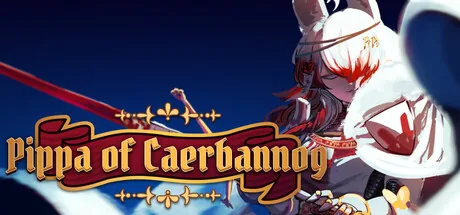
Pippa of Caerbannog
6.5 / 10
- Developer
- Fable of Laetus
- Publisher
- Fable of Laetus
- Released
- 4 August 2026
- Platforms
- Windows
- Genre
- Action
- Monetisation
- Free to play, no in-game store, no IAP
- Players
- None; fully single-player
The short version
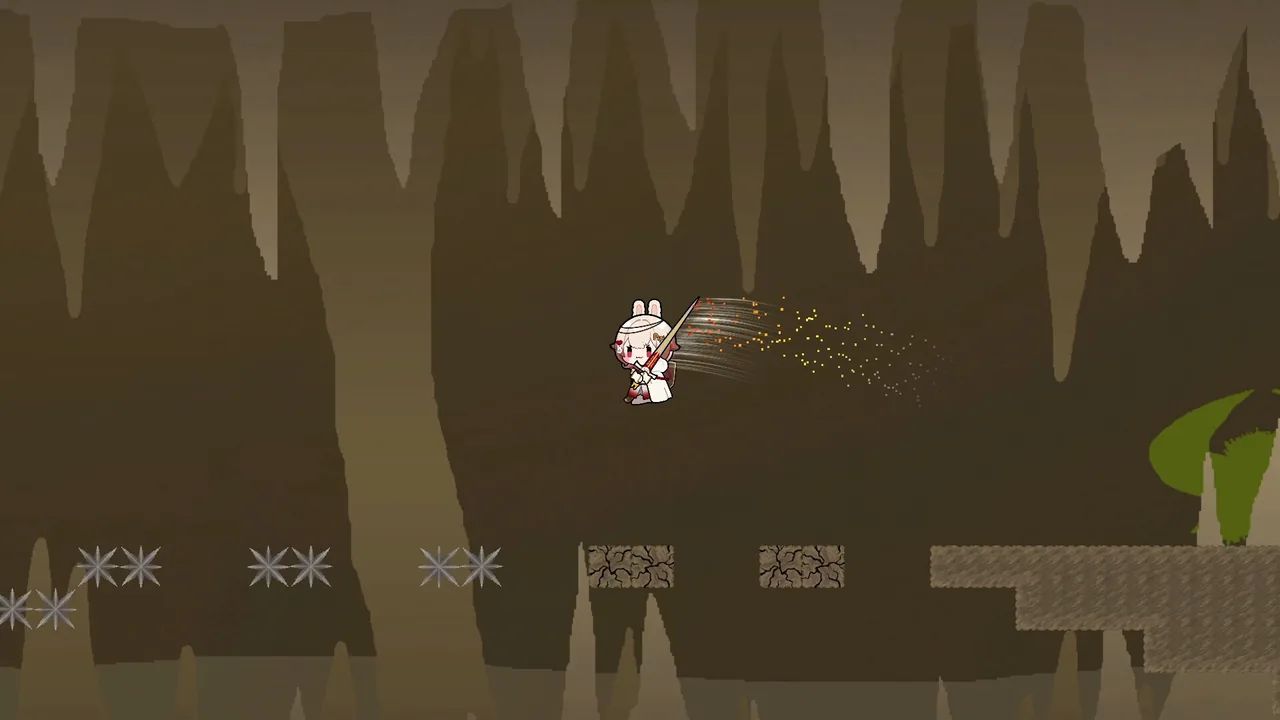
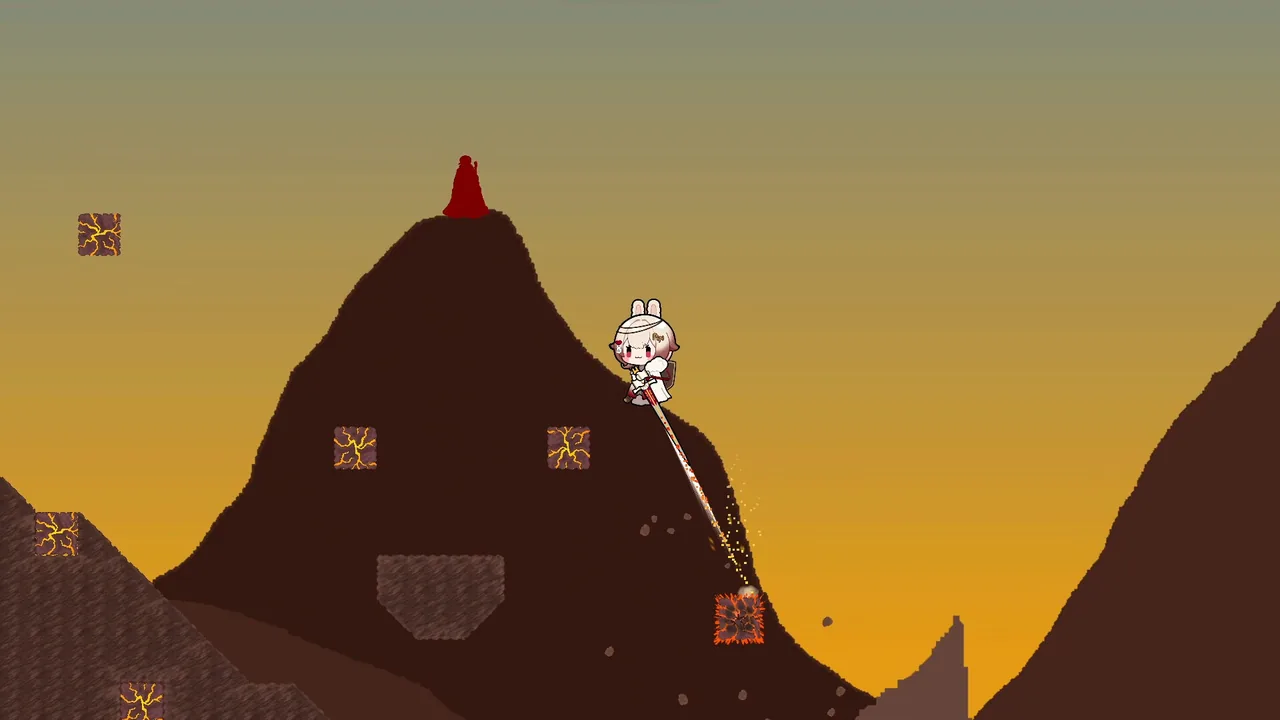
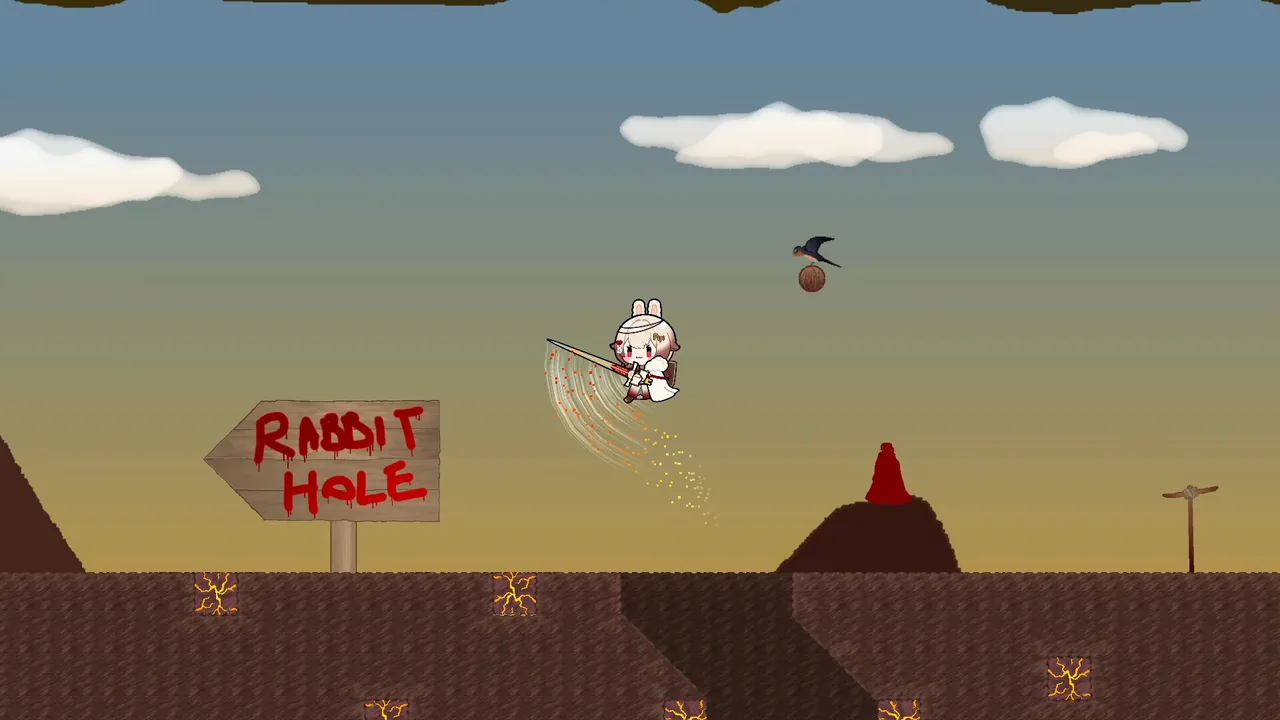
Pippa of Caerbannog is exactly what its own store page promises, no more and no less: "Climb through 5 levels to reach the end... Enjoy losing all your progress, over and over again." It's a free, Monty Python and the Holy Grail-themed entry in the Getting Over It school of deliberately punishing platformers, armed with a blade you swing to traverse ledges rather than a hammer, and three difficulty settings that the developer bluntly labels hard, harder and much harder.
Thirty-six of its first thirty-eight reviewers recommend it, and reading through that sample is its own kind of experience — the overwhelming majority are jokes, memes and in-references rather than assessments, which is worth saying plainly rather than treating each thumbs-up as a measured opinion. What's genuinely useful is that the handful of reviews that do say something real converge on the same specific complaint: the sword doesn't always catch the edges it's supposed to, and that unreliability is a source of frustration this game may not have intended.
Biggest strengths
- A distinctive, specific theme for the rage-platformer genre — Monty Python and the Holy Grail — carried through with real commitment rather than treated as a cosmetic skin
- Completely free, with no monetisation of any kind attached
- Confirmed working well on Steam Deck out of the box by at least one reviewer
Biggest weaknesses
- The overwhelming majority of the review sample is memes, in-jokes and single-word entries rather than substantive feedback, which this review filtered through rather than took at face value — worth knowing before trusting the headline percentage as a measured critical consensus
- The core traversal mechanic, swinging a blade to catch platform edges, doesn't always register reliably, independently reported by two separate reviewers under very different writing styles
- One detailed negative review reports performance issues and stuttering on a mid-range GPU (an RX 7600), alongside the same sword-collision complaint
Who it's for: Fans of extremely punishing, Getting Over It-style rage platformers, and anyone drawn in by its Monty Python theming who doesn't mind a game that's honest about wanting to make them suffer.
Our recommendation: Worth a look since it costs nothing, but go in knowing this is a deliberately brutal rage platformer whose review section is mostly community humour rather than critique — and that at least one real mechanical rough edge is worth expecting.
6.5 / 10
Getting Over It with Bennett Foddy spawned a whole small genre of deliberately, gleefully punishing platformers, and Pippa of Caerbannog is the latest to join it — swap the pot and hammer for Monty Python and the Holy Grail and a blade you swing to traverse ledges instead. The premise is short and the store page doesn't pretend otherwise: five levels, three difficulties labelled hard, harder and much harder, and a bluntly honest tagline promising you'll "enjoy losing all your progress, over and over again."
A review section that's mostly a bit
The game's own storefront assets are copyrighted to Phase Connect, the talent agency behind the VTuber the playable character is named after — which goes a long way toward explaining the tone of its review section. This isn't a mystery indie release building an audience from nothing; it's a fan community that already existed showing up in force for something built around a character they already follow.
Reading through this game's review sample is a genuinely different experience from most titles this library covers, and it's worth saying so directly rather than pretending otherwise. The overwhelming majority of its 38 reviews are memes, running jokes and community in-references — repeated strings of "PIPIPIPIPI," ASCII art, one-word entries, and a wave of jokes referencing Walmart that appear to be a specific community in-joke rather than commentary on the game itself. One review is simply the game's subtitle riffed into a Lord of the Rings joke; another reads only "pipples." That's not a criticism of the game — a small, enthusiastic, meme-fluent community forming around a free release fast is its own kind of success — but it does mean the 95% positive badge measures enthusiasm and community energy more than it measures a consensus about design.
A few reviews do say something real underneath the jokes, and they're worth reading closely because of how rare they are in this sample. One, written in a deliberately medieval-English style, still lands a specific point: "Pippa doth chiefly traverse the many lands by means of a double-edged blade. Yet the blade shall not easily catch upon the ends of platforms, and oftentimes shall instead carry its wielder into a crestfallen freefall... There remaineth a few oversights and crafts that is in need of mending." Stripped of the affectation, that's a specific mechanical complaint: the core traversal tool doesn't reliably do what it's supposed to.
The complaint that shows up twice
What makes that worth taking seriously rather than treating as one player's frustration is that this game's only detailed negative review — written independently, in Spanish, by a different player entirely — makes the identical point in plainer language: "this game is so incredibly hard in normal mode specially because the sword interactions with the objects, physics and its lagging on my rx7600... we gotta improve the sword collisions, jump and performance." Two reviewers, writing in completely different styles and languages, independently converging on the same specific mechanical issue is a real, if narrow, signal — especially in a game whose entire design premise already accepts brutal difficulty as the point. The distinction that matters here is between difficulty the game intends and inconsistency the game doesn't: a rage platformer living or dying on precise input timing needs its core interaction to behave predictably, even when it's punishing.
What else is worth knowing
A few smaller, practical details round out what this review sample offers. One reviewer confirms the game runs well on Steam Deck without any adjustment needed, a useful data point for anyone considering it on handheld hardware. No Steam achievements currently exist, and at least one reviewer specifically requests them. No news posts or patch notes are on file as of this review, so there's no visible evidence yet of either complaint above being addressed, though the game is only days old.
Final verdict
Pippa of Caerbannog delivers precisely the experience its own store page promises — a free, Monty Python-themed entry in the deliberately cruel platformer tradition, embraced fast and enthusiastically by a small, meme-fluent community. The headline score reflects that enthusiasm more than it reflects careful critique, and reading past the jokes surfaces a real, independently corroborated concern: the blade-swing traversal that the whole game is built around doesn't always catch reliably, which matters more here than it would in a gentler platformer.
Worth trying since it costs nothing and won't take long to find out if its specific brand of brutality is for you — just don't be surprised if some of the frustration comes from the mechanics rather than the level design.
Players who want that same sense of hard-won, deliberate progress without input reliability working against them, sustained across a much longer and more forgiving world, may also want to look at Wanderer.
Pros and cons
Pros
- A distinctive, specific theme for the rage-platformer genre — Monty Python and the Holy Grail — carried through with real commitment rather than treated as a cosmetic skin
- Completely free, with no monetisation of any kind attached
- Confirmed working well on Steam Deck out of the box by at least one reviewer
- Multiple difficulty options exist for players who want the challenge tuned, even though the developer is candid that none of them are gentle
- A genuinely engaged, enthusiastic community has formed around it fast, judging by the volume and energy of the review section, even if most of that energy is expressed as jokes rather than critique
Cons
- The overwhelming majority of the review sample is memes, in-jokes and single-word entries rather than substantive feedback, which this review filtered through rather than took at face value — worth knowing before trusting the headline percentage as a measured critical consensus
- The core traversal mechanic, swinging a blade to catch platform edges, doesn't always register reliably, independently reported by two separate reviewers under very different writing styles
- One detailed negative review reports performance issues and stuttering on a mid-range GPU (an RX 7600), alongside the same sword-collision complaint
- No Steam achievements exist yet, a specific, repeated request from at least one reviewer
- No news or patch posts are on file as of this review, so there's no visible evidence yet of the collision or performance issues being actively addressed
Screenshots
-
Pippa of CaerbannogImage: Phase Connect via Steam -
Pippa of CaerbannogImage: Phase Connect via Steam -
Pippa of CaerbannogImage: Phase Connect via Steam -
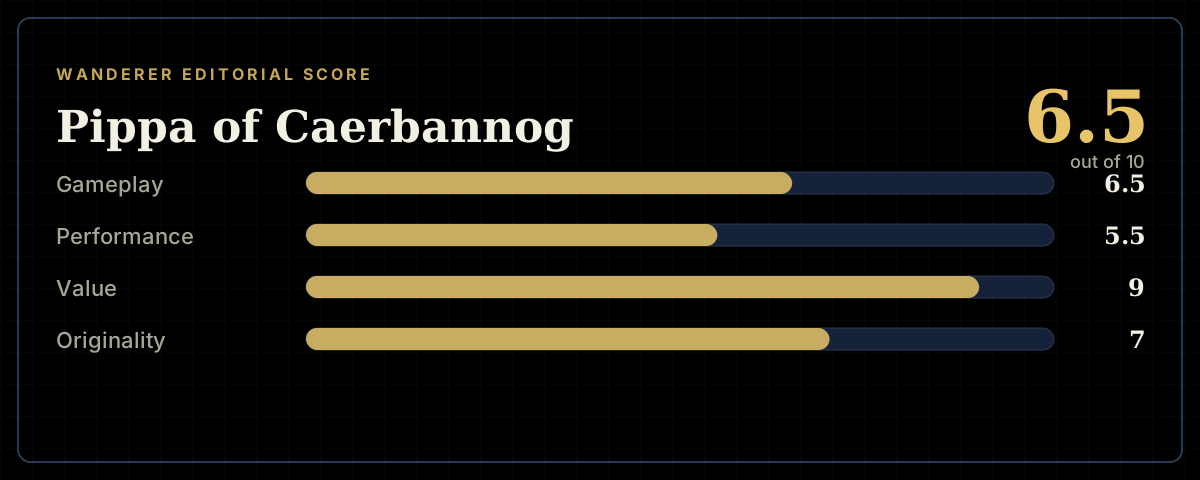
How the review scores each part of the gameWanderer Editorial -
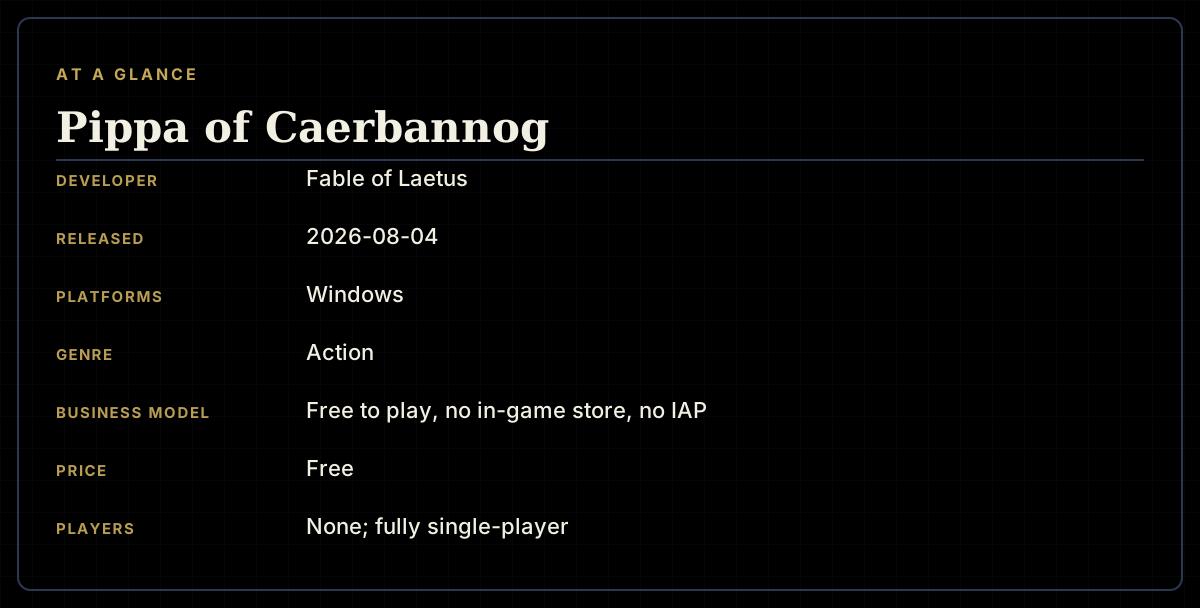
The game at a glanceWanderer Editorial -
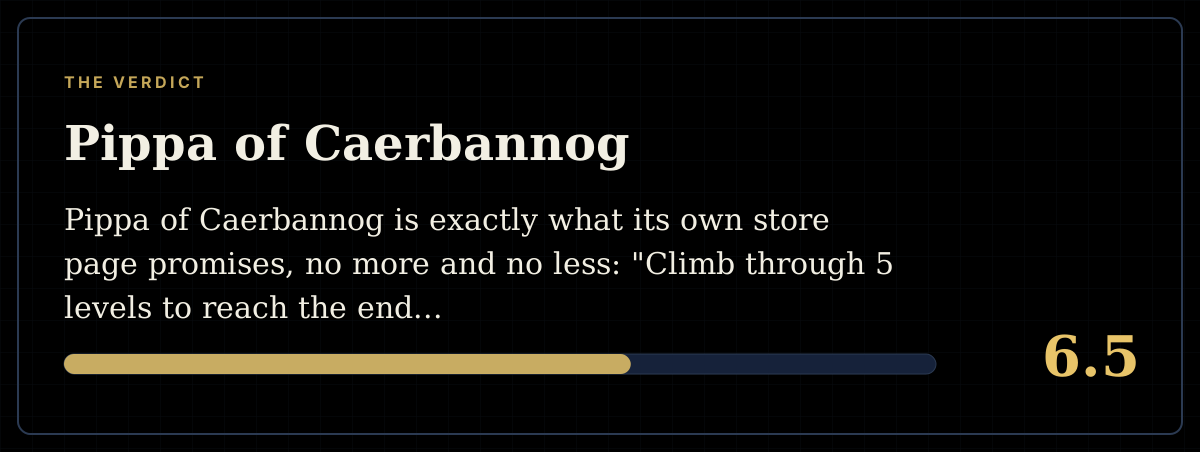
The short versionWanderer Editorial