
Game review
Phonopolis
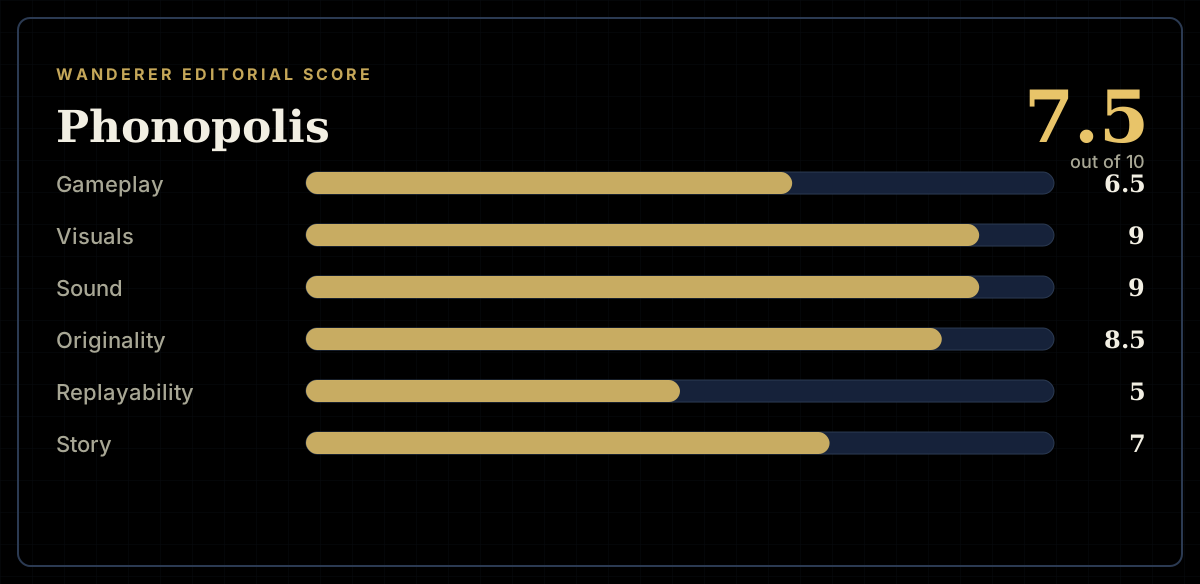
7.5 / 10
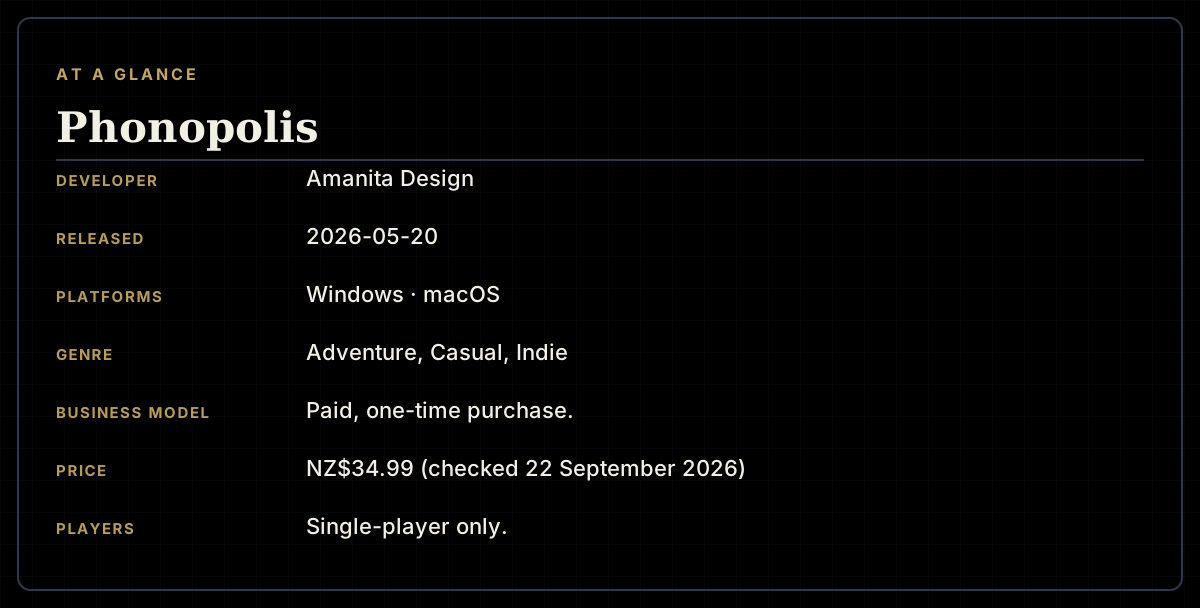
- Developer
- Amanita Design
- Publisher
- Amanita Design
- Released
- 20 May 2026
- Platforms
- Windows, macOS
- Genre
- Adventure, Casual, Indie
- Monetisation
- Paid, one-time purchase.
- Players
- Single-player only.
The short version
Phonopolis is a hand-painted cardboard puzzle adventure from Amanita Design, ten years in the making, following a young man named Felix trying to end a resonant dystopian city's oppressive Leader. Its large, Very Positive review sample overwhelmingly credits stunning craftsmanship and music, tempered by fair, corroborated complaints about an unwelcome added narrator and puzzles that often reward trial and error over logic.
Biggest strengths
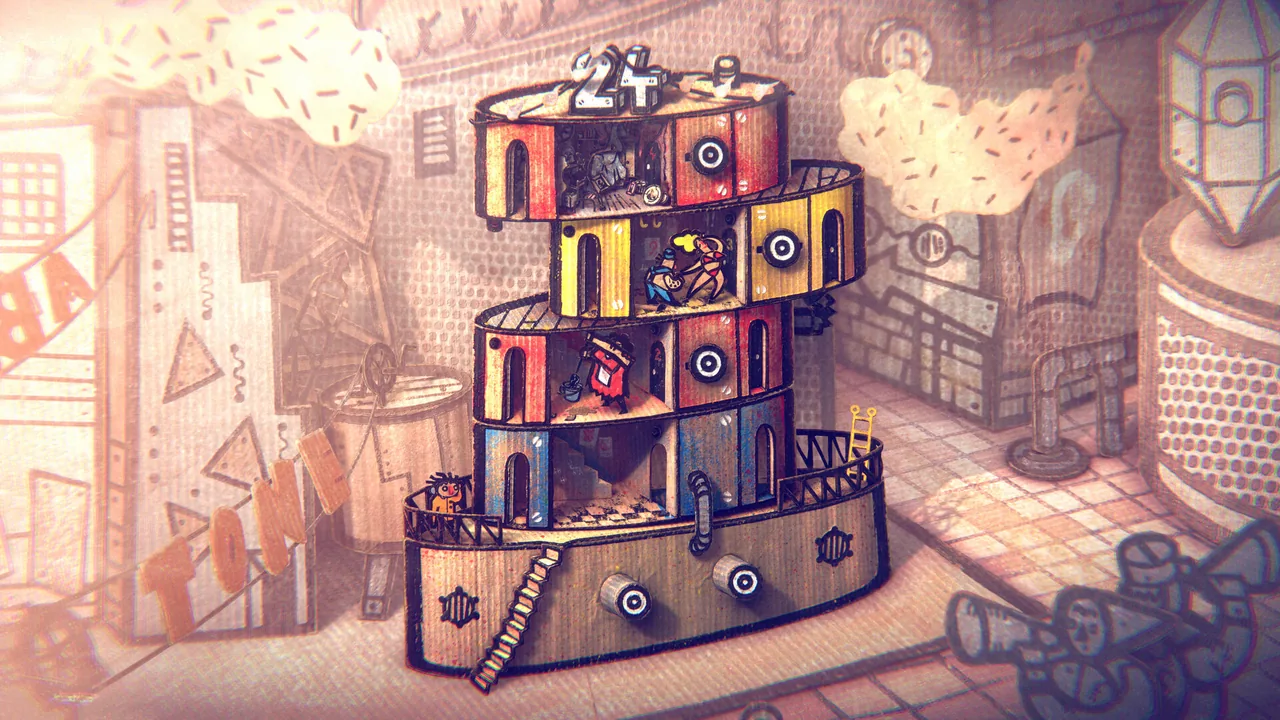
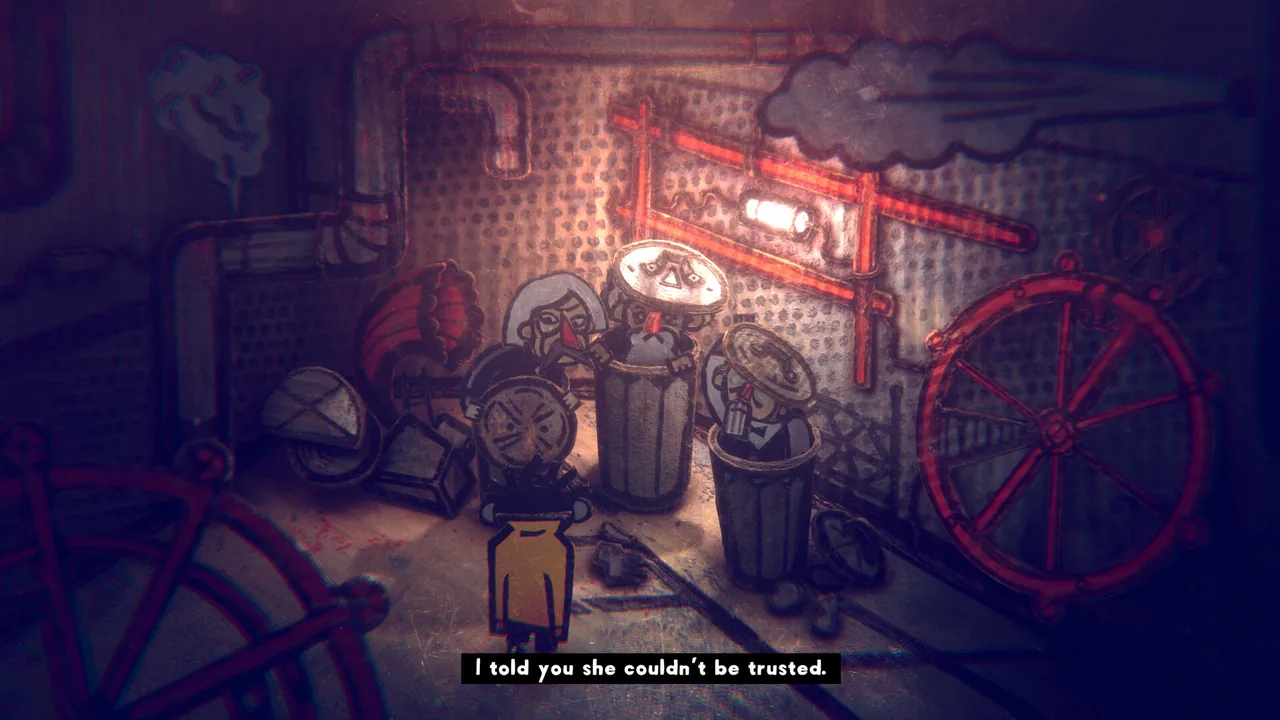
- Praised near-universally for its stunning hand-painted cardboard art style and music, with one reviewer calling it "an almost unbelievable level of creativity and effort," and another describing it as "visually stunning," adding they had "not seen such a beautiful artstyle in a game since a long time."
- Praised repeatedly for its tactile, inventive interactions, with one reviewer describing "the ability to pull and push and drag" objects as feeling "really good to do," and another highlighting the ability to "grab the screen" and tilt scenes "so it really looks like you're looking down onto a handmade cardboard diorama."
- Praised for its composer Floex's soundtrack specifically, with one reviewer calling it "as characteristically brilliant as his previous work with Amanita," a recurring point of enthusiasm across many otherwise varied reviews.
Biggest weaknesses
- A fair, heavily corroborated complaint concerns the game's added narrator, with one reviewer writing "whoever convinced these developers, who are masters at non-verbal storytelling, to add a narrator to their game did them a tremendous disservice," and a separate, more critical reviewer independently saying they "really don't like the fact that there's a narrator instead of the little noises the characters made in previous games."
- A fair, corroborated complaint concerns puzzles that reward trial and error over logic, with one reviewer noting "there are also a few too many that my partner and I solved by accident," and another separately writing the puzzles "are quite linear and... by the time you figure out how to solve them, it's likely that you've tried every permutation already."
- This review's own check of Steam's achievement data found a steep decline from 95.3% of players earning the first story achievement to 4.6% completing every achievement in the game, a wider drop than this review typically sees for a relatively short adventure, suggesting many players engage with the opening but don't fully explore its later puzzles and secrets.
Who it's for: Fans of Amanita Design's prior work (Machinarium, Samorost, Chuchel) who value handcrafted visual artistry and atmosphere over mechanically rigorous puzzle design, and who don't mind a shorter, narrator-driven experience; players wanting Machinarium-length adventures or tightly logical puzzles should temper expectations.
Our recommendation: A visually and musically extraordinary puzzle adventure whose puzzles and unusual narrator divide even its biggest fans.
7.5 / 10
Ten years in the making, from the studio behind Machinarium
Phonopolis is a hand-painted cardboard puzzle adventure from Amanita Design, the Czech studio behind Machinarium, the Samorost series, and Chuchel, reportedly over a decade in development. Players guide Felix, a young man trying to end the oppressive rule of Phonopolis's Leader, who has installed loudspeakers across the city to broadcast a mind-controlling "Absolute Tone." This review draws on a sample of 100 English reviews pulled from an English review pool of 705, out of 1,728 total reviews rated Very Positive, one of the largest and most substantive samples this review has covered, reflecting the anticipation surrounding a long-awaited release from a well-regarded studio.
Praised near-universally for its handcrafted visuals and music
The dominant theme across this review's sample is overwhelming admiration for the game's presentation. "As artwork, Phonopolis is spectacular: everything from the hand-painted cardboard sets to the fluid animation to the music is stunning," writes one reviewer, a sentiment echoed almost verbatim across dozens of reviews. A separate reviewer independently calls it "an almost unbelievable level of creativity and effort," while a third simply states they had "not seen such a beautiful artstyle in a game since a long time." Composer Floex's soundtrack draws its own repeated, specific praise, with one reviewer calling it "as characteristically brilliant as his previous work with Amanita." This review reads that convergence, dozens of independently written reviews converging on the same specific craftsmanship, as about as strong and reliable a signal as this review has encountered for any category of praise.
Praised for tactile, inventive interactions
A second consistent theme is enthusiasm for how the game's interface makes its handcrafted world physically tangible. "The game feels very tactile, which is an odd thing to say about a computer game but the ability to pull and push and drag feels really good to do," writes one reviewer, while a separate reviewer highlights the ability to "grab the screen in a lot of the scenes and tilt it slightly left/right/up/down so it really looks like you're looking down onto a handmade cardboard diorama." This review treats that as a specific, credible strength distinct from the visual praise above: reviewers aren't just admiring the art from a distance, they're describing a particular interaction model that makes the diorama-like world feel physically manipulable.
A fair, heavily corroborated complaint about the added narrator
Set against that praise, this review found an unusually heavily corroborated complaint about a specific new design choice: the addition of a spoken narrator, a departure from the wordless, sound-driven storytelling of Amanita's earlier games. "Whoever convinced these developers, who are masters at non-verbal storytelling, to add a narrator to their game did them a tremendous disservice. I really encourage the developers to add a patch to the game that just removes the narrator," writes one reviewer who otherwise loves the puzzles. A separate, more critical reviewer independently writes, "I really don't like the fact that there's a narrator instead of the little noises the characters made in previous games," feeling it makes the storytelling "a bit infantile." This review treats that as fair and unusually well corroborated: reviewers spanning both positive and negative overall verdicts converge specifically on the narrator as a step backward from the studio's established strength.
A fair, corroborated complaint about trial-and-error puzzle logic
This review also found a fair, corroborated complaint about how several of the game's puzzles are actually solved. "There are also a few too many that my partner and I solved by accident," writes one reviewer who otherwise praises the soundtrack and puzzle creativity. A separate reviewer independently writes that the puzzles "are quite linear and, like some other reviewers said, by the time you figure out how to solve them, it's likely that you've tried every permutation already," adding "a lot of puzzles just straight up can't be figured out without trying everything." A third describes one specific sequence as feeling "like a random sequence of clicks" with no discernible logic. This review treats that as fair: three independently written reviews describing the same underlying issue, puzzles solved through exhaustive trial and error rather than deduction, is credible evidence of a genuine design weakness even within an otherwise beloved game.
A note on length and this review's large sample
Several reviewers independently note that Phonopolis is noticeably shorter than Machinarium, and one reviewer captures a recurring split in sentiment by describing it as "arguably their most beautiful game yet" while simultaneously leaning "towards mixed" overall, wishing for more narrative depth given the game's scope. With 705 English reviews behind a Very Positive overall score, this review reads the sample's near-unanimous visual and musical praise as highly reliable, while treating the narrator and puzzle-logic complaints, though a minority position, as credible given how specifically and repeatedly they're described by reviewers who otherwise clearly love the studio's work.
A note on price and achievement data
At NZ$34.99, Phonopolis sits toward the higher end of what this review typically covers for a short, narrative-focused puzzle adventure, a price several reviewers note is justified by the game's evident craftsmanship even given its length. This review's own check of Steam's global achievement data found a steep decline from 95.3% of players earning the game's first story achievement down to just 4.6% completing every achievement, a wider drop-off than this review typically sees for a game many reviewers describe finishing in a single sitting, suggesting a meaningful share of players don't fully engage with its later puzzles, hidden details, or full completion.
Final verdict
Phonopolis is a visually and musically extraordinary puzzle adventure that this review found lives up to a decade of anticipation from Amanita Design's fanbase, credited overwhelmingly by its large review sample for stunning handcrafted artistry and an outstanding score. That praise is tempered by a fair, heavily corroborated complaint about an added narrator many reviewers feel undermines the studio's signature non-verbal storytelling, and by a fair complaint that several puzzles reward trial and error over genuine logic. For fans of Amanita Design's prior work who value atmosphere and craftsmanship above all, it's an easy recommendation; players wanting tightly logical puzzles or a longer adventure should temper expectations.
Pros and cons
Pros
- Praised near-universally for its stunning hand-painted cardboard art style and music, with one reviewer calling it "an almost unbelievable level of creativity and effort," and another describing it as "visually stunning," adding they had "not seen such a beautiful artstyle in a game since a long time."
- Praised repeatedly for its tactile, inventive interactions, with one reviewer describing "the ability to pull and push and drag" objects as feeling "really good to do," and another highlighting the ability to "grab the screen" and tilt scenes "so it really looks like you're looking down onto a handmade cardboard diorama."
- Praised for its composer Floex's soundtrack specifically, with one reviewer calling it "as characteristically brilliant as his previous work with Amanita," a recurring point of enthusiasm across many otherwise varied reviews.
Cons
- A fair, heavily corroborated complaint concerns the game's added narrator, with one reviewer writing "whoever convinced these developers, who are masters at non-verbal storytelling, to add a narrator to their game did them a tremendous disservice," and a separate, more critical reviewer independently saying they "really don't like the fact that there's a narrator instead of the little noises the characters made in previous games."
- A fair, corroborated complaint concerns puzzles that reward trial and error over logic, with one reviewer noting "there are also a few too many that my partner and I solved by accident," and another separately writing the puzzles "are quite linear and... by the time you figure out how to solve them, it's likely that you've tried every permutation already."
- This review's own check of Steam's achievement data found a steep decline from 95.3% of players earning the first story achievement to 4.6% completing every achievement in the game, a wider drop than this review typically sees for a relatively short adventure, suggesting many players engage with the opening but don't fully explore its later puzzles and secrets.
Screenshots
-
PhonopolisImage: Amanita Design via Steam -

PhonopolisImage: Amanita Design via Steam -
PhonopolisImage: Amanita Design via Steam -
How the review scores each part of the gameWanderer Editorial -
The specs at a glanceWanderer Editorial -
The short versionWanderer Editorial