
Game review
PegIdle
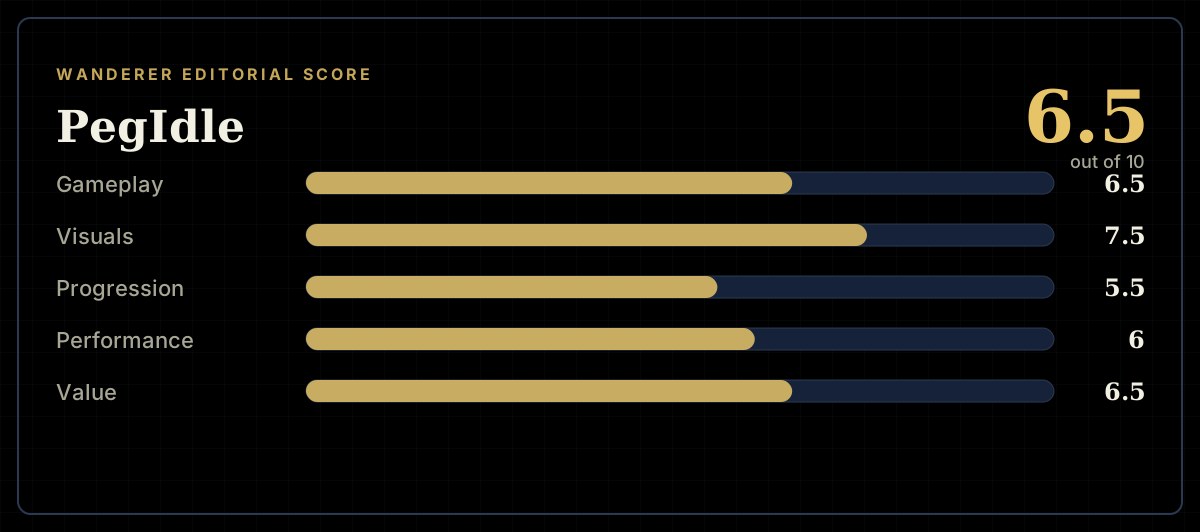
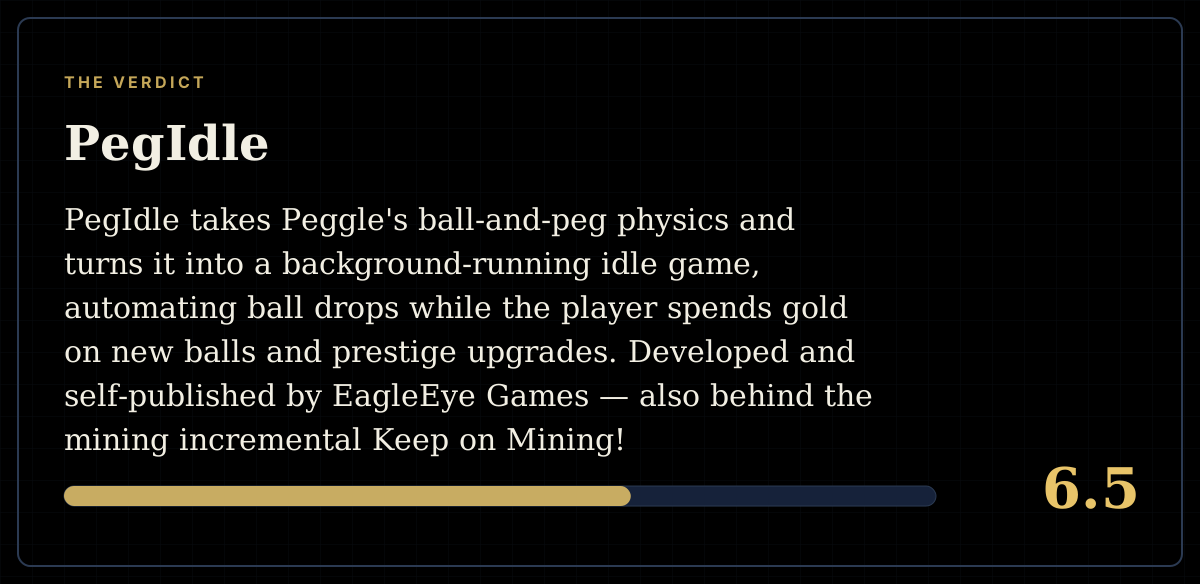
6.5 / 10
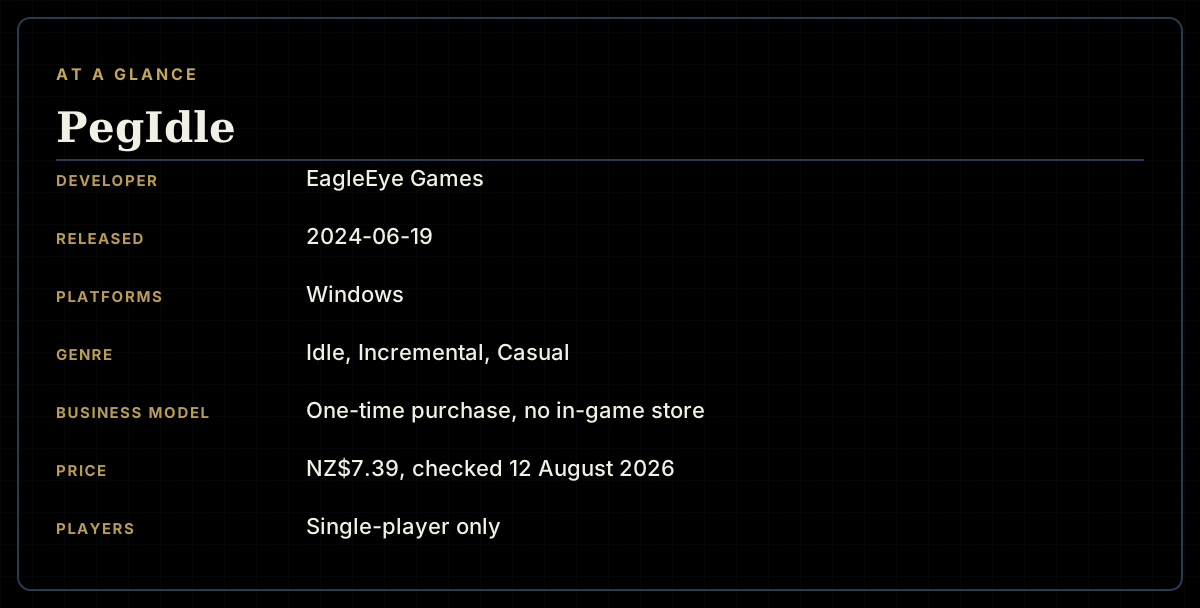
- Developer
- EagleEye Games
- Publisher
- EagleEye Games
- Released
- 19 June 2024
- Platforms
- Windows
- Genre
- Idle, Incremental, Casual
- Monetisation
- One-time purchase, no in-game store
- Players
- Single-player only
The short version
PegIdle takes Peggle's ball-and-peg physics and turns it into a background-running idle game, automating ball drops while the player spends gold on new balls and prestige upgrades. Developed and self-published by EagleEye Games — also behind the mining incremental Keep on Mining! — it released on 19 June 2024 at a low NZ$7.39. Its 311 English-language Steam reviews sit at Mostly Positive, roughly 73%, and reading the full negative sample alongside the top positives finds a game whose opening hours draw genuine, specific praise for how satisfying the ball physics feel, paired with a mid-to-late game that a large share of its own critics say goes flat, plus a save system serious enough to have cost at least one heavily invested player everything to a crash.
Biggest strengths
- The core Peggle-inspired ball-and-peg physics draw wide, specific praise as visually satisfying and genuinely fun to watch, described by multiple reviewers in explicitly dopamine-driven terms
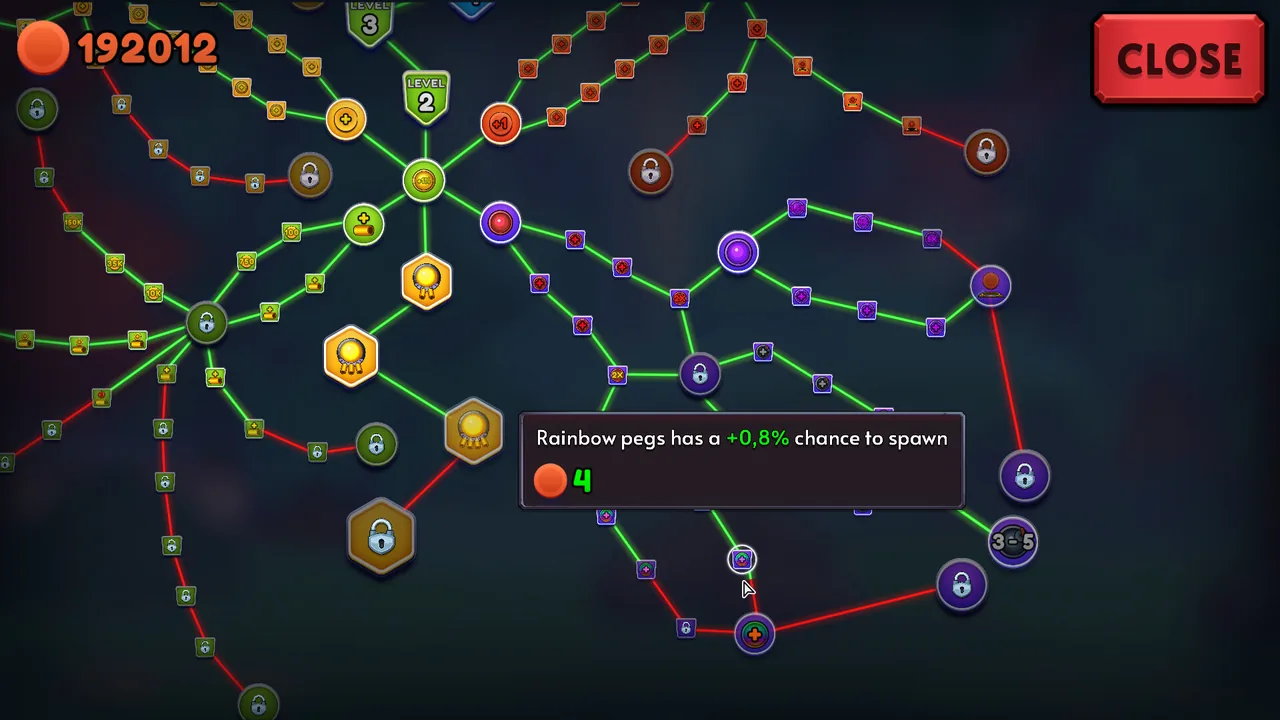
- A clean, accessible prestige structure means new players get a readable sense of progress within the first hour or two, without needing outside guides
- The developer shipped bug-fix and quality-of-life patches roughly weekly through its first two months on Steam, addressing feedback quickly rather than going quiet after launch
Biggest weaknesses
- A cluster of detailed reviews, several from players with 50-plus hours logged, describe the mid-to-late game as flat and repetitive, with the core loop settling into watching numbers rise rather than making meaningful new decisions
- The single most-upvoted negative review, from a player with over 170 hours logged, reports that a crash can erase all progress, and that the developer's own guidance for recovering it amounts to manually restoring a save through workaround steps
- Several reviewers report offline progress badly out of sync with active play, needing days left running to match what a short active session would earn
Who it's for: Fans of low-effort, visually pleasing background idlers who mainly want an enjoyable first few hours and don't mind a shallow long-term ceiling; a poor fit for anyone chasing deep late-game systems or expecting bulletproof save reliability.
Our recommendation: A cheap, charming idle game that's genuinely worth its price for the opening stretch, best treated as a short, pleasant distraction rather than a long-term incremental with real depth.
6.5 / 10
Introduction
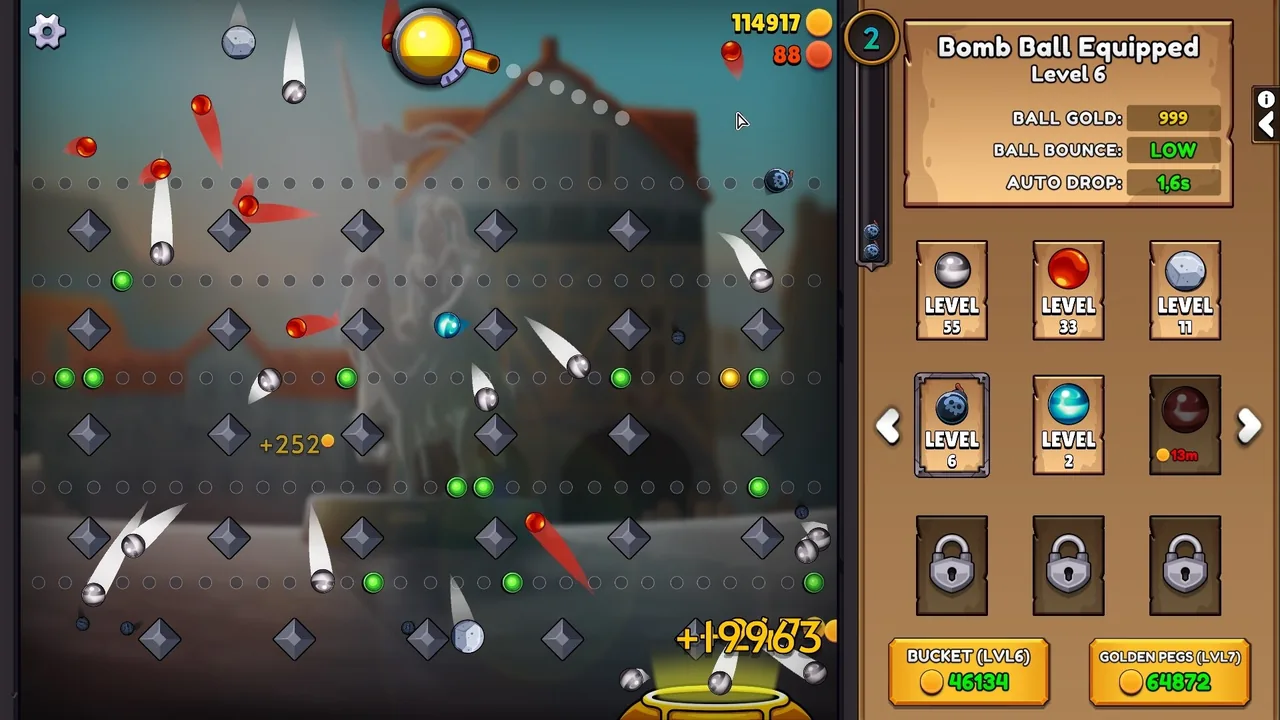
PegIdle borrows its physics from Peggle and its patience from the idle genre: balls drop onto a pegboard, bounce around clearing gold pegs and landing in a moving bucket, and once the player buys auto-drop, the whole thing runs itself while gold accumulates toward new balls, upgrades and prestige resets. EagleEye Games, the small studio also behind the mining incremental Keep on Mining!, released it on 19 June 2024 for a modest NZ$7.39. Reading every one of its 85 English-language negative reviews alongside the 100 most-upvoted positives turns up a story with a clear shape: an opening stretch reviewers describe in genuinely enthusiastic, sensory terms, and a back half a meaningful share of the same audience says runs out of ideas.
Balls, pegs and a genuinely good hook
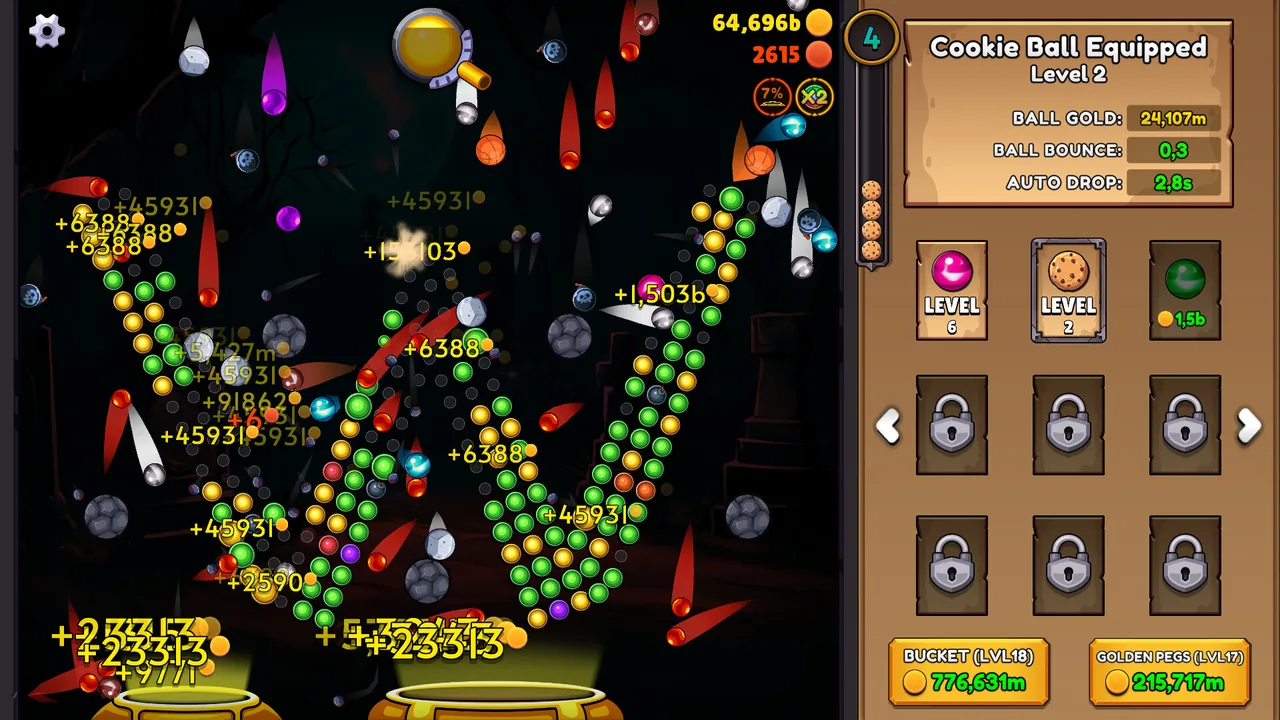
The physics-driven core loop is where PegIdle earns its warmest reviews. Reviewers describe the sensation of balls raining down and pegs lighting up in openly dopamine-chasing language — one comparing it to "a brilliant way for ADHD brains to pass the time," another simply calling the spectacle of millions of balls bouncing around "quite amusing." The game's own community tags back this framing: Idler and Incremental sit at the top of the vote count, but Cozy, Relaxing, Physics and Arcade all cluster close behind, describing a game its own audience experiences as pleasant background noise more than a systems-heavy incremental. For players who grew up on Peggle, several reviews frame the purchase in exactly those terms — a beloved physics toy repurposed as something you can leave running rather than actively play.
A curve that flattens out
The trouble reviewers keep coming back to is what happens once that initial appeal wears off. Several detailed negative reviews, written by players who logged 50 or more hours before deciding against a recommendation, describe the mid-game onward as a slow flattening: new ball unlocks and prestige upgrades keep arriving, but none of them meaningfully change what the player is doing, which is watching a number get bigger. One reviewer who completed the game at 100% put it plainly — the early game is genuinely good, but "the second you start getting into mid-late/late game it's just waiting for weeks" for the next meaningful unlock. Another, framing the same complaint from the opposite direction, said the idle portion "isn't rewarding enough to justify" grinding out every prestige upgrade, since the numbers never reach a point that feels like a real payoff for the time invested.
Steam's global achievement data offers a useful, if double-edged, corroboration here. Reaching the game's full ball roster and its deepest number-tier achievements sits at roughly 33–34% of tracked players — a moderate rate rather than a steep falloff, meaning a real share of buyers do get that far. But for a background idler, high completion on late-game numeric milestones isn't necessarily a sign of deep engagement — it's exactly what you'd expect if the game simply keeps running while the numbers climb regardless of whether the player is making interesting choices, which is precisely the criticism the negative sample is making.
A save system serious enough to matter
Beyond the pacing argument, the single most-upvoted negative review in the entire sample raises a more concrete problem: a crash can wipe out all saved progress. Its author, over 170 hours in, called the game "one of the best I've ever played" in the same breath as warning that a single crash cost everything, and noted that the developer's own published guidance for recovering lost progress amounted to manually working around the loss rather than preventing it. EagleEye Games did respond during Early Access-adjacent development — a "Save Backup File System" patch shipped in late July 2024, roughly five weeks after release, following a run of near-weekly bug-fix updates through that first summer. The most-upvoted complaint about the issue is dated January 2025, six months after that patch, which suggests the backup system hasn't fully closed the door on the problem for every player, even if it's an improvement on what shipped at launch. Several reviewers separately describe offline progress running badly out of sync with active play, needing days left running unattended to match what a short active session earns — a milder version of the same "the numbers don't move the way an idle game promises" complaint.
Final Verdict
PegIdle is a genuinely charming idea, well executed for the length of time most players will spend enjoying it at its best: the ball-and-peg physics are satisfying, the price is low, and the developer clearly kept working the bugs out through a steady patch cadence in its first months. Where it comes up short is exactly where incremental games live or die — the loop stops evolving once the initial spectacle wears off, prestige scaling draws specific criticism for outrunning what it rewards, and its most-invested critics are the ones most disappointed by how little changes across dozens of hours. Add a save-loss bug serious enough to headline the negative reviews, and the honest recommendation is to enjoy PegIdle for what its opening hours do well rather than expect it to hold up as a long-term incremental.
Players who enjoy EagleEye Games' particular flavour of idle design may also want to look at their mining-themed incremental Keep on Mining!, reviewed separately on Wanderer.
Pros and cons
Pros
- The core Peggle-inspired ball-and-peg physics draw wide, specific praise as visually satisfying and genuinely fun to watch, described by multiple reviewers in explicitly dopamine-driven terms
- A clean, accessible prestige structure means new players get a readable sense of progress within the first hour or two, without needing outside guides
- The developer shipped bug-fix and quality-of-life patches roughly weekly through its first two months on Steam, addressing feedback quickly rather than going quiet after launch
- Achievement completion for reaching the game's ball roster and deep late-game number tiers sits in the low-to-mid 30% range, moderate rather than a steep cliff, showing a meaningful share of buyers stick with it well past the opening hours
Cons
- A cluster of detailed reviews, several from players with 50-plus hours logged, describe the mid-to-late game as flat and repetitive, with the core loop settling into watching numbers rise rather than making meaningful new decisions
- The single most-upvoted negative review, from a player with over 170 hours logged, reports that a crash can erase all progress, and that the developer's own guidance for recovering it amounts to manually restoring a save through workaround steps
- Several reviewers report offline progress badly out of sync with active play, needing days left running to match what a short active session would earn
- The prestige-point scaling is criticised by name in multiple reviews as poorly tuned, with the cost of upgrades outrunning the rate at which points accumulate as a run goes on
Screenshots
-
PegIdleImage: EagleEye Games via Steam -
PegIdleImage: EagleEye Games via Steam -
PegIdleImage: EagleEye Games via Steam -
How the review scores each part of the gameWanderer Editorial -
The essentials at a glanceWanderer Editorial -
The short versionWanderer Editorial