Game review
MapleStory Worlds
6.5 / 10
- Developer
- Toben Studio (Nexon)
- Publisher
- Nexon
- Released
- 23 April 2025
- Platforms
- Windows, iOS, Android
- Genre
- User-Generated Content Platform
- Monetisation
- Free to enter and play. Creators earn revenue through World Coin, a premium currency players buy with real money to spend on avatar items and creations inside player-made Worlds. Nexon's own published figures put the creator revenue share at 35% of World Coin sales, with the remainder covering platform, payment-processing and operating costs; creators need to reach a $100 minimum before they can cash out earnings at all. Separate funding programs — a Global Creator Challenge and a "Creator Circle" offering up to $3,500 a month — supplement that baseline revenue share for selected creators.
- Players
- Built entirely around player-created multiplayer Worlds hosted on the platform
The short version
MapleStory Worlds is Nexon's bet that a Roblox Studio-style creation platform, built on top of 30 million assets from a 20-plus-year, 250-million-lifetime-player MMORPG, can turn one of its biggest IPs into an open-ended ecosystem rather than a single game. The creator tools are genuinely accessible, and real money is flowing into creator-funding programs. What still needs work a year in: a 35% creator revenue share and $100 cashout floor that sit below several platform peers, and a flagship recreation World, Mapleland, that's still locked to South Korea only.
Biggest strengths
- Drag-and-drop tools paired with optional Lua scripting give both casual creators and experienced developers a real path to build something, using 30 million existing MapleStory-themed assets rather than starting from nothing
- Nexon is backing the platform with genuine funding, not just promotional support — a Global Creator Challenge with prizes up to $30,000 per team and a Creator Circle program offering up to $3,500 a month to selected creators
- Repositioning a 250-million-lifetime-player MMORPG IP as an open creator platform is a genuinely distinctive strategic move for a franchise this size, rather than another straightforward sequel or spin-off
Biggest weaknesses
- Nexon's own published creator revenue share, 35% of World Coin sales, sits below several comparable UGC platforms, and a $100 minimum cashout threshold is a real barrier for smaller creators before they see any money at all
- Mapleland, one of the platform's most talked-about recreation Worlds, is currently restricted to South Korean users only — a region-lock inside a platform that's otherwise marketed as global
- As with any UGC platform, quality and completeness vary entirely by which player-made World a visitor lands in, so there's no single consistent "MapleStory Worlds experience" to review as one game
Who it's for: MapleStory fans curious what a UGC spin on the franchise looks like, and aspiring creators interested in a funded on-ramp into game development using a recognisable IP's assets. Less suited to players wanting a single, complete game experience — quality and content vary entirely by which player-made World you're in.
Our recommendation: Worth exploring for the novelty of a legacy MMORPG brand reinventing itself as a creator platform, and genuinely promising for anyone considering building on it given the real funding programs on offer. Go in aware the economics for an individual creator are currently less generous than some competing platforms, and that not every flagship experience is available worldwide yet.
6.5 / 10
MapleStory has been running since 2003 and claims more than 250 million lifetime players across its various versions — the kind of install base most MMORPGs never approach. Instead of building another sequel or spin-off on top of that, Nexon spent 2024 and 2025 turning the IP into something closer to a platform: MapleStory Worlds, a Roblox Studio-style creation tool that hands 30 million MapleStory-themed assets to anyone who wants to build a World with them, then hosts and monetises whatever gets made. It soft-launched in the Americas and parts of Europe in October 2024, went fully global on PC and mobile in April 2025, and marked its first anniversary a year later with a Global Creator Challenge offering up to $65,000 in combined prizes. That's a genuinely distinctive bet for a franchise this size to make, and a year in, the platform is still working out exactly how well it pays off for the creators actually building on it.
Tools built for both ends of the skill range
The core creation toolkit pairs intuitive drag-and-drop building with optional Lua scripting for anyone who wants deeper control, which is the right split for a platform trying to attract both casual hobbyists and people treating it as a real development on-ramp. Working from a 30-million- asset library drawn from two decades of MapleStory content means a new creator isn't starting from a blank canvas the way they would on a more generic UGC platform — there's an immediately recognisable visual identity available from the first click, which is a real advantage a brand-new platform without that history simply couldn't offer.
The economy creators actually see
This is the part worth scrutinising closely, since it's exactly the kind of question Wanderer's readers care about most. Nexon's own published figures put the creator revenue share at 35% of World Coin sales inside a creator's World, with the rest going to platform hosting, payment processing and operating costs. That's a real, specific number, and it sits below several comparable creator-economy platforms in the wider UGC space. On top of that baseline, creators need to accumulate $100 in earnings before they can cash anything out at all — a real friction point for a smaller creator whose World hasn't found a large audience yet. Nexon is clearly aware this baseline alone isn't the whole pitch: the Global Creator Challenge and a separate "Creator Circle" program offering up to $3,500 a month to selected creators exist specifically to supplement it, which suggests the company itself sees the standard revenue split as needing support rather than being sufficient on its own.
A flagship World that isn't actually available everywhere
One of the platform's most talked-about creations is Mapleland, a recreation of classic-era MapleStory built inside the new tools — and at time of writing, it's restricted to South Korean users only. For a platform Nexon markets as a global creator ecosystem, having one of its own highest-profile Worlds locked to a single region is a real inconsistency worth flagging plainly, and it's the kind of detail that undercuts the "worldwide platform" framing for players outside Korea specifically hoping to try it.
A platform still finding its footing
None of this reads as a platform in trouble — a full year of continued investment, including a dedicated anniversary creator challenge with a substantial prize pool, points toward a sustained commitment rather than a quickly abandoned experiment. But it is still young: reports from creators building on the platform describe the kind of technical rough edges and discoverability challenges that come with any UGC ecosystem in its first year, before the tooling, moderation and audience-matching systems have had time to mature the way a platform like Roblox has over more than a decade.
Verdict
Six and a half out of ten. MapleStory Worlds is a genuinely notable strategic move — turning a 250-million-lifetime-player MMORPG brand into an open creator platform rather than another straightforward sequel — and Nexon is backing it with real money through creator funding programs rather than treating it as a marketing exercise. What keeps the score from climbing higher a year in: a 35% creator revenue share and $100 cashout floor that ask more patience from smaller creators than some competing platforms do, and a flagship recreation World that's still, somewhat awkwardly, locked to a single region on what's supposed to be a worldwide platform. Worth watching, and worth trying if you're curious what building on it looks like — just go in with realistic expectations about what an individual creator actually takes home right now.
Creator program figures and platform history checked 3 August 2026.
Pros and cons
Pros
- Drag-and-drop tools paired with optional Lua scripting give both casual creators and experienced developers a real path to build something, using 30 million existing MapleStory-themed assets rather than starting from nothing
- Nexon is backing the platform with genuine funding, not just promotional support — a Global Creator Challenge with prizes up to $30,000 per team and a Creator Circle program offering up to $3,500 a month to selected creators
- Repositioning a 250-million-lifetime-player MMORPG IP as an open creator platform is a genuinely distinctive strategic move for a franchise this size, rather than another straightforward sequel or spin-off
- A full year of continued investment — including a dedicated one-year anniversary creator challenge — suggests this is a sustained platform bet rather than a quickly abandoned experiment
Cons
- Nexon's own published creator revenue share, 35% of World Coin sales, sits below several comparable UGC platforms, and a $100 minimum cashout threshold is a real barrier for smaller creators before they see any money at all
- Mapleland, one of the platform's most talked-about recreation Worlds, is currently restricted to South Korean users only — a region-lock inside a platform that's otherwise marketed as global
- As with any UGC platform, quality and completeness vary entirely by which player-made World a visitor lands in, so there's no single consistent "MapleStory Worlds experience" to review as one game
- The platform is barely a year old at full global launch, and creator-side reports describe an ecosystem still working through technical and discoverability growing pains typical of a young UGC platform
Screenshots
-
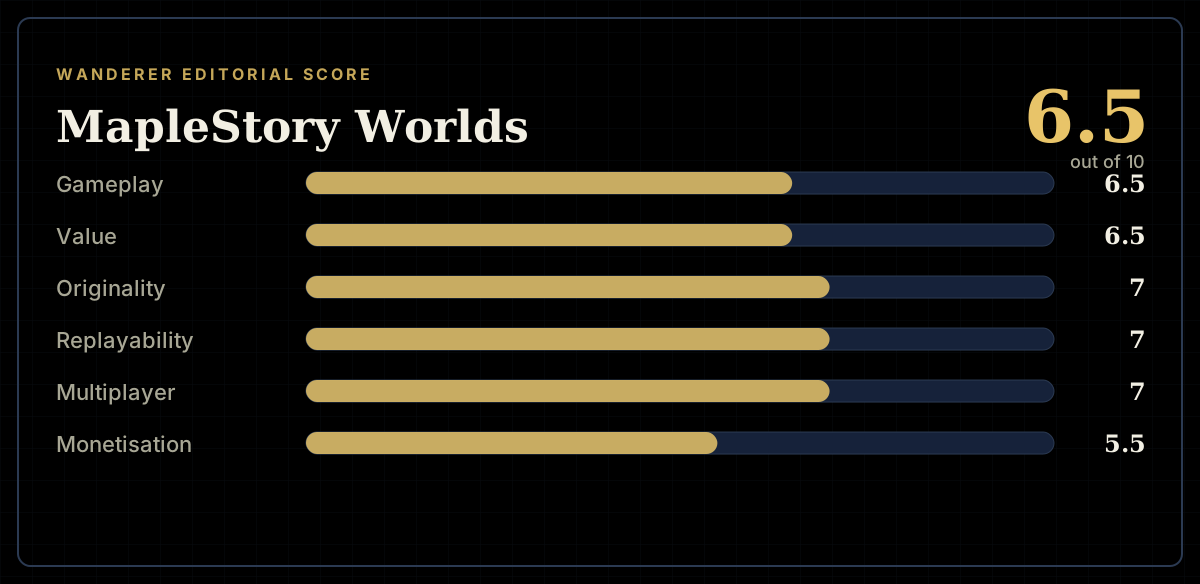
How the review scores each part of the platformWanderer Editorial -
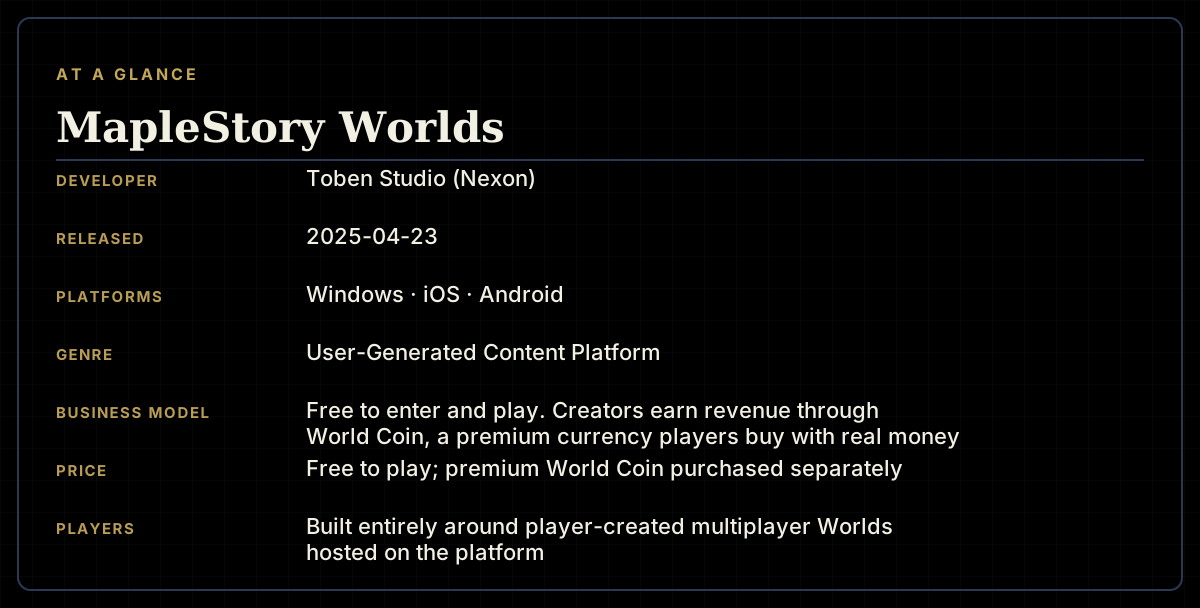
The platform at a glanceWanderer Editorial -
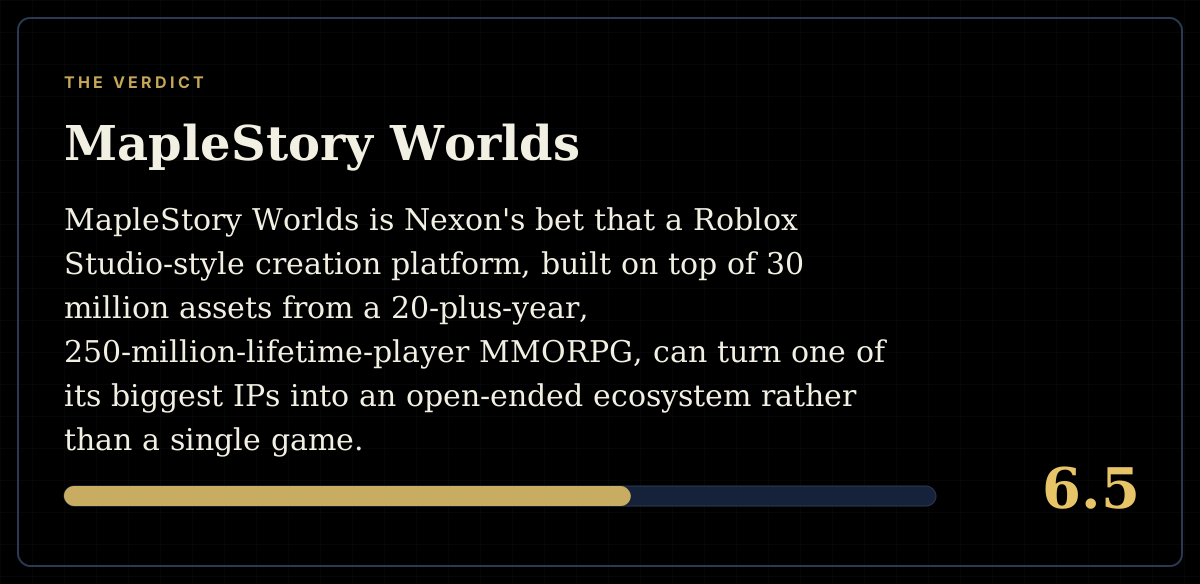
The short versionWanderer Editorial