
Game review
Low-Budget Repairs Review
4.5 / 10
- Developer
- Gray2RGB
- Publisher
- Simplicity Games, PlayWay S.A.
- Released
- 13 August 2026
- Platforms
- ["Windows"]
- Genre
- Handyman Renovation Sim
Two Years of Wishlists, One Very Different Game
Low-Budget Repairs spent roughly two years building an audience on the strength of a single premise: you play a drunken, corner-cutting handyman in 1990s Poland, hired to fix up crumbling apartments as cheaply and lazily as possible while hiding the shoddy results from the client. That pitch, and the chaotic, physics-driven trailers that sold it, pulled in over a million wishlists before launch. What actually shipped on August 13, 2026, from Polish studio Gray2RGB, is a much more linear, much more heavily-tutorialized game than almost anyone who wishlisted it was expecting, and the 625-review English pool has responded with an almost even split, landing at "Mixed" with 55% positive.
The Trailer Sold a Sandbox; the Game Delivered a Checklist
By far the single most repeated complaint in this review pool, appearing in some form in a large majority of the negative reviews, is the gap between the marketing and the finished product. Reviewers describe the original trailers and promotional material as showing a genuinely freeform mess-around simulator, where jobs could be botched creatively, corners cut in whatever order the player liked, and objects hung at drunken angles just for the joke of it. What shipped instead is a tightly scripted, story-driven campaign narrated by a nagging ghost mentor who walks the player through each job step by step, with the "correct" way to do things enforced far more strictly than the demo or playtest builds suggested. Multiple reviewers explicitly call this false advertising, several note the developers quietly re-cut the launch trailer to look more like the actual game after the discrepancy started drawing attention, and more than one reviewer who otherwise enjoyed parts of the game says they refunded purely because the promised sandbox chaos never materialized. This isn't a minor stylistic quibble raised by one or two disappointed fans; it's the dominant, load-bearing complaint of the entire negative side of the review pool.
Bugs, Stiff Physics, and a Tutorial That Won't Let Go
Layered on top of the advertising complaint is a second, equally corroborated cluster of technical problems. Reviewers repeatedly single out tile-cutting as close to broken, describe furniture and shelving that vanishes or clips through walls when handled, and report the same handful of missions softlocking after a save-and-reload, in a few cases costing hours of unrecoverable progress including, for some players, the entire ending sequence. Several reviewers also describe strange performance behavior, with framerates and GPU power draw spiking hard specifically while indoors, and a couple mention memory usage climbing into the tens of gigabytes over a session. A separate but related complaint concerns pacing: reviewers describe basic house-repair options and tools being locked away behind story missions for several hours, turning what should be immediate sandbox fiddling into an extended, hand-held tutorial that several reviewers say never really ends even well into the campaign.
A Disclosed Use of AI Audio That a Striking Number of Reviewers Call Out
A third theme, distinct from the above two and corroborated well past the threshold worth reporting, concerns the game's use of generative AI for some of its music and, in the view of several reviewers, its English voice acting. The store page discloses limited AI-generated audio content, but a large number of reviewers say they either missed that disclosure before buying or feel it undersells how much of the soundtrack and dialogue was affected, describing "fuzzy" AI-vocal pop songs on the in-game radio and stilted line deliveries from the player character and side cast. Several reviewers specifically call out that a separate paid soundtrack is being sold containing what they say are exclusively AI-generated tracks, which a number of them single out as the most galling part of the whole situation. The complaint isn't universal, and it's frequently paired with reviewers otherwise praising the game's Eastern European humor and 90s-Poland setting, but it comes up often enough, and specifically enough, across independent reviewers to be a genuine and recurring factor in the pool's overall lukewarm reception, not just an isolated gripe.
What's Actually Good Here, According to the People Who Liked It
The positive half of the review pool, smaller but far from negligible, tends to agree on what works: the core loop of plastering, tiling, and painting is described as tactile and satisfying once a player gets past the early tutorial stretch, the 90s-Poland setting is repeatedly praised for its specificity and its cultural in-jokes, and the writing, when it isn't being drowned out by complaints about pacing, gets genuine laughs from several reviewers. A number of positive reviews also credit the developers directly, noting an active Discord presence and a steady stream of post-launch patches addressing the worst bugs within days of release. Even several negative reviewers stop short of dismissing the underlying concept, framing their disappointment as coming from a game with real potential that was either rushed out the door too early or was never quite the game its own marketing promised.
Verdict
Low-Budget Repairs is a case where the review pool's mixed score reflects two real problems rather than one exaggerated one: a marketing campaign that ran for two years selling a looser, chaos-driven game than what shipped, and a launch build carrying enough bugs, performance quirks, and disclosed-but-underexplained AI-generated audio to give even players who don't care about the trailer discrepancy real reasons to hesitate. None of that erases what's there underneath, a genuinely well-observed slice of 90s Polish apartment-block life with a satisfying if over-tutorialized renovation loop, but at $19.99, buyers should go in expecting a linear story campaign about doing repairs properly, not the drunken sandbox demolition derby the trailers spent two years promising.
What makes this pool worth reading past the headline percentage is how consistently its complaints reinforce each other rather than competing for attention. The players frustrated by the tutorial pacing are largely the same players frustrated by the advertising gap, since both complaints point at the same underlying decision to replace an open-ended sandbox with a controlled, story-gated experience; the bug reports and the AI-audio complaints, meanwhile, read less like separate scandals and more like symptoms of a launch that needed more time in the oven. For a studio whose active post-launch patching suggests it's listening, that's a fixable set of problems rather than a fundamentally broken game, but it also means anyone buying today should judge the game currently on the shelf rather than the one still being promised in patch notes.
Screenshots
-
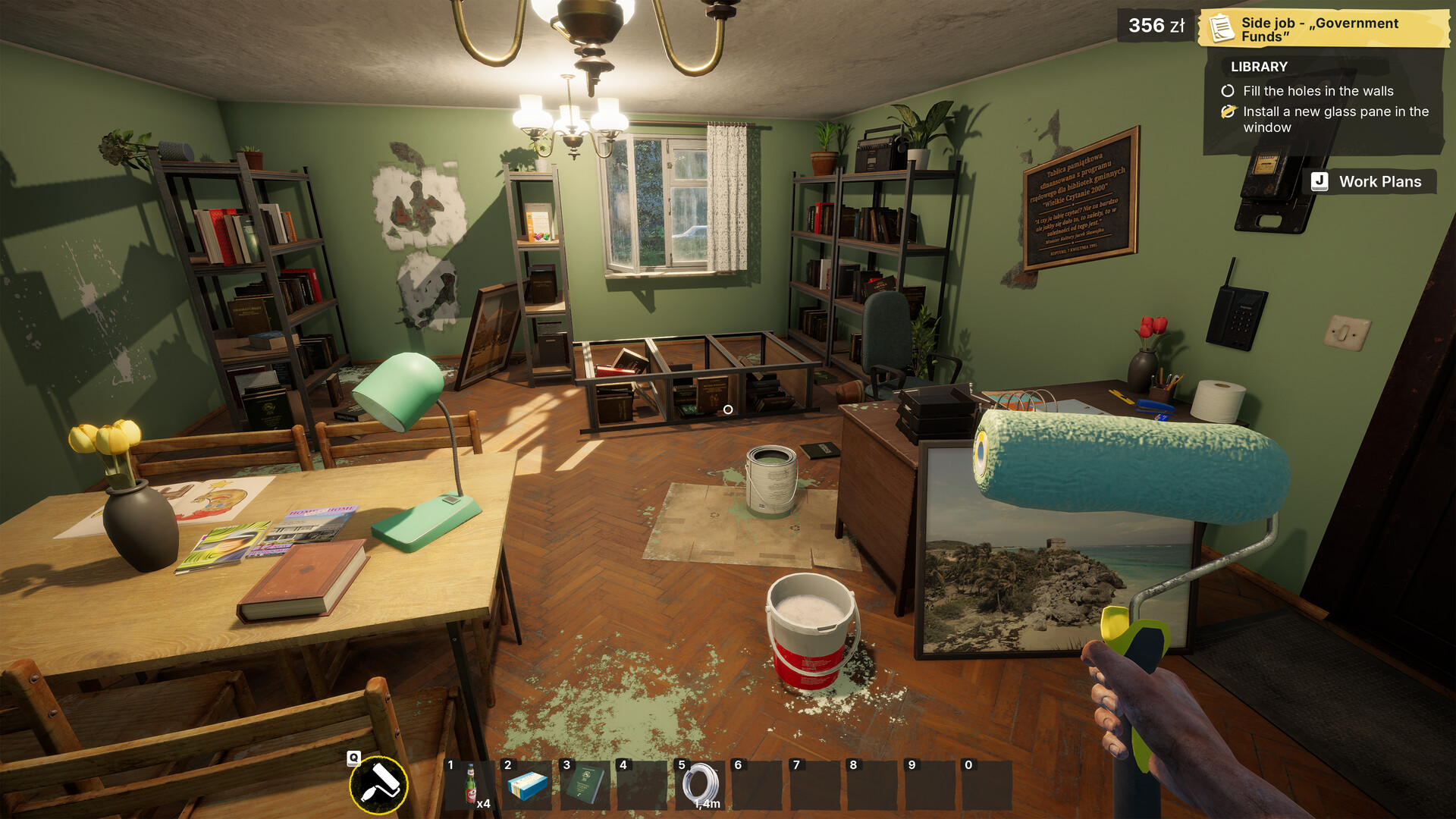
A typical job site: wall damage to patch, paint to roll on, and a running checklist of tasks the client is paying for.Image: Simplicity Games via Steam -
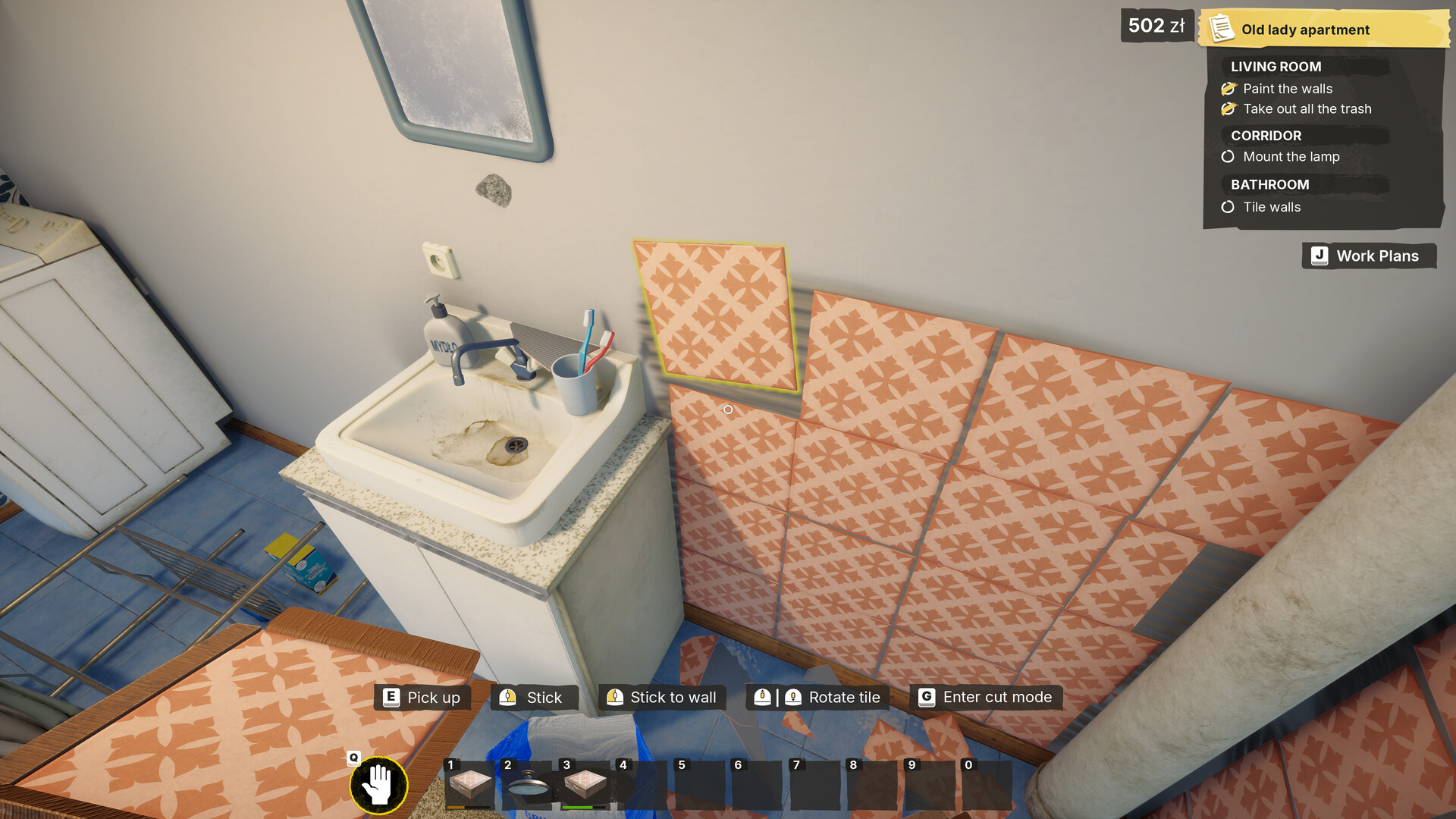
Tile-cutting and wall-tiling, the specific mechanic reviewers most often single out as buggy and frustrating.Image: Simplicity Games via Steam -
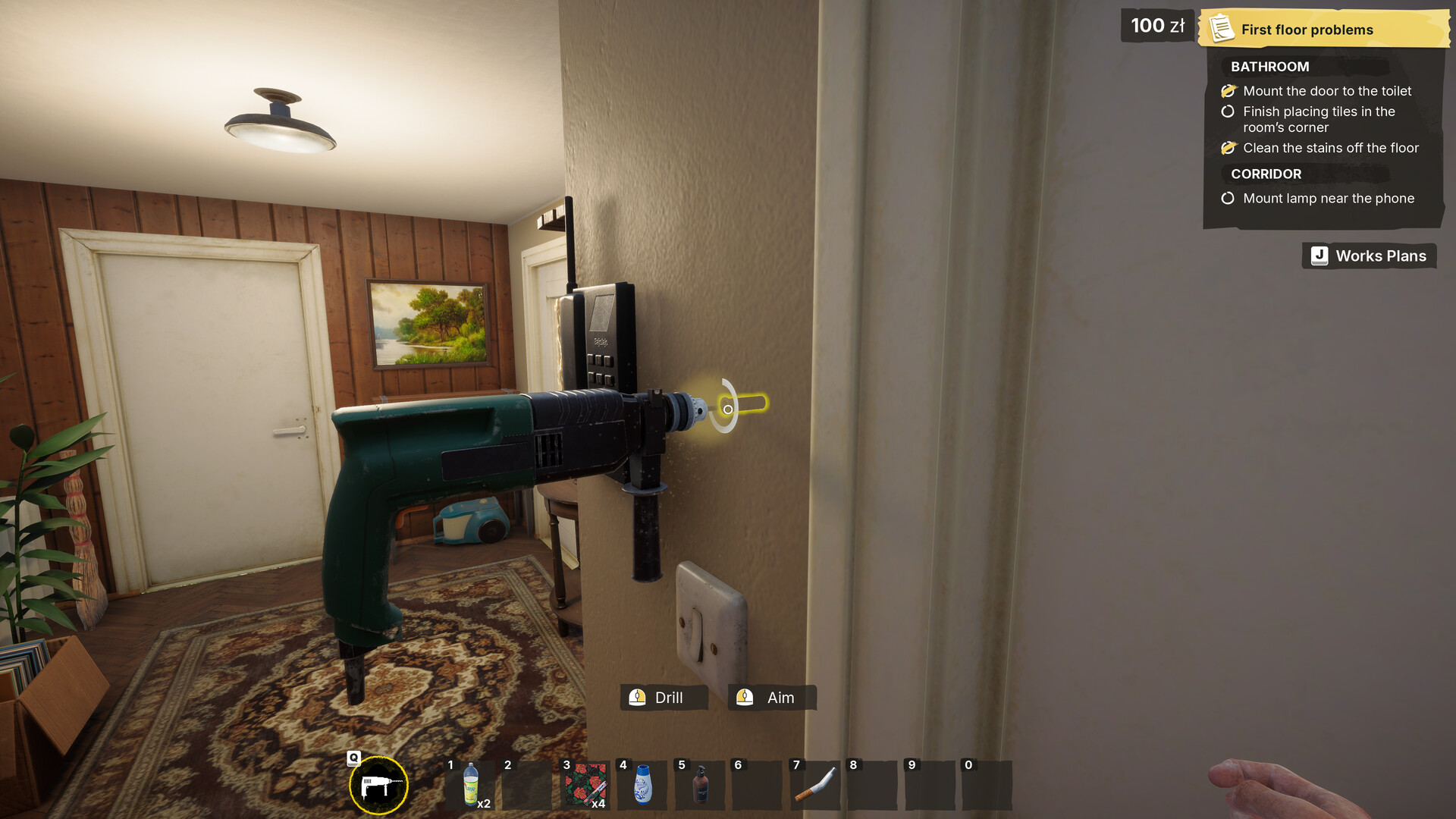
Working through a client's task list room by room, one of the more linear, story-gated stretches reviewers say feels more like a checklist than a sandbox.Image: Simplicity Games via Steam