
Game review
Idle Tower Defense
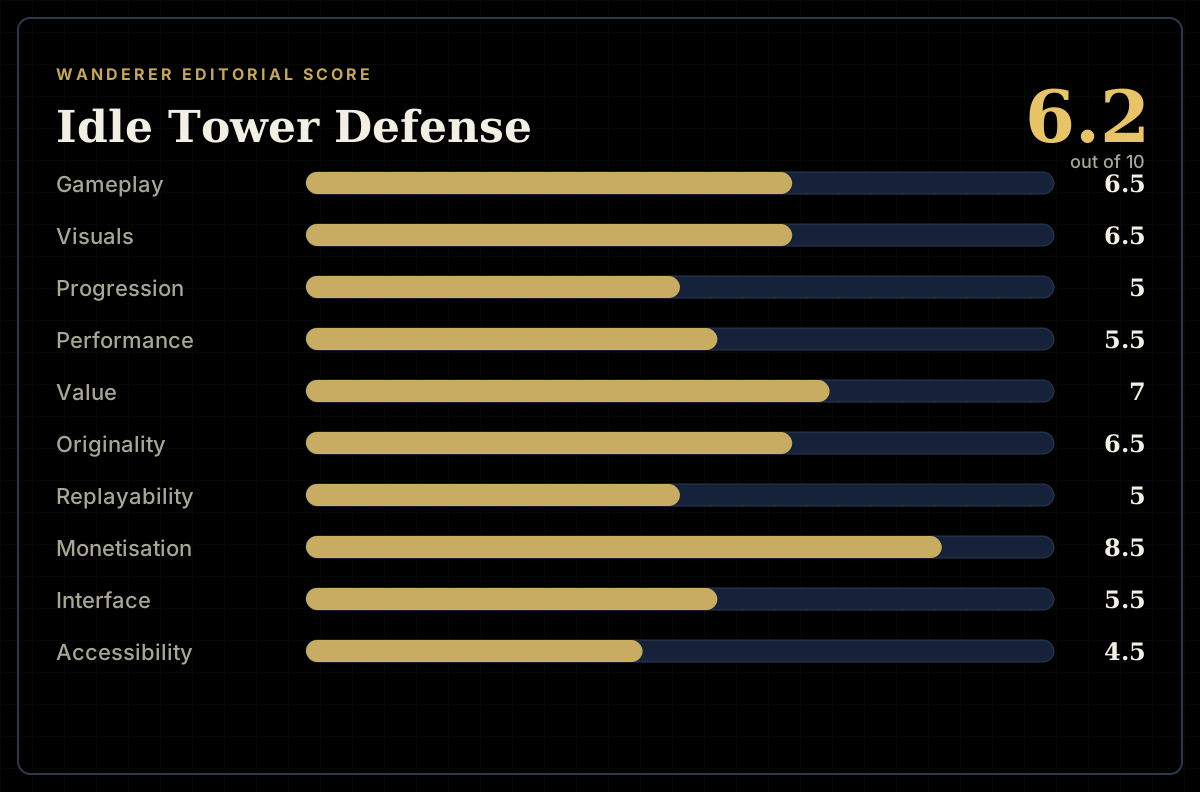
6.2 / 10
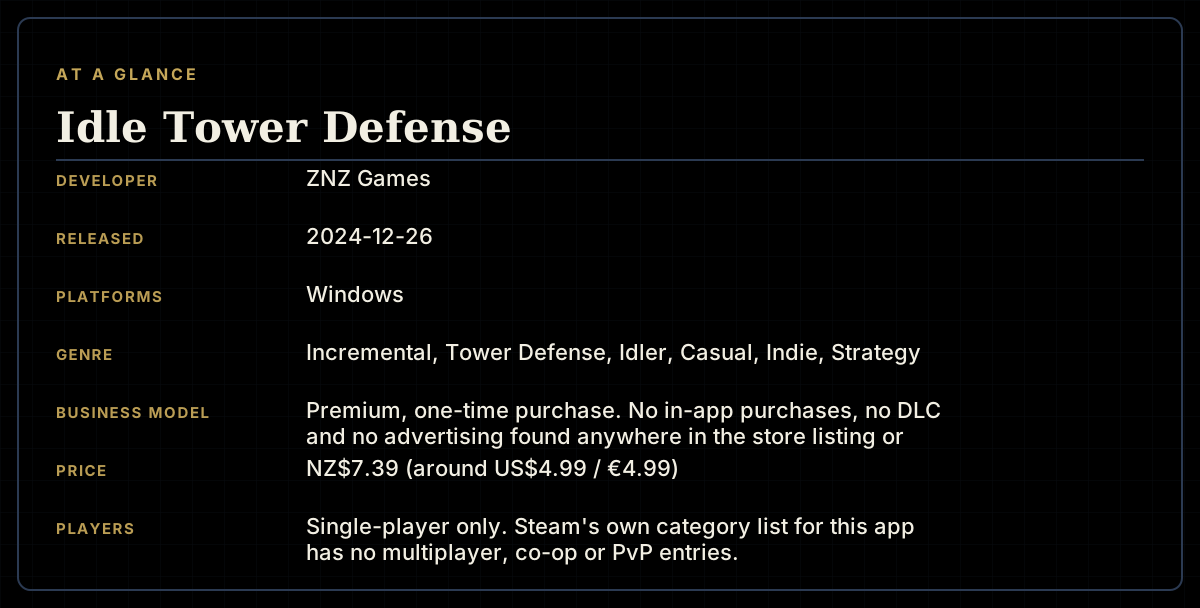
- Developer
- ZNZ Games
- Publisher
- ZNZ Games
- Released
- 26 December 2024
- Platforms
- Windows
- Genre
- Incremental, Tower Defense, Idler, Casual, Indie, Strategy
- Monetisation
- Premium, one-time purchase. No in-app purchases, no DLC and no advertising found anywhere in the store listing or the review corpus — several players specifically praise it for having no microtransactions.
- Players
- Single-player only. Steam's own category list for this app has no multiplayer, co-op or PvP entries.
The short version
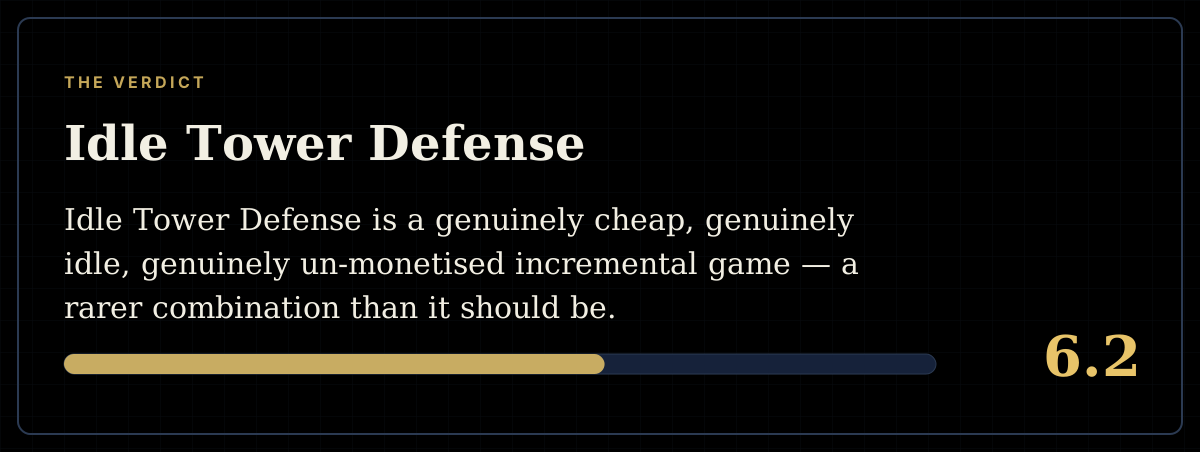
Idle Tower Defense is a genuinely cheap, genuinely idle, genuinely un-monetised incremental game — a rarer combination than it should be. It also has a well-documented, self-admitted-by- its-own-players ceiling: the two most-helpful negative reviews in its entire English corpus, independently, name the same wall around wave 100-200 and the same underwhelming prestige system as the reason they stopped recommending it.
Steam's global achievement data backs up a real decline rather than a cliff — 62.6% of owners clear wave 100, 38.5% clear wave 200, 13.3% clear wave 500 — so a meaningful share of buyers do get deep into the game before the complaints start to bite.
Biggest strengths
- Cleanly and verifiably monetised. Steam's own category list for the app shows no microtransaction entry, there is no DLC, and this review found no advertising anywhere in the store material; several reviewers volunteer, unprompted, that they appreciate the absence of "micro-transactions"
- The opening hours are well liked. Multiple independent reviewers single out genuine build variety across the tower's weapon and module slots, and offline/idle progress functions as advertised — nobody in the corpus disputes that the game actually plays itself while closed
- Steam's global achievement data shows real depth reached by a real share of the audience — 62.6% of owners have cleared wave 100 and 38.5% have cleared wave 200, which is a gradual decline rather than an early cliff, and corroborates that a large minority of buyers get well past the point where the negative reviews start
Biggest weaknesses
- The single most-repeated complaint in the corpus, made independently by the two highest-voted negative reviews (28 and 19 votes, the top two by a wide margin): progression grinds to a near-halt around wave 100-200, and the "Phoenix" ascension/prestige loop — which stacks a flat "+1% damage per death" — is called "cartoonishly bad," "borderline useless" and something you'd need to "let the game run idle for a week" to meaningfully benefit from
- Once players settle on a working build, several report the rest of the module roster becomes dead weight: "practically every weapon except the original weapon is trash," and specific upgrade trees (HP and Armor) are described as actively working against each other rather than combining
- Development has gone quiet. After a burst of near-daily patches around launch and another burst of eight hotfixes in three weeks after the August 2025 V1.1.0 update, the Steam news feed has carried nothing since 20 August 2025 — about a year, as of this review
Who it's for: Genre completionists and anyone who wants a five-dollar, no-strings incremental to leave running in the background for a few dozen hours — not players hoping for a long-tail live-service idler with constant new content, since the developer has not posted an update since 20 August 2025.
Our recommendation: Worth the asking price for the opening dozen-plus hours alone, and there is nothing predatory to watch out for. Go in expecting the build variety and the fun to taper off hard once you're past wave 100-200, rather than hoping a purchase now buys into an actively growing game.
6.2 / 10
A single tower, and a store page the community half-agrees with
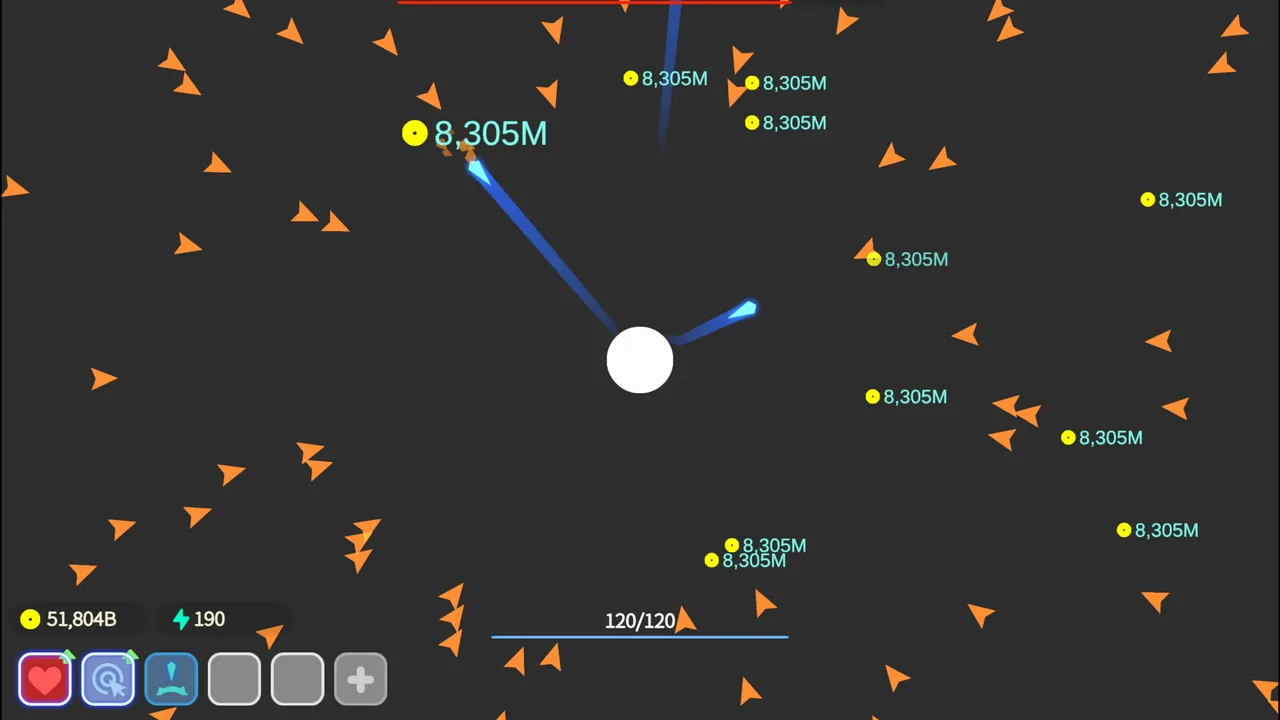
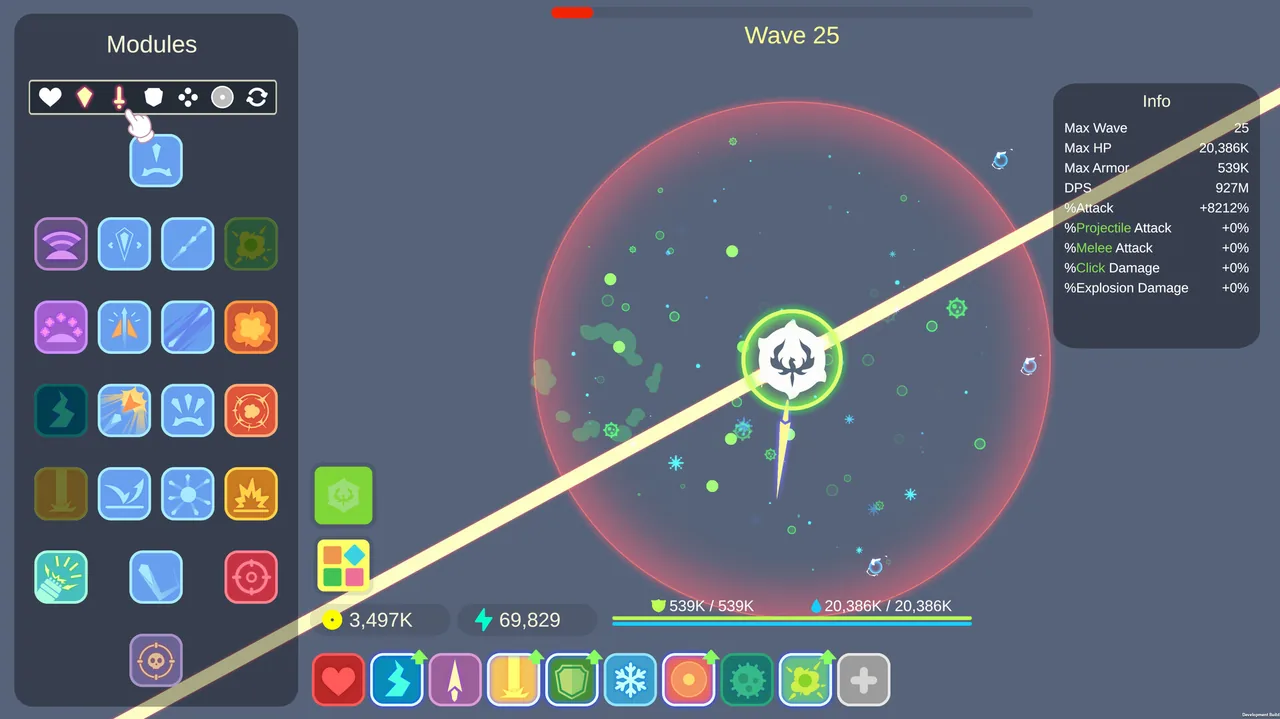
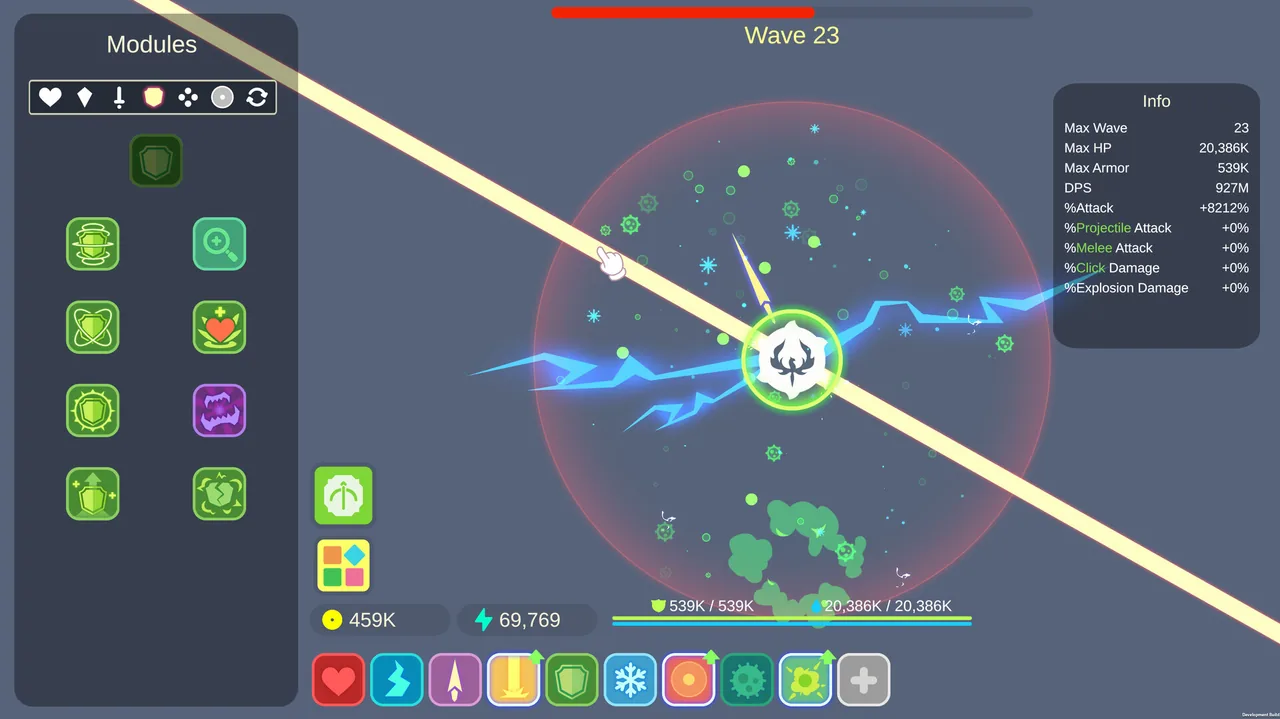
Idle Tower Defense strips the genre down to one structure: no lanes to plan, no placement puzzle, just a single central tower that you build out with weapon and module slots, then leave running while waves of enemies walk into it. Steam's own official classification calls it Casual, Indie and Strategy. Its players, voting with Steam's tag system rather than the storefront copy, put it somewhere more specific: "Incremental" is the single most-voted tag on the page (97 votes), ahead of "Tower Defense" (92) and "Idler" (91), with "Strategy" — the only overlap with the official genre list — all the way down in 11th place with 52 votes, behind even "Bullet Hell," "Minimalist" and "Colorful." The label the developer picked and the label the community actually reaches for turn out to be close enough that this isn't a case of false advertising, but it's worth knowing before you buy that the audience thinks of this first as an incremental with tower-defense dressing, not the reverse.
What the "Mixed" badge is actually measuring
Idle Tower Defense sits at 54.2% positive across 118 total reviews and 54.5% across its 77 English-language reviews — Mixed either way, and close enough between the two that no single non-English market is skewing the number. That total is small enough that this review read every English review the game has rather than a sample: all 35 negatives and all 42 positives.
The split does not trace to monetisation, ads or a hidden currency shop — there isn't one. It traces almost entirely to one thing, stated independently by the two most-helpful negative reviews in the whole English corpus. The top-voted negative (28 votes, 24.8 hours played) puts it plainly: "progression basically stops after wave 100, with all of the wave 200+ ascension options being cartoonishly bad, and little to no indication that there is any progression after that, despite the achievements implying that there should be content up to wave 500 at least." The second-most-voted negative (19 votes, 19.2 hours, self-reported as having "unlocked everything") reaches the same conclusion from further inside the game: "the ascend stuff that is available to you when you reach wave 200 is super underwhelming. It's borderline useless. The entire game is basically just waiting for numbers to go up (very very very very slowly)." Two reviewers, writing independently, naming the same wave range and the same system as the reason they stopped recommending it, is about as clean a diagnosis as a review corpus offers.
At least eight of the 35 English negatives name wave 100 or wave 200 specifically as the point where the game stops delivering — "progress just stops after wave 200 and you just need to wait until you get enough energy to buy a new upgrade slot," "lame after wave 200, not worth 5€," "game is pretty much done at lvl 200," and so on. The prestige system that's supposed to carry players past that point — nicknamed "Phoenix" in-game, giving a permanent, stacking +1% damage per death — draws its own specific criticism: one 32.5-hour reviewer calculates "you'd probably have to let the game run idle for a week to get to wave 200" relying on it alone, and a 205.5-hour review calls the same mechanic "boring as hell... sounds great on paper. But doesn't feel that enticing."
The achievement data tells a gentler story than the loudest complaints
It would be easy to read those quotes and assume most buyers bounce off early. Steam's global achievement percentages say otherwise. ACHIEVEMENT_REACH_WAVE_50 sits at 81.6% of all owners, ACHIEVEMENT_REACH_WAVE_100 at 62.6%, ACHIEVEMENT_REACH_WAVE_200 at 38.5%, and ACHIEVEMENT_REACH_WAVE_300 at 23.3%, tapering to 13.3% at wave 500. That's a gradual, genre- typical decline curve, not a cliff — nearly two in five owners get to the exact wave range the loudest negative reviews describe as the point the game "stops," which means the complaint isn't that people can't reach that point, it's that a real number of the people who do reach it don't like what's waiting for them. Both things are true at once, and the review score reflects both: a game with real reach and a real, well-documented drop in quality once you're inside it.
The part of the pitch that actually holds up: no strings attached
Whatever else is contested in the review corpus, the monetisation is not. Idle Tower Defense is a one-time purchase — NZ$7.39, with reviewers elsewhere quoting roughly US$4.99 or €4.99 — with no DLC, no in-app-purchase category on Steam's own listing, and no advertising found anywhere in the store material this review examined. Several reviewers volunteer this unprompted: one 13.4-hour review says plainly "it's actually a good game. it satisfies the craving for this genre, without micro-transactions," and the second-highest-voted positive review in the entire corpus (8 votes, behind only a joke review farming thumbs-ups) makes the value case directly: "For $4.99 this is a fun game. i think sometimes people forget to not expect the world of a fun little $5 game. For the price this game is excellent and virtually bug free." For a genre this library covers specifically because it's a minefield of pay-to-skip mechanics, a clean five-dollar flat sale with nothing to upsell is worth stating plainly as a genuine strength, not faint praise.
Development burned bright, then went quiet
The Steam news feed shows a developer who was extremely responsive at first: near-daily hotfixes through the game's first three weeks in December 2024 and January 2025. Then a long gap, an April 2025 "Dev Log," and on 1 August 2025 a genuinely substantial content update — V1.1.0, adding a 63-talent system, 50 new modules and 13 new ascension effects, alongside a full rebalance. Several negative reviews describe that update landing badly: "after the most recent update, 1.1.0 the game lost all fun... in a massive way. The balance is thrown into completely impossible mode," one 35.6-hour review reports, and a later, unvoted review adds "after 1.1.0 update game is dead for me dev reworked game so much removed so many core and QoL stuff." To the developer's credit, the response was fast: eight further patches (V1.1.1 through V1.1.8) shipped over the following three weeks, fixing crashes, an unresponsive-controls-after-Ascension bug, a framerate-drop-to-0 issue and localisation errors, and specifically removing the "Ascension 100 Times!" achievement that an earlier negative review had singled out as one of the few remaining, near-impossible unlocks.
What hasn't followed is anything since. The news feed has carried nothing since V1.1.8 on 20 August 2025 — about a year, as of this review, with current player counts down to single digits. For a buyer weighing "wait for more content" against "buy it for what it is today," the honest answer right now is the latter: there's no evidence of active development to wait for.
Accessibility: a genre that should be a strong case, and a store page that says nothing
Idle tower defenses are, almost by design, one of the more accessible sub-genres going — minimal reflexes, minimal reading, progress that continues while you step away. One 5.3-hour reviewer makes exactly that case for this specific game, unprompted: it "provides a decent time sink with a dopamine inducing game play loop that is very accessible to users regardless of age, skill or physical restrictions." Steam's own declared accessibility-feature data for the store page, however, has every single flag set to false — no resizable UI, no colourblind alternatives, no subtitles, no keyboard-only or mouse-only mode, no adjustable difficulty, nothing. That's not unusual for a small indie idle game, and the genre's inherent low interaction demands do a lot of the work regardless of what's formally declared — but a player who specifically needs one of those declared options (colour alternatives or a keyboard-only mode, say) has nothing on the store page to check before buying.
A smaller, harder-to-pin-down technical complaint
Separate from the balance discussion, three of the 35 English negative reviews — independently, with somewhat different specifics — describe the game causing serious trouble outside itself: one reports "massive memory use, over 25GB RAM stuck after quit the game," unable to open other programs until clearing the Windows page file; another, at 89.6 hours played, reports the game "interferes with Steam's ability to launch other titles"; a third describes needing "a forced restart of Steam or the entire PC" before other games would run again. Three independent, specific reports in a corpus this size is enough to flag rather than dismiss as one unlucky machine, but it is well under a tenth of the negative sample and the details don't converge cleanly enough for this review to state a single cause. If you plan to leave this running unattended for long stretches — which is, after all, the point of an idle game — it's worth keeping an eye on early on, rather than assuming it's inert in the background.
Final verdict
Idle Tower Defense earns its "Mixed" rating honestly rather than through anything predatory: it's a genuinely cheap, genuinely idle, genuinely ad-and-IAP-free single-tower incremental whose own players, at real volume and real specificity, agree it has a hard ceiling around wave 100-200 that the prestige system doesn't do enough to soften. The achievement data says a real chunk of the audience gets that far and further, so the game isn't failing to deliver its opening act — it's the second act that a genuine share of its own fans found wanting, and that the developer, quiet for a year now, hasn't yet revisited. At NZ$7.39 with nothing to upsell you on, it's an easy recommendation for the first dozen-plus hours and a harder one to make past that, which is close to exactly what its own review corpus already says.
Pros and cons
Pros
- Cleanly and verifiably monetised. Steam's own category list for the app shows no microtransaction entry, there is no DLC, and this review found no advertising anywhere in the store material; several reviewers volunteer, unprompted, that they appreciate the absence of "micro-transactions"
- The opening hours are well liked. Multiple independent reviewers single out genuine build variety across the tower's weapon and module slots, and offline/idle progress functions as advertised — nobody in the corpus disputes that the game actually plays itself while closed
- Steam's global achievement data shows real depth reached by a real share of the audience — 62.6% of owners have cleared wave 100 and 38.5% have cleared wave 200, which is a gradual decline rather than an early cliff, and corroborates that a large minority of buyers get well past the point where the negative reviews start
- The developer responded fast to its own biggest content update going wrong. The V1.1.0 update (August 2025) shipped a new 63-talent system, 50 new modules and 13 ascension effects, and player complaints about balance and stability were followed within three weeks by eight separate hotfix patches (V1.1.1 through V1.1.8)
Cons
- The single most-repeated complaint in the corpus, made independently by the two highest-voted negative reviews (28 and 19 votes, the top two by a wide margin): progression grinds to a near-halt around wave 100-200, and the "Phoenix" ascension/prestige loop — which stacks a flat "+1% damage per death" — is called "cartoonishly bad," "borderline useless" and something you'd need to "let the game run idle for a week" to meaningfully benefit from
- Once players settle on a working build, several report the rest of the module roster becomes dead weight: "practically every weapon except the original weapon is trash," and specific upgrade trees (HP and Armor) are described as actively working against each other rather than combining
- Development has gone quiet. After a burst of near-daily patches around launch and another burst of eight hotfixes in three weeks after the August 2025 V1.1.0 update, the Steam news feed has carried nothing since 20 August 2025 — about a year, as of this review
- Steam's own declared accessibility-feature list for this app is entirely empty: no resizable UI, no colourblind alternatives, no subtitles, no difficulty levels, no keyboard-only or mouse-only mode, nothing checked at all. That sits oddly against a genre, and this specific game, that a couple of reviewers praise for being playable "regardless of age, skill or physical restrictions" through sheer low interaction demands
- A smaller but recurring technical complaint, described independently and with specific detail in three separate negative reviews rather than a single outlier, is the game hanging on to excessive memory or otherwise blocking other Steam titles from launching until a full system restart. This review found the reports too infrequent (well under a tenth of the English negative corpus) and too varied in detail to state as a settled cause, but frequent and specific enough that it's worth a shopper's attention before leaving the game running unattended for long stretches
Screenshots
-
Idle Tower DefenseImage: ZNZ Games via Steam -
Idle Tower DefenseImage: ZNZ Games via Steam -
Idle Tower DefenseImage: ZNZ Games via Steam -
How the review scores each part of the gameWanderer Editorial -
The game at a glanceWanderer Editorial -
The short versionWanderer Editorial