
Game review
Hamster Hustle
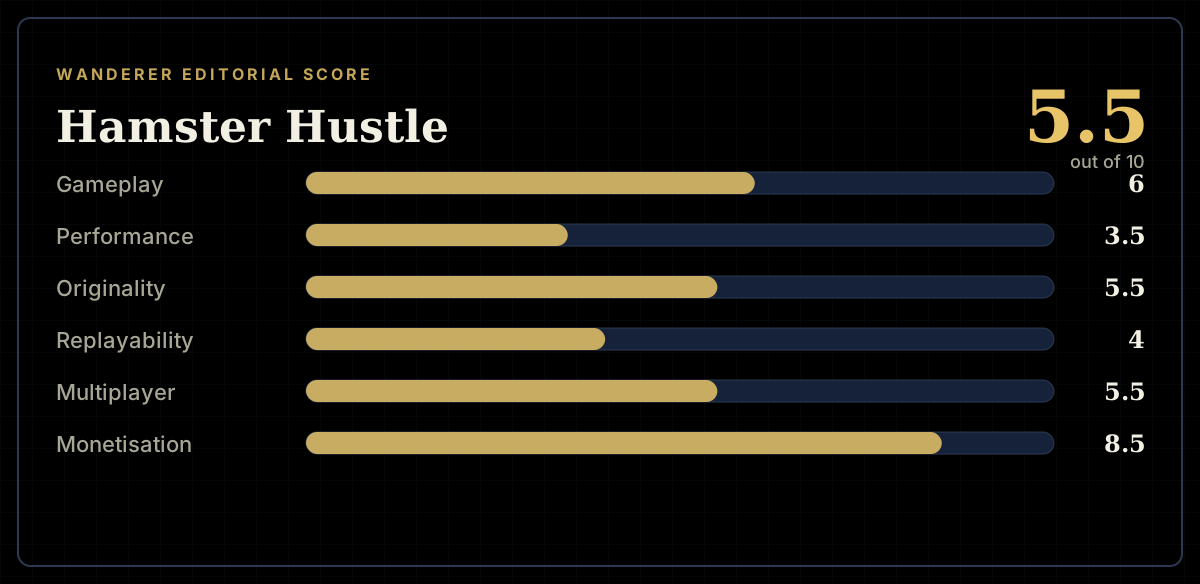
5.5 / 10
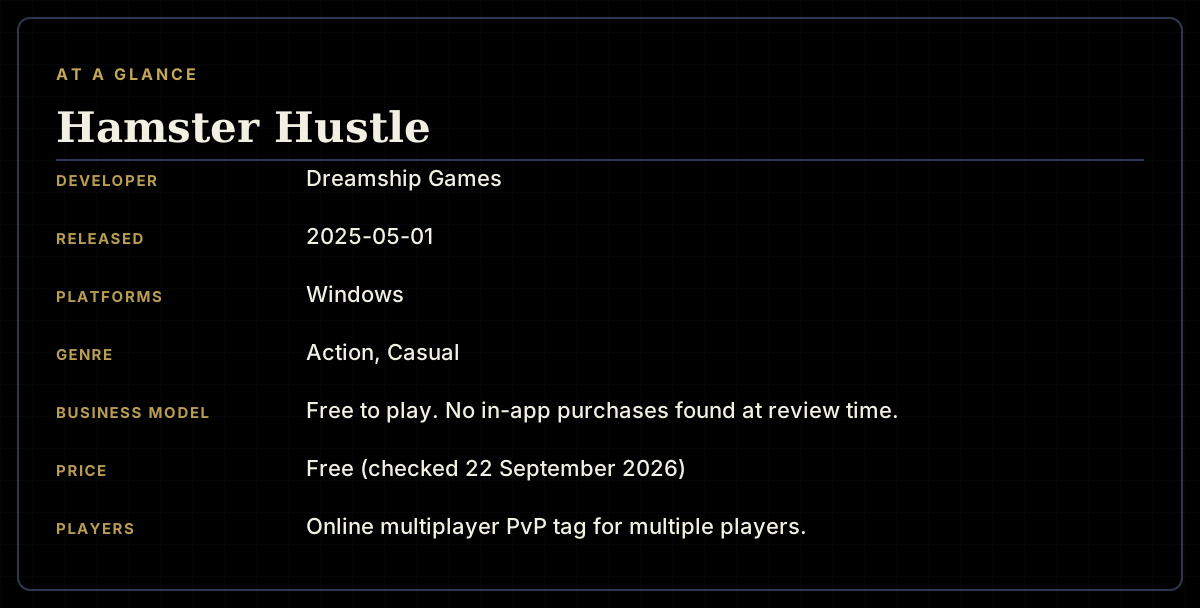
- Developer
- Dreamship Games
- Publisher
- Dreamship Games
- Released
- 1 May 2025
- Platforms
- Windows
- Genre
- Action, Casual
- Monetisation
- Free to play. No in-app purchases found at review time.
- Players
- Online multiplayer PvP tag for multiple players.
The short version
Hamster Hustle, developed and published by Dreamship Games, is a free-to-play chaotic multiplayer party game where players scurry around as hamsters, dodging, dashing, and pushing each other to avoid becoming "it." Its review sample has embraced the game with real, if often deliberately absurd, enthusiasm, several reviewers explicitly stating they would have happily paid for what they're getting for free. But underneath that goodwill sits a real, corroborated pool of technical complaints: a core tag mechanic that several reviewers report simply doesn't function correctly in some matches, leaving the player who is "it" unable to tag anyone at all, alongside performance concerns, an unpatched autoclicker exploit, and reports of the game freezing on its scoreboard screen.
Biggest strengths
- Praised as a genuine, unexpected delight for casual friend-group play, with one reviewer calling it "easily the most unexpectedly fun game to play with friends," and another confirming it's "great" and could be "a wonderful proof of concept for something in the future."
- Praised as strong value given its price, with multiple reviewers stating they "would have definitely paid money for it," one specifically offering "I would have paid 25 cents for it and been very very happy."
- Built real early enthusiasm and a devoted, meme-fluent audience quickly after release, with reviewers writing lengthy, deliberately absurd tributes to the game as a cultural phenomenon rather than simply leaving a short recommendation.
Biggest weaknesses
- The single most serious, corroborated complaint concerns the tag mechanic itself failing in some matches, with one reviewer reporting they "was INSTANTLY it and could not tag anyone," and a separate reviewer independently confirming "my friend was it and couldn't tag a soul," describing the mechanics as effectively non-functional in that session.
- A second, corroborated complaint concerns performance, with one reviewer specifically warning the game is "either highly unoptimized or the creator is using your system for their own purposes," reporting a high-end GPU "running at 98 percent utilization even at 1080p" for a simple, low-fidelity party game.
- A third complaint concerns unresolved technical issues at a more basic level, with one reviewer requesting a patch for "the infinite autoclicker" exploit, and separate reports of the game freezing on its scoreboard screen after launching, requiring a relaunch before a match could begin.
Who it's for: Small friend groups looking for a free, low-stakes party game to jump into casually; anyone expecting a polished, bug-free multiplayer experience or serious long-term depth should treat this as an early-stage free release rather than a finished product.
Our recommendation: A promising, free chaotic party game with a small but genuinely enthusiastic following, undercut by real bugs in its core tag mechanic and unresolved performance and exploit issues.
5.5 / 10
A free game that found a genuine, enthusiastic audience
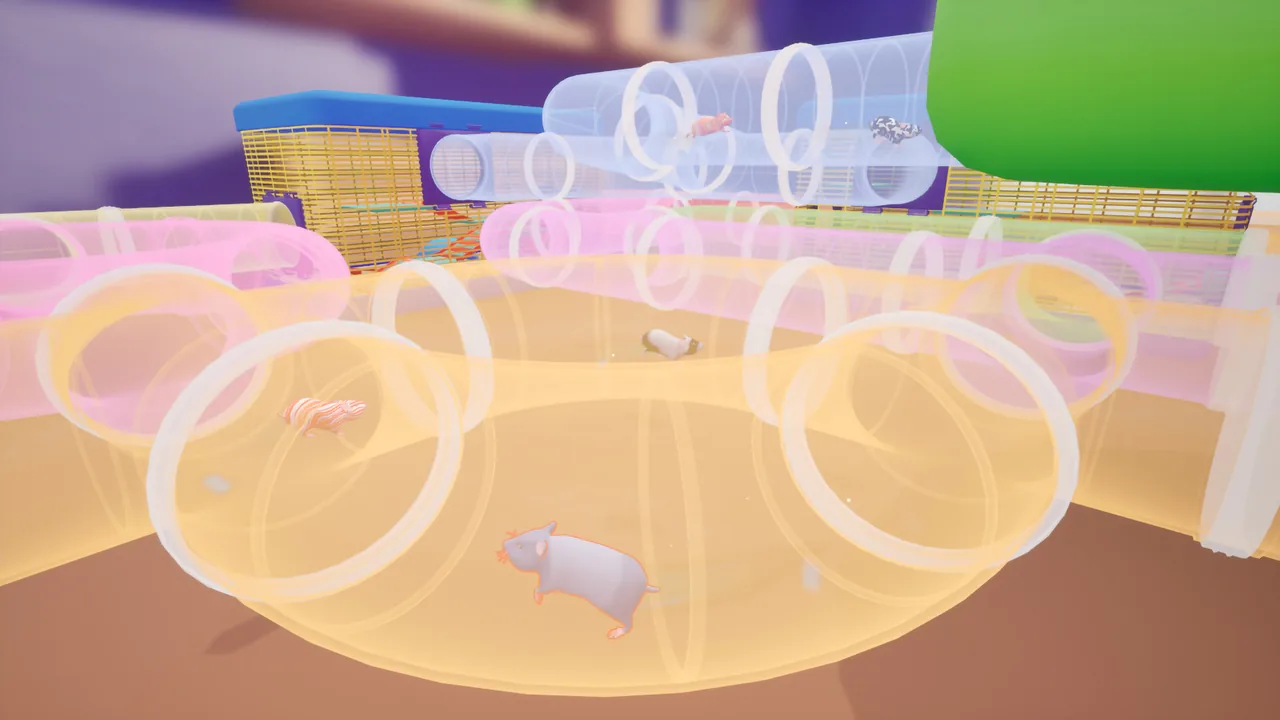
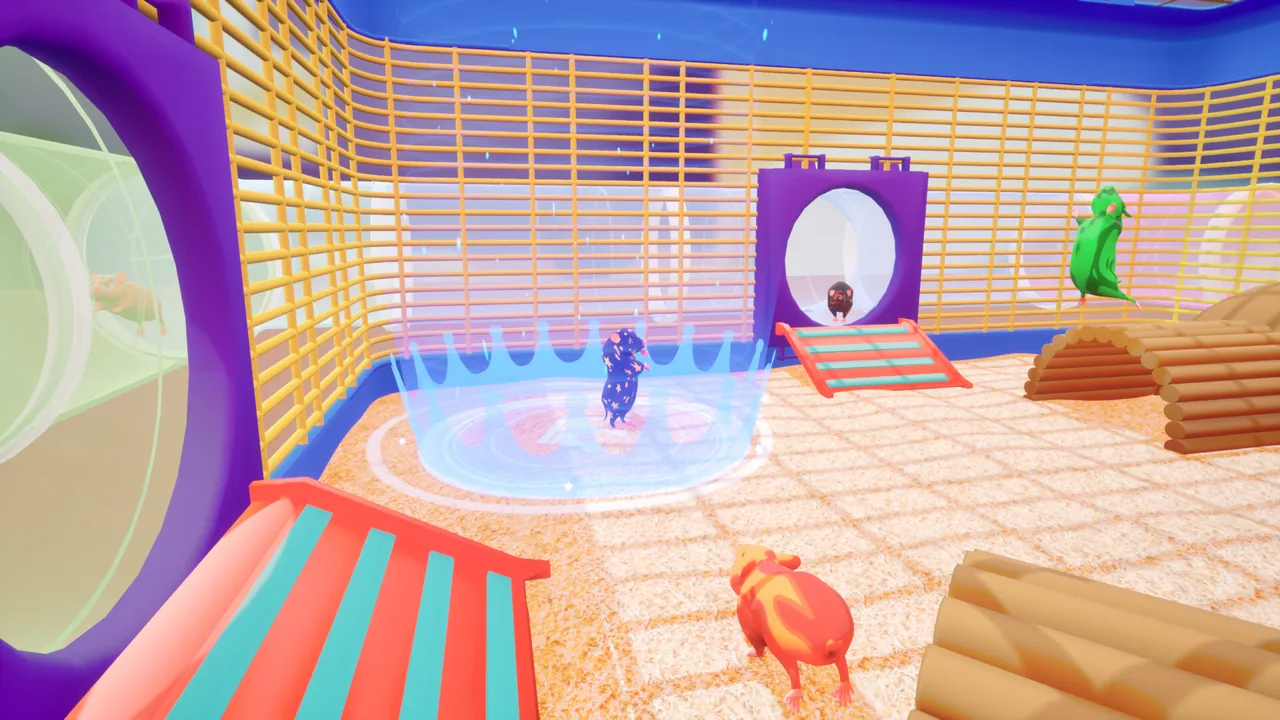
Hamster Hustle, released 1 May 2025 by developer and publisher Dreamship Games, is a free-to-play chaotic multiplayer party game built around a single, simple idea: players control hamsters who dodge, dash, and push each other around an arena to avoid becoming "it." That simplicity, paired with a price of nothing at all, appears to have won the game real goodwill quickly after launch. One reviewer calls it "easily the most unexpectedly fun game to play with friends," adding "found this game randomly and didn't expect to love it as much as I did, please do yourself a favor and play this!" Another reviewer frames the experience as having real commercial potential beyond its current free release, writing "genuinely fun, would have definitely paid money for it," a sentiment echoed by a separate reviewer who states plainly "I would have paid 25 cents for it and been very very happy."
That enthusiasm has curdled, in an entertaining way, into a small wave of deliberately absurd, meme-format reviews treating the game less as a serious product and more as a cultural touchstone worth celebrating theatrically. One lengthy review, styled as a mock personal-transformation story, credits the game with turning its author from "a man without cheese, charm, or clout" into someone with newfound confidence, while another describes the game changing their life by curing procrastination and improving their sleep schedule. Whatever their literal sincerity, these reviews function as a genuine, if unconventional, signal that the game has found real cultural traction with a specific, terminally-online audience within weeks of its release, a notable outcome for a small free party game from a modest studio.
A tag mechanic that doesn't always work
Set against that goodwill, the review sample's most serious and directly corroborated criticism concerns whether the game's core mechanic, tag, actually functions reliably in every match. One reviewer reports a specific, frustrating session where they were "INSTANTLY it and could not tag anyone," leaving them "HATED and losing points" before the match abruptly ended. That is not an isolated account: a separate, independent reviewer describes an almost identical experience, reporting that during their one successful match launch, "my friend was it and couldn't tag a soul," while "everyone else ran free like they broke out of prison with no guards." A third reviewer echoes the same specific failure mode, describing mechanics "running on microwave energy and blind optimism" during a match where the designated tagger similarly couldn't connect with anyone.
For a game whose entire design rests on the tension of trying to avoid becoming "it," and the payoff of successfully tagging someone else once you are, a tag mechanic that multiple independent reviewers report simply not working in some sessions represents a serious, core functionality gap rather than a minor rough edge. Several of these same reviewers also report the game failing to properly launch into a match at all, getting stuck instead on a static scoreboard screen, with one describing being "greeted by a frozen scoreboard judging me" and needing to relaunch before play could begin.
Performance concerns and unresolved exploits
Beyond the tag mechanic specifically, a second, corroborated complaint concerns the game's technical performance relative to its visual simplicity. One reviewer offers a pointed warning that the game is "either highly unoptimized or the creator is using your system for their own purposes," reporting a high-end RX6800 graphics card running at "98 percent utilization even at 1080p" for a low-fidelity party game that, on its face, shouldn't demand anywhere near that level of hardware resources. A separate reviewer makes a similar point more bluntly, joking the tag game "requires more resources than GTA 6," a specific and repeated enough observation across independent reviewers to suggest real, unresolved optimization problems rather than an isolated hardware quirk on one player's system.
A further, concrete complaint concerns an unpatched exploit, with one reviewer directly requesting the developers "please patch the infinite autoclicker, exploits are wild man," pointing to a specific competitive-integrity issue in a game whose PvP tag format depends on players' relative speed and reaction time being roughly comparable. Combined with the reported matchmaking and tag-functionality failures, these technical complaints paint a picture of a genuinely promising concept that, as one reviewer put it, still functions best as "a wonderful proof of concept for something in the future" rather than a fully finished, reliable multiplayer release today.
A small studio's first outing, judged accordingly
It's worth weighing these complaints against what Hamster Hustle actually is: a free release from Dreamship Games, a small studio with no prior track record visible in its Steam catalogue, shipping a multiplayer party game into a genre where matchmaking, netcode, and anti-cheat infrastructure are notoriously difficult to get right even for well-resourced teams. Several reviewers explicitly frame their praise with that context in mind, treating the rough edges as forgivable growing pains for a promising debut rather than disqualifying failures, with one reviewer's "proof of concept for something in the future" framing capturing that generosity precisely. That reading is reasonable given the price of admission is zero, and given the core dodge-and-tag loop, when it does work as intended, appears to land exactly as intended for its target audience of casual friend groups.
At the same time, a free price tag doesn't erase the seriousness of a tag mechanic that multiple independent reviewers report failing outright in some matches, since a party game that occasionally cannot complete its own central objective is a functionality problem rather than a balance quibble. The autoclicker exploit report carries similar weight regardless of price, since competitive integrity issues tend to compound as a playerbase grows and discovers shortcuts faster than a small team can patch them. Whether Dreamship Games addresses these issues in the months following launch will likely determine whether Hamster Hustle's early, enthusiastic goodwill translates into a sustained player base or fades once the novelty of its meme-fuelled launch window wears off.
Verdict
Hamster Hustle is, by its own review sample's account, a simple, chaotic free party game that has won real and sometimes theatrically enthusiastic goodwill from a small early audience, several of whom say they would gladly have paid for what they're currently getting at no cost. But a genuinely serious, independently corroborated problem with its core tag mechanic failing in some matches, paired with real performance concerns and an unpatched autoclicker exploit, mean this remains very much an early-stage release rather than a polished one. Small friend groups looking for a free, low-stakes distraction should have fun with it in its current state; anyone wanting a consistently functional, competitively fair multiplayer experience should keep an eye on future patches before investing serious time.
Pros and cons
Pros
- Praised as a genuine, unexpected delight for casual friend-group play, with one reviewer calling it "easily the most unexpectedly fun game to play with friends," and another confirming it's "great" and could be "a wonderful proof of concept for something in the future."
- Praised as strong value given its price, with multiple reviewers stating they "would have definitely paid money for it," one specifically offering "I would have paid 25 cents for it and been very very happy."
- Built real early enthusiasm and a devoted, meme-fluent audience quickly after release, with reviewers writing lengthy, deliberately absurd tributes to the game as a cultural phenomenon rather than simply leaving a short recommendation.
Cons
- The single most serious, corroborated complaint concerns the tag mechanic itself failing in some matches, with one reviewer reporting they "was INSTANTLY it and could not tag anyone," and a separate reviewer independently confirming "my friend was it and couldn't tag a soul," describing the mechanics as effectively non-functional in that session.
- A second, corroborated complaint concerns performance, with one reviewer specifically warning the game is "either highly unoptimized or the creator is using your system for their own purposes," reporting a high-end GPU "running at 98 percent utilization even at 1080p" for a simple, low-fidelity party game.
- A third complaint concerns unresolved technical issues at a more basic level, with one reviewer requesting a patch for "the infinite autoclicker" exploit, and separate reports of the game freezing on its scoreboard screen after launching, requiring a relaunch before a match could begin.
Screenshots
-
Hamster HustleImage: Dreamship Games via Steam -

Hamster HustleImage: Dreamship Games via Steam -
Hamster HustleImage: Dreamship Games via Steam -
How the review scores each part of the gameWanderer Editorial -
Key facts at a glanceWanderer Editorial -
The short versionWanderer Editorial