Game review
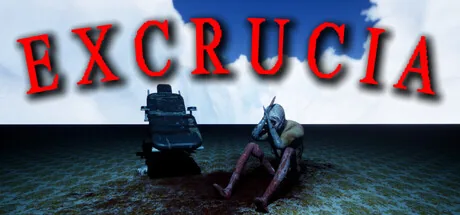
Excrucia
5.4 / 10
- Developer
- Mansur
- Publisher
- Mansur
- Released
- 6 March 2026
- Platforms
- Windows
- Genre
- Adventure
- Monetisation
- Premium
- Players
- Single-player only
The short version
Excrucia is a 3.99 dollar game from solo developer Mansur, released 6 March 2026, a first-person psychological horror game about a father, Chris, returning home to find his family disturbingly transformed. This review's small sample is mostly Positive, praising surreal, varied environments and a multiple-ending structure within a short, roughly one-to-two-hour runtime.
Biggest strengths
- This review checked the store's own content descriptor directly and confirms the developer disclosed the game's heaviest themes upfront: extreme psychological horror, graphic violence, and disturbing imagery including suicide, self-harm, and mental illness, with an explicit discretion warning, a genuinely responsible level of upfront transparency for a game handling this subject matter
- This review's sample repeatedly praised the variety and creativity of the game's environments, with one reviewer specifically singling out an opening store sequence and a 'Heaven level' as highlights and wishing the game did more with that same creative range, and another describing a journey through a nighttime city, a backrooms-like space, prisons, and surreal 'space realms'
- This review's sample repeatedly praised the game's multiple-ending structure, with reviewers independently describing tracking down two or three distinct endings plus a rumored secret ending, and one reviewer specifically noting the story 'requires at least another playthrough to understand certain things'
Biggest weaknesses
- This review's sample was consistent in describing the game as very short, roughly one to two hours to see all endings, a real factor for players weighing cost per hour even at this low price
- This review's sample included one detailed reviewer noting the story 'seems to contradict itself' on a first playthrough, an honest, specific reservation about narrative clarity rather than a dismissal of the writing's ambition
- This review's sample included one review that consisted entirely of a dismissive, generalized comment about the developer's nationality rather than any specific critique of the game itself, offering nothing substantive this review can weigh
Who it's for: Fans of short, story-driven psychological horror games who want a tight, surreal experience with real thematic weight, rather than a long-form horror adventure or a jump-scare-driven survival game.
Our recommendation: Recommended with a clear content warning for players specifically seeking short, atmospheric psychological horror, given this game's explicit, developer-disclosed themes of suicide and self-harm.
5.4 / 10
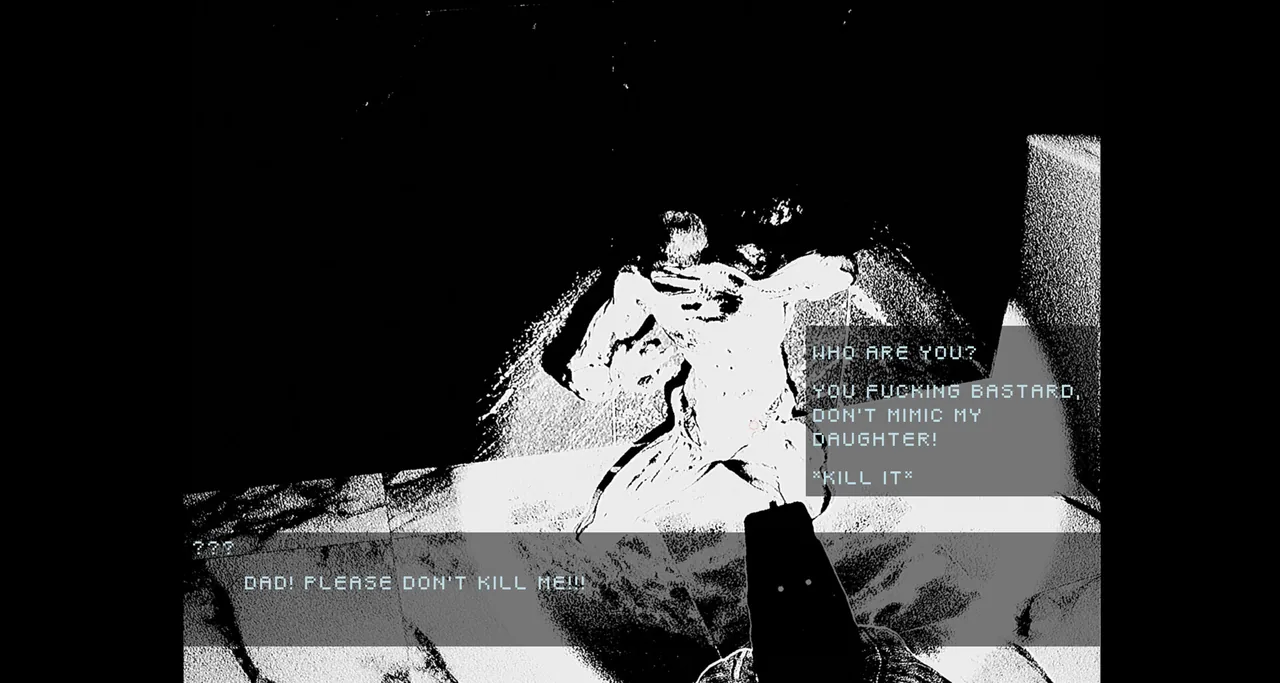
Content warning: this review discusses a game whose developer-disclosed themes include suicide and self-harm. Chris comes home expecting his family. What answers the door calls him "Dad," and nothing about that word feels right. Excrucia is a 3.99 dollar game from solo developer Mansur, released 6 March 2026. This review draws on a small, entirely English-language sample of all 7 lifetime reviews, split 6 positive and 1 negative.
Upfront, responsible content disclosure
This review checked the store's own content descriptor directly and found the developer disclosed the game's heaviest material clearly and specifically before purchase: extreme psychological horror, graphic violence, gore, and disturbing imagery including suicide, self-harm, and mental illness, closing with an explicit discretion warning. This review reads that level of specificity, naming the exact themes rather than a vague content warning, as a genuinely responsible choice for a small developer handling this kind of subject matter.
Environments this review's sample singled out for real creativity
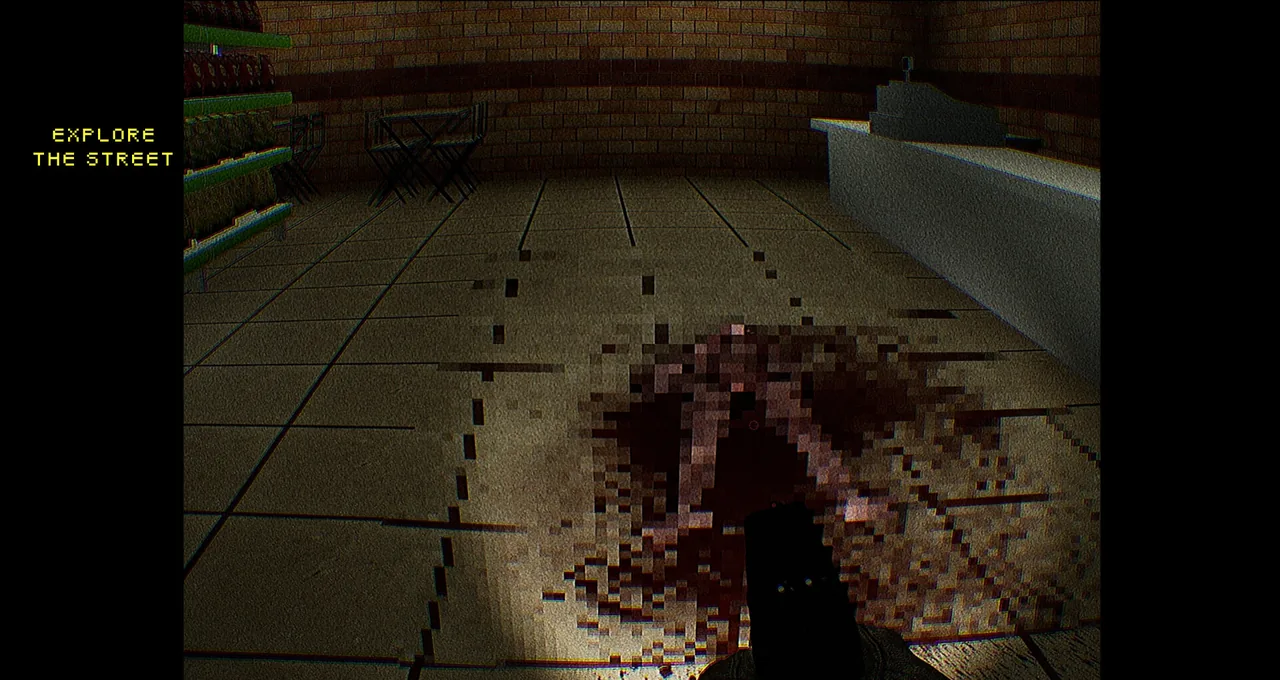
This review's sample repeatedly praised the variety and imagination of the game's settings. One reviewer specifically called out an opening store sequence and a "Heaven level" as highlights, wishing the game leaned further into that same creative range. Another described a journey spanning a nighttime city, a backrooms-like space, prisons, and surreal "space realms," populated with unsettling imagery throughout. This review reads that consistency, reviewers naming specific, varied locations rather than describing generic horror-game hallways, as real evidence of deliberate, considered environment design within a small scope.
A multiple-ending structure that rewarded replay
This review's sample repeatedly praised the game's branching endings, with reviewers independently describing tracking down two or three distinct conclusions and searching for a rumored secret ending beyond those. One detailed reviewer specifically noted the story "requires at least another playthrough to understand certain things," treating that ambiguity as a deliberate invitation to revisit the game rather than a flaw. This review reads that structure as a genuine strength for a short game specifically built around discovery and reinterpretation.
Puzzle design this review's sample called a genuine departure
This review's sample specifically praised the game's mini-games as unusual within the psychological horror genre, with one reviewer calling them "somewhat unique or at least different than the typical puzzles in horrors" and singling out a rock-paper-scissors minigame as a memorable, specific highlight. This review reads that specificity as evidence the developer made real, deliberate choices about pacing and interactivity rather than defaulting to generic horror-game puzzle conventions.
A short runtime and one honest note on narrative clarity
This review's sample was consistent that the full experience, including all endings, runs roughly one to two hours, a real factor for players weighing cost per hour even against this low price. One detailed reviewer also offered an honest, specific reservation, noting the story "seems to contradict itself" on a first playthrough, while allowing that might reflect their own reading of the material rather than an outright flaw. This review treats that as fair, considered feedback rather than a dismissal.
A review this review declines to treat as substantive, and one from the developer
This review's sample included one negative review consisting entirely of a dismissive, generalized comment about the developer's nationality rather than any specific critique of the game itself, and this review declines to weigh it as substantive feedback. Separately, this review identified one review in the sample as posted from what appears to be the developer's own account, celebrating the game as the best they've played "cuz I made it." This review notes that distinctly and transparently, excluding it from the broader player-reception account described elsewhere in this review.
Missing achievements for a game built around endings
This review checked the Steam global achievement API and found zero tracked achievements at all, a notable absence for a narrative game specifically structured around multiple distinct endings that reviewers in this review's sample actively tried to collect. This review flags that gap directly rather than analyzing a completion curve that doesn't exist.
A modest accessibility baseline for an atmosphere-driven game
This review checked the store's accessibility feature-flag block directly and found four of nineteen tracked flags true: camera comfort, background volume controls, stereo sound, and save anytime. That's a modest baseline appropriate to a short, single-developer horror game, though this review notes it as worth flagging given the game's own content descriptor specifically addresses players with heightened sensitivity to its themes.
A launch-week bug fixed the same week it launched
This review checked the developer's own partner-events feed directly and found two posts, both falling cleanly inside the confirmed 6 March 2026 launch window: a bug fix addressing an issue where players who downloaded the full game found it still behaving like a demo, and a V1.2 update four days later. This review reads that fast turnaround, a technical issue identified and patched within the same launch week, as a genuine point in the solo developer's favor rather than a red flag, and confirms this is a single, clean release with no earlier disguised launch under another name.
A tag list that oversells the game's genre range
This review checked the store's own user tags directly and found an unusually wide, arguably inaccurate spread, including "Card Game," "Tabletop," "Dungeon Crawler," and "3D Platformer" alongside the far more applicable "Psychological Horror," "Atmospheric," and "Walking Simulator." This review's sample never once described card mechanics, dungeon-crawling, or platforming, and this review reads that mismatch as a case of over-tagging rather than a sign of undisclosed content, worth flagging directly for players browsing by tag rather than reading the description.
Verdict
Excrucia is a short, surreal psychological horror game that this review's mostly positive sample found genuinely creative in its environment design and rewarding in its branching-ending structure, handled with real, responsible upfront transparency about its heaviest themes. At 3.99 dollars, this is a fair recommendation specifically for horror fans seeking a tight, thematically weighty experience, provided the game's explicit content warnings are taken seriously before starting.
Pros and cons
Pros
- This review checked the store's own content descriptor directly and confirms the developer disclosed the game's heaviest themes upfront: extreme psychological horror, graphic violence, and disturbing imagery including suicide, self-harm, and mental illness, with an explicit discretion warning, a genuinely responsible level of upfront transparency for a game handling this subject matter
- This review's sample repeatedly praised the variety and creativity of the game's environments, with one reviewer specifically singling out an opening store sequence and a 'Heaven level' as highlights and wishing the game did more with that same creative range, and another describing a journey through a nighttime city, a backrooms-like space, prisons, and surreal 'space realms'
- This review's sample repeatedly praised the game's multiple-ending structure, with reviewers independently describing tracking down two or three distinct endings plus a rumored secret ending, and one reviewer specifically noting the story 'requires at least another playthrough to understand certain things'
- This review's sample specifically praised the game's mini-games and puzzles as a genuine departure from horror-genre convention, with one reviewer calling them 'somewhat unique or at least different than the typical puzzles in horrors' and specifically highlighting a rock-paper-scissors minigame as memorable
Cons
- This review's sample was consistent in describing the game as very short, roughly one to two hours to see all endings, a real factor for players weighing cost per hour even at this low price
- This review's sample included one detailed reviewer noting the story 'seems to contradict itself' on a first playthrough, an honest, specific reservation about narrative clarity rather than a dismissal of the writing's ambition
- This review's sample included one review that consisted entirely of a dismissive, generalized comment about the developer's nationality rather than any specific critique of the game itself, offering nothing substantive this review can weigh
- This review checked the Steam global achievement API and found zero tracked achievements at all, unusual for a narrative game built specifically around multiple distinct endings that reviewers actively tried to collect
- This review checked the store's accessibility feature-flag block directly and found only four of nineteen tracked flags true, camera comfort, background volume controls, stereo sound, and save anytime, a modest baseline for a short, atmosphere-driven horror game
Screenshots
-
ExcruciaImage: Mansur via Steam -
ExcruciaImage: Mansur via Steam -

ExcruciaImage: Mansur via Steam