Game review
Atelier's Key
6.5 / 10
- Developer
- Spindlewood Studios
- Publisher
- Spindlewood Studios
- Released
- 16 June 2026
- Platforms
- Windows
- Genre
- Action, Free To Play
- Monetisation
- free-to-play
- Players
- false
The short version
Biggest strengths
- Genuinely distinctive dark-fantasy art direction and worldbuilding, repeatedly singled out as the game's strongest asset
- Notably feature-complete for a student project, with key rebinding, three save slots, achievements, and colorblind support
- Adaptive AI difficulty that punishes reckless play but rewards using cover and terrain
Biggest weaknesses
- Real technical roughness, including collision bugs, an unreliable grapple mechanic, and reported crashes
- A glitchy final boss that multiple reviewers had to reattempt several times
- Very short runtime, roughly 20 to 90 minutes depending on exploration
Who it's for: Players curious about distinctive, atmospheric student-project worldbuilding who can tolerate real bugs and a very short runtime, rather than anyone seeking a polished, mechanically deep FPS
Our recommendation: recommended
6.5 / 10
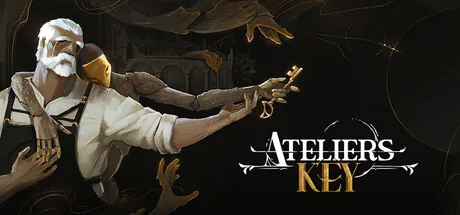
Atelier's Key released free on Steam on June 16, 2026, from Spindlewood Studios, a dark-fantasy first-person shooter set in a root-bound Victorian world populated by puppets. Severed from a hivemind and armed with a mysterious weapon, the player shoots, grapples, and explores through the world to rescue a Father figure from his own damned creation. The game is explicitly a student project, something several reviewers note themselves, and its 23-review English pool lands at Positive (19 up, 4 down, 83%), with reviewers consistently grading it through that lens rather than against full commercial FPS releases.
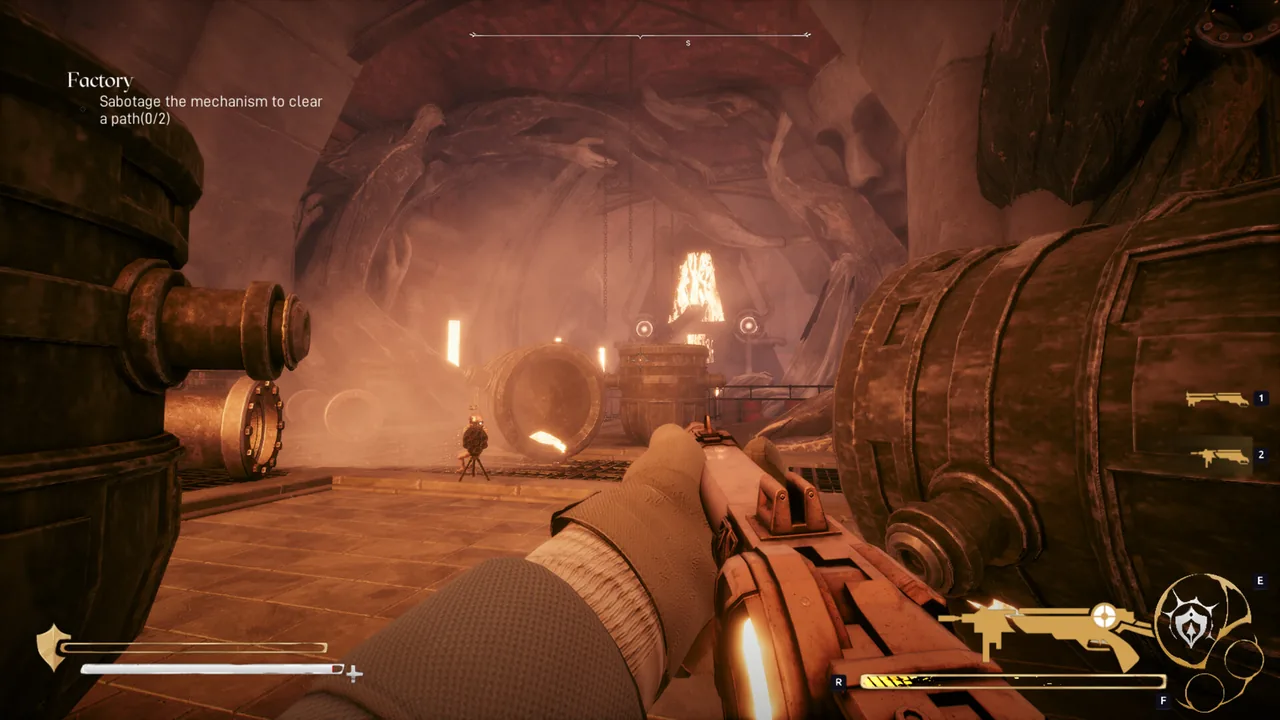
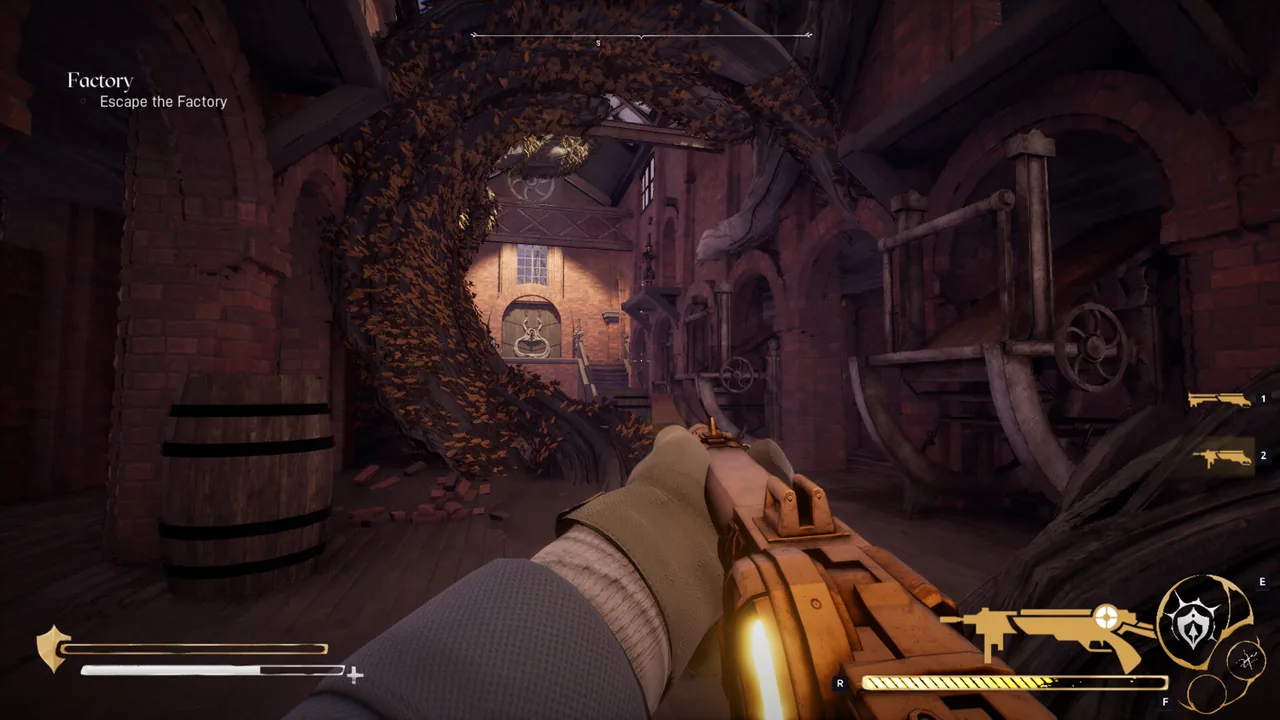
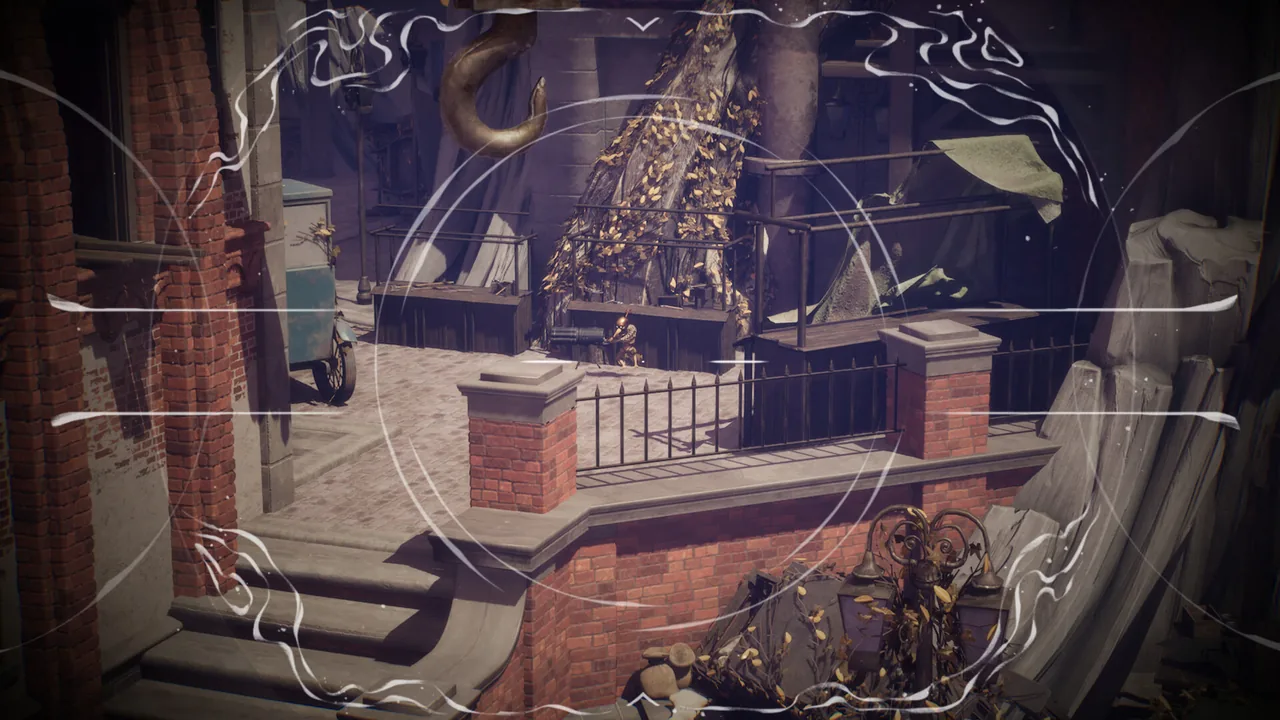
The art direction and worldbuilding draw the pool's most consistent and enthusiastic praise, by a wide margin. One reviewer called the world "BEAUTIFUL," with "no complaints about any of the art," while another described the game as "an avant-garde work that transcends conventional form, inviting the viewer into a dreamlike, surreal space," specifically praising how it combines "musical, medieval painting and FPS together." A third reviewer praised "an environment which speaks of love and attention from the devs," tied to "a story of the past that led to the circumstances of where the game takes place now," and said they'd happily follow the studio's future work on the strength of this introduction alone. That sentiment, genuine enthusiasm for a distinctive aesthetic paired with disappointment that there isn't more of it, recurs across nearly every positive review in the pool.
Reviewers were equally consistent, and notably charitable, about the game's rough technical edges, largely because of its student-project context. One detailed review flagged "collision errors," an "unreliable" grapple that turned "an otherwise fun concept" into "an annoying challenge," getting stuck in the ceiling, falling through the floor, and a gun that at one point simply "refused to fire anymore." A more critical reviewer put it more bluntly: "it's obviously buggy, short," while explicitly separating that criticism from any judgment of "those 12 people working on it." A different reviewer reported the game as "probably one of worst optimized games I have played in awhile," with four crashes in ten to fifteen minutes of play, though this was a minority complaint rather than the pool's dominant technical grievance, which centered more on the grapple and physics jank.
The final boss draws specific, repeated criticism as the game's roughest moment. Two separate reviewers described it as glitching out, with one saying it "kept glitching out horribly so it took me a few times to finally beat it," and another calling the grappling during that fight unreliable enough to turn the encounter into "an annoying challenge" rather than the satisfying climax the earlier setpieces suggested was intended. That's a meaningful rough patch for a short game where the final boss carries disproportionate weight in shaping the overall impression a player walks away with.
One especially thorough review laid out a clear-eyed pros-and-cons breakdown worth quoting directly, since it captures the pool's overall balance better than any single positive or negative comment could alone. On the credit side: "Can rebind keys despite what's shown on store page," "Some really nice setpieces and modeling," "Achievements, which is rare for a student game," and "Colorblind support, also rare for a student game." On the debit side: "Story is unclear," "Audio is weak across the board," "Sluggish movement," and a bug where the "Game bugs out on first load when it forces a discord browser window," requiring an Alt+F4 to escape. That mix, real ambition and polish in places most student projects skip entirely, undermined by genuine, specific technical rough edges, is a fair summary of the pool as a whole.
Runtime is short across the board, with most reviewers reporting somewhere between 20 and 90 minutes depending on how much of the world they explored, and several explicitly framing that brevity as the game's biggest limitation rather than its bugs. One reviewer called it "a very short game, but if it was a bit more polished and a lot longer I believe this could become a very liked and played game," a sentiment echoed by another who said the world and story "needs some more of it," and a third who compared the whole experience to "a rough draft in video game format but in a good way," praising the worldbuilding while wishing for a fleshed-out narrative to match it.
It's worth being direct about how much weight the "student project" context should actually carry in a review, since it's doing a lot of work in shaping the pool's generosity. Several reviewers explicitly said as much themselves, with one noting "I would believe, being as this is a school project, that there was a short amount of time to meet specific criteria to grade," and another saying "I won't downvote free student games when effort was put in." That context is fair to weigh, since it's disclosed plainly on the store page rather than hidden, and it genuinely does explain a lot of the rough edges without excusing them entirely. But it's also worth noting that a small minority of reviewers pushed back specifically against extending that leniency, arguing a buggy, short, unfinished-feeling release "shouldn't even be listed on Steam to begin with due to its problems and lack of content," regardless of the circumstances of its creation. Both readings are defensible: the game is free and transparently scoped as a learning exercise, which softens the technical criticism considerably, but the bugs and brevity are real regardless of context, and a reader deciding whether to spend even twenty free minutes on it deserves to know that upfront rather than have it buried under goodwill toward the developers.
Given that it's completely free, a student project by design, and delivers a genuinely distinctive visual identity even in its rough current state, Atelier's Key is a reasonable, low-risk recommendation for players curious about atmospheric, unconventional worldbuilding who can tolerate real jank along the way. It won't satisfy anyone looking for tight, reliable FPS mechanics or a substantial runtime, but as an introduction to a promising studio's design sensibilities, at no cost, it's worth the twenty to ninety minutes it asks for.
Pros and cons
Pros
- Genuinely distinctive dark-fantasy art direction and worldbuilding, repeatedly singled out as the game's strongest asset
- Notably feature-complete for a student project, with key rebinding, three save slots, achievements, and colorblind support
- Adaptive AI difficulty that punishes reckless play but rewards using cover and terrain
- Completely free, with a short but atmospheric world worth exploring at no cost
Cons
- Real technical roughness, including collision bugs, an unreliable grapple mechanic, and reported crashes
- A glitchy final boss that multiple reviewers had to reattempt several times
- Very short runtime, roughly 20 to 90 minutes depending on exploration
- Weak, thin audio design and gunplay that several reviewers found unsatisfying
Screenshots
-
Atelier's KeyImage: Spindlewood Studios via Steam -
Atelier's KeyImage: Spindlewood Studios via Steam -
Atelier's KeyImage: Spindlewood Studios via Steam