Offline Progress Without Lying About It
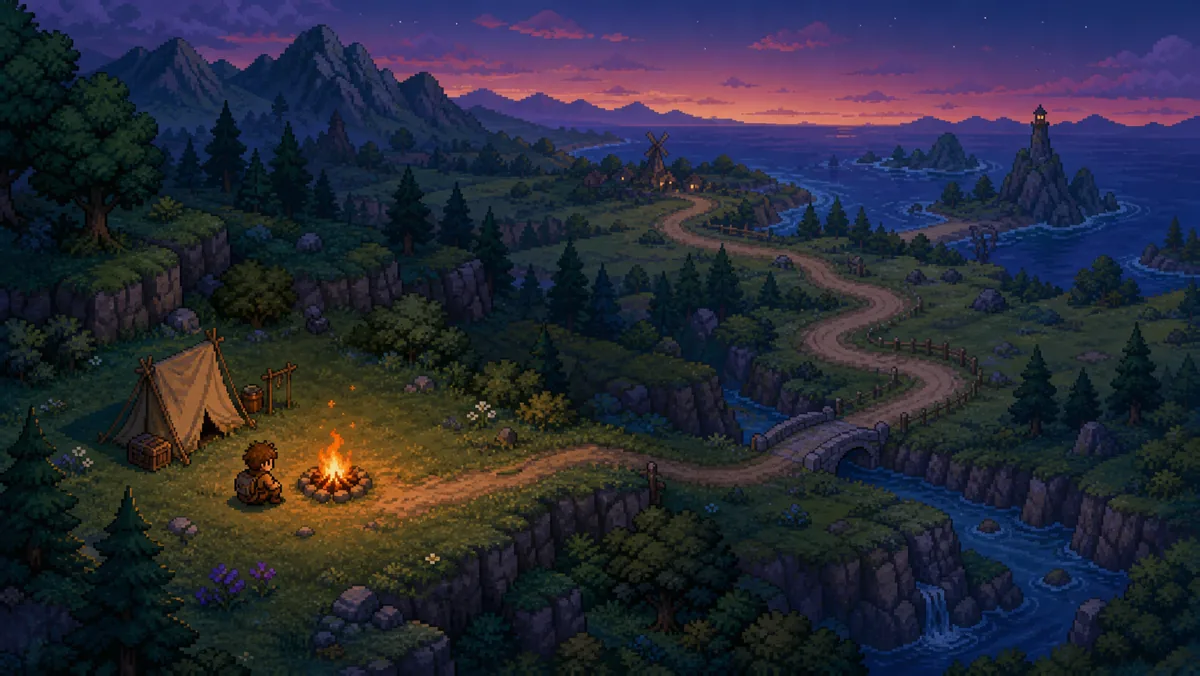
Most idle games treat your absence as a math problem: hours × rate = numbers, paid on return. It works, but you can feel the hollowness — nothing happened while you were gone; a spreadsheet ticked.
Wanderer's away-time is built on a different promise: when you come back, the server replays what your wanderer actually did.
Simulation, not multiplication
Before you log off you leave a standing order — keep exploring, hunt, rest, mine a chosen ore, cut wood, or work a chosen forge recipe. When you return, the server steps through your time away tick by tick using the live game's systems:
- The same combat engine. Your wanderer meets monsters appropriate to where they walked, fights with real stats and real gear, wins most and — sometimes — loses. A loss plays out like a live loss: revived at the nearest unlocked town, a short recovery, back to the orders.
- The same drop logic (at a deliberately reduced rate — attentive live play should keep an edge). Loot goes into the pack; when the pack fills, overflow auto-sells for coins, exactly as it does live.
- The same XP tables. An offline steel bar is worth precisely what an online steel bar is worth. We keep a test that fails the build if those ever diverge.
- The same geography. An offline explorer genuinely covers ground — fights cost forward progress, recovery takes ticks, the summary's "furthest east" is a place they really stood.
The return summary is the payoff: distance walked, battles won and lost, loot kept, the best find highlighted. It reads like a postcard because it is one — a record of events, not a receipt.
The honest limits
Offline time runs against a cap — one hour free, extendable to twelve with earned coins — because unlimited simulation would make the game play itself better than you can. And offline earns slightly under attentive live play on purpose. Away-time is a first-class way to progress; it shouldn't be the optimal one.
Why bother?
Because trust is the whole product. When defeat can happen while you sleep (gently — you lose position, never items), a good overnight report means something. Players plan their away-time like a second loadout: safe woodcutting before bed, a bold eastward push before a workday, the forge before a weekend. That planning is gameplay — the kind that respects that you have a life, which is the kind Wanderer is for.
The practical how-to lives in the offline guide.