Game review
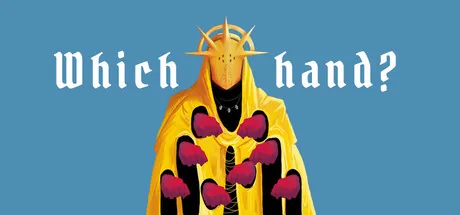
Which hand?
6.5 / 10
- Developer
- Play Hooky
- Publisher
- Play Hooky
- Released
- 1 May 2026
- Platforms
- Windows
- Genre
- Casual, Indie
- Monetisation
- Paid, one-time purchase.
- Players
- Single-player only.
The short version
Which hand? is a short logic-puzzle game from solo developer Play Hooky, tasking players with learning a titan's cryptic rules through experimentation and inductive reasoning across a handful of increasingly demanding chapters. Its small, Positive English review sample praises strong art and sound design and a genuinely useful drawing-based note-taking tool, tempered by fair complaints about a final stage that leans on luck and a pair of mutually exclusive achievements.
Biggest strengths
- Praised for genuinely useful, unusual puzzle design, with reviewers crediting the game for teaching its rules through inference and codex entries rather than explicit tutorials, and for pacing hints so they feel earned rather than handed out.
- Praised for strong art and sound design and a "fun mysterious atmosphere," with multiple reviewers independently singling out the presentation as a standout.
- Praised for a built-in drawing mode that lets players mark up the screen to track deductions, a feature more than one reviewer said every puzzle game should have.
Biggest weaknesses
- A fair, corroborated complaint from multiple reviewers is that the final stage can reach configurations with no safe moves left, forcing a guess and a restart, which several players felt undercut the otherwise fair, deducible logic of earlier chapters.
- A fair, heavily corroborated complaint from several reviewers, including one of the sample's three negative reviews, is that two late-game achievements are mutually exclusive by design, making a full 100% completion impossible as originally shipped.
- A fair complaint from more than one reviewer is that the interface has rough edges, including a titan's yes/no answer disappearing if missed, drawn marks not staying visible outside drawing mode, and hand poses sometimes obscuring clues the zoom function doesn't fully solve.
Who it's for: Fans of short, atmospheric logic puzzle games who enjoy learning rules through trial and error rather than explicit tutorials, and who don't mind an ending that can hinge partly on chance; achievement completionists and players wanting a longer game for their money should temper expectations.
Our recommendation: A short, atmospheric, and inventive logic puzzle held back by a luck-reliant final stage and some rough interface edges.
6.5 / 10
A titan, a riddle, and rules you have to earn
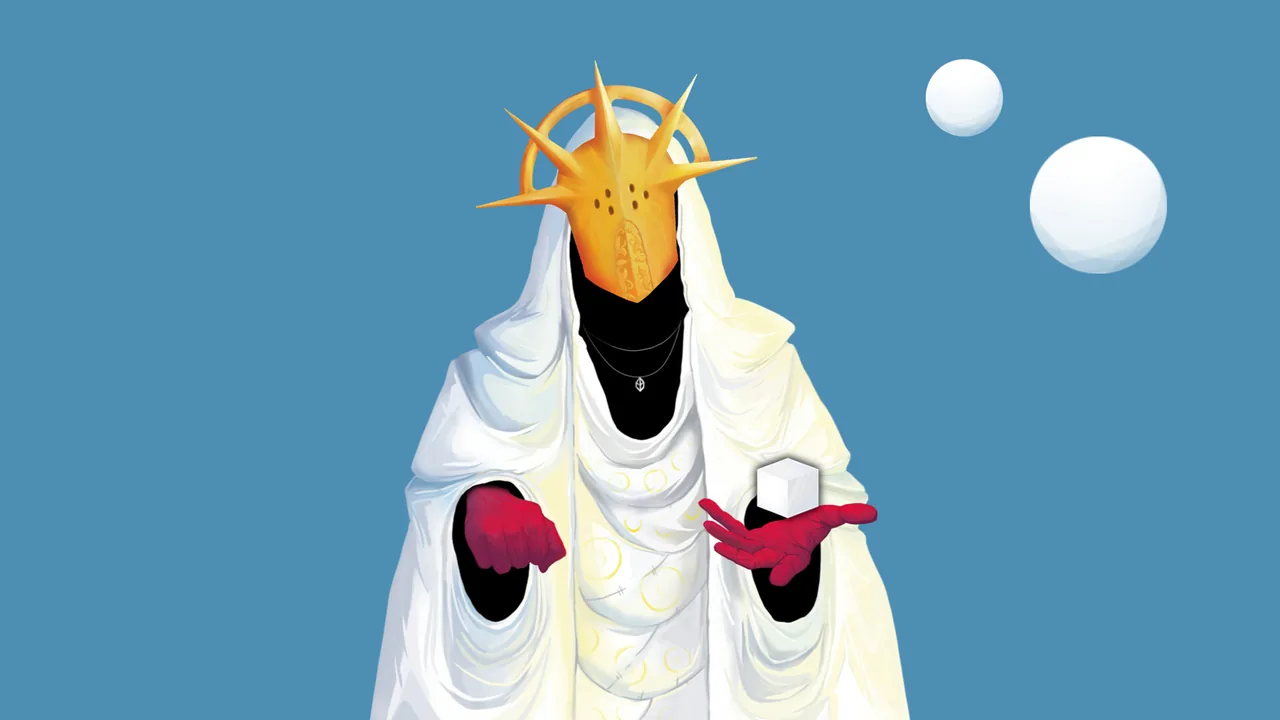
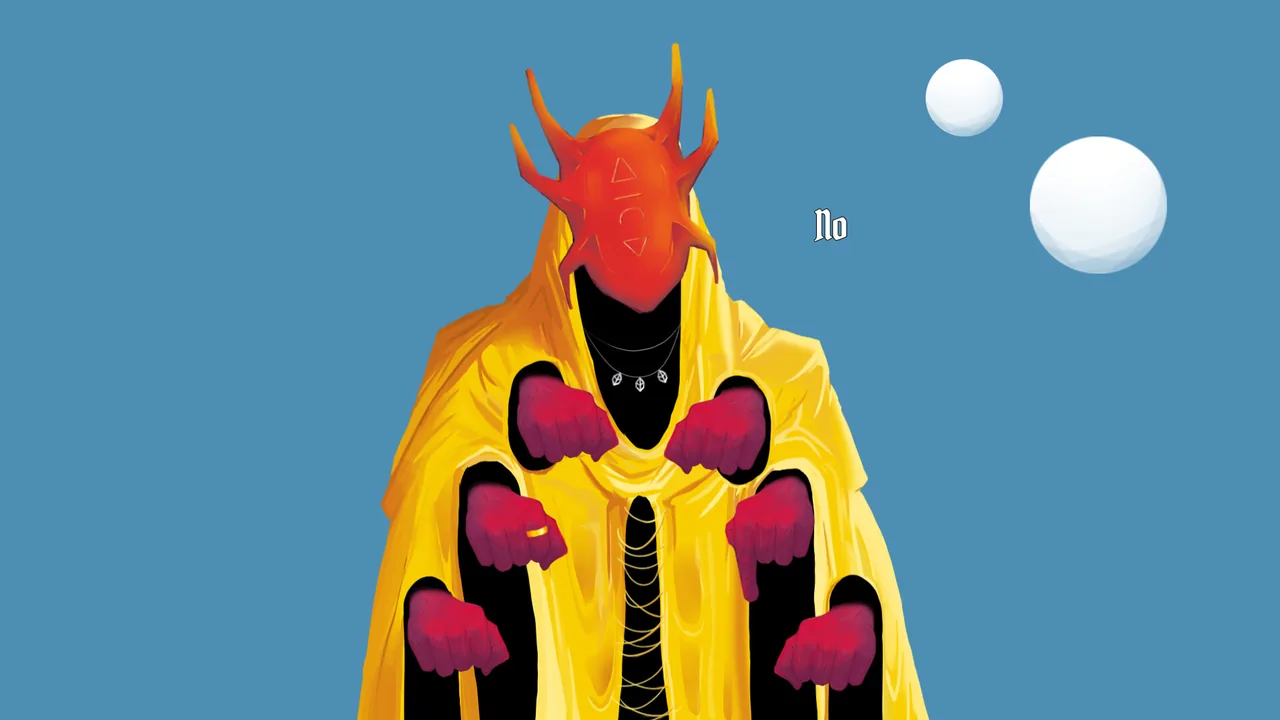
Which hand? is a short logic-puzzle game from solo developer Play Hooky, casting players against a titan whose cryptic rules must be uncovered through experimentation and inductive reasoning rather than an explicit tutorial. Each chapter layers new rules onto the ones already learned, building toward logic-grid-style puzzles that demand players track several deductions at once. This review draws on an English review sample, 22 reviews at the time of research, Positive overall (19 positive, 3 negative).
Praised for teaching its rules through genuine deduction
Reviewers consistently credit the game's core design choice: making players work out its rules rather than explaining them upfront. "This is a puzzle game about learning the meaning of various clues and then applying them to logic-grid-style puzzles. The rules can be discovered by experimenting or by collecting codex entries," reads one detailed review, which also notes the codex deliberately withholds some rules so players can feel smart for figuring them out independently. A separate reviewer frames the same design in terms of pacing: "if you're stuck, you can find a hint - without it being immediately available, and without being forced to see it... just the right amount of keeping the hints away so they feel more earned." This review treats that as fair: two reviewers independently crediting the same specific balance, between discovery and guidance, is credible evidence of careful puzzle design rather than accidental obscurity.
Praised for its art, sound, and atmosphere
This review also found consistent, independent praise for the game's presentation. "In general, art is fantastic... and I just like the theme," reads one review, while a separate, more detailed reviewer goes further: "the visual presentation and sound design are excellent, and I was impressed by the way the rules combined over the course of the game to create challenges." This review treats that as fair: multiple reviewers, across otherwise very different reviews, independently praising the same audiovisual qualities is a genuine, credible point in the game's favour, especially for a solo-developed project at this price.
Praised for a genuinely useful drawing-based note-taking tool
A specific mechanical feature drew repeated, enthusiastic praise. "This puzzle game has a feature that every single puzzle game should have - it allows you to draw on the screen!" reads one review. A separate reviewer describes the same tool in practical terms, noting the game "eventually required some visual note-taking (the game has a built-in drawing mode for this)" as the puzzles grew more complex. This review treats that as fair: reviewers independently identifying the same specific tool as a standout, rather than praising the game only in general terms, is credible evidence it meaningfully improves how the later puzzles are solved.
A fair, corroborated complaint about a luck-reliant final stage
Set against that praise, this review found a specific, corroborated complaint about how the game resolves. "My main issue with the game is that the last stage cannot be completed without relying on chance. Even if I find three crystal balls in the previous level, it's still possible to reach a configuration where there are no safe moves left, and a wrong guess means restarting the whole stage," reads one detailed review. A separate reviewer raises a similar concern from the opposite side of the game's difficulty curve: "the game seems to give you 50/50 situations sometimes and its really upsetting," specifically citing an unclear warning system before a fatal click. This review treats that as fair: reviewers who otherwise praised the game's fair, deducible logic still independently flagging its ending as an exception is credible, corroborated evidence of a real design weak point.
A fair, heavily corroborated complaint about mutually exclusive achievements
This review also found the sample's single most repeated specific complaint: that two of the game's achievements cannot both be earned. "It has a pair of end-game achievements each of which is deliberately designed to lock you out of getting the other one... even if you erase the local save data and play through the whole game again," reads one detailed review, which notes the developer later patched the game to make full completion possible. A separate reviewer states plainly: "Short great puzzle game but I will not recommend it due to making 2 achievements where you can just unlock 1 (Life/Death), so making 100% impossible," explicitly citing it as their reason for an overall negative recommendation despite otherwise enjoying the game. This review treats that as fair: this is the most independently repeated specific complaint across the whole sample, including from at least one reviewer who otherwise liked the game enough to still be disappointed by it.
A fair complaint about interface rough edges
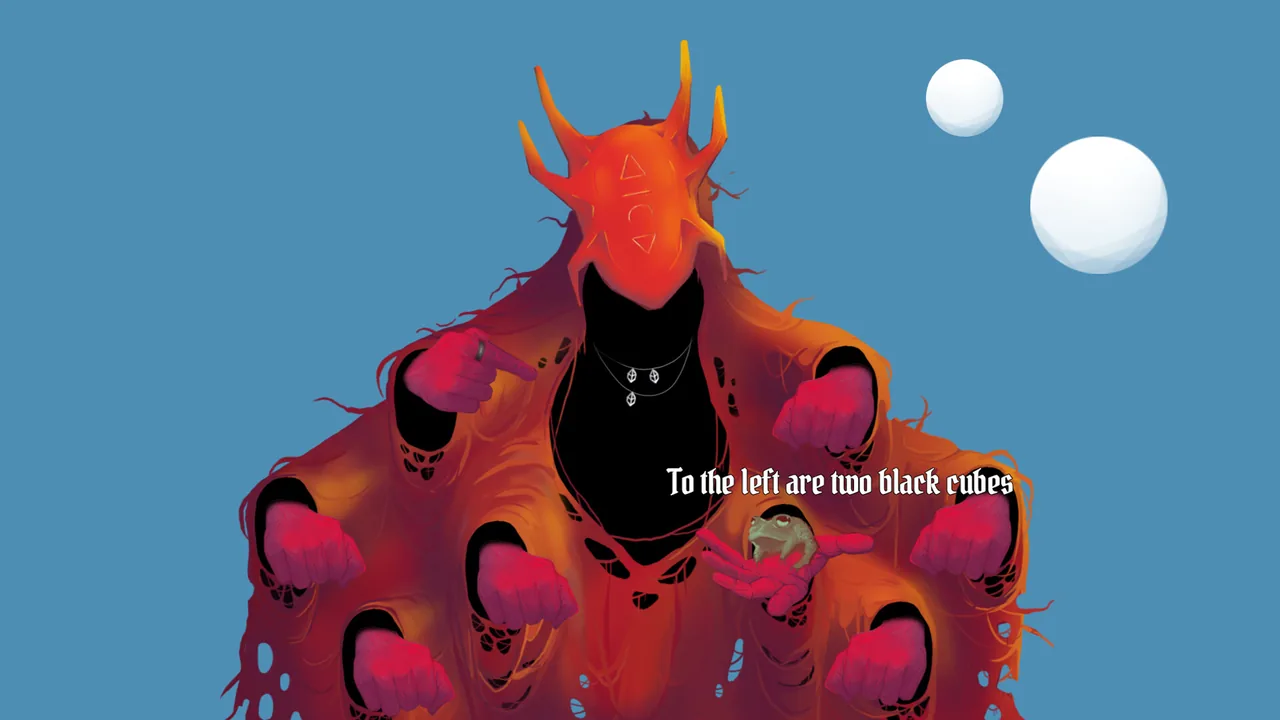
This review also found a cluster of smaller, credible interface complaints. "The UI is awkward: the game has a drawing mode to add marks to keep track of things, but there are no predefined yes/no marks, the opacity layer just gets in the way, and the custom marks are visible only in the drawing mode, not when actually playing," reads one review. A separate reviewer raises a related issue: "when the titan tells you 'yes' or 'no', there's no way to see what they said if you miss it," and "the finger of the pointing hands doesn't point directly at your cursor, which can be confusing." This review treats that as fair: multiple reviewers independently flagging distinct but related interface friction points, on top of an otherwise well-regarded puzzle design, is credible evidence the game's execution lags a step behind its ideas.
Achievement data corroborates the mutually exclusive ending
This review's own check of Steam's global achievement data supports the reviewer complaint about its ending achievements directly. The DEATH and LIFE milestones sit at 29.1% and 25.9% respectively, a combined roughly 55%, closely matching the 54.5% held by a third, non-exclusive milestone earned at a similar point in the game. That near-identical combined total is consistent with almost every player who reaches that point in the game earning exactly one of the two disputed achievements, not both, corroborating the reviewer reports of a deliberately exclusive design.
Final verdict
Which hand? is a short, inventive logic puzzle game that earns real credit for teaching its rules through genuine deduction rather than hand-holding, wrapped in strong art, sound, and a drawing tool reviewers say more puzzle games should copy. This review found that praise tempered by fair, corroborated complaints about a final stage that can force a guess regardless of skill, a pair of mutually exclusive achievements that frustrated at least one reviewer enough to flip their recommendation, and a scattering of interface rough edges around clue visibility. For fans of short, atmospheric logic puzzles who don't need a perfect completion record, it's a worthwhile pickup; achievement completionists and players wanting a longer game for their money should temper expectations.
Pros and cons
Pros
- Praised for genuinely useful, unusual puzzle design, with reviewers crediting the game for teaching its rules through inference and codex entries rather than explicit tutorials, and for pacing hints so they feel earned rather than handed out.
- Praised for strong art and sound design and a "fun mysterious atmosphere," with multiple reviewers independently singling out the presentation as a standout.
- Praised for a built-in drawing mode that lets players mark up the screen to track deductions, a feature more than one reviewer said every puzzle game should have.
- Praised as appropriately short by several reviewers, offering a satisfying amount of progression and difficulty in roughly two to two and a half hours without overstaying its welcome.
Cons
- A fair, corroborated complaint from multiple reviewers is that the final stage can reach configurations with no safe moves left, forcing a guess and a restart, which several players felt undercut the otherwise fair, deducible logic of earlier chapters.
- A fair, heavily corroborated complaint from several reviewers, including one of the sample's three negative reviews, is that two late-game achievements are mutually exclusive by design, making a full 100% completion impossible as originally shipped.
- A fair complaint from more than one reviewer is that the interface has rough edges, including a titan's yes/no answer disappearing if missed, drawn marks not staying visible outside drawing mode, and hand poses sometimes obscuring clues the zoom function doesn't fully solve.
- This review's own check of achievement data shows the two disputed late-game achievements sitting at a combined roughly 55%, closely matching a third, non-exclusive milestone at the same stage, corroborating that most players are indeed only ever able to earn one of the pair.
Screenshots
-
Which hand?Image: Play Hooky via Steam -
Which hand?Image: Play Hooky via Steam -
Which hand?Image: Play Hooky via Steam -
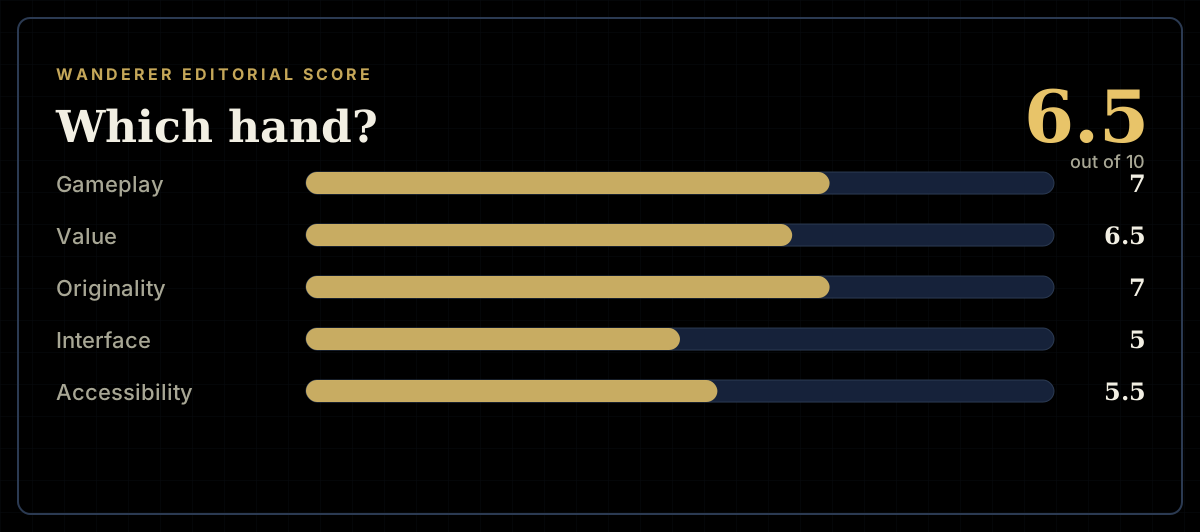
How the review scores each part of the gameWanderer Editorial -
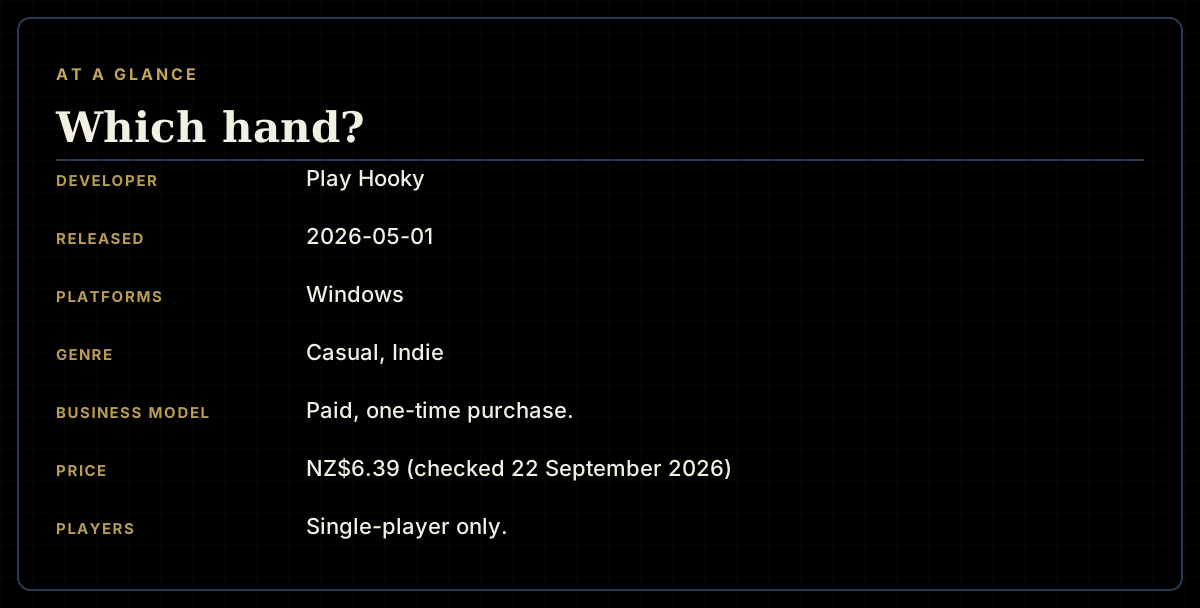
The specs at a glanceWanderer Editorial -
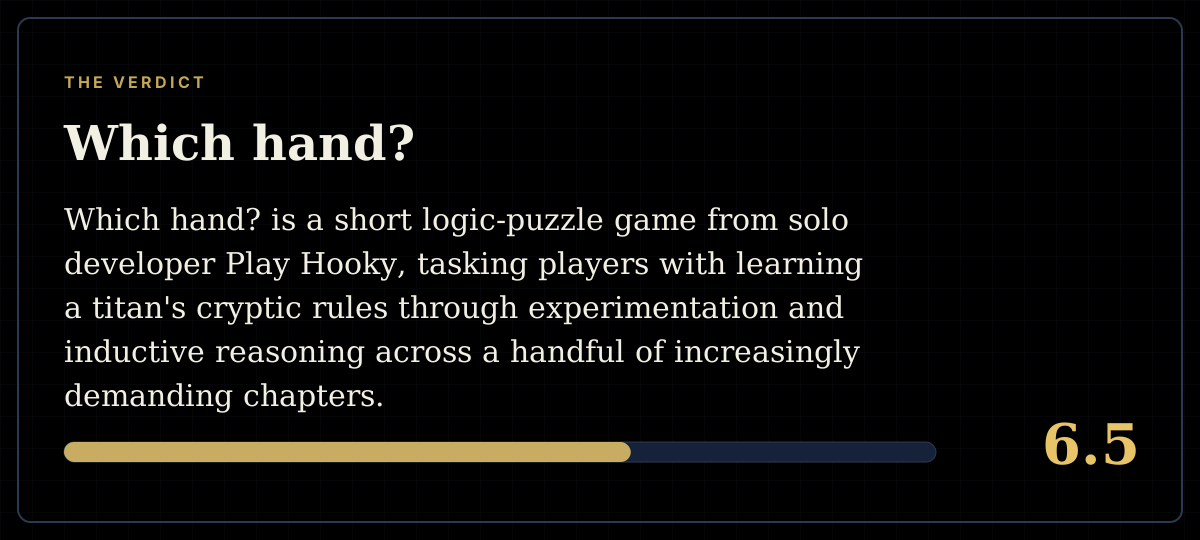
The short versionWanderer Editorial