
Game review
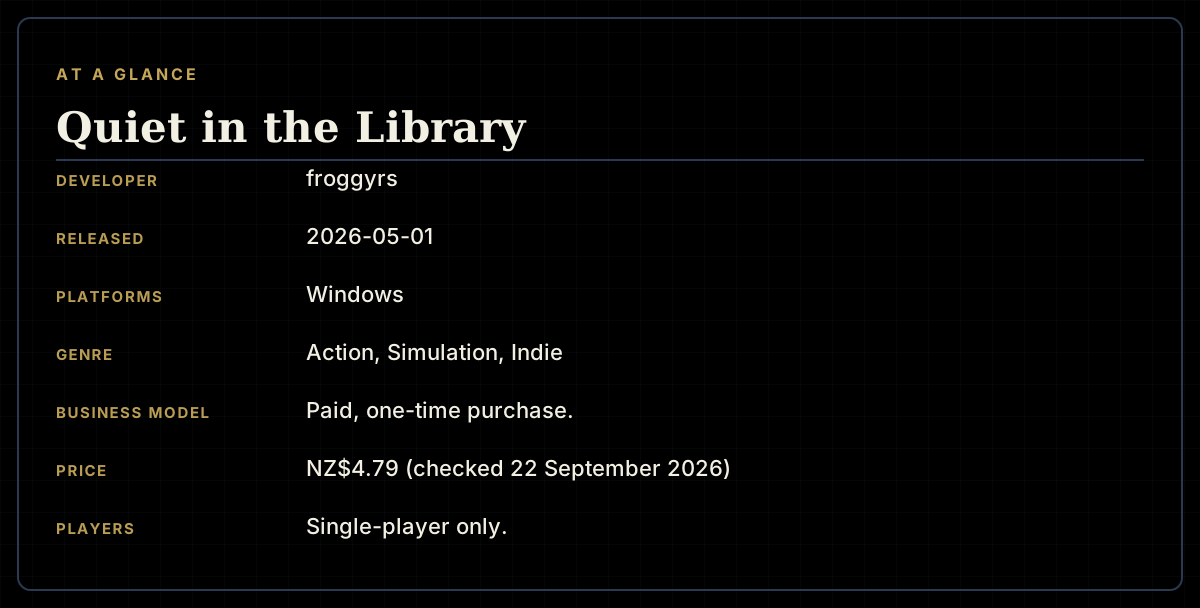
Quiet in the Library
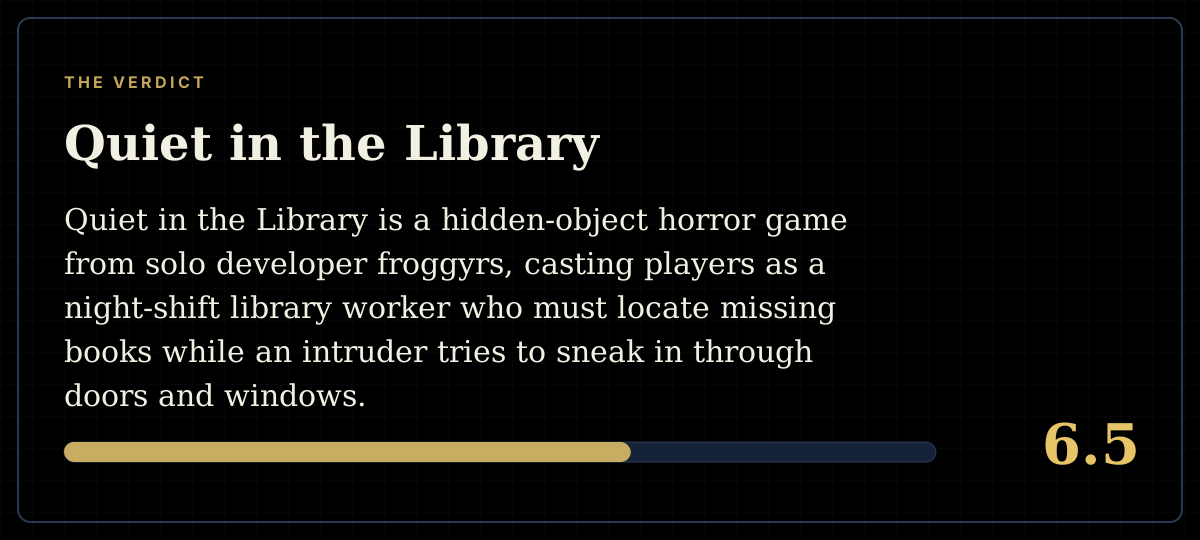
6.5 / 10
- Developer
- froggyrs
- Publisher
- froggyrs
- Released
- 1 May 2026
- Platforms
- Windows
- Genre
- Action, Simulation, Indie
- Monetisation
- Paid, one-time purchase.
- Players
- Single-player only.
The short version
Quiet in the Library is a hidden-object horror game from solo developer froggyrs, casting players as a night-shift library worker who must locate missing books while an intruder tries to sneak in through doors and windows. Its small, entirely positive English review sample praises tense, unique gameplay and satisfying skill progression, tempered by a severe, corroborated complaint that its audio-based threat-detection system is close to unusable for players who are hard of hearing or without good headphones.
Biggest strengths
- Praised by multiple reviewers for genuinely fun and unique gameplay built around a hidden-object core layered with a stalking intruder threat, described by one reviewer as consistently tense throughout.
- Praised by more than one reviewer for strong visual presentation and, separately from the game's central accessibility complaint below, its overall audio design and music.
- Praised for a well-structured difficulty curve across easy, hard, and a final insane stage that teaches its systems gradually before testing them, with one reviewer describing a satisfying sense of skill progression toward beating higher difficulties.
Biggest weaknesses
- A severe, corroborated complaint from two independent detailed reviewers is that the game's audio cues for locating the intruder, a creaking sound for the trapdoor and a curtain sound for windows, are too similar to reliably distinguish, with one reviewer stating this "does not work at all" and makes the game "nigh impossible" for players who are hard of hearing or lack good headphones.
- A fair complaint from one detailed reviewer is a specific bug where getting caught while dozing off from exhaustion can cause the screen to go dark or render incorrectly, requiring a full force-quit and restart to fix.
- A fair complaint from one reviewer is a lack of downtime or rest periods, especially in the early levels, alongside a broader note from two reviewers that the game felt buggy at times.
Who it's for: Fans of short, tense hidden-object horror who have good headphones or strong hearing and are willing to judge from a small review base; players who rely on subtitles or visual cues, or who want a relaxing low-stress experience, should temper expectations sharply.
Our recommendation: A tense, distinctive horror debut whose core threat system leans so heavily on subtle audio cues that it risks locking out exactly the players who most need clear signals, worth a look only with good headphones and patience for its steep difficulty curve.
6.5 / 10
The night shift nobody wants
Quiet in the Library is a hidden-object horror game from solo developer froggyrs, putting players behind the desk of a library during the night shift, searching for missing books while an intruder tries to sneak in through doors and windows around the building. This review draws on an English review sample of only 5 reviews at the time of research, all of them positive, a small but consistent base.
The game structures its eleven levels across three tiers of escalating difficulty: five easy stages, five hard stages, and a single final insane stage. Each level layers its core hidden-object searching against a handful of side systems, among them a stove-repair minigame, a coffee-based tiredness meter that must be managed to avoid dozing off, and a computer minigame, all while the looming threat of the intruder demands constant attention in the background.
Praised for tense, unique gameplay and strong presentation
Reviewers consistently credit the game for delivering a genuinely distinctive and tense experience. One detailed reviewer, who reports beating all eleven levels across 363 minutes of play, describes "fun and unique gameplay, good audio design... amazing visuals" and notes the game kept tension high throughout their full playthrough. A second reviewer, still working through the harder stages, independently praises the game as "made with soul," singling out its atmospheric early levels. This review treats that as fair: two independent reviewers, one having finished the game and one still partway through it, both converging on real appreciation for its distinctive premise and visual presentation, is credible evidence the core experience lands even before weighing its problems.
Praised for a well-paced difficulty curve and satisfying skill progression
This review also found specific, corroborated praise for how the game teaches and tests its systems. The completionist reviewer above reports a genuine sense of achievement in mastering the harder content, noting they may have been among the first to clear the game's toughest "insane" stage based on how few players had the associated achievement at the time. The most detailed review in this sample, a long, structured account of the full stage progression, separately praises how the early easy stages effectively teach each individual system, the stove repair, the coffee management, the computer minigame, before the hard and insane stages combine them under real pressure. This review treats that as fair: a first-hand account of teaching-led early design paired with an independent account of hard-won mastery in the late game is credible evidence of a genuinely well-paced difficulty curve, distinct from the specific late-game complaints raised below.
A severe, corroborated complaint about audio-based accessibility
Set against that praise, this review found the sample's most serious and best-corroborated complaint, aimed squarely at the game's central threat-detection mechanic. The intruder sneaks in through either a trapdoor or a window, and the game expects players to identify which by ear alone, a creaking sound for the trapdoor and a distinct curtain sound for windows. The sample's most detailed reviewer states plainly that this system "does not work at all and makes the game frustrating, especially for players with hearing difficulties," explaining that the two sounds "are far too similar" to reliably tell apart even with attentive listening. A second, independent reviewer, still stuck partway through the hard stages, raises the identical concern from a different angle: "the game is highly audio-based, so if you don't have headphones or are hard of hearing the game is nigh impossible." This review treats that as fair, and unusually severe for a game this small: two independent detailed reviewers, arriving at the same specific diagnosis of an unreliable core audio cue from different play experiences, is credible evidence of a genuine design flaw that actively locks out a meaningful portion of potential players rather than a minor annoyance. The first reviewer's own suggested fix, adding a clearer visual indicator showing which room is under threat alongside the audio cue, strikes this review as a reasonable, low-effort remedy for what is otherwise a well-regarded core loop.
A fair complaint about a game-breaking bug and a lack of downtime
This review also found a specific, if less severe, technical complaint from its most detailed reviewer: getting caught by the exhaustion mechanic while dozing off can trigger a bug where the screen goes dark or renders incorrectly, with "the only fix" being to force quit and restart the game entirely. That same reviewer's completionist counterpart separately describes the game as "buggy at times" without specifying further, which this review treats as loose corroboration of a real, if inconsistently triggered, stability problem rather than an isolated one-off report. The completionist reviewer's sole complaint is a related pacing issue, a lack of downtime or rest periods, especially in the earlier levels, which this review reads as a smaller but genuine criticism of how relentlessly the game's tension is maintained even when players might reasonably want a breather.
Achievement data is consistent with a steep late-game difficulty spike
This review's own check of Steam's global achievement data shows a clear staircase pattern: 88.0 percent of players clear the first easy level, dropping steadily through the middle stages to 45.6 percent reaching the game's ending, then falling sharply through the hard tier to just 11.2 percent and 8.0 percent for the fourth and fifth hard stages, and only 3.2 percent for the final insane stage. That steep late drop-off is consistent with reviewer accounts of unfair-feeling threat behaviour and confusing audio cues specifically in the harder stages, lending independent, data-based support to the complaints raised above even though no reviewer cited the achievement figures directly.
A note on this review's small, entirely positive sample
This review draws on only 5 English reviews at the time of research, all of them positive, a small and uniformly favourable base. Both specific complaints raised above, the audio-accessibility problem and the freeze bug, rest on the same single most-detailed reviewer, corroborated only partially by a second, less detailed account, so this rating should be read with some caution until a larger review base is available. Given how severe and specific the accessibility complaint is, however, this review has weighted it heavily despite the small sample and the absence of any negative reviews overall, rather than defaulting to a higher score purely on the strength of a clean positive record.
Final verdict
Quiet in the Library is a short, distinctive hidden-object horror game that this review found genuinely tense and well-paced across its small, entirely positive review sample, with real praise for its visual presentation and its gradual, teaching-led difficulty curve. That credit is significantly undercut by a severe, corroborated complaint that its core audio-based threat system is close to unusable for players who are hard of hearing or without good headphones, alongside a specific freeze bug and a lack of early breathing room. For fans of short, tense horror with good headphones and patience for a steep late-game curve, it's a worthwhile, inexpensive pickup; players who need reliable visual or subtitled cues should temper expectations sharply.
Pros and cons
Pros
- Praised by multiple reviewers for genuinely fun and unique gameplay built around a hidden-object core layered with a stalking intruder threat, described by one reviewer as consistently tense throughout.
- Praised by more than one reviewer for strong visual presentation and, separately from the game's central accessibility complaint below, its overall audio design and music.
- Praised for a well-structured difficulty curve across easy, hard, and a final insane stage that teaches its systems gradually before testing them, with one reviewer describing a satisfying sense of skill progression toward beating higher difficulties.
Cons
- A severe, corroborated complaint from two independent detailed reviewers is that the game's audio cues for locating the intruder, a creaking sound for the trapdoor and a curtain sound for windows, are too similar to reliably distinguish, with one reviewer stating this "does not work at all" and makes the game "nigh impossible" for players who are hard of hearing or lack good headphones.
- A fair complaint from one detailed reviewer is a specific bug where getting caught while dozing off from exhaustion can cause the screen to go dark or render incorrectly, requiring a full force-quit and restart to fix.
- A fair complaint from one reviewer is a lack of downtime or rest periods, especially in the early levels, alongside a broader note from two reviewers that the game felt buggy at times.
- This review's own assessment notes the sample here is small, only 5 English reviews at the time of research, all positive, so this rating leans on the substance of the audio-accessibility complaint rather than on broad negative corroboration.
Screenshots
-
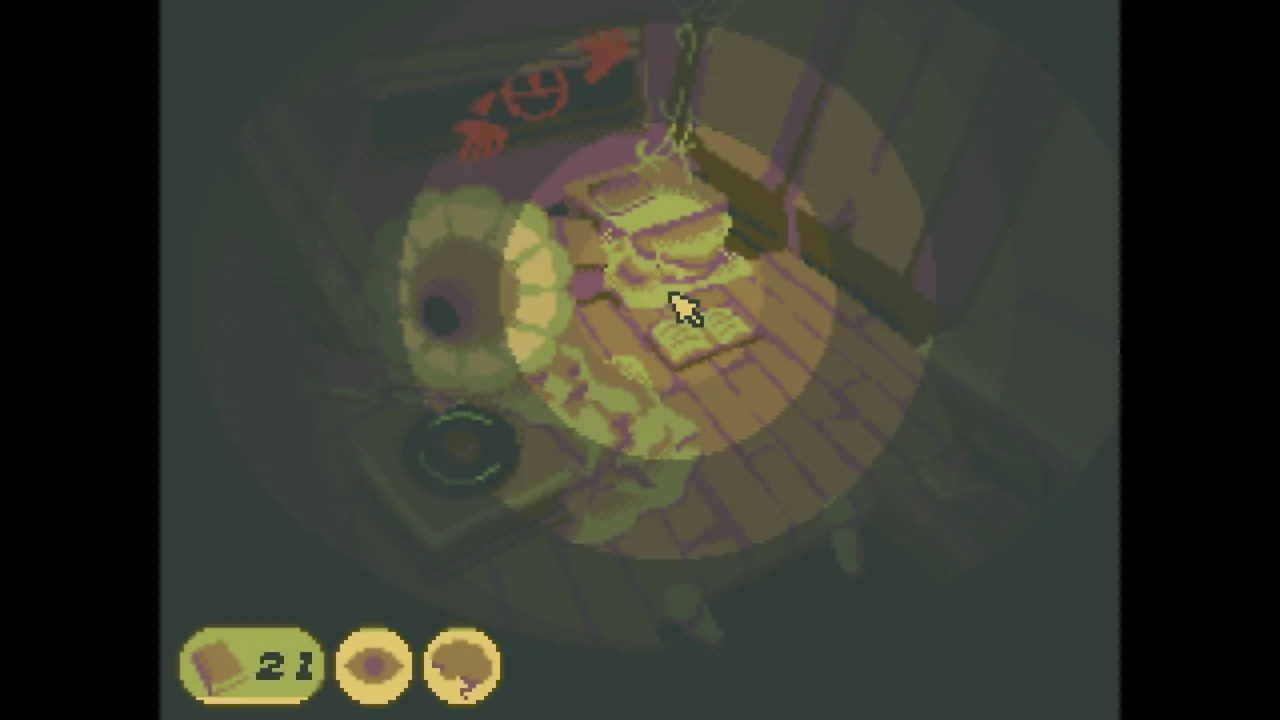
Quiet in the LibraryImage: froggyrs via Steam -
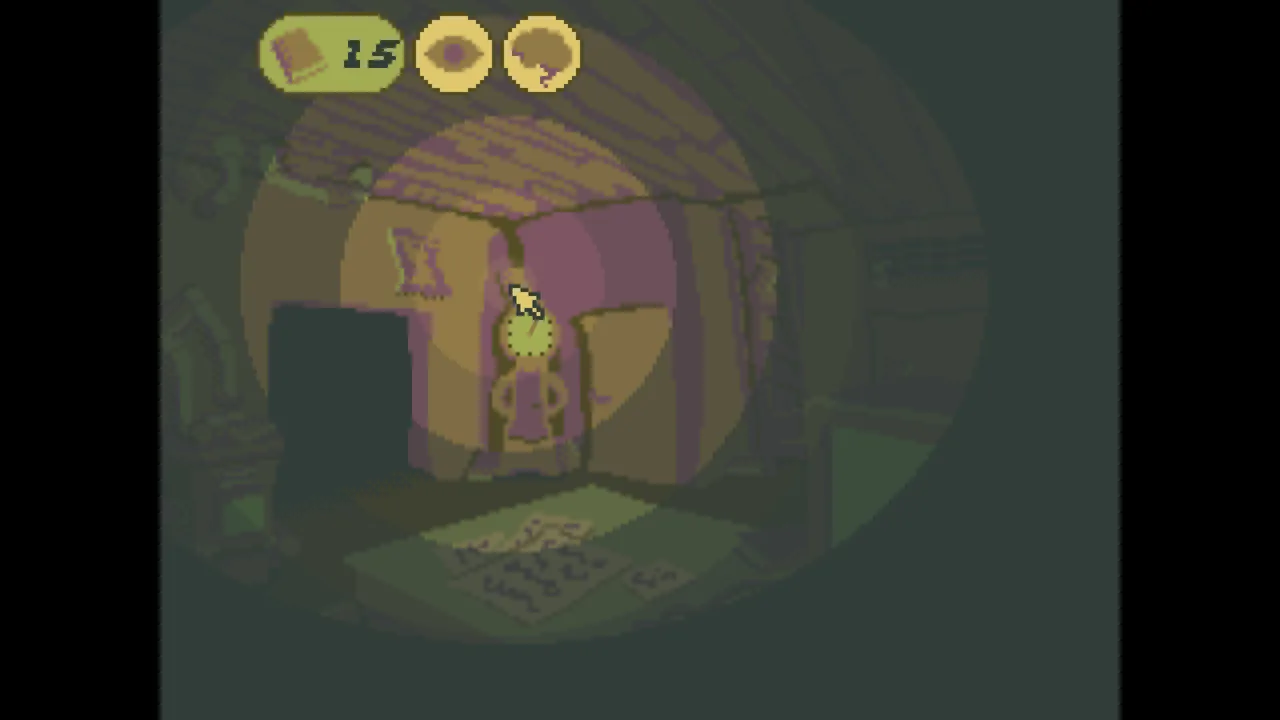
Quiet in the LibraryImage: froggyrs via Steam -
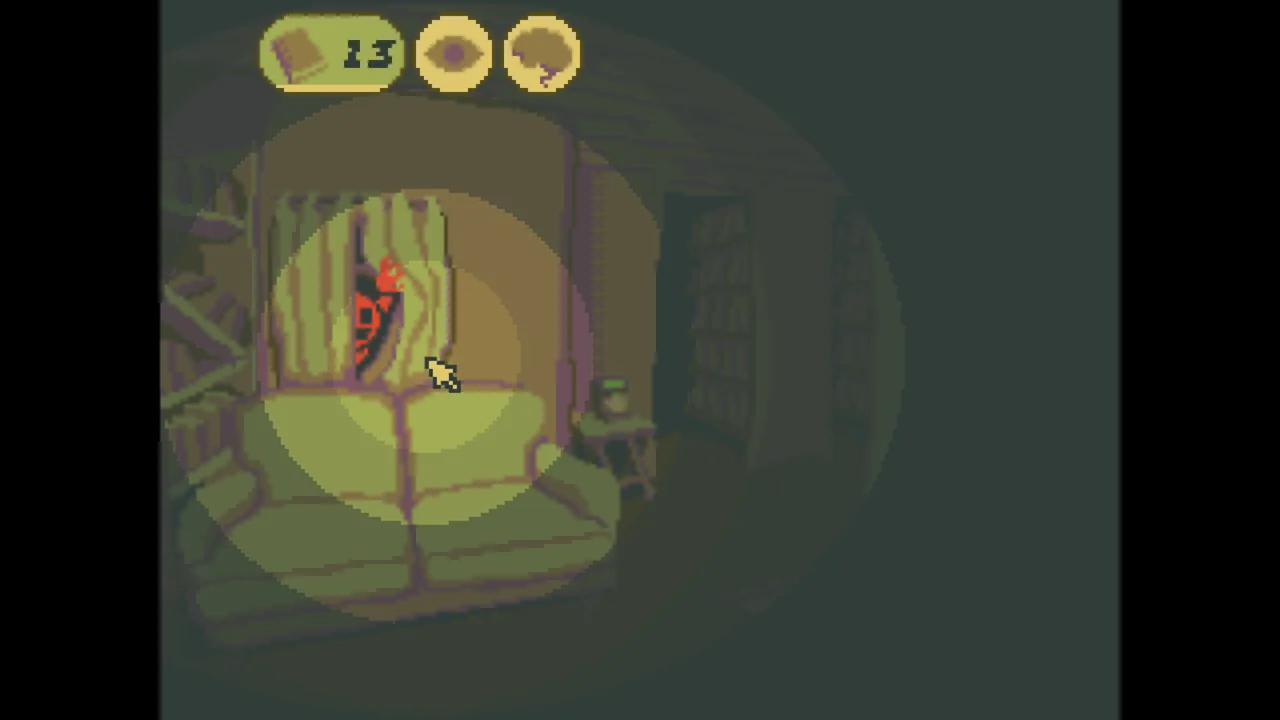
Quiet in the LibraryImage: froggyrs via Steam -
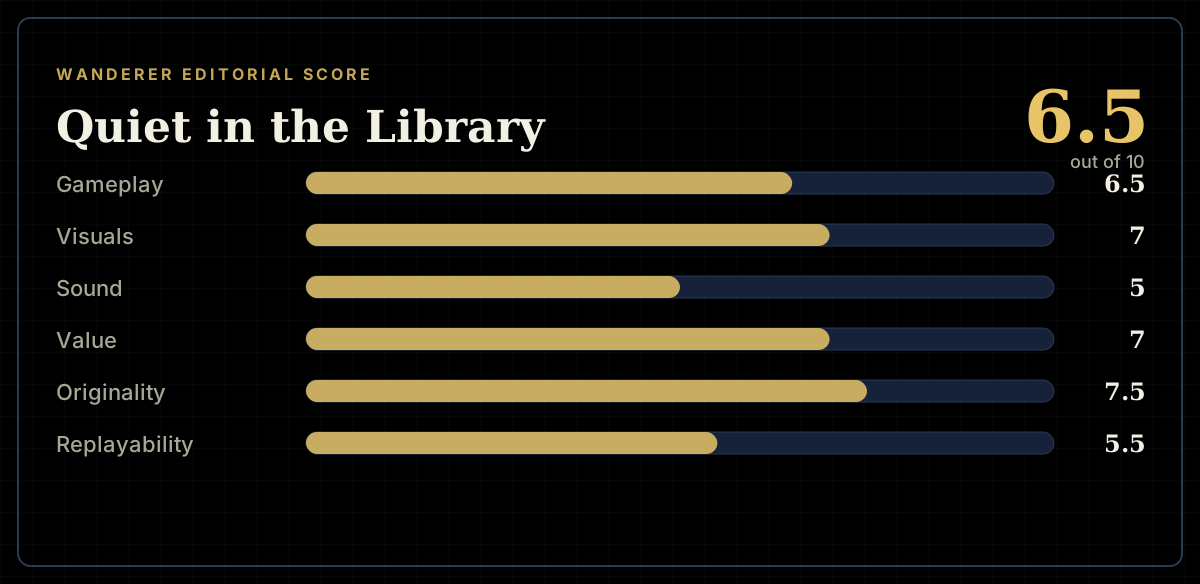
How the review scores each part of the gameWanderer Editorial -
The specs at a glanceWanderer Editorial -
The short versionWanderer Editorial