Game review
Hangin' Off!
7.5 / 10
- Developer
- Sk1ds Retro Works
- Publisher
- Sk1ds Retro Works
- Released
- 24 June 2026
- Platforms
- Windows
- Genre
- Indie, Racing, Early Access
- Monetisation
- paid
- Players
- false
The short version
Biggest strengths
- Driving physics and a sense of lean and speed reviewers repeatedly called truer to Sega's original arcade classics than most modern imitators, with several favorably comparing it to Yu Suzuki's work
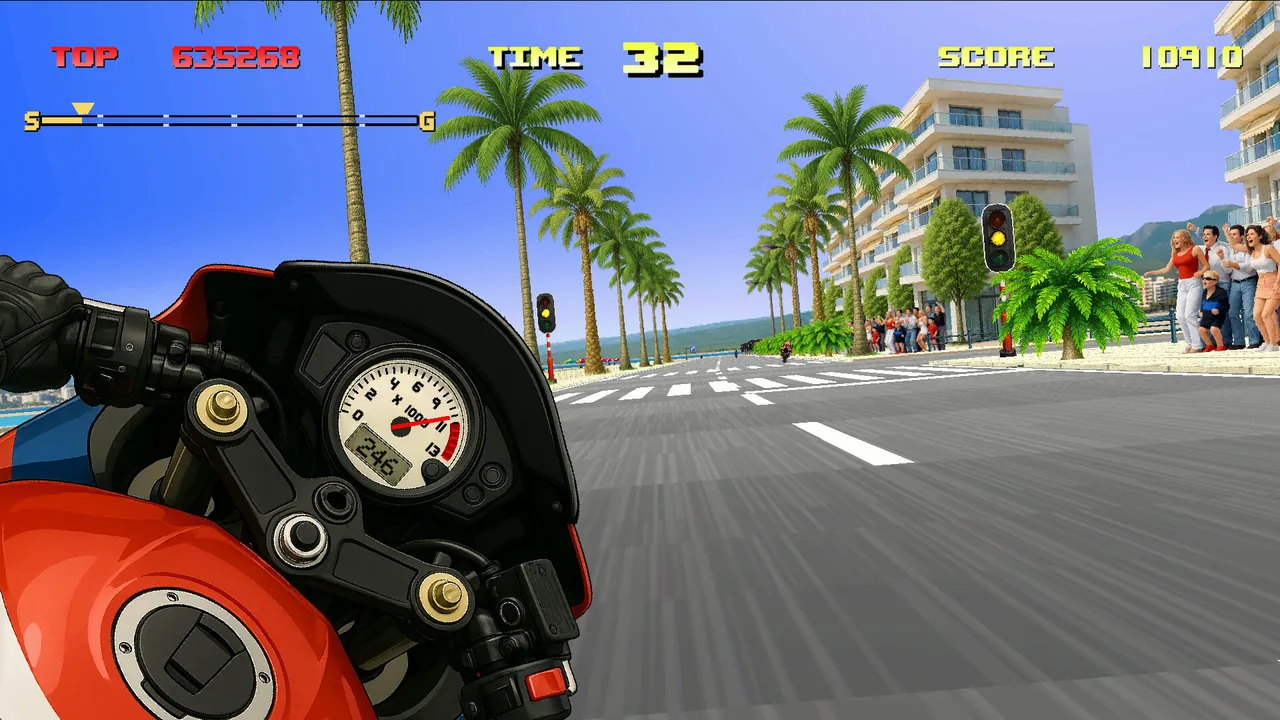
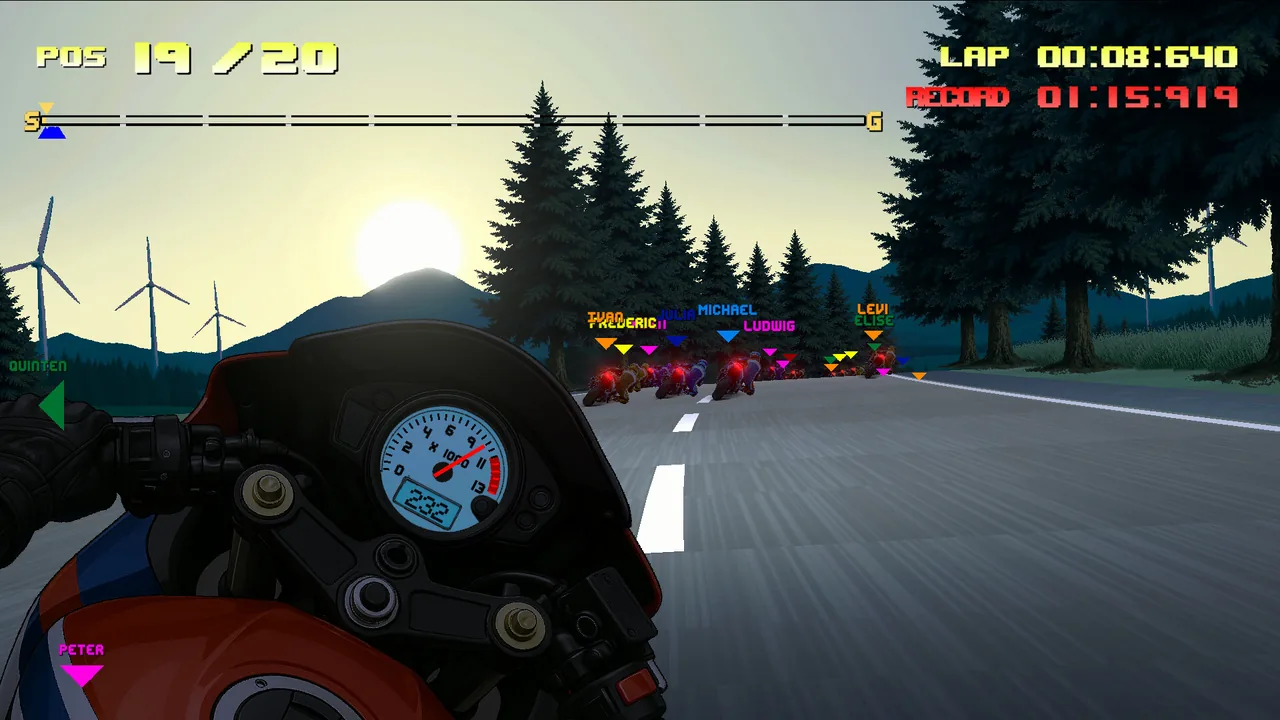
- A distinctive first-person cockpit view that sells the sensation of leaning through corners at high speed
- Highly customisable Single Race settings that let players tune difficulty and field size, giving even the current small content set real replay variety
Biggest weaknesses
- A genuinely thin Early Access track and mode list at launch, with reviewers explicitly framing the current build as a taste of the full game rather than a complete package
- A sound mix multiple reviewers called painfully loud and harsh on crashes, with default volume shipping at maximum
- A UI reviewers described as needing more work, typical of early-stage arcade racers but still a rough edge worth knowing about
Who it's for: Fans of Sega's Hang-On, Super Hang-On, and OutRun looking for a faithful modern arcade motorcycle racer, who can accept a very small Early Access track list and some launch-day audio mixing issues
Our recommendation: recommended
7.5 / 10
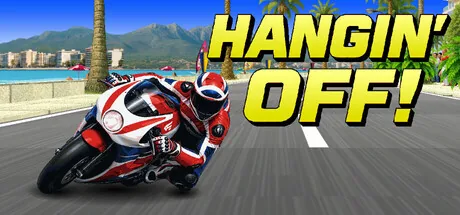
Hangin' Off! entered Early Access on June 24, 2026 with a target squarely in its sights: recapturing the feel of Sega's Hang-On and Super Hang-On, the arcade motorcycle racers that defined a very specific sensation of leaning your whole body into a corner at speed decades before most modern racing games bothered trying. Reviewers overwhelmingly agree it hits that target. The review pool sits at 94% Positive across 35 English reviews, and the praise is unusually consistent in what it singles out: the physics feel right in a way genre throwbacks rarely manage.
The strongest reviews in the pool read like love letters to Sega's arcade lineage rather than conventional critiques. One reviewer, a self-described longtime fan of Hang-On, wrote that the driving physics "would make Yu Suzuki proud" and said it's clear the developer spent most of their time getting the bike feel right, calling the result "exactly how it should be." Another described the game as a technical marvel reminiscent of what "super scaler" arcade technology might have evolved into had 3D graphics never taken over, and went further still, arguing the handling is "BETTER than the source material it's trying to emulate." A third reviewer, playing on a controller, praised the analogue-stick controls as "spot on," singling out the tension of holding a racing line through long sweeping turns while keeping a turbo meter charged, and specifically liked that AI riders can be barged and barge back without ever feeling unfair — mistakes in a crash reliably feel like the player's fault, not the game's.
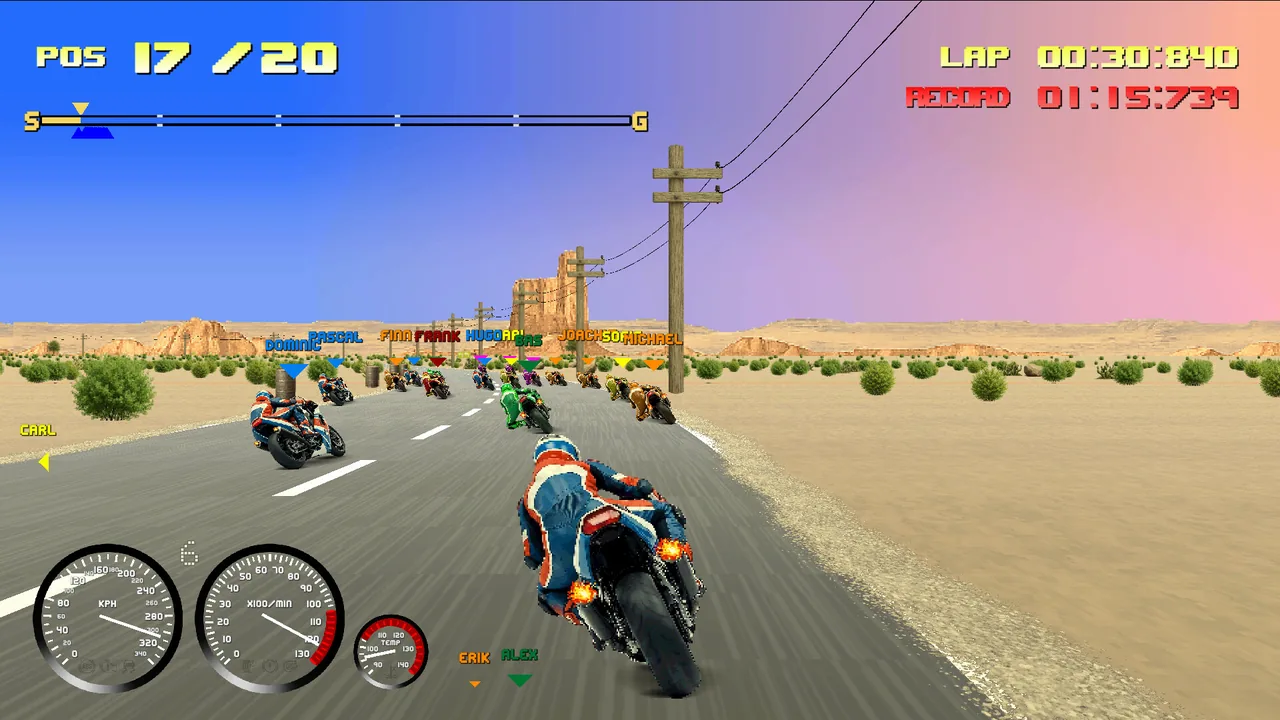
The comparisons reviewers reach for tell their own story about the game's identity: Hang-On, OutRun, Road Rash, Rad Mobile, and Moto Racer all come up repeatedly, alongside the first-person cockpit view that several reviewers said sells the illusion of leaning through a corner better than they expected. One reviewer specifically praised the "Multi-Class GP feel" created by highly customisable Single Race settings, which let players tune difficulty, field size, and course selection even with the current Early Access track list being small — currently built around two Arcade Runs in an OutRun-style time-attack format, with those same courses also playable in more configurable Single Races.
That thinness of content is the clearest, most consistently flagged shortcoming in the pool, and reviewers are candid about it rather than pretending otherwise. Several explicitly describe the current build as a demo-sized taste of a larger vision, with one calling it "an Early Access 'Demo'" in scare quotes, precisely because the paid build currently offers a similar scope to what a free public demo might. None of the reviewers making this point treat it as disqualifying, generally framing the low price as fair compensation for buying in early, but it's worth understanding going in: this is not yet a racing game with a deep mode roster or a long track list, and buyers are explicitly betting on where Sk1ds Retro Works takes it from here.
Audio is the other recurring complaint, and it's sharper than the content-thinness one. Multiple reviewers flagged that the game's default volume ships at maximum and that the sound mix during crashes is jarring, with one reviewer who otherwise loved the game writing bluntly that "if you crash, prepare your ears because they will bleed." That same review connects the sound-balance issue to a separate point worth flagging on its own: the developer's Steam store page carries an AI Generated Content Disclosure stating that "all 2D visual artwork used in the game was created or edited with the assistance of generative AI tools, then manually reviewed, selected, adjusted, and implemented by the developer," covering in-game sprites, store artwork, and promotional material. That same reviewer wrote that seeing the disclosure was part of what prompted them to refund the game, and a separate, much shorter review dismissed the visuals outright as "ai slop art." Because the disclosure is the developer's own stated practice rather than a reviewer's unverified allegation, Wanderer treats it here as a sourced fact about the game rather than a contested claim — but it's clearly a dividing line for at least some of the audience, and worth knowing before buying.
Value for money follows a similar pattern to the content-thinness complaint: reviewers consistently frame the $5.99 price as generous given how early the project is, rather than as a shortcoming in itself. One reviewer explicitly noted they don't usually buy into games this early in development but made an exception here specifically because the core driving felt strong enough to justify supporting the project's future, adding that the price made that decision easy. Another reviewer who tested the game on a controller called it "decent for the early price tag," while still flagging the UI as an area needing further work, "as is typical of such titles" at this stage. That framing, a small but confident foundation worth betting on rather than a full package worth judging harshly for what it's missing, runs through almost the entire positive side of the review pool, and it's a reasonable way to set expectations before buying in.
Weighed as a whole, Hangin' Off! delivers on the one thing that matters most for a game explicitly chasing a specific arcade legacy: the bike feels right, corner after corner, in a way that earned it comparisons to the genre's most beloved touchstones from reviewers who clearly know that lineage well. The Early Access limitations, a short track list and a sound mix that needs rebalancing, are real but addressable problems rather than structural ones, and the AI-generated art will matter more to some buyers than others depending on how strongly they feel about that disclosure. For fans of Sega's arcade motorcycle classics willing to buy into an early, thin build on the strength of its handling alone, this is an easy recommendation; for anyone hoping for a fully fleshed-out racing game today, it's worth waiting for a few more content updates first.
Pros and cons
Pros
- Driving physics and a sense of lean and speed reviewers repeatedly called truer to Sega's original arcade classics than most modern imitators, with several favorably comparing it to Yu Suzuki's work
- A distinctive first-person cockpit view that sells the sensation of leaning through corners at high speed
- Highly customisable Single Race settings that let players tune difficulty and field size, giving even the current small content set real replay variety
- AI riders reviewers described as fair competition, capable of barging and being barged back without feeling cheap or unbalanced
Cons
- A genuinely thin Early Access track and mode list at launch, with reviewers explicitly framing the current build as a taste of the full game rather than a complete package
- A sound mix multiple reviewers called painfully loud and harsh on crashes, with default volume shipping at maximum
- A UI reviewers described as needing more work, typical of early-stage arcade racers but still a rough edge worth knowing about
- The developer's disclosed use of generative AI tools for the game's 2D sprites, store art, and promotional material, a choice at least one reviewer said factored into their decision to refund
Screenshots
-
Hangin' Off!Image: Sk1ds Retro Works via Steam -
Hangin' Off!Image: Sk1ds Retro Works via Steam -
Hangin' Off!Image: Sk1ds Retro Works via Steam