Game review
Cell: Idle Factory Incremental
7 / 10
- Developer
- Octocube Games
- Publisher
- Octocube Games
- Released
- 12 December 2022
- Platforms
- Android, Windows via Google Play Games on PC
- Genre
- Factory Incremental
- Monetisation
- Free with optional rewarded video ads, a premium currency (Diamonds) that can also be earned in-game, permanent booster packs, chest autoclickers and two of three reward lanes sold as in-app purchases
- Players
- Single-player, with leaderboards and cloud saves
The short version
Four years of accumulated systems, given away free, with a prestige ladder deep enough that players measure their progress in years rather than hours. Almost nothing on mobile has this much game inside it.
It splits people because the economy underneath is built out of chest cooldowns, rewarded videos and daily caps, and the most useful things money buys aren't power — they're autoclickers and shorter cooldowns. Love it or bounce off it, the reason is the same design decision.
Biggest strengths
- Each new ship unlocks a whole menu with its own currency and rules, so progression delivers new systems rather than bigger multipliers
- Loop prestige, Ouroboros traversals and the Space Academy stack into a ladder measured in months, and the game keeps adding rungs
- Diamonds are a premium currency you can actually farm for free, up to a documented daily cap
Biggest weaknesses
- Loop requirements escalate on a published schedule, so every reset is deliberately slower than the last
- Key bonuses aren't applied retroactively, so a player who buys the obvious upgrade on schedule permanently loses value to one who read a guide first
- Diamonds, tokens and chests are gated by cooldowns and rewarded videos, so a free player's day is capped by attention rather than production
Who it's for: Incremental veterans who want a game that outlasts them, are happy running a spreadsheet beside it, and don't mind a check-in rhythm dressed as an idle game.
Our recommendation: Free, so the only real cost is a fortnight of your attention — and a fortnight is roughly how long it takes to find out whether the chest-and-cooldown rhythm reads as ritual or as chores. If it's chores by day three, nothing later in the ladder fixes that.
7 / 10
The community wiki for this game has an entire page teaching you how to point an external auto-clicker at it, and the developer's blessing is sitting right at the top of that page. Not a grudging tolerance. An invitation. You can learn more about Cell: Idle Factory Incremental from that one detail than from any feature list, because it tells you two things at once: the game respects your time enough to let you automate the parts it can't, and there are parts it can't.
CIFI — everyone shortens it — is a free Android incremental from Octocube Games, a small Danish studio, first released on 12 December 2022 and still shipping updates today. Half a million people have installed it. It has taken the r/incremental_games community award for best mobile incremental three years running, which its store page leads with, and it also generates more genuine argument than anything else in the genre. Both of those are earned.
One point of housekeeping, because the naming causes confusion: there is no Steam release and no browser build. The "Windows version" on the store is the Android build running under Google Play Games on PC, not a separate port, and Octocube's other titles — ISEPS, Chad's Galactic Mining Empire — are different games, not editions of this one. What you're getting is a phone game that happens to run on a desktop.
Eight games in a trench coat
The bottom of the loop is the oldest idea in the genre. Mk1 generators make cells, Mk2 generators make Mk1s, and so on up an eight-deep chain of machines building machines. If that were all of it you'd be done in a weekend.
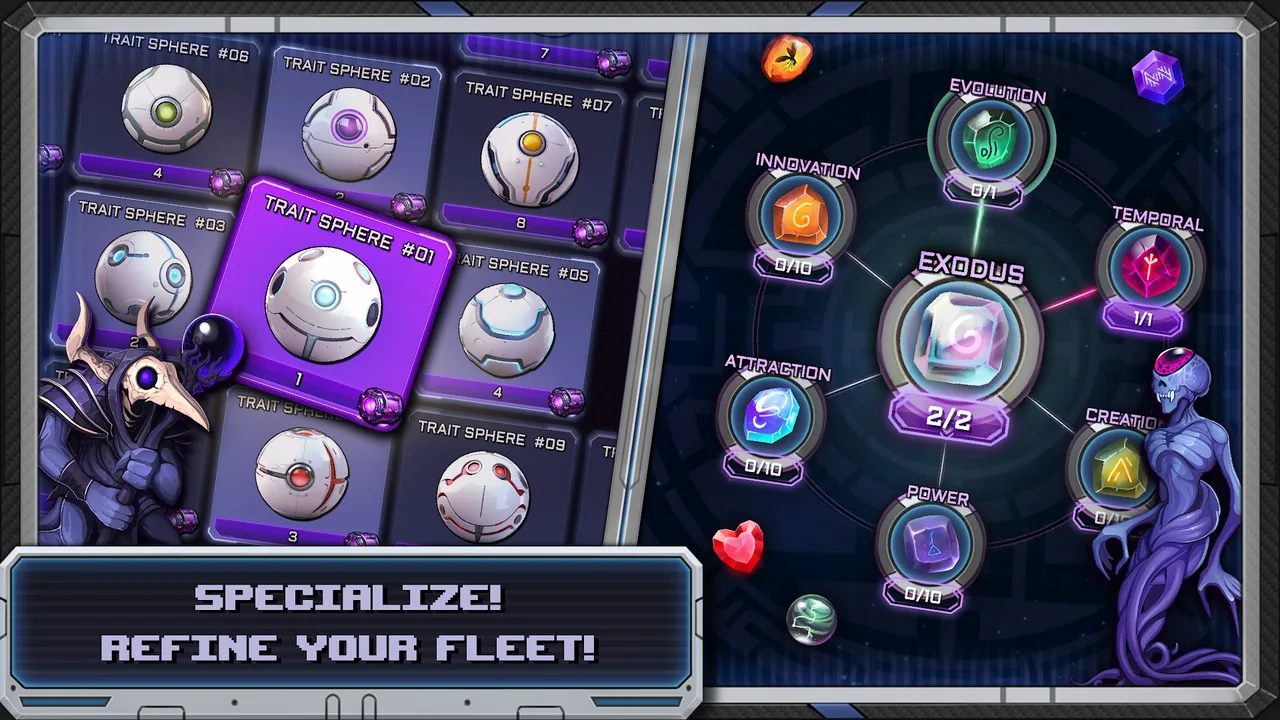
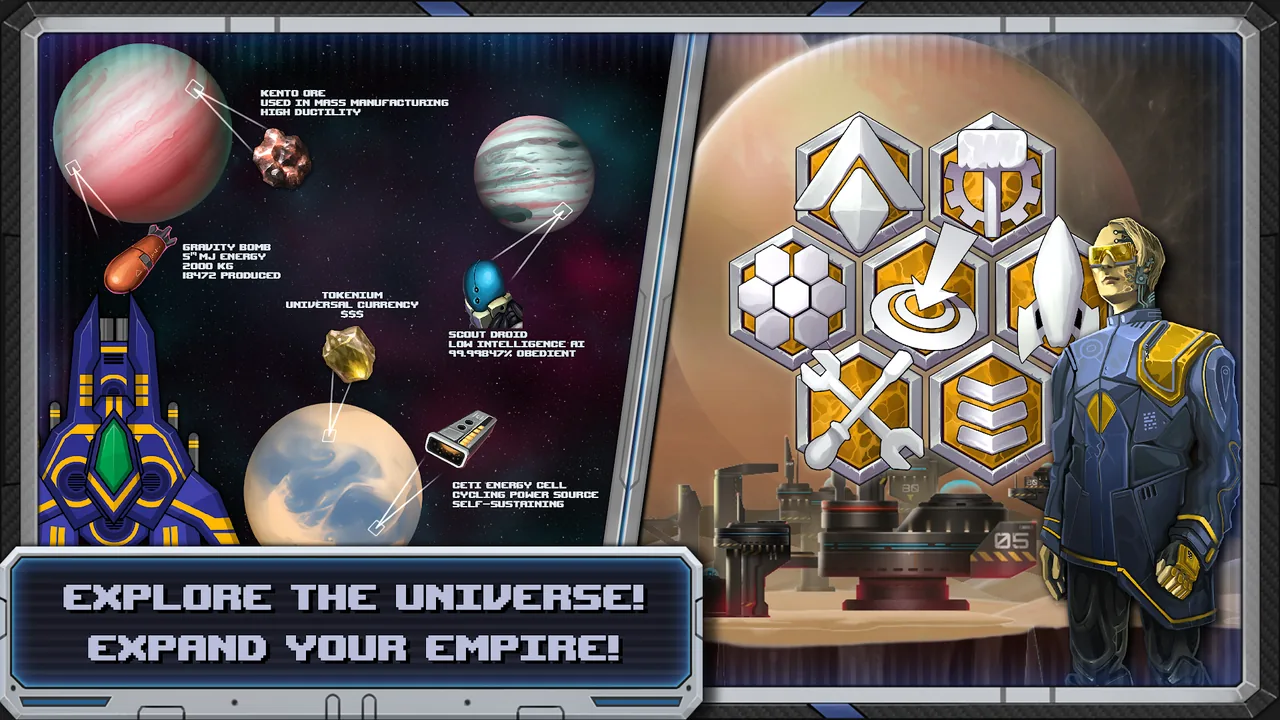
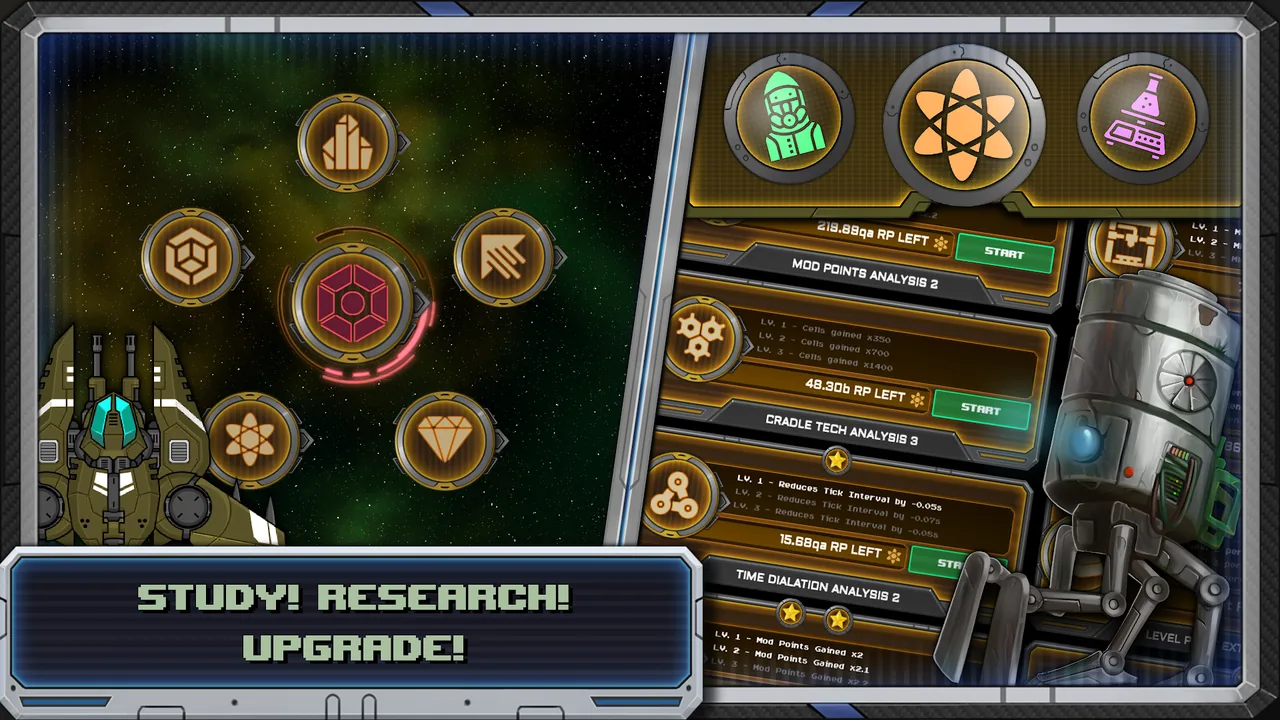
What CIFI does instead is use ships as chapter breaks. Buy the Cradle and you've got a ranking system with installs and crew. Buy the Demeter and a whole shard-mining economy appears, running Operations on tick timers. The Hephaestus hands you automation. The Zagreus opens loop prestige. The Zeus bolts on a Space Academy with projects, missions, loot reports and craftable gear sets. The Ouroboros unlocks traversals and a Hunters Headquarters where two hunters grind materials on their own schedule.
Every one of those is a menu with its own currency, its own upgrade tree and its own optimal play. That's the trick, and it's a good one: progression here delivers new systems rather than bigger numbers attached to old ones. Most incrementals show you their whole hand in the first fortnight and spend the next six months adding zeroes. CIFI is still introducing mechanics after the point where its competitors have run out of ideas, which is why its players talk in years.
The cost of that structure is legibility. Eight economies stacked on each other means eight sets of rules to hold in your head, and the interface — dense, tabbed, functional sci-fi industrial — has to carry thousands of upgrades. It does that competently. It does not do much to teach them.
The wall is published, not hidden
Loop prestige is where the game's real character shows. Reset, lose your cells, shards, generators and ship ranks, and convert filled loops into Mod Points for a permanent modification tree. Standard stuff. The interesting part is the requirement curve: you need three filled loops for the first reset, and each reset raises the bar — by roughly one loop each time early on, climbing to four per reset once you're past three hundred resets deep.
That's a deceleration schedule, written down, and it's the honest version of what every incremental does with a hidden exponent. Some players find it clarifying. Others read it correctly as a game that intends to outlive their interest in it, and leave.
Harder to defend is what sits beside it. Bonuses that increase Mod Points per loop are not applied retroactively, so buying the Zagreus the moment you can afford it is a permanent, invisible loss compared to stalling until every multiplier is stacked. The community named the workaround "Zaglagging". The game hints at it in an advanced-tips panel; the actual maths lives in shared Google Sheets — a diamond and ship optimiser, a shard calculator, a modification tree planner.
This is the crux of the argument about CIFI. For one kind of player, a game whose optimal line requires outside tooling is the highest compliment you can pay a system: it's deep enough to model. For another, it's a design that punishes the reasonable instinct — buy the upgrade when it lights up — and hands the advantage to whoever read a guide first. Both readings are fair. Only one of them is fixable, and four years in, it hasn't been.
The tap tax
CIFI is filed under idle, and the offline half is genuinely good: production continues while you're away, automation keeps buying generators and tech at your configured levels, and you're asked on return whether that offline session should have run with automations on or off. That's a thoughtful touch most of the genre doesn't bother with.
But the resources that actually gate you aren't production. They're diamonds and tokens, and those come from chests on cooldowns, from daily rewards, from arcade minigames that refresh every ten minutes, and from watching rewarded videos. Diamonds are capped at 800 a day from chests, a little more with the right research. So a free player's daily ceiling is set by how many times they pick up the phone, not by how well their factory is tuned.
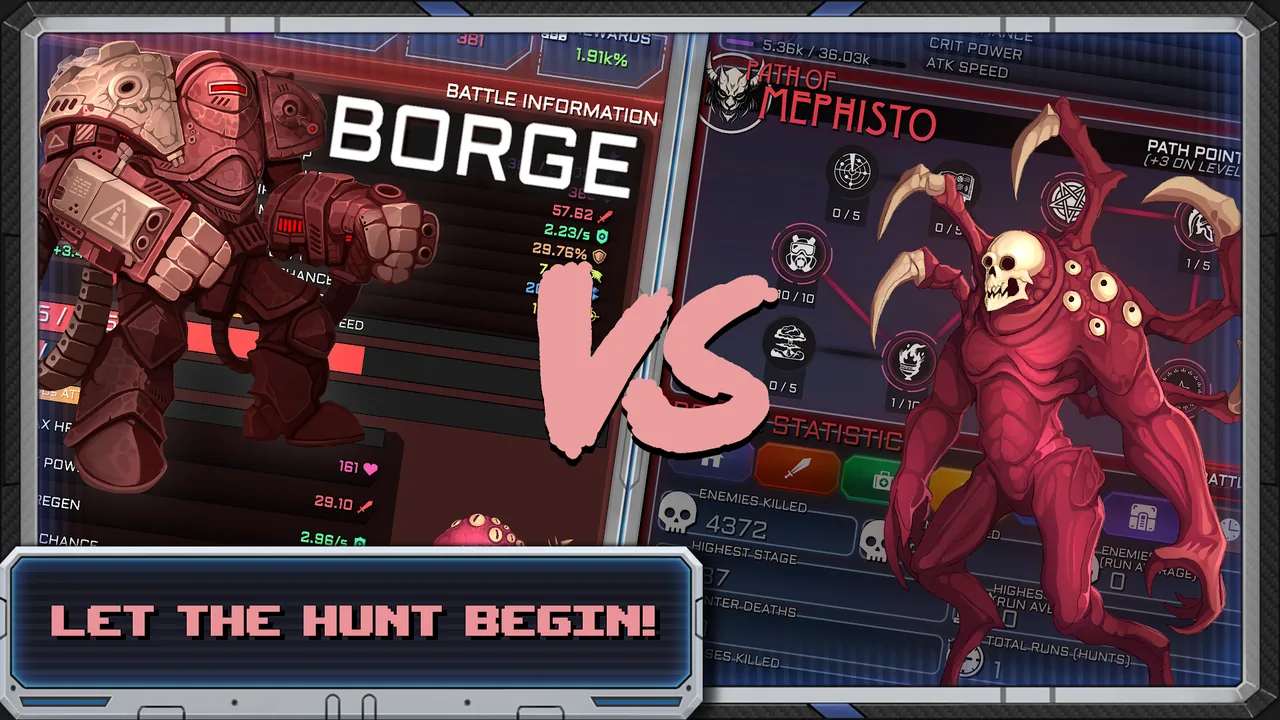
That's a check-in game wearing an idle game's clothes, and it's the reason the macro page exists. The developer's permission is genuinely player-friendly — far better than pretending the problem isn't there — but a game that plays noticeably better with an auto-clicker attached has told you exactly where its friction is. Snek and Bling-Blong are charming for the first fifty rounds. They are not charming as a ten-minute alarm.
What the money buys
There's no paywalled content here, and no timer demanding payment to continue. Diamonds are a premium currency you can farm. The purchases are permanent packs — Starter, Generators, Looper, Explorers, Collectors, Supporter, Traversal, Fragmentation — each granting diamonds plus a standing multiplier, and Google Play lists in-app items from US$1.49 to US$59.99 (checked 29 July 2026). Two of the three reward lanes that pay out as you level are sold rather than earned.
Look closely at that list, though, and the pattern is unusual. The purchases players rate most highly aren't the multipliers. They're the ones sold alongside the Starter Pack: an autoclicker for token chests, an autoclicker for diamond chests, and an extension that halves chest cooldowns. The premium version of this game is, functionally, the version that stops asking you to tap.
I don't think that's predatory — nothing is competitive, nothing expires, and the free game is the complete game. But it does mean the shop is priced against the interface rather than against the content, which is a strange thing to build deliberately, and it's why "the longer it's been out, the more it charges for" is a recurring note from long-term players. The pack list has grown with almost every major update.
Verdict
Seven out of ten, and it's a wide seven — this is a game plenty of people would score two points either side of that, for reasons I'd consider legitimate in both directions.
What CIFI does better than anything else on Android is keep going. The ship-by-ship structure gives it a rhythm of genuine reveals, the prestige layers stack without collapsing into each other, and the sheer volume of it, given away free by a studio still numbering its builds 0.7.x after nearly four years, is remarkable value. If you want an incremental that will still be showing you new menus next spring, there isn't a better free option on the platform.
What stops it going higher is that two of its central decisions work against the players it's courting. Non-retroactive bonuses turn outside knowledge into the strongest multiplier in the game, and a chest economy metered by cooldowns and adverts turns an idle game into a schedule. The macro permission and the autoclicker packs are both fixes for the same self-inflicted wound.
Install it if you like your progression measured in months, you're comfortable with a browser tab of community maths open beside it, and a phone that wants checking on doesn't bother you. Skip it if "idle" to you means setting something running and forgetting it — this one notices when you look away.
Pricing and monetisation checked 29 July 2026.
If a slower, quieter version of that idea appeals — progress that continues while the app is shut, without a chest timer to catch — Wanderer is built around it, and there's nothing to tap. Readers weighing the other end of the genre may also want our take on Milky Way Idle, which spends its complexity on a player-run economy instead of a prestige ladder.
Pros and cons
Pros
- Each new ship unlocks a whole menu with its own currency and rules, so progression delivers new systems rather than bigger multipliers
- Loop prestige, Ouroboros traversals and the Space Academy stack into a ladder measured in months, and the game keeps adding rungs
- Diamonds are a premium currency you can actually farm for free, up to a documented daily cap
- The developer permits external macros outright, which is more honest than the usual silent ban
- Snek and Bling-Blong are real little arcade games rather than reskinned progress bars
Cons
- Loop requirements escalate on a published schedule, so every reset is deliberately slower than the last
- Key bonuses aren't applied retroactively, so a player who buys the obvious upgrade on schedule permanently loses value to one who read a guide first
- Diamonds, tokens and chests are gated by cooldowns and rewarded videos, so a free player's day is capped by attention rather than production
- The most valuable purchases are chest autoclickers and halved cooldowns — you're buying your way out of the interface, not into the game
- Android only, with no iOS build, no browser version and no Steam release
- Still numbered 0.7.x nearly four years after launch, and the optimal-play maths lives in community spreadsheets rather than in the game
Screenshots
-
Cell: Idle Factory IncrementalImage: Octocube Games via Google Play -
Cell: Idle Factory IncrementalImage: Octocube Games via Google Play -
Cell: Idle Factory IncrementalImage: Octocube Games via Google Play -
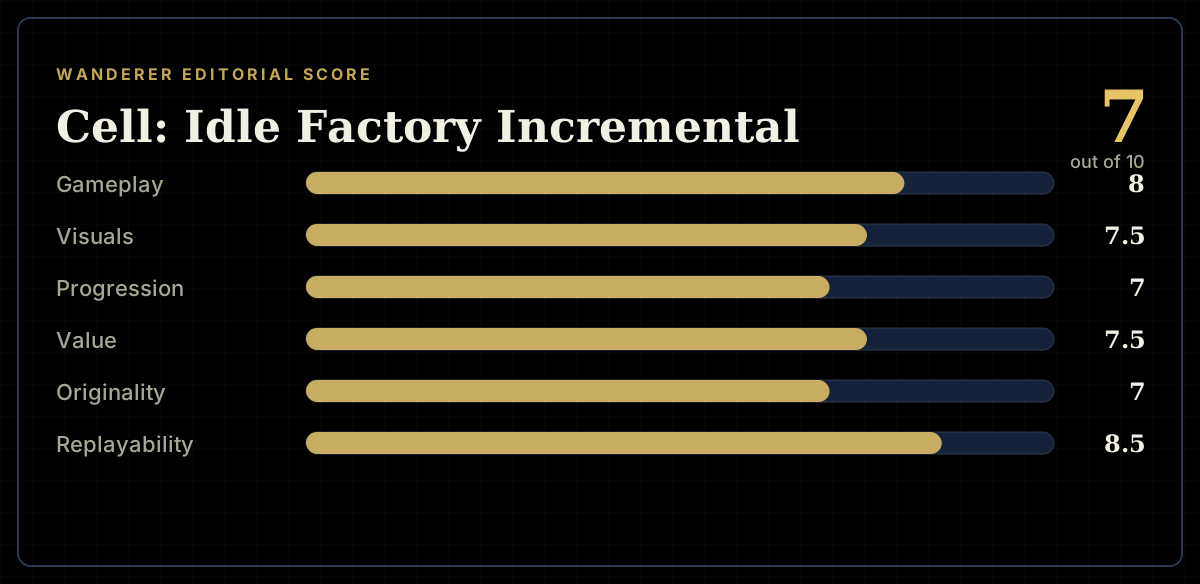
How the review scores each part of the gameWanderer Editorial -
The short versionWanderer Editorial