The Crownwatch Market: Players Can Trade At Last
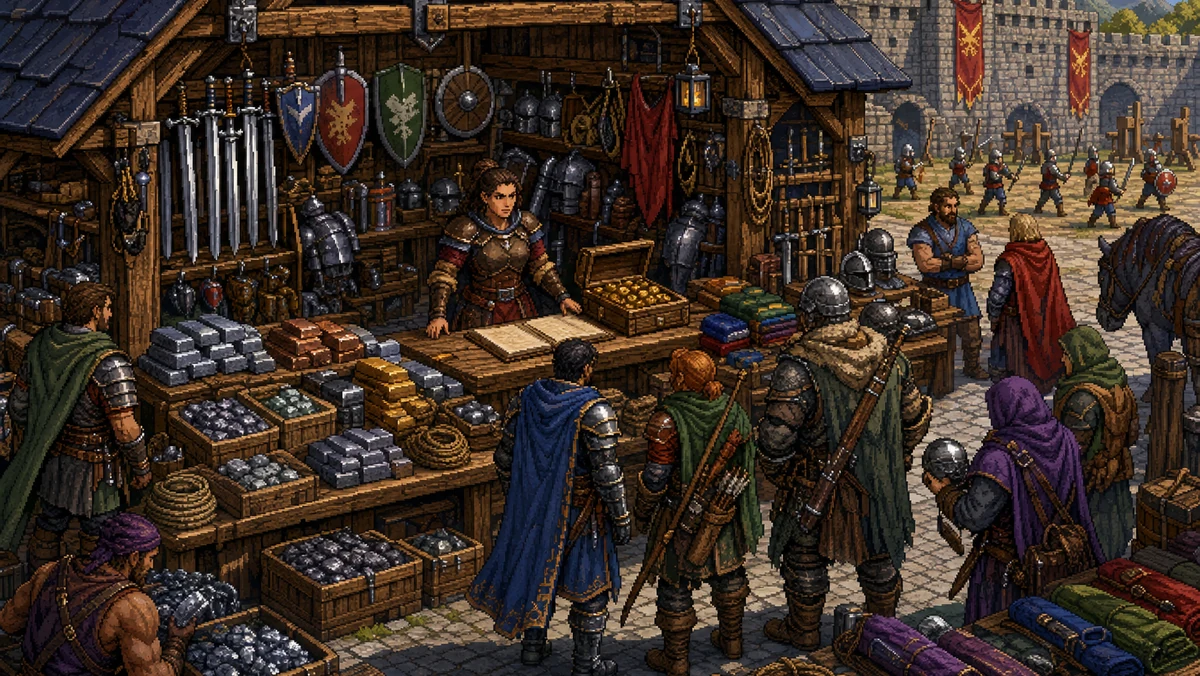
For as long as Wanderer has existed, everything you owned was found by you. There was no way to hand a spare bar to someone who needed it, and no way to buy the helmet you keep not finding.
Today there is. The player market has opened at Crownwatch March.
Where it is
A new trading hall stands in the merchant square inside the Crownwatch safe ward — a bespoke building, not a repainted shop. Quartermaster Vessa runs it. Tap her and the market opens.
You have to be there. The market is a place in the world, not a menu you carry, and that is on purpose: Crownwatch is deep enough east that reaching it is an achievement, and the walk gives the marketplace a natural centre of gravity.
What you can trade
Weapons, shields, helmets, body, legs and boots; cosmetics; ores, bars and logs; crafting materials, tools, teleport items, consumables and oddments. Sixteen categories in all, with search and filtering over the board.
Items move as the exact item you owned. Nothing is recreated from a name — the instance itself travels, so its rarity, its tempering, its stats and its quantity arrive with it. What you list is precisely what the buyer gets.
Everyone starts with three active listings, and a listing runs for seven days. More slots are available as a permanent upgrade, each one costing more than the last.
Market Tokens, not gold
The market trades in Market Tokens and never in coins. Your gold does not enter the market and cannot leave it.
New tokens come from exactly one place: supporters earn one per day of an active subscription. Everyone else gets them the other way — by selling something someone wants, which moves tokens from a buyer's balance to yours rather than minting any.
That's the whole supply, and it's deliberately tiny. It's why prices run from 1 to 10,000 tokens but realistic ones are single and double digits: this is a barter economy with a bookkeeper, not a gold sink with a second face.
A sale pays the seller in tokens, minus a 5% cut that is burned — it doesn't go to a bank or an NPC, it leaves the economy entirely. That's the only brake on token inflation, and it is why the numbers should stay small and legible for a long time.
How the money is kept safe
The unglamorous half of a marketplace is the half that decides whether people trust it, so it's worth saying plainly how this one behaves:
- Listing escrows the item. It leaves your pack and is held by the market. It is never duplicated and never re-made.
- Every money-moving action is a single database transaction with the rows locked. Two players cannot buy the same listing. Nothing can be collected twice.
- Sellers are usually offline when a sale lands, so proceeds are held at the market as a durable debt and credited when you come to collect.
- Retries can't double-pay. Every token movement is logged against a unique reference, so a dropped connection, a second device or a server restart replays to exactly the same balance.
Unsold listings and sale proceeds both wait for you at the counter. Nothing is lost by not being logged in.
Why now
The short answer is that Wanderer has enough stuff for trade to be interesting. Between the forge, the tempering bench, the new gathering professions and two dungeons' worth of drops, players are producing items that other players genuinely want and would otherwise never see.
Go and see what's on the board. If it's thin at first, that's the invitation.
Happy wandering.