RPG Game Meaning: What It Is, Where It Came From, and Why Millions Play
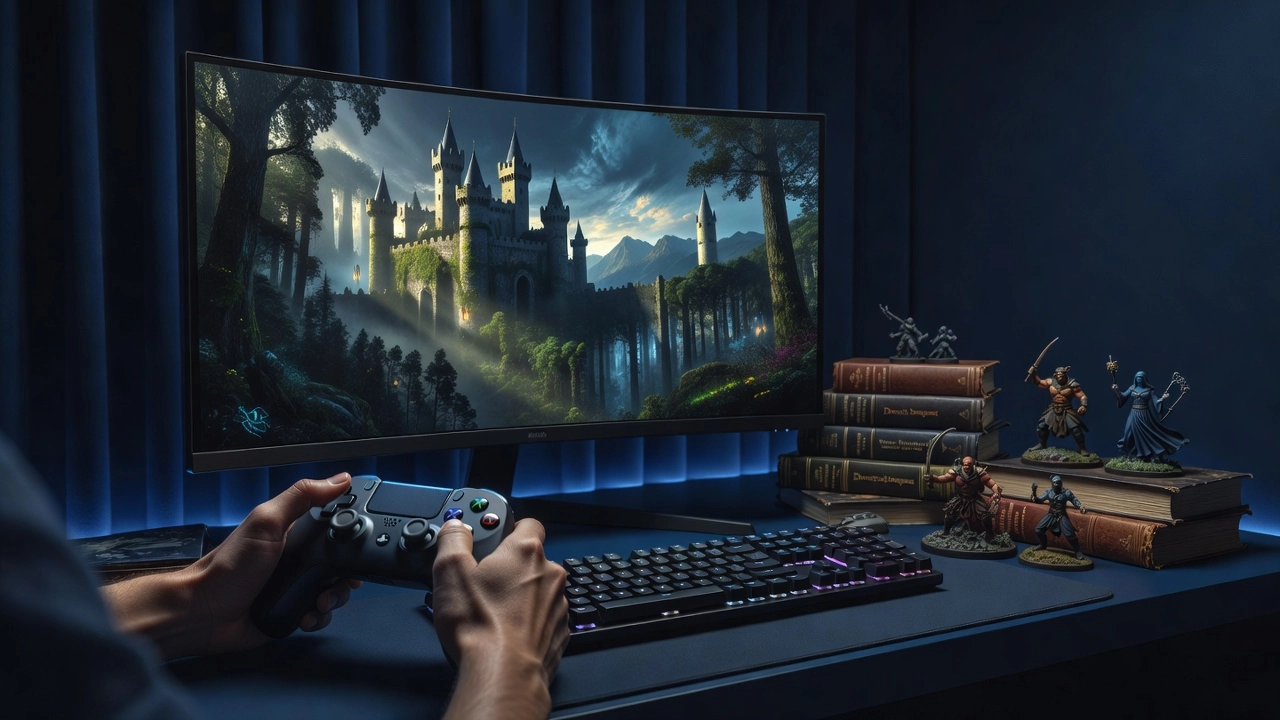
Have you ever watched someone play a video game where they level up their character, go on epic quests, and make choices that shape the entire story? If so, you were probably watching a role-playing game in action. But what exactly does that mean, and why do so many people around the world absolutely love this style of gaming?
Understanding the RPG game meaning is actually simpler than you might think, and once it clicks, you will start seeing this genre everywhere. From classic tabletop adventures played around a kitchen table to massive online worlds with millions of players, RPGs have a rich history and a very special way of pulling people in.
In this guide, we are going to break it all down for you in plain, friendly language. You will learn what RPG stands for, where the whole concept originally came from, and what makes these games so incredibly fun and addictive. Whether you are brand new to gaming or just curious about the term, you are in exactly the right place. Let's dive in!
What Does RPG Stand For?
Let's start with the basics. RPG stands for Role-Playing Game, and each word in that name tells you something important about what makes this genre special.
Role means you step into the shoes of a character. You are not just moving pieces around a board or clicking targets. You take on an identity, make decisions as that character, and experience the world through their eyes. Playing shifts the focus away from your own real-world reflexes and toward your character's built-up strengths, skills, and stats. The better your character grows, the more capable they become. And Game reminds you this is interactive. You are not watching a movie or reading a book. You are the one pushing the story forward.
Put it all together and you get something powerful. In an RPG, you don't just watch a story unfold, you are the character living it.
Quick side note worth mentioning: RPG means something completely different outside of gaming. In a military context, RPG is short for rocket-propelled grenade. If you landed here searching for the gaming definition, you are in the right place. The two have nothing to do with each other.
Every RPG, no matter the format, is built on three core pillars. First, character progression: your hero levels up, learns new skills, and grows stronger over time. Second, narrative depth: there is a story unfolding that your choices actually influence. Third, player agency: the decisions you make carry real consequences.
The beautiful thing is that these three pillars show up everywhere. Whether you are rolling dice at a tabletop, playing on a console, tapping through an RPG on your phone, or exploring a browser-based fantasy world, the same DNA is present. The genre started at the tabletop and grew into every screen imaginable, but those three foundations never changed.
Where Did RPGs Come From?
It all started not on a screen, but around a kitchen table.
In 1974, Gary Gygax and Dave Arneson published Dungeons and Dragons, and the idea of role-playing as a game was suddenly real. Players would gather together, create characters with names, backstories, and stat sheets, and then roll dice to determine their fate. One person, called the Dungeon Master, would narrate the world and referee the action. There were no graphics, no controllers, and no loading screens. Just imagination, paper, and the shared thrill of a story unfolding in real time. It sounds simple, but it was revolutionary. For the first time, you were the hero, and the adventure was entirely your own.
Then came the 1980s, and everything changed again. Developers looked at those paper character sheets and thought: what if we built this on a computer? Titles like Ultima, Final Fantasy, and The Legend of Zelda took the core ideas of tabletop play (quests, progression, choices, and combat) and translated them into pixelated worlds players could explore on a screen. You no longer needed a Dungeon Master or a group of friends at the table. The game itself guided you. Millions of players who had never touched a dice set suddenly found themselves deeply invested in leveling up their characters and chasing down the next quest. You can see a detailed look at how this market evolved in this Role-playing Games Market Research Report.
The next leap came in the late 1990s and 2000s with the rise of MMORPGs, or Massively Multiplayer Online Role-Playing Games. Titles like RuneScape and World of Warcraft created persistent online worlds where millions of players existed in the same space simultaneously. Your character lived in a world that kept moving even when you logged off. It added a social layer that tabletop games had always had, but now scaled to a global audience.
And that audience has only grown. The global RPG market is valued at $48.2 billion in 2025, with projections pointing toward $89.6 billion by 2033, growing at a steady 8.1% CAGR. What started with a handful of friends rolling dice has quietly become one of the most valuable entertainment genres on the planet.
The Main Types of RPG Games
Now that you know where RPGs came from, it helps to understand that the genre has grown into several distinct flavors. Each type plays differently, attracts different kinds of players, and scratches a different kind of itch. Here is a breakdown of the main categories you will encounter.
Action RPG
Action RPGs are probably the most immediately exciting type for new players. In these games, combat happens in real time, which means your reflexes and timing matter just as much as how you have built your character. You might be dodging fireballs, chaining combos, or swapping weapons mid-fight. Games like Diablo and Genshin Impact are great examples. They are fast, visually impressive, and give you that instant rush of feedback when a fight goes well. The appeal is that skill and strategy both play a role, so there is always something to improve.
Turn-Based RPG
Turn-based RPGs slow things down in the best possible way. Instead of reacting in real time, you and your enemies take turns making decisions. You choose an action, the enemy responds, and so on. This format rewards careful thinking and long-term planning rather than quick fingers. Final Fantasy and Persona are classic examples that have built massive fan bases over decades. If you enjoy chess-like decision-making and want to feel genuinely clever after a tough battle, this style is incredibly satisfying. The Wikipedia overview of role-playing video games confirms that turn-based combat is one of the oldest and most established RPG formats.
MMORPG
MMORPGs take the RPG experience and make it massively social. Thousands of real players share the same persistent online world, completing quests, forming guilds, trading items, and sometimes competing against each other. World of Warcraft and RuneScape are the benchmark examples here. The appeal is the sense of living inside a world that keeps going whether you are logged in or not.
Tactical RPG
Tactical RPGs add a layer of grid-based strategy on top of traditional RPG character building. Positioning your units on the battlefield matters enormously, and planning several moves ahead is often the difference between winning and losing. Fire Emblem and Final Fantasy Tactics are the genre's most recognized franchises. These games reward players who enjoy thinking through systems deeply and building characters with specific long-term goals in mind.
Idle RPG: The Emerging Category
There is a fifth category worth knowing about, and it is one you will not find listed in standard industry guides yet. Idle RPGs are games where your characters progress and battle automatically, even when you are not actively playing. You set up your team, make strategic decisions, and then let the game run, checking back in to upgrade and redirect your progress. Interestingly, no major taxonomy, including the Wikipedia RPG subgenre list, officially names Idle RPG as a recognized category. That absence is not a sign that the format is niche or unproven. It is simply a sign of how fast the category is moving. Idle mechanics have exploded on mobile and web platforms, driven by the reality that the average gamer today is 36 years old and often time-constrained. When you cannot sit down for a three-hour dungeon crawl, a game that plays smartly in the background fills a genuine need. The format is growing faster than the industry's labels can keep up.
Why Fantasy Is the Home of RPGs
Fantasy hasn't just been popular in RPGs. It has been the genre's natural home since the very beginning, and there are real reasons for that.
Think about what fantasy gives a game designer. Magic systems can be invented from scratch, with their own internal logic and rules. Worlds can have entirely new physics, societies, and moral structures. Epic quests can span continents, pit heroes against ancient evils, and reward players with legendary gear. No other genre offers that level of creative freedom. Science fiction has rules tied to real science. Historical settings have boundaries. Fantasy has none of those constraints, which makes it the perfect sandbox for the deep, layered mechanics that RPGs demand.
There is also something deeply psychological going on. The hero's journey is a story structure that appears across cultures and centuries, and it maps almost perfectly onto how RPGs are designed. You start as an ordinary person, receive a call to adventure, face trials, find allies, and eventually transform into something greater. Players do not just watch that journey. They live it through their character, which creates an emotional investment that most other entertainment formats simply cannot match.
Fantasy RPGs also built the entire genre's vocabulary. Experience points, levels, guilds, spells, dragons, character classes, loot: all of these ideas were born in fantasy settings, starting with Dungeons and Dragons in the 1970s. Even RPGs set in space or dystopian futures borrow that same framework underneath.
That is exactly why games like PlayWanderer are built in fantasy worlds. It is not just an aesthetic choice. Fantasy and RPG mechanics genuinely evolved together, and that partnership still drives the genre's most engaging experiences today.
What Makes an Idle RPG Different?
So you've learned what an RPG is, where it came from, and why fantasy fits the genre so naturally. Now here's where things get really interesting for anyone with a busy life: the idle RPG.
Idle mechanics are exactly what they sound like. Your character keeps moving forward, earning gold, gaining experience, and completing quests whether you're actively playing or not. The game runs in the background like a loyal companion who never sleeps. You check in, make a few decisions, collect your rewards, and go back to whatever life is asking of you. This is the core promise of the idle format, and it genuinely delivers.
The smart thing about idle RPGs is that they don't throw out what makes an RPG great in the first place. Your character still levels up. There is still a story world full of lore and interesting places to discover. You still make real, meaningful choices about how to build your character, which upgrades to prioritize, and which strategy to chase. The difference is simply that none of it requires you to be glued to a screen for three hours straight. You can learn more about how idle mechanics compare to incremental and tycoon formats if you want to go deeper on the distinctions.
Now here is a number worth sitting with: the average gamer globally is 36 years old. That's someone who probably has a job, maybe a family, and realistically gets about 20 uninterrupted minutes of free time on a good day. Idle RPGs weren't designed for teenagers with empty afternoons. They were practically engineered for that 36-year-old who still loves a great fantasy world but needs the game to respect their schedule.
The hardware picture fits perfectly too. 68% of players worldwide use smartphones as their primary gaming device. Idle RPGs are optimized for exactly that reality: short sessions, background play between meetings or during a commute, and no need for expensive hardware or a powerful gaming PC.
And if you want the lowest-friction entry point possible, browser-based idle RPGs like PlayWanderer take accessibility one step further. No download required, no installation, no waiting. You open a browser tab and your adventure begins immediately, which makes it genuinely the easiest way for a total newcomer to experience everything the RPG genre has to offer.
Why RPGs Keep Growing Year After Year
RPGs are not a flash-in-the-pan genre. While many games spike at launch and lose most of their players within a week, RPGs are built differently. The genre is considered "long-tail friendly" because players invest months or sometimes years into a single title. Character progression, evolving storylines, and gear upgrades give players constant reasons to return. That kind of sustained engagement is rare, and it makes RPGs one of the most valuable genres for developers and players alike.
The platform driving that growth right now is the one already in your pocket. Mobile gaming generated $103 billion in 2025, capturing 55% of total global gaming revenue, and smartphones are now the primary gaming device for 68% of players worldwide. For RPGs specifically, this matters enormously. Smartphones remove the hardware barrier that used to keep millions of people from ever trying the genre. You no longer need a gaming PC or a console to explore a fantasy world and build a character from scratch.
The free-to-play model is another major fuel source. Industry analysts have identified free-to-play, cloud gaming, and AI as the top growth drivers in the 2026 gaming market. Idle RPGs fit perfectly into this picture because their progression loops, where characters grow even while you are offline, map naturally onto free-to-play mechanics without ever feeling forced.
The audience itself is also expanding fast. There are now 3.6 billion active players worldwide, with the fastest growth coming from Latin America at 5.3% year-over-year and the Middle East and Africa at 6.1%. These are mobile-first regions where free-to-play titles have a clear edge over expensive console releases. Meanwhile, Europe leads RPG-specific regional growth at a 9.2% CAGR, and Asia-Pacific holds 38% of total RPG market share. You can explore the full role-playing games market forecast through 2035 to see just how deep that runway goes. The numbers point to a genre that is simultaneously widening its geographic reach and deepening the engagement of the players already inside it.
Ready to Play Your First RPG?
You now have everything you need to take that first step. RPG stands for Role-Playing Game, and no matter which version you try, every single title in the genre is built on the same three pillars: character progression, narrative depth, and player agency. Those fundamentals have stayed consistent from the first dice rolls in 1974 all the way to a global industry worth $48.2 billion in 2025. The genre has simply kept adapting, moving from kitchen tables to mainframes to consoles to the phone in your pocket.
That adaptability is exactly why idle RPGs exist. They take everything meaningful about the genre and strip away every barrier that might stop a newcomer from actually starting. No download required, no schedule to maintain, no prior experience needed. Your character grows whether you are actively playing or not, which makes the whole experience feel rewarding from minute one.
If you want to try a free-to-play fantasy idle RPG right now, PlayWanderer is ready for you on both web and Android. There is nothing to install for the browser version, and your character begins progressing the moment you start. It is genuinely the lowest-friction way to experience what the RPG genre is all about, and it costs nothing to find out whether you love it.
Conclusion
Now you have a solid grasp of the RPG game meaning and everything that comes with it. To recap the big ideas: RPG stands for role-playing game, a genre built around becoming a character and shaping your own story. These games trace their roots back to tabletop adventures like Dungeons and Dragons before evolving into the digital worlds we know today. What keeps millions of players hooked is the powerful combination of freedom, progression, and emotional storytelling that few other genres can match.
So here is your next step. Pick one RPG that caught your interest while reading this, download it, and just start playing. Do not worry about doing it perfectly. The beauty of role-playing games is that there is no wrong way to explore. Your adventure is waiting, and the only thing left to do is begin.