
Game review
Blood Vial
6.5 / 10
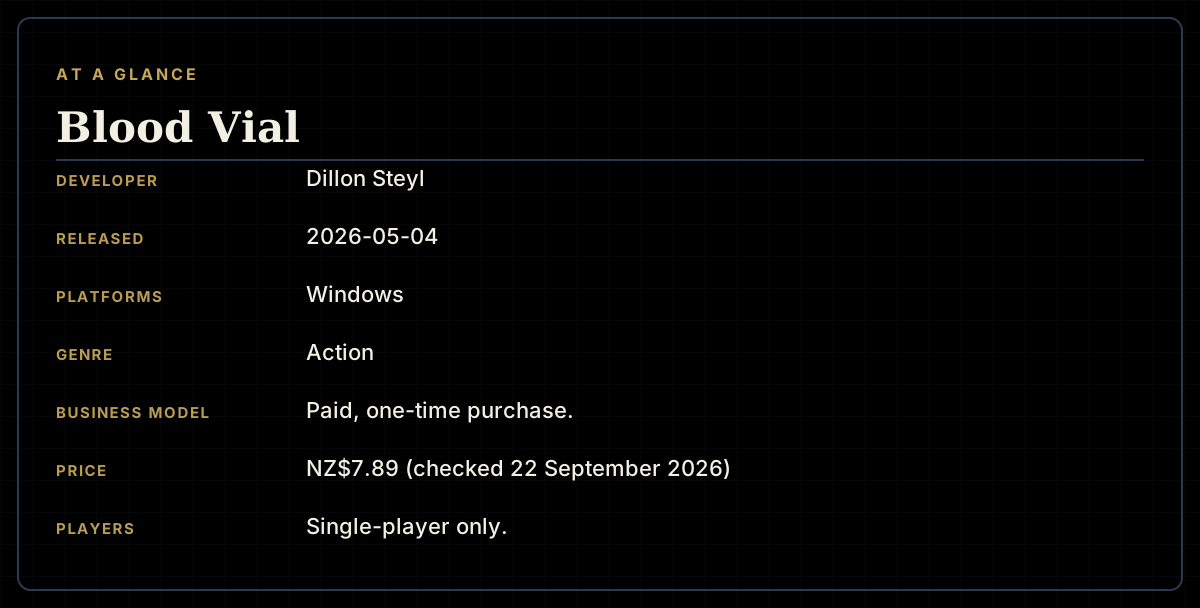
- Developer
- Dillon Steyl
- Publisher
- Dillon Steyl
- Released
- 4 May 2026
- Platforms
- Windows
- Genre
- Action
- Monetisation
- Paid, one-time purchase.
- Players
- Single-player only.
The short version
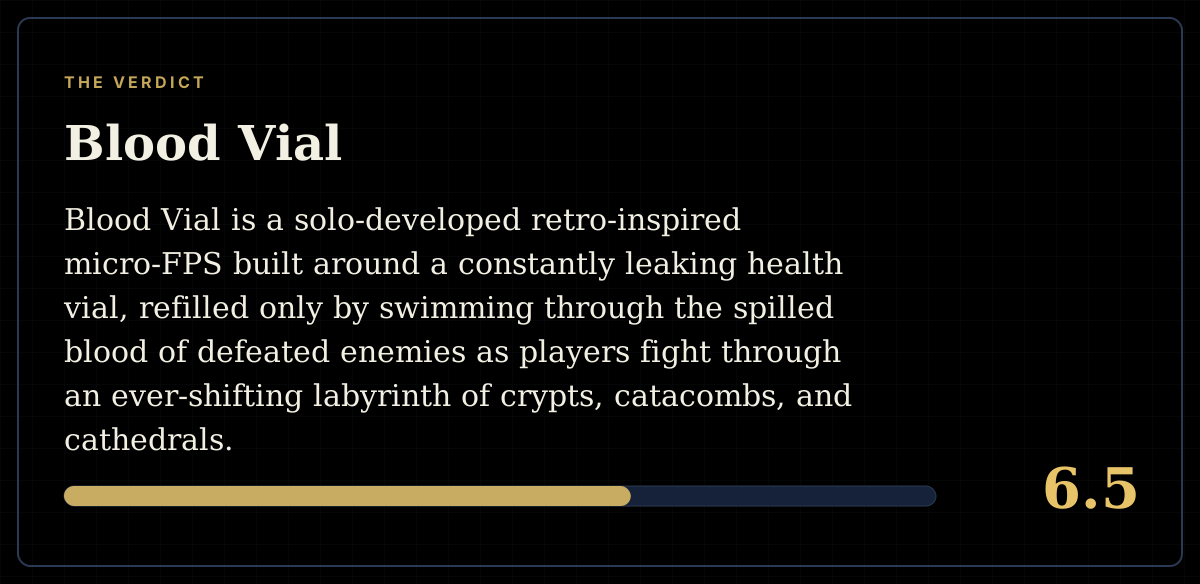
Blood Vial is a solo-developed retro-inspired micro-FPS built around a constantly leaking health vial, refilled only by swimming through the spilled blood of defeated enemies as players fight through an ever-shifting labyrinth of crypts, catacombs, and cathedrals. Its English review sample rates it Very Positive, praising its unique, tightly executed core mechanic, tempered by an overwhelming, corroborated complaint about its very short length.
Biggest strengths
- Praised repeatedly for a genuinely unique core health mechanic, with multiple reviewers independently comparing its blood-swimming system favourably to Splatoon's ink traversal and Ultrakill's blood-as-resource design.
- Praised for tight, satisfying gunplay and movement, with reviewers crediting clean shooting, varied enemy design, and a constant sense of forward momentum and urgency.
- Praised for strong presentation for a solo-developed project, with reviewers specifically crediting its music, sound design, and gothic art style.
Biggest weaknesses
- An overwhelming, heavily corroborated complaint across the sample is that the game is very short, with many reviewers reporting completion times of under two hours and some finishing in under thirty minutes.
- A fair, corroborated complaint from multiple reviewers is that its roguelike upgrade structure feels underbaked, offering little escalating challenge and some upgrades that are clearly stronger than others.
- A fair complaint from several reviewers is that replay value is limited once the short campaign is finished, with only a handful of weapons, one equippable per run, and a single biome across all levels.
Who it's for: Fans of tight, movement-focused boomer shooters looking for a short, genuinely inventive session, especially players who enjoyed Splatoon's ink mechanics or Ultrakill's blood-as-resource systems; players wanting a substantial campaign or a roguelike structure with real escalating challenge should temper expectations.
Our recommendation: A genuinely inventive, tightly executed movement shooter let down by content too thin to match its asking price.
6.5 / 10
A leaking vial, a trail of blood, and no time to stand still
Blood Vial is a retro-inspired micro-FPS from solo developer Dillon Steyl, built around a deceptively simple premise: the player's health is a constantly leaking vial, refillable only by swimming through the spilled blood of defeated enemies. That single mechanic reshapes everything about how players approach its ever-shifting labyrinth of crypts, catacombs, and cathedrals, forcing constant aggression over caution. This review draws on an English review sample, 276 reviews at the time of research, rated Very Positive overall.
Praised repeatedly for a genuinely unique core mechanic
The sample's most consistent theme is just how inventive and well-realised the blood-vial system feels in practice. "It's kinda like splatoon x ultrakill. You dive in blood from things you kill which refills your guage, and your guage is your hp. You can throw some blood allowing you to traverse stuff and dodge etc, but it drains your guage," reads one detailed review. A separate reviewer draws the same comparison while noting a meaningful distinction: "Swimming in blood is just that compelling of a mechanic... Coming from Splatoon you do need to rewire your brain a bit for how this game uses the blood with how you absorb it, which forces you to constantly be moving instead of just sitting in the ink." This review treats that convergence as fair and meaningful: multiple reviewers independently reaching for the same two genre touchstones, then crediting the game for meaningfully building on both, is credible evidence of real mechanical originality.
Praised for tight gunplay and strong presentation from a solo developer
Reviewers also specifically credit the game's moment-to-moment feel and craft. "Gunplay feels clean. 'Blood Swim' is a great mechanic. The Vial doesn't feel too full, and encourages you to play offensively. Good art style and music," reads one review. A separate reviewer independently praises its enemy variety within that system: "The enemy variety plays into it perfectly. The first levels will be filled with rats which are just kind of walking bloodbags that die in 1 hit, but soon you'll encounter gunmen who shoot projectiles that you can dodge in blood." This review treats both as fair: reviewers crediting tight combat feel and thoughtfully designed enemy variety, all from a single developer, is credible evidence of disciplined, focused design within its compact scope.
An overwhelming, corroborated complaint about length
Set against that praise, this review found an unusually consistent and heavily corroborated complaint about how short the game is. "I beat the game in just under an hour," reads one review, while a separate reviewer reports a similar pace: "This game's borderline on whether or not I'd recommend it... It's extremely short, I beat the game in less than two hours of play." A third reviewer is blunter still: "It just feels like a demo." This review treats that as fair and central to any recommendation: the sheer number of independent reviewers reporting sub-two-hour completion times, several of them otherwise strongly positive, makes this the sample's dominant and most credible concern.
A fair, corroborated complaint about underbaked roguelike elements
This review also found a specific, related complaint about the game's roguelike upgrade structure. "The roguelike mechanics feel like they don't impact the gameplay much, aside from just making it easier. Honestly, I don't understand why this game is a roguelike in the first place. There isn't much increased challenge as you progress," reads one detailed review. A separate reviewer independently reports uneven upgrade balance: "Some of the upgrades seem significantly better compared to others, for example the Thirst upgrade that increases healing... are way more useful compared to say Blood Bank, which reloads the gun's rounds/bullets rather slowly." This review treats that as fair: multiple reviewers independently questioning whether the roguelike framing adds meaningful challenge, plus specific reports of upgrade imbalance, is a credible, corroborated design complaint.
A fair complaint about limited replay value and content
This review also found a related complaint about the game's post-completion depth. "Once you beat the game, theres nothing to do... There is only one biome, levels feel similar to each other, and overall there isn't enough level variety," reads one reviewer, who nonetheless praised the core gameplay loop highly. This review treats that as fair: a reviewer explicitly separating strong mechanical praise from a content-volume complaint, rather than letting one colour the other, is a credible and useful distinction for prospective buyers weighing price against playtime.
Achievement data corroborates a short, highly finishable experience
This review's own check of Steam's global achievement data, across just two tracked milestones, shows 96.9% of players complete the tutorial and a notably high 49.0% go on to finish the entire game. That completion rate is unusually high for any game with achievement tracking, and directly corroborates the sample's dominant complaint: a large share of buyers are reaching the ending, not abandoning the game unfinished, which strongly suggests length rather than difficulty or quality is the limiting factor.
Final verdict
Blood Vial is a genuinely inventive, tightly executed movement shooter that earns real credit for its blood-vial health system, a mechanic reviewers consistently and credibly praise as a meaningful evolution of ideas from Splatoon and Ultrakill, backed by clean gunplay and strong presentation for a solo developer's project. This review found that praise heavily tempered by an overwhelming, corroborated complaint about its short length, reinforced by its own achievement data showing about half of all players reaching the ending. For players wanting a short, genuinely inventive session at a modest price, it's a solid pickup; players expecting a substantial campaign or meaningfully escalating roguelike challenge should weigh that gap carefully before buying.
Pros and cons
Pros
- Praised repeatedly for a genuinely unique core health mechanic, with multiple reviewers independently comparing its blood-swimming system favourably to Splatoon's ink traversal and Ultrakill's blood-as-resource design.
- Praised for tight, satisfying gunplay and movement, with reviewers crediting clean shooting, varied enemy design, and a constant sense of forward momentum and urgency.
- Praised for strong presentation for a solo-developed project, with reviewers specifically crediting its music, sound design, and gothic art style.
- This review's own check of achievement data shows an unusually high full-game completion rate, corroborating reviewer accounts of a short, highly finishable experience rather than an inflated one.
Cons
- An overwhelming, heavily corroborated complaint across the sample is that the game is very short, with many reviewers reporting completion times of under two hours and some finishing in under thirty minutes.
- A fair, corroborated complaint from multiple reviewers is that its roguelike upgrade structure feels underbaked, offering little escalating challenge and some upgrades that are clearly stronger than others.
- A fair complaint from several reviewers is that replay value is limited once the short campaign is finished, with only a handful of weapons, one equippable per run, and a single biome across all levels.
- This review's own check of achievement data shows only two tracked milestones, reflecting the game's compact scope and offering limited insight into its structure beyond confirming how quickly most players reach the ending.
Screenshots
-
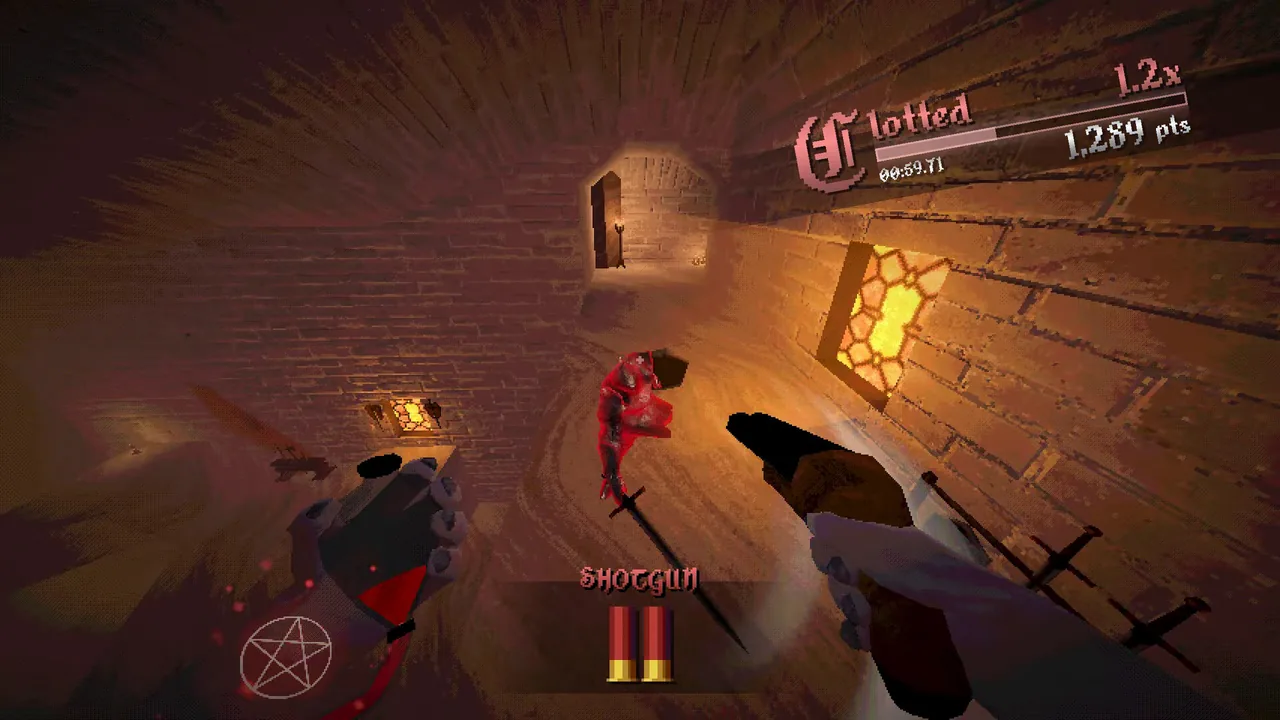
Blood VialImage: Dillon Steyl via Steam -
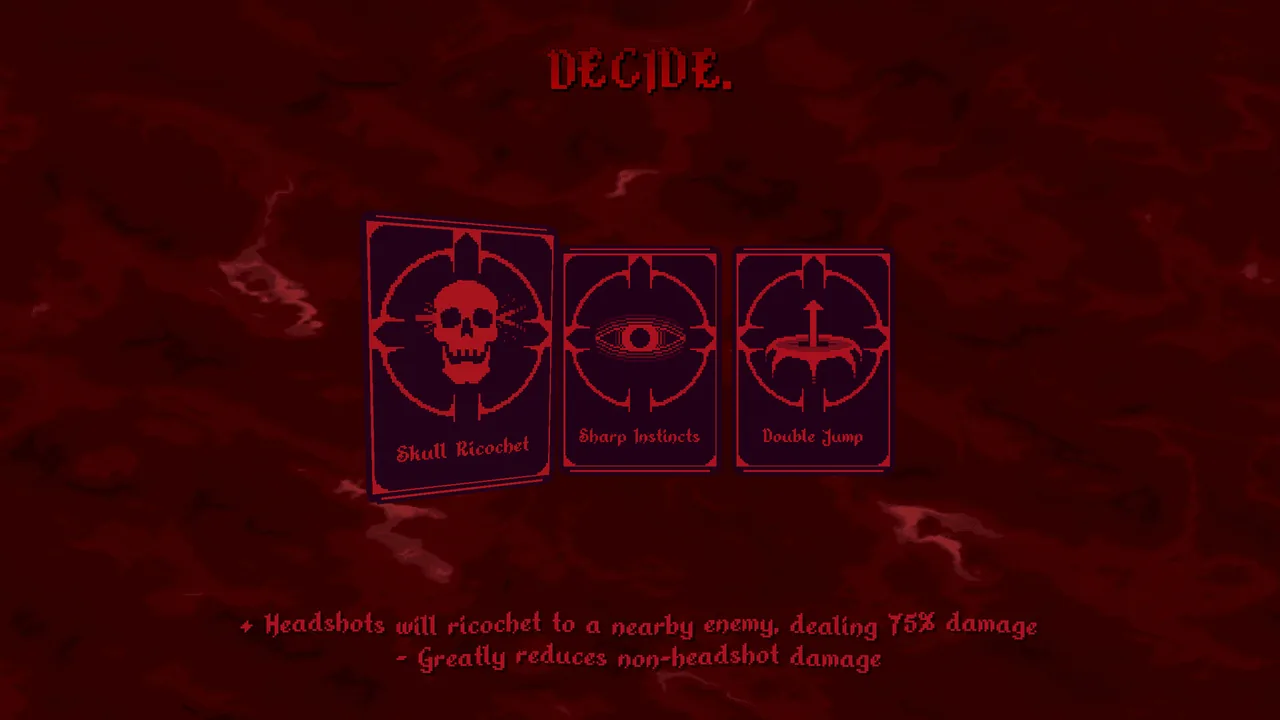
Blood VialImage: Dillon Steyl via Steam -
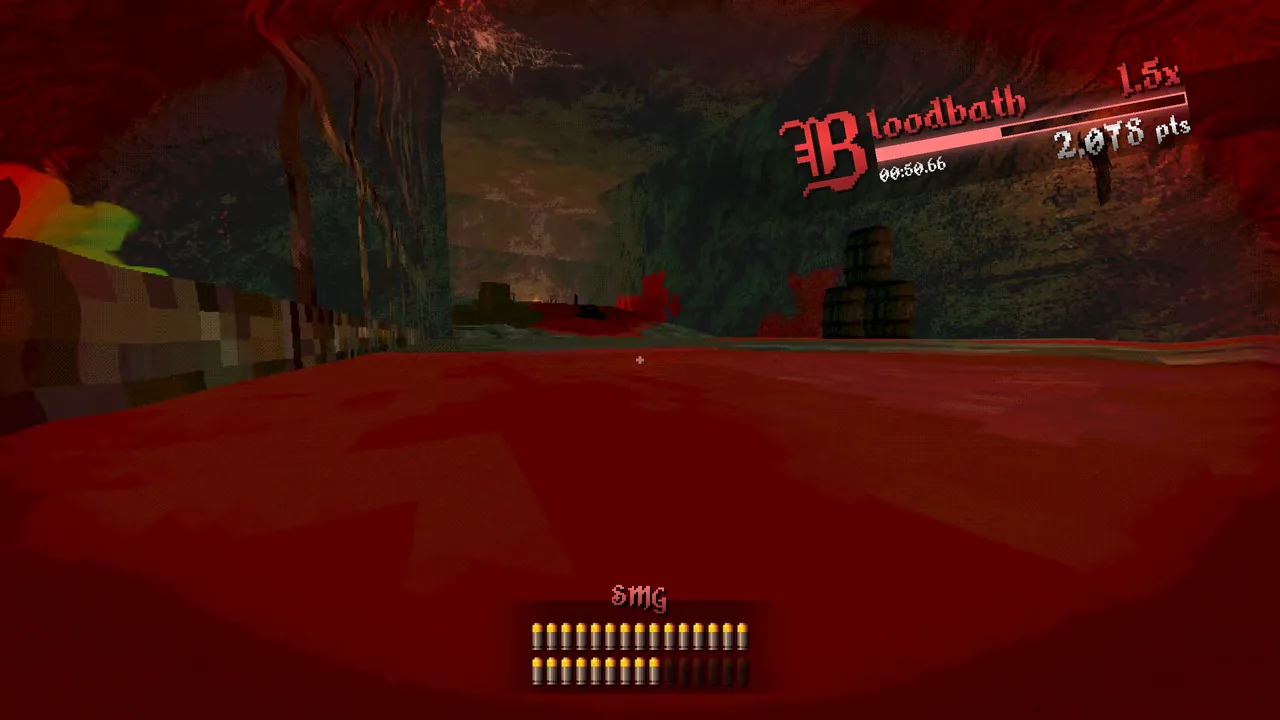
Blood VialImage: Dillon Steyl via Steam -
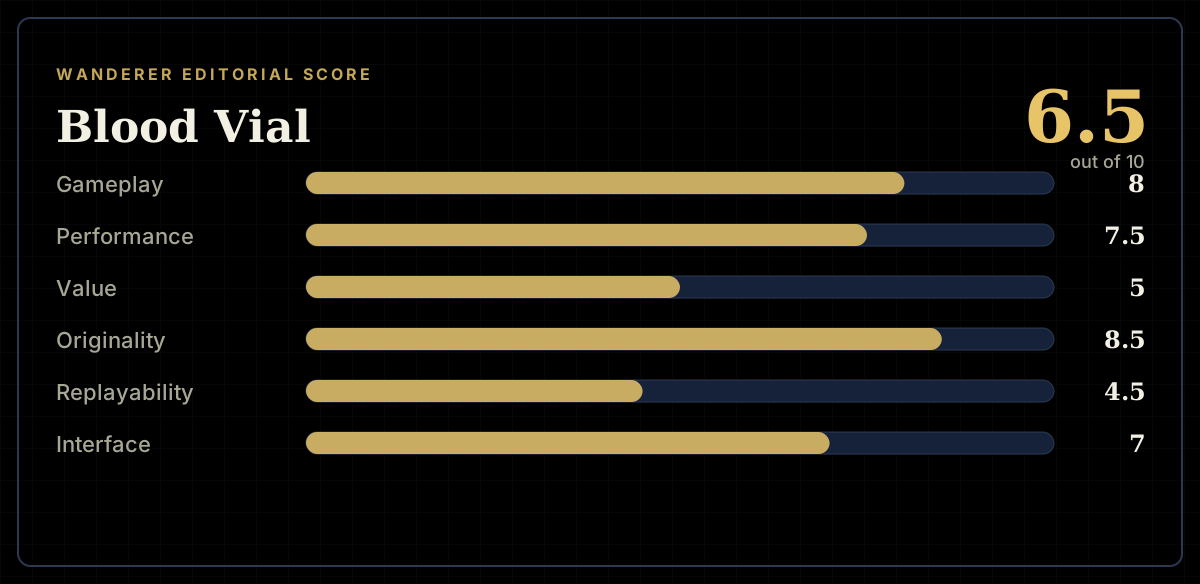
How the review scores each part of the gameWanderer Editorial -
The specs at a glanceWanderer Editorial -
The short versionWanderer Editorial