
Game review
Willie's Nightfall
6.8 / 10
- Developer
- Runebox Game Studio
- Publisher
- Runebox Game Studio
The short version
Biggest strengths
- A tense, well-executed take on the Slender-style 'collect the documents while evading a stalker' formula, with items randomized each attempt to force real exploration instead of memorized routes
- Willie himself is genuinely frightening, reviewers repeatedly cite the sound design, the creaking, whistling, and sudden footsteps, as doing more work than jump scares to build dread
- Short, replayable sessions of roughly thirty minutes to an hour that reviewers say deliver a satisfying scare-per-minute ratio for a low asking price
Biggest weaknesses
- A recurring capture bug lets Willie catch players through walls or closed doors, including inside supposedly safe hiding spots, which several reviewers say cost them runs late in a playthrough
- Directional audio cues for Willie's footsteps and door interactions are inconsistently loud, making it hard to judge his actual distance or direction until he's already close
- Randomized item placement can occasionally strand players searching the same handful of rooms for several minutes with no indication where the last document actually is
6.8 / 10
Overview
Willie's Nightfall is a first-person horror game developed and published by Runebox Game Studio, released on Steam on January 13, 2025. Players explore the offices of the fictional Willie's Company hunting for ten secret documents that reveal the truth behind the company's murderous mascot, a distorted mouse-mascot named Willie who stalks the darkened corridors listening for every footstep and creaking door. It's a compact, session-based scare built around a single loop: find the documents, avoid the mouse, escape. The reception has landed at Positive across 27 reviews, with 23 recommending it.
That's a modest-sized pool for a small indie horror release, but the reviews are consistent enough in what they praise and what they flag to paint a clear picture: this is a well-crafted riff on a familiar formula, hampered by a handful of specific bugs and interface rough edges that keep it from climbing higher.
Story and Presentation
The premise is delivered sparingly, players piece together the truth about Willie's creation through the documents they collect rather than any upfront exposition, and the payoff mostly arrives after a run ends. Several reviewers enjoyed this drip-fed structure as fitting the mystery, but just as many wished for more narrative texture woven into the actual exploration, rather than saving nearly everything for the ending screen. It's a design choice that works better for players replaying the game for the scares than for those hoping a first run will feel like it's telling a story as it goes.
Where the presentation clearly succeeds is atmosphere. Reviewers repeatedly single out the sound design, flickering lights, creaking doors, and Willie's own sickly whistling and growling, as doing the heavy lifting for the horror, often more effectively than the character's appearance itself. Multiple reviewers describe the audio alone as enough to unsettle them within seconds of starting a level, well before Willie is ever on screen.
Gameplay and Mechanics
The core loop borrows heavily and openly from the Slender: Eight Pages format: explore a bounded space, collect a set number of items, and evade a relentless AI stalker who can hear and react to your movement. Willie's Nightfall differentiates itself by having Willie able to open doors and move between any room rather than patrol a fixed path, and by randomizing where keys, access cards, and documents spawn on every attempt, which reviewers credit with forcing genuine exploration and layout memorization instead of a routine that gets solved and repeated.
The friction comes from specific, reviewer-identified bugs rather than the core concept itself. A recurring complaint describes Willie catching players through walls, closed fire-exit doors, or even while hiding in what should be a safe locker, several reviewers say this cost them progress deep into a run through no fault of their own. Audio direction compounds the frustration: footstep and door-interaction sound effects are inconsistently loud regardless of Willie's actual proximity, making it genuinely difficult to judge whether he's in the next room or two floors away, a problem for a game whose entire tension model depends on players trusting what they hear.
Progression and Replayability
There's no traditional progression system here, success is simply completing a run by finding all ten documents and escaping, with the randomized item placement meant to keep repeat attempts fresh. Reviewers who bounced off the game quickly generally did so because that randomization occasionally works against the player, leaving them searching the same handful of rooms for an extended stretch with no clue where the final document has spawned, a design tension between fair randomness and frustrating dead ends that a couple of negative reviews cite directly.
For reviewers who stuck with it, the unpredictable AI and randomized layout genuinely deliver on replayability within a short, thirty-minute-to-one-hour session, several describe multiple death-and-retry loops as part of the fun rather than a chore, since each failed attempt changes item locations rather than simply resetting to the same solved puzzle. It rewards players who enjoy the tension of not knowing the map by heart, and punishes players looking for a more curated, guided experience.
Technical Performance and Value
Aside from the capture-through-walls bug and the inconsistent audio cues, reviewers describe the game as running smoothly, one reviewer explicitly notes it performing well as a technical showcase for the amount of work evidently put into Willie's AI behavior and the office environment's detail. There's no widespread complaint about crashes, stuttering, or major visual issues beyond the specific gameplay-affecting bugs already noted.
On value, reviewers are broadly positive: at its low price point and thirty-minute-to-hour runtime, several describe it as an easy, low-cost pickup for horror fans, with more than one reviewer explicitly calling it a strong deal for the scares delivered, even accounting for its rough edges. It's not positioned as a lengthy experience, but nobody in the review pool suggests it overstays its welcome either.
Verdict
Willie's Nightfall takes a well-worn horror format, the item-collecting chase through a hostile, patrolling AI, and executes it with real atmospheric craft, particularly in its sound design and its unpredictable, door-opening stalker. It's held back from a stronger recommendation by a specific capture-through-walls bug and inconsistent directional audio that undercut the very tension the game is built around, along with a story that arrives almost entirely after the fact rather than during the run itself. For horror fans who enjoy short, replayable chase-and-hide sessions and can tolerate a rough edge or two, it delivers a genuinely unsettling half-hour to an hour at a fair price; players who want a more polished, bug-free stalker AI may want to wait for a patch.
Pros and cons
Pros
- A tense, well-executed take on the Slender-style 'collect the documents while evading a stalker' formula, with items randomized each attempt to force real exploration instead of memorized routes
- Willie himself is genuinely frightening, reviewers repeatedly cite the sound design, the creaking, whistling, and sudden footsteps, as doing more work than jump scares to build dread
- Short, replayable sessions of roughly thirty minutes to an hour that reviewers say deliver a satisfying scare-per-minute ratio for a low asking price
- An unpredictable AI that can access any room and doesn't simply patrol a fixed route, keeping even repeat playthroughs from feeling scripted
Cons
- A recurring capture bug lets Willie catch players through walls or closed doors, including inside supposedly safe hiding spots, which several reviewers say cost them runs late in a playthrough
- Directional audio cues for Willie's footsteps and door interactions are inconsistently loud, making it hard to judge his actual distance or direction until he's already close
- Randomized item placement can occasionally strand players searching the same handful of rooms for several minutes with no indication where the last document actually is
- Minimal story delivered almost entirely after the fact, with several reviewers wishing for more narrative context woven into the run itself rather than saved for the ending
Screenshots
-
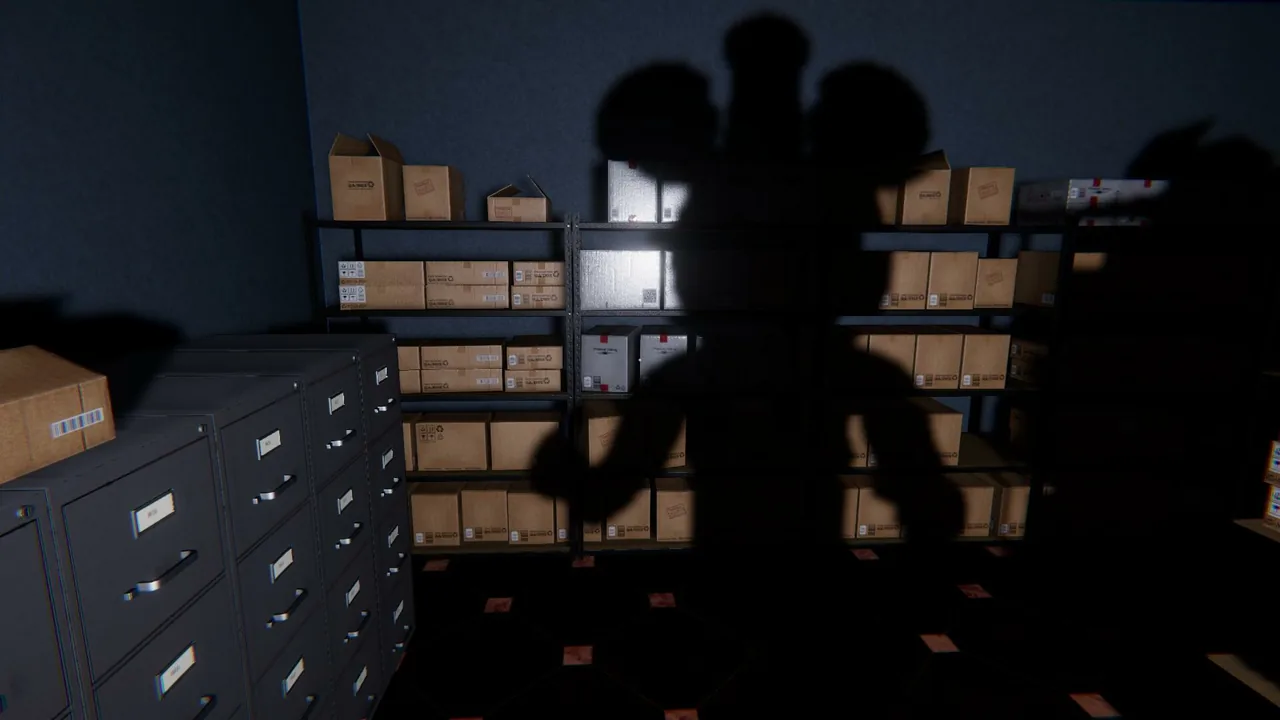
Willie's shadow looms among the office storage shelves, one of the many hiding spots documents can spawn inImage: Runebox Game Studio via Steam -

A close-up encounter with Willie, whose sound design reviewers cite as scarier than his appearanceImage: Runebox Game Studio via Steam -
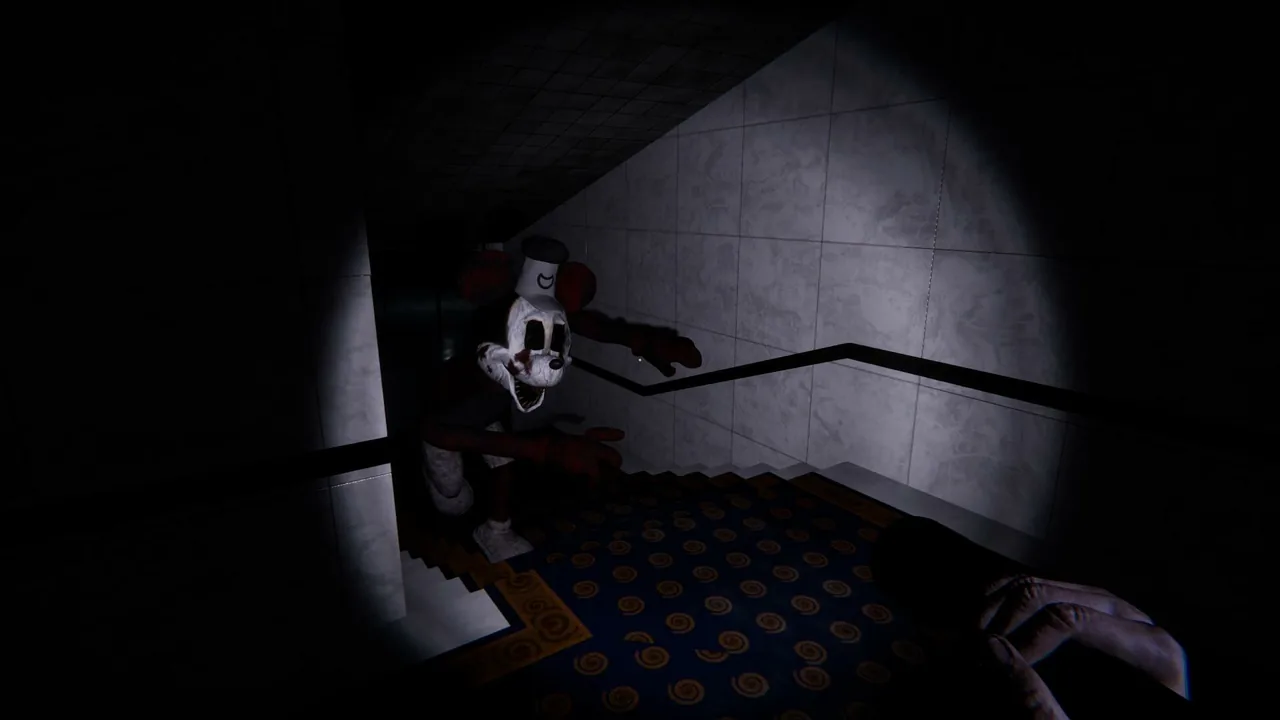
Willie corners the player on a stairwell, the kind of close encounter that ends a run if there's no escape routeImage: Runebox Game Studio via Steam -

Wanderer Game ReviewsWanderer Game Reviews