Game review
Trapped: Family Vacation
8 / 10
- Developer
- New Forge Games
- Publisher
- New Forge Games
The short version
Biggest strengths
- A genuinely fresh twist on the anomaly-hunting formula: each room and stalking family member has its own distinct survival rule, turning every level into a small deduction puzzle rather than a repeated flat mechanic
- Being physically present in the room while swapping to camera views to compare states adds a tension most genre peers, which keep players safely behind a static monitor, don't replicate
- Rules and rooms shuffle and escalate meaningfully as the game progresses, keeping the two-to-four-hour runtime from feeling repetitive despite the format's familiarity
Biggest weaknesses
- Some early rooms, particularly ones built around a simple door mechanic, feel too easy relative to the rules introduced later, creating an uneven difficulty curve at the start
- A handful of reviewers describe individual room rules as confusingly worded or unclear on a first attempt, requiring trial and error to parse what's actually being asked
- At least one reviewer hit a game-breaking bug that blocked full completion, though it was patched quickly once reported to the developer
8 / 10
Overview
Trapped: Family Vacation is a first-person anomaly-hunting horror game developed and published by New Forge Games, released on Steam on January 15, 2025. Players are trapped inside a hotel with a hostile stepfamily and their toys, and must survive each room by marking five differences between what they see in person and what security cameras show, all while figuring out the specific, unwritten rule that governs how that particular room's threat behaves. It runs roughly two to four hours across three escalating levels, and it has landed a Positive reception across 30 reviews, with 29 recommending it.
That's an unusually one-sided response for a genre this crowded, and the reviews are consistent about the reason: rather than simply repeating a static spot-the-difference loop, Trapped: Family Vacation gives every room its own distinct rule set, turning the familiar formula into something closer to a string of small, escalating deduction puzzles.
Story and Presentation
The premise is thin by design, a family vacation gone wrong, trapped in a hotel with a stepfamily and their toys hunting the player, and the game doesn't lean heavily on exposition to carry it. What presentation there is works mostly through atmosphere: reviewers describe each hotel room as having its own distinct, uneasy mood, aided by production choices that keep every stage feeling visually and tonally different from the last rather than recycling the same environment with new anomalies slotted in.
Where the game earns its horror credentials is in the payoff for getting a rule wrong. Reviewers repeatedly cite genuinely effective jump scares, several noting that the scares landed even when they knew one was coming, because the tension of parsing an unfamiliar rule under time pressure builds real anticipation before the punishment arrives.
Gameplay and Mechanics
The core hook that separates this from its genre peers is the combination of physical presence and shifting rules. Rather than sitting behind a static bank of monitors, as in most anomaly-hunting games, players are physically in the room and have to actively swap to camera views to compare states, a design choice reviewers say meaningfully raises the tension since the threat is, at least in principle, right there with them. Layered on top is the rule system: each room and each stalking family member follows their own specific, undisclosed logic for how they punish mistakes, and figuring out that logic through observation and trial is treated by reviewers as the real core puzzle, more so than the anomaly-spotting itself.
That novelty comes with rough edges. Several reviewers note that some early rooms, particularly ones built around a straightforward door-based mechanic, feel too simple and don't prepare players for the more demanding rule logic introduced later, creating a noticeably uneven difficulty ramp at the start. A smaller number of reviewers also describe specific room rules as ambiguously worded on a first encounter, meaning progress sometimes comes from trial and error rather than confident deduction, though most reviewers frame this as an acceptable part of the puzzle-solving rather than a real flaw.
Progression and Replayability
Progression runs through three levels of escalating difficulty, each introducing new rooms, new family members, and new rules that build on what came before rather than simply reskinning earlier mechanics. Reviewers who finished the full game describe the final stretch as effectively combining multiple rules at once for a tense, demanding conclusion, a structural choice several single out as a satisfying capstone rather than a rehash of earlier difficulty spikes.
The clear limitation is scope. At three levels and two to four hours, several reviewers explicitly say they wanted more, more rooms, more rules, more family members, with more than one reviewer stating they'd happily pay for additional levels as DLC rather than viewing the short length as a dealbreaker. It's a rare case in this review pool where "too short" reads less as a genuine complaint and more as a testament to how much reviewers wanted the concept extended.
Technical Performance and Value
Performance is largely a non-issue in the review pool, aside from one reviewer who encountered a game-breaking bug that prevented full completion, an issue they note the developer patched quickly once it was reported, a responsiveness reviewers view favorably even when describing the bug itself. Outside that isolated case, there's no pattern of stutters, crashes, or other technical complaints across the pool.
Value is close to unanimous: reviewers repeatedly describe the asking price as excellent for what's delivered, and the request for paid DLC rather than a refund over the short length says as much about reception as any explicit praise does. For players who enjoy anomaly-hunting horror and want a format that actually innovates on the core loop rather than repeating it, reviewers consistently frame this as an easy, low-risk purchase.
Verdict
Trapped: Family Vacation takes a well-worn horror format and finds a genuinely clever way to make it feel fresh, giving each room its own logic to decode rather than asking players to simply spot static differences over and over. The uneven early difficulty curve and occasionally unclear rule-wording are real, minor frictions, and the short runtime will leave genre fans wanting a follow-up rather than feeling fully satisfied on length alone. But for anomaly-hunting horror fans looking for a smart, well-executed twist on the format at a fair price, this is close to as strong a recommendation as the review pool gets, and the demand for more content is itself the clearest evidence of how well it lands.
Pros and cons
Pros
- A genuinely fresh twist on the anomaly-hunting formula: each room and stalking family member has its own distinct survival rule, turning every level into a small deduction puzzle rather than a repeated flat mechanic
- Being physically present in the room while swapping to camera views to compare states adds a tension most genre peers, which keep players safely behind a static monitor, don't replicate
- Rules and rooms shuffle and escalate meaningfully as the game progresses, keeping the two-to-four-hour runtime from feeling repetitive despite the format's familiarity
- Reviewers near-unanimously call it a strong value at its price point, with several actively requesting paid DLC for more levels rather than complaining about length
Cons
- Some early rooms, particularly ones built around a simple door mechanic, feel too easy relative to the rules introduced later, creating an uneven difficulty curve at the start
- A handful of reviewers describe individual room rules as confusingly worded or unclear on a first attempt, requiring trial and error to parse what's actually being asked
- At least one reviewer hit a game-breaking bug that blocked full completion, though it was patched quickly once reported to the developer
- The short two-to-four-hour length leaves multiple reviewers wanting substantially more content, rooms, rules, and family members, than the current three levels provide
Screenshots
-
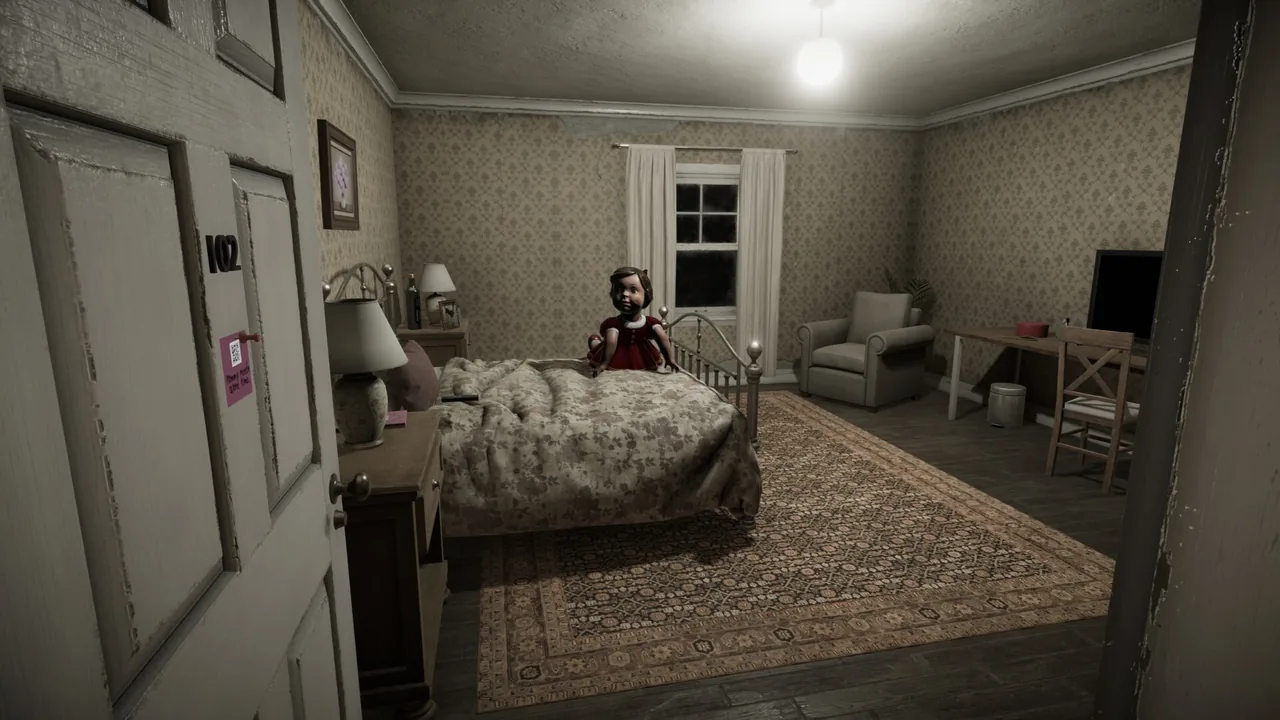
A hotel room with a doll standing watch, the kind of subtle presence players must track between camera checksImage: New Forge Games via Steam -
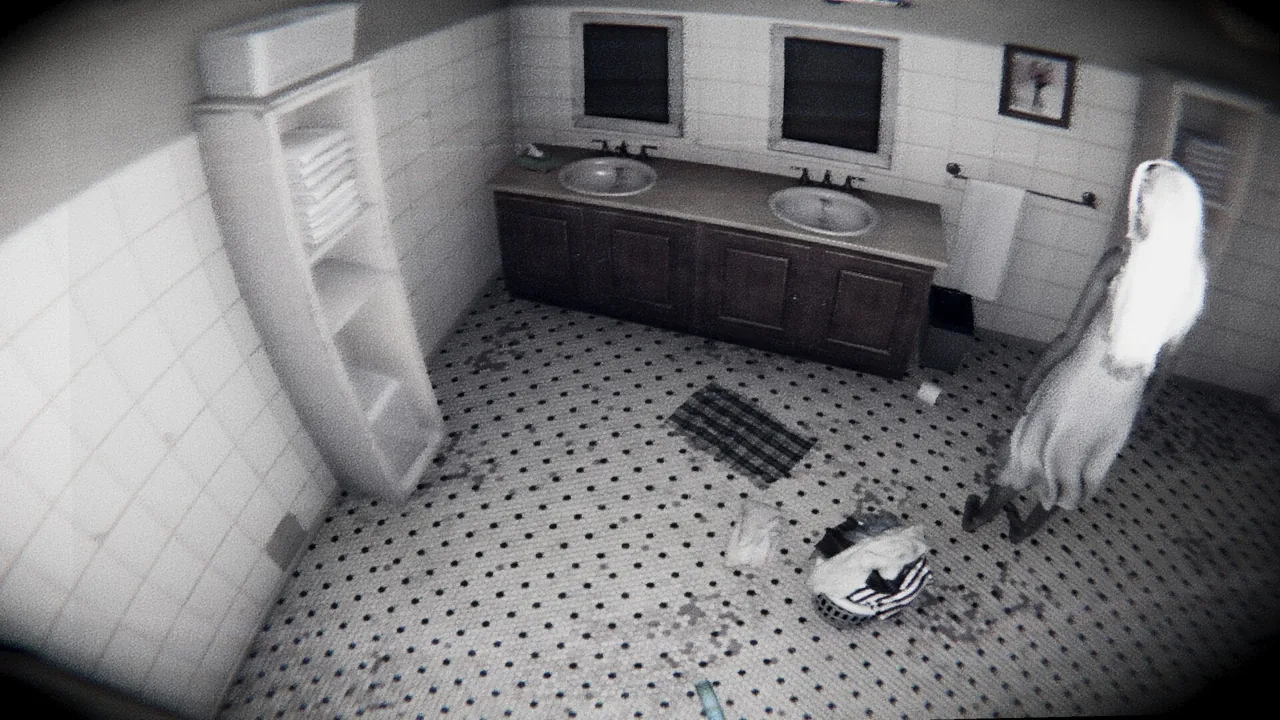
A night-vision camera feed catches a ghostly figure in the bathroom, one of several distinct camera views used to spot anomaliesImage: New Forge Games via Steam -
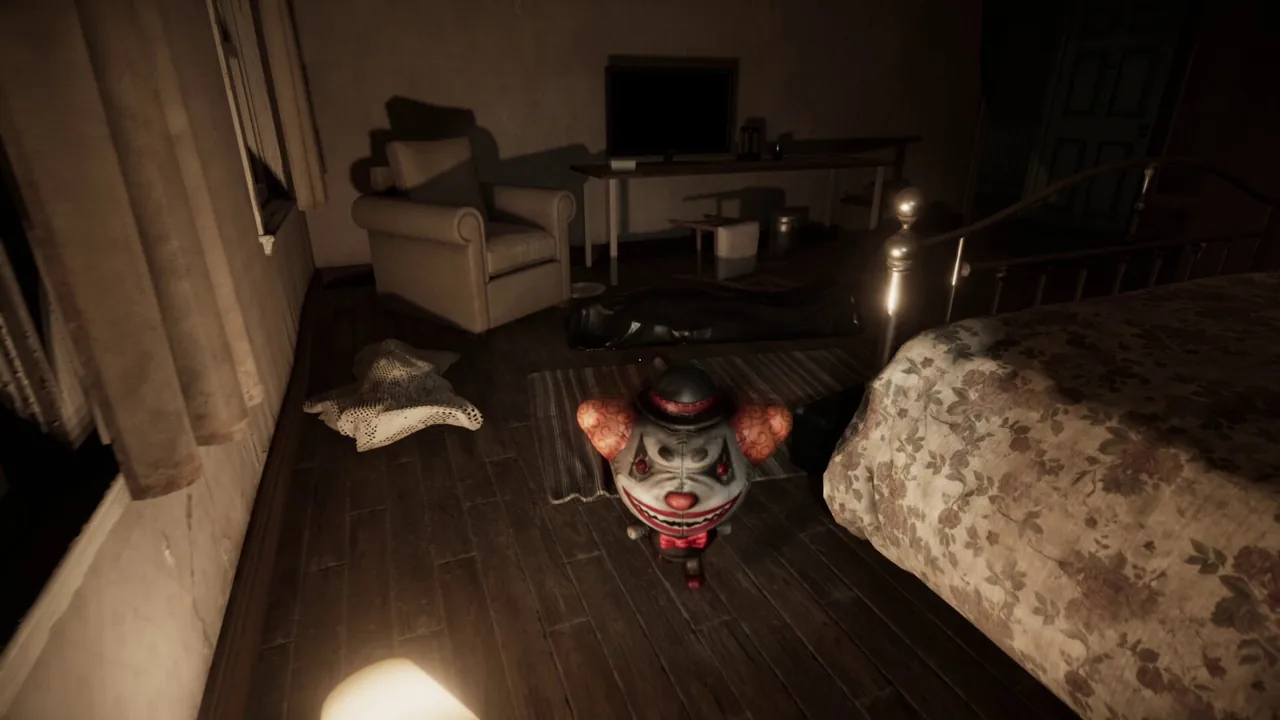
A clown-faced toy stalks a bedroom floor, one of the stepfamily's toys that players must learn the behavior rules of to surviveImage: New Forge Games via Steam -
Wanderer Game ReviewsWanderer Game Reviews